

25 Years Ago: Movie Soundtrack Takes Bluegrass Mainstream
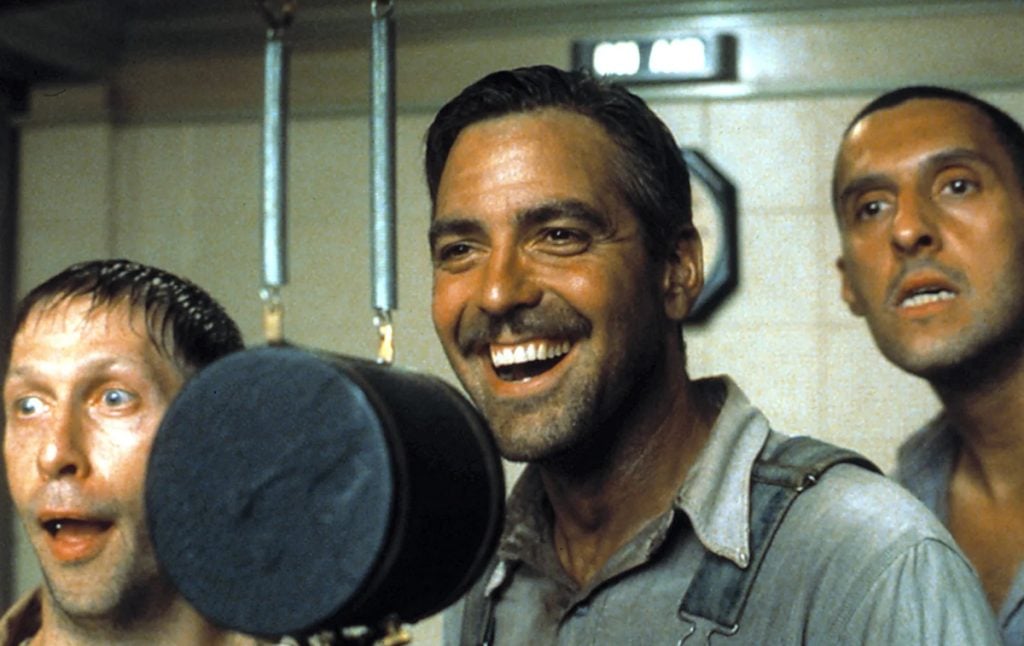
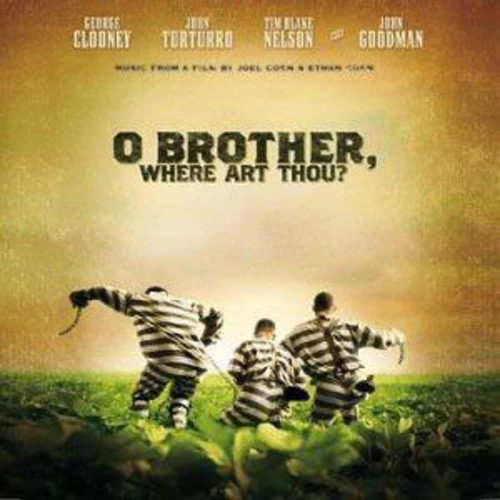
In the often contentious environment of country music where the commercial interests of the industry and the critical concerns of roots enthusiasts often result in friction and infighting, it’s very rare that an album comes to any sort of universal consensus, let alone one that’s the soundtrack to a movie, recorded and produced outside the Music Row ecosystem. But such was the fate of the music to the 2000 Coen Brothers film O Brother Where Art Thou, released 25 years ago today, December 5th, 2000.
In fact, the impact and reception for the O Brother Where Art Thou soundtrack was so significant, it’s very fair to characterize it as one of the most important albums in country music history, and it was most certainly one of the most significant releases of the last quarter century. As we sit back and marvel at the arena level success of Billy Strings and bluegrass music, in many ways you can trace it back to this very soundtrack.
Though sales started off a little slow since the film itself wasn’t a blockbuster out of the gate, as O Brother Where Art Thou gained cult status, sales for the soundtrack soared. It hit #1 on the all-genre Billboard 200, spent over 20 weeks on the Billboard Country Albums chart, and by 2007, had been Certified Platinum eight times over. The O Brother Where Art Thou has gone on to become one of the best selling country albums of all time.
As far a critical acclaim, the soundtrack couldn’t have been received any better. In fact, it pulled off the rare trifecta of country music awards. O Brother Where Art Thou won the all-genre Grammy Award for Album of the Year in 2002. Ralph Stanley won the Grammy for Best Country Solo Performance for his a capella “O, Death.” Dan Tymiski won for Best Country Collaboration for singing “I Am a Man of Constant Sorrow” for the George Clooney character of the film.
O Brother Where Art Thou also won both the CMA and ACM for Album of the Year. “I Am A Man of Constant Sorrow” also won the CMA Single of the Year in 2000. That’s right, a nearly 90-year-old song won over some radio star. That speaks to just how significant this soundtrack was.
The success of the soundtrack also had a massive impact on country music itself. Alison Krauss and Gillian Welch became bona fide stars. Artists like Chris Thomas King and Dan Tymiski found new support behind their careers. Ralph Stanley and John Hartford received renewed interest in their legacies as well, and songs like “O, Death” and “Man of Constant Sorrow” became standards.
No, it didn’t result in a massive roots resurgence in the mainstream of country, but it did result in a greater share of the attention in it, at least for a period. But perhaps more importantly, O Brother Where Art Thou installed bluegrass back to its place of prominence in American music. The enthusiasm we see for bluegrass today was very much revitalized by the film and its soundtrack, while other country subgenres such as Western swing and rockabilly still seem to struggle for their proper recognition.
Along with bluegrass itself, the string band resurgence that would reach all the way to the mainstream with bands like Mumford & Sons and The Lumineers very much piggy backed off the O Brother Where Art Thou movement, and was cited directly as an influence. String bands decked out in Depression-era attire became so popular, a backlash against them ensued, even among roots fans. Old Crow Medicine Show’s “Wagon Wheel” became the “Free Bird” of the era, with Darius Rucker eventually recording a version, taking it to #1 in 2013, and winning awards with it.
The success of the O Brother Where Art Thou soundtrack most certainly still resonates today, as do the lessons. In the dearth of support for bluegrass, folk, and string music in the mainstream, other avenues can and must be found to reach the proper audiences. As we’ve seen with movies such as Hell or High Water, and TV shows like Yellowstone and Landman, the small and big screens can be conduits for artists to connect with fans and bypass insular mainstream channels.
O Brother Where Art Thou also proved that there is still massive appeal for old music. Listeners just have to be exposed to it in a compelling manner. That’s what The Coen Brothers and soundtrack producer T Bone Burnett did, recording the music even before they shot the film, speaking to what a seminal part the music was to the project. And it paid off in ways that country and roots fans, and even just general fans of music, still enjoy today.
– – – – – –
To celebrate the 25th Anniversary of the O Brother Where Art Thou soundtrack, Lost Highway Records is releasing both limited edition color vinyl and standard vinyl gatefold editions of the album. They are available for pre-order now, and will be released on February 20th, 2026. T Bone Burnett and Lost Highway Records will also be presenting an “Evening in Celebration of O Brother, Where Art Thou?” on the Grand Ole Opry on February 28th.
– – – – – – –
Editor’s note: Portions of this article appeared in a previous article. If you found this article valuable, consider leaving Saving Country Music A TIP.
December 5, 2025 @ 8:51 pm
Dan Tyminski has a great quip in interviews about his wife LOVING Clooney’s voice over work. I wore out CDs from bluegrass PBS pledge drives during this heyday.
December 6, 2025 @ 12:30 am
Around 1990 I was teaching myself old time fiddle from scratchy old cassette tapes of obscure field recordings and searching for people who knew anything qt all about Appalachian ballads while living with a 40-year-old who played an even more obscure form of old time music (hokum) And it was all a very, very, very niche thing to be interested in. Around that point there were only enough ” Young people” my immediate scene that the four of us were able to put together a young people string band for the fiddle contests because there were only literally like four people under 25 in the scene.
Talking to the 40-year-old roommate about how unknown our music was, I remember he used to say the following:
” If I ever won the lottery and became super rich, I would try and finance a Hollywood movie that had old time music as its soundtrack”. The idea was that would be the only way to get people interested in this stuff again.
Probably 6 years later the Hollywood movie Songcatcher was released. It’s a silly fiction. Very loosely based around the story of the ” Discovery” of Appalachian ballada by the outside world
Oh brother, where Art thou was absolutely the revolution that trigger is talking about here, and it blew my mind that the thing my old roommate always fantasized about actually came to be, and was so successful in the long run. Now, there were a bunch of other factors that encouraged people to get interested in old music- The entire ’90s was a period when loads of old records. Got re-released on CD, and that created a lot of interest in world music and folk music and old country and bluegrass, but that movie pretty much capped off that slow rise in interest.
December 6, 2025 @ 4:58 am
A fantastic write up of a fantastic moment. Thanks Trigger. I wss only 13 when it came out but it was the first time i had ever given a listen to country music and enjoyed the album and have seen several of the acts (Union Station, Gillian Welch, Chris Thomas King) since. Also agree it ushered in an era of Tyler Sheridan, Hell or High Water, Lojgmire and other directors caring about the music they used and actually protecting thar music in syndication (for TV shows at least). Heck even scrubs leaned into music because O brother showed people cared about it.
The other soundtrack id encourage people to remember was to TransAmerica (2005) which featured more Ralph Stanley, Lucinda Williams, OCMS and the great Travelin Thru by Dolly Parton
December 6, 2025 @ 12:47 pm
There was also a Larry Sparks song featured in “Transamerica” as well.
December 6, 2025 @ 8:44 am
Good times. Def was a great soundtrack. Movie was pretty good too. It was what led me to the soundtrack. Funny looking back overall other than westerns, my parents and mines tastes in movies didnt cross over as i aged but there were a couple of movies that they turned me onto which i prob would have never saw otherwise. This is one of them along with fried green tomatoes.
December 6, 2025 @ 9:41 am
Sturgill Simpson poured gasoline on the current Appalachian mountain music resurgence over a decade ago. But, the spark was Bill Monroe passing in 1996 causing Ricky Skaggs and Marty Stuart to have their “Will the Circle be Unbroken” moment and re-commit to their roots and stop chasing mainstream success. The flame was the release of the “O Brother” soundtrack and the following year Patty Loveless’ “Mountain Soul.” Loveless, just a few years removed from being named the CMA Female Vocalist of the year, mainstreamed the term “mountain music”: country music with bluegrass elements. And mountain music is the sound of “O, Brother.” It’s the music that layed the foundation for Sturgill, Tyler Childers, Billy Strings, Cole Chaney, Town Mountain, Old Crow Medicine Show, SteelDrivers, Colby T. Helms….
During the dog days of summer, sports media was overindulged in quarter century lists. That lead me to compiling my top 25 country music albums. “O, Brother” came in at 3.
December 8, 2025 @ 1:31 pm
heard Mountain Soul on the airline supplied headphones, then went and ordered it from BMG for 99 cents! What an amazing album!
December 6, 2025 @ 10:43 am
It’s funny how times have changed. The OBWAT soundtrack phenomenon was very much a hipster thing, or at least that’s how I remember it. The seed was planted, and it bore the fruit of Old Crow Medicine Show and Mumford & Sons a decade later.
The “alt country” soundtracks of today – Yellowstone and Landman, specifically – really *aren’t* hipster. The vibe is different, not better or worse necessarily. There are a lot more artists now who grew up listening to country, and the audience is like that too — unlike the 90’s and 2000’s when you had a lot people into alternative rock or what not having an “epiphany” that country can be cool (I was one of them).
The next step is to take over the mainstream altogether.
December 6, 2025 @ 4:32 pm
There was also an O Brother concert tour that featured many of the soundtrack artists. We got to see Ralph Stanley, Alison Krauss, Emmylou Harris, and others. We had great seats, and one of the Union Station guys plopped down next to us with his camcorder to record some of the other acts. I thought it was pretty cool that he was such a big fan of the rest of lineup.
December 6, 2025 @ 10:25 pm
I remember the concert. TN I thought Union Station pushed it to the top at that time…but from what you say… maybe not. .
December 7, 2025 @ 1:44 am
It was and is still a great soundtrack album. Its commercial success was really incredible and really surprised me.
December 7, 2025 @ 11:51 am
I believe there was also a dvd released in conjunction with the concerts that “Proofreeder” mentions. It was called “Down From The Mountain” and fronted by the late John Hartford.
December 8, 2025 @ 12:24 pm
Thanks for this. I don’t think the OBWAT soundtrack can be overstated in terms of its influence on the revival of bluegrass, folk and country here in 2025.
It’s an enjoyable movie, too, with lots of fun lines.
December 9, 2025 @ 10:19 am
Excellent soundtrack, and the concert that eventually followed was phenomenal. So much talent. Always appreciate what it did for music that wasn’t mainstream. Under all of that – what a great movie. It is still watched routinely in our house and a favorite of those not even alive when it was released. An appreciation for the movie helps in appreciating the soundtrack, although it is great regardless.
December 11, 2025 @ 6:59 am
I wish that I’d brought this soundtrack when it came out, the music on it was (and is) amazing. The movie was and is great, too.
The best testament to the longevity of this movie and the music in it? Hearing it done on variety TV shows in other countries, and seeing one of the songs (‘As I Went Down To The River To Pray’) performed in other countries, as shown here.