

Alex Pretti, Mark Capps, and the Extrajudicial Killings of Americans
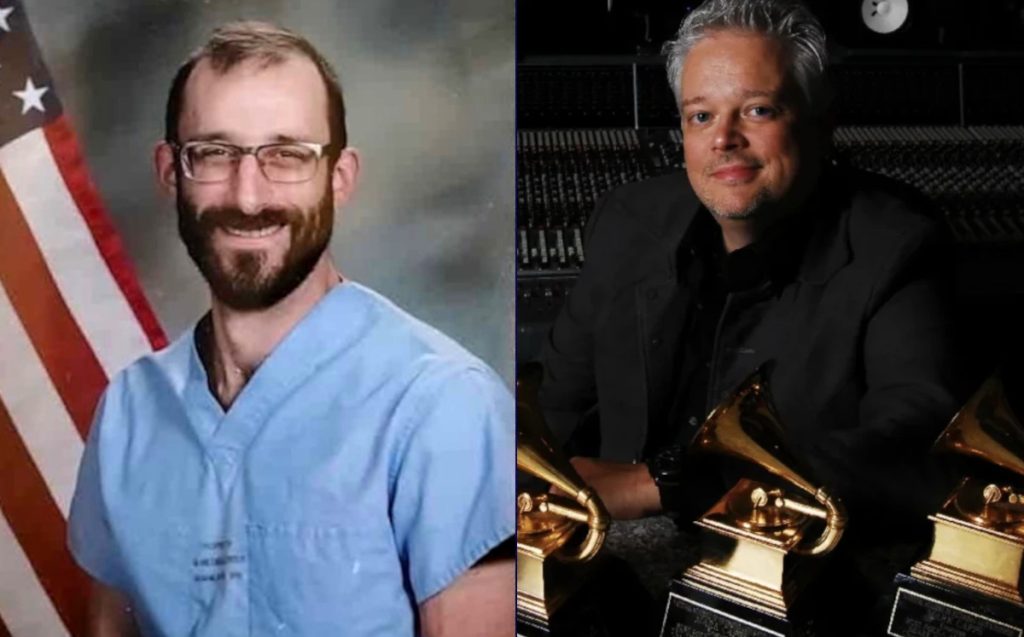
The killing of VA nurse Alex Pretti in Minneapolis has done something quite exceptional that we rarely see in the United States these days: bring people towards something resembling a consensus opinion. It’s not just the killing, but the rhetoric that proceeded it that made the matter feel less political, and more personal. It cut less across one’s feelings on policy, and more about a universal fear on the infringement of very fundamental civil rights that all Americans hold dear, and specifically the right to protest and bear arms.
Where in previous eras any officer involved shootings resulted in cautious statements by officials, paid administrative leave for the officers involved, and a thorough investigation, we got propagandized hyperbole not even law enforcement proponents could justify, along with rushes to judgment that appropriately called into question the credibility of everyone involved.
The characterization of commander-at-large of the United States Border Patrol, Greg Bovino that Alex Pretti was “out to do maximum damage, and massacre law enforcement,” and Department of Homeland Security Secretary Kristi Noem’s asserting that Pretti was “brandishing” a firearm feels so buffoonish in the face of the overwhelming video evidence, including that the gun was removed from Pretti’s possession before a dozen or so shots rang out while he was face down on the ground, surrounded by officers.
The rhetoric has been so irresponsible, even the Trump Administration that has been notoriously reluctant to show weakness or regret is now reshuffling and re-assigning the leadership involved in the killing and response, and drawing down the numbers of Federal law enforcement in Minnesota to attempt to de-escalate tensions.
The concern many Americans now hold is when these extrajudicial killings could come for members of their community, or someone they know. But the truth is for the country music community and Nashville, it already did. It just didn’t become the cause célèbre the killing of Renee Good and Alex Pretti did, or George Floyd or Brianna Taylor for that matter.
We’re talking about the killing of four-time Grammy-winning Mark Capps in January of 2023.
Similar to Renee Good and Alex Pretti, the same entities who helped perpetrate the killing of Mark Capps were also the ones assigned to investigating it. Lies and mischaracterizations were fed to the media and public immediately to push them off the scent. And also similar to the Alex Pretti killing, Second Amendment rights we’re very much a part of the issue, with the presence of a gun used to justify the killing, even though the gun was never fired, and there was no evidence it was ever brandished.
In both situations, there was video recording of law enforcement asking, “Where is the gun?” after the shooting, because the answer was not obvious in the immediate aftermath.
– – – – – – – –
With scores of credits to his name from working with artists such as Dolly Parton, The Oak Ridge Boys, Ronnie Milsap, The Isaacs, and many others, 54-year-old Mark Capps was well-known and beloved throughout the country music community. Mark Capps also came from a prominent country music family. He was the son of Grand Ole Opry legend and Musicians Hall of Fame member Jimmy Capps, also known as “The Man In Back.”
But in the early days of 2023, Mark Capps was going through a difficult time. Mark’s brother Jeffery Allen Capps passed away on January 3rd—just two days before he would be killed by Metro Nashville Police. On December 15th, 2022, Becky Isaacs of the country Gospel band The Isaacs was hit head-on in a two car collision in Hendersonville, Tennessee, and hospitalized with severe injuries. Capps was close to Becky Isaacs. This also resulted in the Isaacs having to cancel numerous tour dates. Mark Capps was the touring engineer for The Isaacs at the time, which put Mark Capps out of work right around the Holidays.
All of this led to January 5th. Still distraught over the death of his brother, Mark Capps was heavily medicated and drinking alcohol. When his wife Tara came home and saw Capps drinking, she took the beer from him, which helped initiate the altercation. Police reports do make it clear that Mark Capps was verbally threatening both his wife and stepdaughter McKenzie, and acting erratically as a fight dragged on into the night.
But the whole time there was a third person in the house with Mark Capps as well. Zachary Noah Silva is an officer for the Tennessee Bureau of Investigation (or TBI), and was staying in the house that night. He was the boyfriend of Mark’s stepdaughter. Not only was Silva in the house, he was there with his sidearm, badge, and uniform.
Despite police later characterizing the incident as Mark Capps kidnapping his family and not allowing them to leave, Noah Silva was able to leave during the incident and after it had de-escalated. And when Noah Silva left, he felt no need to report the incident to either Nashville Metro Police, or to his TBI superiors when he arrived at work.
Mark’s wife and stepdaughter were able to leave eventually too, going to a nearby police station, and leaving Mark Capps alone in the house. The two women provided sworn affidavits that Mark had threatened to kill them, and a warrant was issued for his arrest. But as opposed to trying to open a line of communication with Mark to attempt to de-escalate or get Mark to leave the house, the SWAT team was called and ordered to extricate Mark Capps from his home.
Three SWAT Officers were ordered to the front porch of the Mark Capps house to place an explosive device on the front door to blow it off its hinges. When Capps came to the door after hearing a commotion outside—allegedly with a revolver in his hand—SWAT officer Ashley Kendall Coon fired four times at Capps.
As can be seen in body camera footage, after the first shot was fired, the front door of the house closed. Despite not being able to see Capps in order to determine if he remained a threat, Officer Coon kept firing, shooting Capps three times through the closed door, ultimately killing Capps in the front room of his house.
Along with the bullets, fragments of the door were found in Mark during the autopsy. Mark Capps was shot through the closed metal door of his home. Body camera footage from the officers left it inconclusive if Mark had a gun, or if he pointed it toward officers. Whether Capps had a gun or not, he was clearly retreating when he was shot.
In a press conference held on the day of the shooting, Metro Nashville Public Affairs Director Don Aaron stated that Mark Capps had kidnapped his wife and stepdaughter at gunpoint and held them against their will. The media ran with this story and reported it virtually verbatim.
Wife Tara Capps wanted her husband removed from the home since he was clearly experiencing a mental health crisis, but she never wanted him killed. As the Associated Press reported at the time, “Nashville has a project called Partners in Care that teams counselors from the city’s Mental Health Cooperative with officers to respond to mental health emergencies where there is a gun or other danger present. Instead, members of the Metro Nashville Police Special Response Tactical team returned to the Capps’ home around 2 p.m.”
This was the fatal mistake made by Metro Nashville Police, along with ordering SWAT officers to the front door to place the explosive devices so they could blow it off its hinges as opposed to opening a line of communication with Capps. This decision also put the SWAT officers at risk.
Mark Capps had no previous criminal record or history of arrests. According to friends of Mark, he was never violent, and wouldn’t hurt anyone. He was in the midst of a metal health crisis. The wife who Capps allegedly kidnapped and who went to the police filed a wrongful death lawsuit against the Metro Nashville Police Department. The captain in charge of SWAT was reassigned to the Parks Department, and according to sources, strategic changes were made to SWAT protocol due to the Mark Capps killing.
But no disciplinary action was ever taken against the SWAT officer who killed Mark Capps, let alone a criminal investigation, or even a public statement about the mistakes made that lead to Mark Capps being killed.
Though a lot of artists, activists, journalists, and others are demanding that country music artists and entities speak out against the actions of ICE amid the killings of Renee Good and Alex Pretti, mum was the word from all of these individuals when the media and high-profile performers could have raised awareness about what happened to someone in their own community who was killed senselessly.
Nashville-based media outlets and journalists who profess being for social justice and civil rights ignored the killing of Mark Capps or even parroted out the Metro Nashville Police talking points unscrutinized. It took eight months for any outlet to even report out that a TBI officer had been in the home at the time of the supposed “kidnapping” after Saving Country Music had confirmed this information 15 days after the killing.
The death of Mark Capps would have been the perfect time to illustrate how concerns about civil rights should be universal as opposed to polarizing or politically expedient for one’s pet issues, including the right for Americans to bear arms and be secure in their own homes.
Alex Pretti put himself in harm’s way by being aggressive with police. So did Renee Good. Mark Capps had made threatening statements that resulted in police getting involved. But none of these individuals deserved to die, and all three of these instances deserve to to be at least thoroughly investigated by independent parties. This isn’t about playing stupid games, and winning stupid prizes. This is about the right of every American citizen to be secure in their person and have their civil rights respected.
The killing of Mark Caps didn’t result in massive protests, a major public outcry, or even significant press coverage. It was virtually ignored to the great frustration of Mark’s friends and family. A four-time Gammy winner had been gunned down in his own home, and nobody seemed to care.
But hopefully we all now know that if we don’t stand up for the civil rights of one, we don’t stand up for the civil rights of all, including ourselves.
– – – – – – – – – – –
If you found this article valuable, consider leaving Saving Country Music A TIP.
January 27, 2026 @ 8:49 am
You’re right, it isn’t political. This isn’t about left or right, blue or red. This is about whether you are a decent human being. More than anything it’s really f—-ing sad to see what’s going on over there. Hey, maybe this sort of insanity is the sort of thing that can start to bring people on both sides together in a way that they haven’t been for years. Or maybe I’m just a foolish optimist.
January 27, 2026 @ 9:17 am
I hate to say it because there’s so much right and good in this article but the fallback on this isn’t about politics undermines all hope for any solution. The problem we have here is armed agents of the state empowered to kill people without accountability. The police are unaccountable because of laws passed by politicians, because of endless propaganda about the inherent righteousness of all police killings, because unthinking support for state violence is the bedrock core belief of at the very least one political party, and oh yeah the creation of ice and the department of homeland security in response to 9/11. Now because of 9/11 Americans are shot dead in the streets for the crime of protest and lawfully possessing a gun. This is all politics.
The solution is also politics. You want to change any of this? You want accountability for state violence? That requires political action. It requires protest it requires electing politicians who change laws who will do real things to change all this. But to do any of this you have to get over this idea that “this isn’t about politics”. It is. If you want to solve anything you have to accept you’re a political animal by virtue of being alive. You have to yes vote you have to protest you have to give a damn. And you have to get over yourself. You have to “be political”.
Otherwise you’re just ceding the passing of laws and the wielding of power to those who have chosen to get involved and get political. And guess what? They love unaccountable state violence.
Without accepting this is politics you are just defaulting to “America’s problems are bad… but the causes are very good”.
January 27, 2026 @ 9:56 am
I completely agree that the problems and solutions in these instances might be political. I guess what I was trying to convey in the opening paragraphs that this issue rises above political polarization, which often splits an issue down the middle 50/50, not allowing any consensus to be found, and thus, any solution agreed upon.
January 27, 2026 @ 10:51 am
All forms of government rely on violence and the threat of violence in order to govern. This is true everywhere on earth, at all times throughout history, “democracies” included. Not that there any actual “democratic governments” – because the group of people who have all of the power and know all of the secrets (top secret/classified) are NEVER going to let a group of people that don’t have any real power and who aren’t even allowed to know ANY of the secrets, actually tell them what to do. That would be utter madness.
January 27, 2026 @ 9:21 am
Saving Country Music has been my primary source for information about the killing of Mark Capps. It is very difficult to find any other information source about this killing and I can’t say I trust any of them.
Every Extrajudicial shooting should be treated by the press the same, with suspicion and continual investigation until the truth is exposed. At the same time it is up to all Citizens to ensure whatever lessons learned are implemented and enforced.
Thank you Saving Country Music for continuing to publish articles that mention Mark Capps and the local and state police efforts to hide the truth.
January 27, 2026 @ 9:25 am
The Capps death was entirely unavoidable. He may have been high and in a highly erratic emotional state, but he was at home, alone. There were better ways to deal with the situation. The two deaths in Minneapolis, on the other hand, were entirely avoidable in that the two late professional protesters could have avoided their own demises by – in the first case – not antagonising field officers in a highly charged situation & then driving a vehicle at an armed officer, striking him; and – in the second – not antagonising field officers in a highly charged situation when carrying a gun (and, reportedly, additional ammunition) – who would be so foolish? Try poking a bear with a stick and see what happens. Legitimate protest is fair enough. If the deportation policy is to deal with (say) a Mexican woman who has worked illegally for 30 years and broken no law with the same priority as (say) an illegal immigrant child molester, then I disagree with the policy: of course deportation of the latter should be the priority. However the fact that both examples are illegal immigrants cannot be ignored: they have both broken the law. In my view, harmless self-supporting illegal immigrants – as long as the number can be contained – might be allotted a pass.
January 27, 2026 @ 9:40 am
Too political on main, go home.
January 27, 2026 @ 10:25 am
The woman who was shot in Minneapolis DID NOT attack an armed officer by driving her vehicle toward him. She was attempting to drive away from the scene. The video proves that.
January 27, 2026 @ 10:02 am
I can’t emphasize enough the cope behind the idea that a majority or even a significant number of the protestors are paid professionals as opposed to everyday Americans out in the streets asserting their 1st Amendment rights. There is a strong negative sentiment behind how all of this is being handled, and it should not be surprising to anyone that everyday citizenry is stepping up to have their voices heard. Are there some paid, outside agitators? I would assume so. Alex Pretti was a professional VA nurse working in service of our country’s Veterans.
It’s really important that all of us don’t allow conventional media and social media to feed us what we want to hear as opposed to challenging our own belief systems. Otherwise we can fall for the rhetoric or outright propaganda that often seeks for us to dehumanize each other.
January 27, 2026 @ 11:03 am
At what percentage of protestors being paid are we allowed to care? 49%? 15%? 5%? 1%? Like the George Floyd riots, there is an extremely well-organized core cadre of organizers and agitators at the center of this. Renee Nicole Good was clearly affiliated with/trained by at least some of them, though I don’t think she was any kind of central figure.
These people are *extremely* well-organized, well-financed and well-thought out. It’s actually pretty fascinating if you are interested in insurgencies and unconventional warfare. Or maybe it’s exactly as boring as our corrupt corporate media treats it.
January 27, 2026 @ 11:11 am
why has no maga ever infiltrated one of these paid protests and offered up their payment and communication (i.e. instructions, directions on how to carry out said paid protests)? are maga just too incapable of this, not smart enough?
what exactly is *extremely* well-organized, well-financed, well-thought about people showing up to a location where someone was murdered by government agents to protest?
you guys are delusional. you’ll dream up stuff like this and ignore actual footage of maga storming the capitol or several ice agents throwing a man with a camera to the ground, beating him, disarming him, and then shooting him multiple times in the back.
January 27, 2026 @ 1:41 pm
There is plenty of evidence of this. What evidence could I present you with that you would accept? Define some terms for me please.
January 27, 2026 @ 3:03 pm
john m. – why don’t you just give me the best evidence? would be great if it was from a legitimate source (facebook, youtube, ai meme).
January 27, 2026 @ 11:53 am
I don’t know. But I do know casting off any concern about ICE murdering American citizens as paid-for outrage and extremist views will not serve people well.
January 27, 2026 @ 1:55 pm
If I express concerns about Pretti’s killing, is my country still allowed to have a border?
Because it’s *very* clear that the people who are most exercised over Pretti’s killing (and Good’s before that–whoops, turns out she did hit that cop with her car) are DETERMINED to keep my country from having a border.
January 27, 2026 @ 11:58 am
I’ll be able to live out my days in luxury with the big checks I’ve received from George Sorros for my participation in protests. Yep, we all get them.
January 27, 2026 @ 12:29 pm
At any point, does it bother you that you’re unable to prove any of this?
These people aren’t all wearing masks, body armor, they’re not heavily armed. They… use group chats and disperse handwarmers, whistles, and signs. They had a table out somewhere that looked like a half-baked high school tailgate and fragile people online were losing their minds over their “organization.”
January 28, 2026 @ 11:01 am
Speaking as one of the “core cadre” in NC, we’re running this s*** on a shoestring budget, most of the money we have goes to food and other aid for families scared to leave their houses. Ain’t none of us getting paid except for some nonprofit admin folks, who’d make more working at Home Depot.
We are very well organized though, thanks for the kind words. We’ve got GWOT vets and Northern Irish civil rights folks advising us, as well as old heads from the American civil rights movement.
January 27, 2026 @ 1:24 pm
This wasn’t a protest. They followed ice and tried to disrupt the investigation. While armed. You have to be absolutely stupid or insanely brainwashed to intentionally put yourself in that position. It was completely predictable outcome obvious to anyone thinking logically. Pretti was not. Good was not. Also, this consensus you think exists, doesn’t. This will be out of the news cycle and out of people’s minds by the end of the week.
January 27, 2026 @ 10:04 am
I support the 2nd amendment. If you think Pretti caused his own death you don’t support the 2nd amendment, it is as simple as that. If you claim to support the 2nd amendment and believe Pretti caused his own death then you are nothing but an ideologue (that is the kindest thing I can call you).
January 27, 2026 @ 10:15 am
Good comment.
If I could change any one law in our country, it might be getting rid of 2A or scaling it down tremendously. But that’s my wish, not reality. 2A exists. So regardless of who it is and what they are doing, if someone has a gun on them legally, I support their right to have it and not be attacked by the government exercising their right.
January 27, 2026 @ 11:31 am
Yeah I agree. To be a 2nd Amendment absolutist it involves defending those wrongly killed by the police – not just defending the sales of guns that have the round capacity to guarantee 10 rounds going into the intended target when 40 were fired.
I have to also shoehorn in this point, and it’s not a defense of the Alex Pretti shooting; this is for other people who may not think of this – it is very unwise to agitate police in a protest or riot situation and have a gun on your person. It’s bringing a spark near a powder keg. There are some bad cops, and more good cops and they all want to go home safetly to their families and they never know what danger they are facing and people in general make all degrees of mistakes. Be safe when using your 1st amendment rights.
January 27, 2026 @ 10:30 am
I’m sorry, but are we just not holding officers (be it local, state or federal) to a higher standard now? Is that just gone from society?
Cause if so, that is pretty f’n sad. If the people working at Border Patrol/ICE/State Patrol/LEO are not equipped to handle stressful, chaotic situations then they shouldn’t be in those jobs/positions to start with.
I’m tired of this lazy narrative “their jobs are hard!!”. Nobody is denying that. But if a pilot crashes a plane because they freaked out during turbulence would you say “chill out guys, it is a hard job!”? If a doctor kills a family member on the operating table because they freaked out at the amount of blood would you say “chill out guys, being a surgeon is hard!”?
If the offers are not equipped to handle high-stress and chaotic moments they should not be on the force. They can go work some other job/career that suits their personality and training more.
This stupid, lazy narrative that we must support Law Enforcement – damn the facts – as a reaction to the equally stupid “Defund the Police” narrative that spun up out of George Floyd is insane to me.
January 27, 2026 @ 10:33 am
That’s a bit of victim blaming. The Minneapolis deaths could also have been avoided by our government not sending masked, armed, patrols into the streets to bully and intimidate law abiding citizens.
January 27, 2026 @ 12:05 pm
This is so obviously absurd. I have no idea when a country music audience became the most servile, bootlicking group in the country. This isn’t political in any way.
“…paid professional protesters…’
Provide proof.
“…in the first case – not antagonising field officers in a highly charged situation & then driving a vehicle at an armed officer, striking him…”
Hold on, I was under the impression that they were trying to get their car out of a snowbank. Was that a lie? Of course it was. Good told them that she wasn’t mad at them. The masked shooter then meandered around in front of the vehicle filming with his cell phone. I’m certain everyone here knows how to drive. If you’re trying to impact something in front of your driver’s side headlight, do you turn your tires all the way to the right? In the direction of traffic? No, of course not.
He then fired two of the three shots through the side window while continuing in the direction that the car was headed. He ended by calling her a “fucking bitch” and then the others refused a doctor on scene’s offer to provide emergency medical care.
“not antagonising field officers in a highly charged situation when carrying a gun (and, reportedly, additional ammunition”
He was filming them. If they can’t handle being filmed they are not qualified to perform their duties. He was then pushed backwards and offered no resistance, backing up onto the sidewalk. When one of them pushed a woman down, he placed himself between the officer and the woman. He then proceeded to raise his free hand into the air while he continued to record as he was being pepper sprayed.
He ultimately fell to the ground where a half dozen of them surrounded and beat him. One of them then disarmed Pretti. They then fired nearly a dozen shots, killing him, while he was on the ground with his back turned. And then one of them clapped.
“Try poking a bear with a stick and see what happens.”
I’m not certain you’re aware, but a bear is a wild animal and not a “trained” masked federal officer that, according to the Vice President, has total immunity.
The disgusting victim blaming is strange, disappointing, but far from unexpected. Someone could make a similar case in the Capps case, though it would be just as vile.
January 27, 2026 @ 3:27 pm
Thanks for providing the common sense reply. This comment section shows that it is going to be hard to right this sinking ship, and maybe we don’t deserve to.
January 28, 2026 @ 12:14 pm
@Cracklin’ Brody – Your reply is an instructive example of modern liberal left activism in action.
Your quote from my post several times:
In the first supposed quotation you are dishonest enough to prefix my term “professional protesters” with the word “paid”, and have the audacity to place the phrase in quotation marks: “paid professional protestors”.
Anyone can check my post (the 6th in this thread). Nowhere do I state that the protestors are paid. My moderate position (including the comment that illegal immigrants who are self-supporting & otherwise law-abiding shouldn’t be treated in the same way as hardened criminals) is instantly switched into ‘conspiracy’ territory by falsely attributing that single word.
A perfect example of why no one trusts the liberal left (both activists & media). They don’t play fair. Lies, distortion, and falsification are their bread and butter. Argue robustly but don’t be a cheat.
(For all I know the protesters ARE paid. But I haven’t seen any evidence. They are undoubtedly professional).
January 28, 2026 @ 12:48 pm
Since you’re really emphasizing this word professional, and you’re saying that professional emphatically does NOT mean paid, perhaps you could explain what YOU mean by that word?
Professional would be a word I would generally use to refer to someone who does something for a living. For instance, if I called someone a professional musician, I would be saying that they get paid to make music, as opposed to an amateur musician engaging in it for fun.
So what do you mean when you say professional?
January 28, 2026 @ 6:29 pm
Fair question 👍🏾. I mean ‘professional’ as in the Merriam-Webster definition #3 :
https://www.merriam-webster.com/dictionary/professional
“following a line of conduct as though it were a profession”
In the current case, although seemingly making their living outside of political activism, these types are ideologically driven to the point that said activism is effectively a second (albeit apparently unpaid) profession & one to which they devote a great deal of time and precision (as in the dedicated groups on Signal as widely reported, with seeming accuracy).
The video that surfaced today of Alex Pretti attacking an ICE vehicle a few days before his unfortunate death tends to indicate a more than casual interest in the overall subject on his part. (I don’t have a dog in the fight other than I want the deportation of illegal immigrants who are guilty of serious crimes. Is this a somehow controversial position?).
January 27, 2026 @ 12:29 pm
“The Capps death was entirely unavoidable.”
@Tabitha Toledo–If the SWAT squad had WANTED to avoid it, they might have tried calling him on the phone, and telling him that they had a warrant for his arrest and asking if he would be willing to come out unarmed and surrender peacefully. He was in the house all by himself, there was no imminent emergency. I think an officer who’s trained in these sorts of standoffs and negotiations would have gotten him out. Capps was not a desperado with a reason to want to shoot it out with the cops.
The Swat squad with Ashley Kendall Coon, the officer who killed Capps, CHOSE to do it as a surprise raid, aiming automatic weapons at the door, and screaming and cursing at the suspect to startle and disorient him. The way it ended was fairly predictable, given the procedure that they chose to use.
January 28, 2026 @ 7:14 am
That “professional protestor” was a VA ICU nurse. As a veteran that relies on VA medical care, I’m disturbed at your understanding of the situation and how you characterize a medical professional that cares for former service members.
January 27, 2026 @ 9:29 am
Glad you wrote about this. It’s wild to me how utterly different this is from some of the high-profile police involved killings.
There will be no independent investigation, only a sham one. We do not know the identity of the agent who killed Pretti. Authorities are lying to our face and telling us not to believe our eyes. ICE recruits often from people with fringe views about our democracy, do not properly train them and give them a gun and list of people to terrorize without consequence.
As bad as some of the police killings are, we all generally agree that we need the police. They have formal training. They respond to actual dangerous situations. Occasionally, an officer makes a tragically poor decision. But when that happens, they are still investigated, often charged, fired in some cases and made known to the public.
What we are watching with ICE and how they behave is so far below the standard that police officers hold themselves to. The only plus side are the cell phone videos, which lets the public know how untrustworthy Noem, Patel, Bovino and the goon squad of an administration is. If they are willing to lie throw their teeth when we have video evidence proving otherwise, how can we possibly believe anything else they say.
January 27, 2026 @ 10:17 am
And sorry in advance Trig, I didn’t mean to dismiss this as separate from the Capps killing. I was speaking about police violence more generally.
The most astounding part of this all is how willing the government is to lie to our faces about what we witnessed.
January 27, 2026 @ 9:48 am
Amen
January 27, 2026 @ 9:52 am
This post might sink this website with the shitshow it’s going to open in these comments.
January 27, 2026 @ 10:17 am
Anyone who watches the videos and blames Alex Pretti for his own murder rather than recognizing a state (federal) sponsored execution of a citizen by modern day brownshirts, I don’t know what else to say but to quote Orwell.
“The Party told you to reject the evidence of your eyes and ears. It was their final, most essential command.”
January 28, 2026 @ 7:50 pm
@Jake “The Party told you to reject the evidence of your eyes and ears. It was their final, most essential command.” – ironically your quotation perfectly applies to yourself 🤷🏿♀️
Alex Pretti was spoiling for a fight. Unfortunately he found one. This wasn’t the flower-waving, sensitive nurse described by leftist media; rather an obsessed activist unable to view the deportation of an illegal immigrant child molester as anything other than a ‘racist’ agenda that must be opposed.
https://x.com/greg_price11/status/2016617350615781675?s=46
January 30, 2026 @ 1:32 am
I don’t give a tinker’s damn if he was a nice guy, a not nice guy or a normal guy pissed off by what is happening in his city. It’s irrelevant. Kicking a car is not a capital crime. Following ICE is not a capital crime. Exercising your first and second amendment protected rights is not a capital crime, separately or together.
But if you want to go with the narrative that kicking an ICE car’s taillight was the reason he was murdered days later, that’s fine. As long as you realize that still isnt justification for his murder. It might establish motive, however.
January 30, 2026 @ 1:24 pm
The dude spit on them, kicked out their car light, and was yelling assault me and see what happens…it’s amazing how much more the left cares about protecting the illegals who rape and kill than the hundreds of victims they attack…
January 27, 2026 @ 10:24 am
Lots of things are all true at once:
1. America is an extremely violent place. And no, it’s not “just the guns.”
2. Americans have way too much tolerance for cops killing people for reasons both justifiable and questionable.
3. Americans have way too much tolerance for people fighting cops and otherwise resisting arrest.
4. Minneapolis is currently in the midst of an insurrection against the duly-enacted laws of the United States of America and her duly-elected President.
Points one, two and three have all been true for generations if not since the 1600s. Only point four is genuinely news. I’m quite confident that Alex Pretti will get the same justice that Vicki Weaver and Ashli Babbitt got. I’m not at all confident that Minneapolis will be brought back into the Union.
January 27, 2026 @ 10:40 am
4. ice is currently ignoring the duly-enacted laws of the united states (please see: 1st amendment, 2nd amendment, 4th amendment)
ashli babbitt was literally crawling through a window to the senate floor while a violent mob attempted to halt senate proceedings at the behest of trump.
alex pretti was filming an ice officer toss a woman to the ground while legally carrying a firearm he was not bradishing.
these deaths are not the same.
January 27, 2026 @ 11:48 am
I don’t think you guys realize how obvious it is to normal people, and detrimental to your cause, when you just blatantly omit pertinent facts to try to prove a point. Alex Pretti was not out walking his dog that day; we all know what he was doing. He was actively participating in the networked Signal chats that are being used to organizing the chaos. He was a willing player in this game, and he lost because he crossed a line. A line that all sane people know not to cross. But by all means keep cosplaying as a freedom fighter against a cause the every administration prior to 2020 has supported.
January 27, 2026 @ 11:56 am
You shouldn’t cross the line of helping people who were assaulted by ICE agents?
January 27, 2026 @ 12:01 pm
networked signal chats? lmao. “the protest is happening here.” what a conspiracy!
cosplaying as freedom fighters? are we talking about the gravy seals? they’ll surely show up to defend their second amendment rights soon, won’t they?
people are allowed to protest. the government is not allowed to murder you for doing so.
January 27, 2026 @ 12:16 pm
Who gets to define “normal people?” Is it just folks that agree with you? Seems like it.
In no way did Pretti cross a line that should result in an extrajudicial killing by multiple masked men in the middle of a street. He did not pull his firearm. He was not violent towards the masked men. He got pepper sprayed while his hands were in the air and then he was taken to the ground and beaten by multiple assailants. They were weak, fragile, and emboldened enough to kill him anyway. If he had been out walking his dog that day, you’d still be blaming him.
The level of idiocy and obeisance it takes to defend a bunch of completely unaccountable masked men roaming the streets harassing both the undocumented and US citizens is unimaginable. They kicked down a US citizen’s door without a warrant and dragged him nearly naked into the snow.
You’re more likely to be killed by a masked goon in Minneapolis than an immigrant.
“The law is for protection of the people. Rules are rules and any fool can see. We don’t need no riddle speaking prophet, scaring decent folks like you and me. No siree.”
January 27, 2026 @ 10:34 am
What a bizarre way to shoehorn two completely different cases together. One died because cops came into his home and killed him under shady circumstances. The other died because he was being a dumbass and agitating and interfering with lawful police activity while being armed. These are not the same.
January 27, 2026 @ 10:42 am
agitating? filming an ice officer toss a woman to the ground and trying to help her is “agitating”? not brandishing his gun which he is legally allowed to possess is “agitating”?
lick the boot harder guys, you’ll be rewarded.
January 27, 2026 @ 11:40 am
My reward is getting all the illegal aliens out of my country. And agitators like Mr. Pretti are preventing me from getting my reward by standing in the middle of the road and blocking ICE agents from doing their job. And now Mr. Pretti has his reward.
January 27, 2026 @ 11:57 am
you are disgusting.
January 27, 2026 @ 12:04 pm
where’d the illegal alien touch you?
January 27, 2026 @ 12:05 pm
In my wallet.
January 27, 2026 @ 1:16 pm
What he was doing certainly wasn’t legal and definitely is considered agitating. You don’t have the right to “protect” someone from law enforcement. That is illegal. Fighting with law enforcement with a weapon on you will never not be a very stupid thing to do.
January 30, 2026 @ 1:26 pm
So i’m assuming msm don’t show you the videos of him also spitting on them, kicking out their car lights, and yelling at them to assault him while carrying?
January 27, 2026 @ 11:59 am
I most certainly did not say the two situations were exactly similar. No two situations are ever exactly similar. However:
1. Both were extrajudicial killings by authorities.
2. Both involved a gun (allegedly) as the pretense for the killing
3. Both involved the authorities issuing misleading or outright false statements afterwards.
4. Both are being investigated by the same agencies that were involved in the initial incident.
That is quite a few similarities.
But I’ll be honest. I’m trying to exploit the attention being paid to these matters to bring up a member of OUR community whose death was never given the proper attention or scrutiny it deserved.
January 27, 2026 @ 12:00 pm
Caring for a women who was shoved to the ground is not agitating.
And if he did agitate (again, he did not), the consequence for interfering with law enforcement is not death. Imagine if every time someone talked back to a cop, they were shot and killed.
It’s amazing how ICE defenders are unwilling to hold their agency to any sort of standards at all. No accountability, no code of conduct to abide by. If you believe ICE is an organization worthy of support, why not hold them to high standards?
I encourage you to read some of the comments by veteran ICE officers, in which they describe how unbelievably unqualified and untrained their new recruits are.
January 27, 2026 @ 1:22 pm
Oh look, news coming out today that he broke a rib last week when he interfered with law enforcement previously. But sure, he was just an innocent bystander helping his lady friend. Definitely not a coordinated, repeat offending agitator. Go ahead, move the goalposts again, I’ll wait.
https://nypost.com/2026/01/27/us-news/alex-pretti-known-to-feds-had-rib-broken-in-anti-ice-protest-a-week-before-he-was-killed-by-border-patrol/
January 27, 2026 @ 1:33 pm
I would argue the only person moving the goalpost here is you.
“It was fine they pepper sprayed him, disarmed him, the emptied a clip into him – he annoyed them!”.
Something tells me if Newsom was President and conservatives were protesting him detaining/arresting Steve Bannon or something and a Federal Agent did the same to a conservative protester your response would be different.
Just a hunch.
January 27, 2026 @ 1:35 pm
I don’t care if Alex had stolen from charity, defrauded seniors or was the worst person on earth. It does not matter one bit what he did or did not do before last Saturday.
On Saturday, agents of the US government shot him in the back, while face down, and while unarmed. You either believe in equal rights for all or you do not.
There is no “he had it coming”. I personally believe unarmed citizens should not be shot in back while face down on the ground.
January 27, 2026 @ 9:25 pm
This feels very similar to the revelation that the officer who shot Renee Good had been hit by a vehicle previously. As opposed to justifying the killing, that speaks to perhaps a PTSD situation that the officer needed to resolve as opposed to killing someone, not a legitimate excuse for an extrajudicial killing. So he had a rib broken previously? So police violence justifies police violence?
The simple fact is this incident resulted in Greg Bovino being removed from duty overseeing the operations in Minnesota. The Trump Administration and probably Trump himself sees the optics of this entire thing as very bad as some loyalists contort themselves into all kinds of positions to justify something the Administration isn’t even okay with it.
There should be a thorough investigation, and that can include any previous run-ins or affiliations the deceased had. But saying he was out to “massacre law enforcement” and that he had no right to bring a gun to a protest is factually incorrect. Greg Bavino shit the bed with this one, and is being thrown under the bus. In my opinion, this is one of those moments you take the ‘L’ and move on.
January 28, 2026 @ 8:13 am
wait, you’re telling me ice attacked him on one other occasion?!?
it’s almost like we have endless footage of ice agents being incredibly over aggressive. we’ve seen them murder two people, get in car accidents (their fault) and then drag the other people out of their cars and detain them, ram other peoples cars intentionally, pepper spray people that posed no danger. the list goes on.
check out ‘iceabuses’ on instagram. it’s out there.
January 30, 2026 @ 1:29 pm
Other way around…he attacked them other times and spit on them, kicked out their car light, and yelled at them assault me and see what happens. And I like the why are you making me hit you energy you got with blaming the victim for getting hit by a car lol
January 28, 2026 @ 8:40 am
Did you read the link you posted? It says federal agents attacked him and broke his rib. He wasn’t charged with any crime. It’s not clear to me why you think that justified them shooting him 10 times in the back
January 27, 2026 @ 10:35 am
in before (most of) the typical bad faith maga arguments pop up:
“no dems cared about the death of laken riley, whomever, why didn’t the protest in the streets for her? etc.”
1 – not murdered by government, 2 – murderer caught, tried, jailed (i.e. proper constitutional proceedings followed)
January 27, 2026 @ 11:13 am
The Left didn’t protest for Ashli Babbit (Jan 6) or Justine Damond (police killing in Minneapolis before George Floyd) – both of the shooters did not face justice. 99% of Leftists just jump on the bandwagon of whatever the latest thing is to protest for when it’s politically adventageous for their side. So spare me.
January 27, 2026 @ 11:34 am
ashli babbit? why would anyone protest that? watch it and tell me you don’t see difference. http://www.nbcnews.com/video/capitol-shooting-that-led-to-ashli-babbitt-s-death-captured-on-video-99180613572 just a peaceful tour group, right?
i haven’t seen maga protest much of anything except wearing masks, being able to carry guns – both of which they have totally flopped on now. lmao.
January 27, 2026 @ 11:55 am
A cop shot her in the face thru a wall. She was unarmed. Do I have to spell out your hypocrisy here when you expect everyone to defend the guy who confronted police armed was shot when you are also saying “Ashli Babbit deserved it”.
January 27, 2026 @ 12:17 pm
pretti did not confront ice agents. ice rushed him after agents threw a woman to the ground. multiple agents beat him, they disarmed him and shot him multiple times in the back. what danger was he?
ashli babbit was part of a maga mob actively and violently trying to break down the doors to the senate in order to ‘stop the steal’. many were armed with guns or otherwise. they were warned. what danger was ashli babbit or any of the others? let’s ask josh hawley or any of the other maga senators that were cowering in fear.
there is no hypocrisy here.
January 27, 2026 @ 11:43 am
I’m not sure I would equate Ashli Babbit to Alex Pretti. I think it is pretty clear there were significant differences between the two situations.
That said, I would also note this is exactly what the Government, Big Tech, and Big Media *want* us to do. Which is pick sides. The reality is since the Patriot Act our fundamental rights have been chipped away at more and more by both Republicans and Democrat at the behest of big money.
Regardless of political party – we should be dismayed that our our leaders seem so dismissive of our 1st, 2nd, and 4th Amendment rights and the Constitution more broadly.
January 27, 2026 @ 11:56 am
Yeah significant in that Ashli Babbit was not armed and not engaging in a Democrat led protest. That’s the significant difference.
January 27, 2026 @ 1:29 pm
Ashli Babbit also wasn’t punched by 6+ Border Patrol agents after being pepper sprayed, disarmed, then shot on the street as an Agent emptied his clip into him.
If you are pissed that Capital Police murdered Ashli Babbit – fine. But I’m not sure what exactly is gained by comparing the two when at the end of the day the story has the same through line. The Federal Government murdered a US Citizen.
People should lose their jobs and pensions as a result either way.
January 27, 2026 @ 3:33 pm
My Ashli Babbit remark was initially responding to Gentile trying to predict Republican comments saying “Well the Left never protested for….” The reason I find hypocrisy here is because the Left is demanding the Right speak out against the ICE shootings when it is correct that the Left did not speak out in favor of Republicans who were wrongfully murdered, or universally did not defend Kyle Rittenhouse. Saying “well these incidents aren’t the same” further deepens the hypocrisy because yes they are different obviously because the exact same events didn’t transpire.
January 27, 2026 @ 11:07 am
The killing of Mark Capps is not politically adventageous for either side – that’s why few people will care. To say the least the killings were unfortunate including the two in Minneapolis. I had this discussion with someone yesterday that while I don’t see direct evidence of Fed involvement to use the Renee Good and Alex Pretti shootings to sway public attention – the end result was very effective. Many people stopped focusing on the Epstein story. I’ve also seen no one ask why so many of these nationwide issues happen in Minneapolis: George Floyd, ICE shootings and protester riots, lawmaker Mellisa Hortman and her husband, and the Somali daycare money laundering scandal. Mark Capps death doesn’t serve the interests of the whatever entities control both political parties.
January 27, 2026 @ 11:39 am
I think this is selective fact mentioning around the issues at the end of your post.
Missouri had riots after Michael Brown. A judge in Indiana was just shot last week. There were heavy ICE protests in Chicago, LA, and Portland and in the case of Chicago & LA there were definitely protestors shot in both cities – just not killed. Fraud is present in every State, hell one of Florida’s Sentators (Rick Scott) was the CEO of a company during the 90’s that was convicted on defrauding Medicaid and Medicare.
I’m not defending the fraud in Minnesota or anything else about the State – but I do think it is a bit selective to try and paint this as “just” a MN issue.
January 27, 2026 @ 11:52 am
I wasn’t trying to say all scandals are a MN issue or Tim Walz issue, but in the past year there are a bunch of national scandals swaying public interest,debate, outrage all from one city in Minnesota. (Yes George Floyd was in 2020). My entire point is that it feels like something more than just organic individual issues when those incidents shift the public debate so much when other incidents don’t. I fully believe there are people above the parties pulling strings and somehow doing it in one city – although I don’t have direct proof. Minneapolis as a single city doesn’t seem important enough to be a main source causing this much division in the Country.
I’m aware the Melissa Hortman shooting was quickly forgotten but it’s wild that a lawmaker who broke from her party was shot soon after the vote.
January 27, 2026 @ 11:15 am
I was told one time by Trigger that this wasn’t a political website. What a load of BS. You are allowed to have an opinion as long as it leans left.
January 27, 2026 @ 11:49 am
He’s talked about how the political threads in the comments have caused him to lose readers and how this is his livelihood. I don’t see any upside in doing this post on this site. Whatever his opinions are, there is no good outcome for this. There will be hundreds of comments going into chaos.
January 27, 2026 @ 12:01 pm
People on both sides are able to speak their mind and that’s not ok for some Democrats.
January 27, 2026 @ 12:08 pm
There is little upside to this post. But the downside is absolutely existential to all of us who making a living exercising our Freedom of Speech to advocate for the rights of people like Mark Capps.
January 27, 2026 @ 12:30 pm
This isn’t encouraging dialogue. It’s quicksand and there’s no upside. I’m not justifying any side of this here. It’s going to have be be shut down and the residual damage may be too great.
January 27, 2026 @ 1:20 pm
“residual damage may be too great.”
I appreciate the concern. Let’s not get crazy here. The vast, vast majority of people agree with what’s being said here.
January 27, 2026 @ 1:24 pm
I’m sorry, but the minority opinion – by a wide margin – is on the side of what Trigger is saying here. “The Government shouldn’t indiscriminately kill Citizens” is not a controversial opinion.
You are making it seem like Trigger wrote “I support sex changes for all Country Music fans” or some crap. My God man, if we are at a point that society can’t agree “hmmm, maybe shooting people isn’t cool, m’kay” then we might as well shut it all down.
January 27, 2026 @ 2:05 pm
Nothing good will come from this post here.
I’m not happy about the circumstances of any this story. But nothing will be accomplished here.
January 29, 2026 @ 9:55 pm
Yeah I’ve been reading this site and most of the comments for at least 10 years. There’s a handful of people who always argue and are saying here exactly what you would expect them to say. Can’t say I’ve read every comment on every article but I’ve read way too many…I’ve never seen a single person say they changed their mind or say anything other than what you’d expect them to. Most of the comments on political issues seem to be going through the motions at this point and serve mostly some sort of psychological purpose other than actually trying to change anything.
I understand why Trigger is still trying to shine a light on the other murder, but I’m not sure anything will help that. As someone else pointed out…there’s no political gain to be had. People are killed all the time, by gangs, jealous lovers, drunk drivers, robbers, sometimes cops…most people don’t REALLY care unless they are politically or psychologically invested.
January 30, 2026 @ 8:08 am
The point of Saving Country Music and these articles is not to serve the comments. 90% of the people who read these articles never even navigate to the comments. Often commenters are the same small handful of people leaving a lot of comments on an article like this.
The point of publishing articles is to inform the public and influence the marketplace. After I posted my article on Alexis Williams (Kash Patel’s “country music” girlfriend), the article was quoted in numerous publications, and a reporter from The New York Times interviewed me for about 90 minutes. This article was posted knowing that Rolling Stone Country and others would publish ridiculous politically-oriented pieces, and I wanted to be on record pointing out the hypocrisy before it happened.
No, nobody is convinced of anything in the comments. Because they’re all simply trying to win online arguments. That doesn’t make these articles counter-productive or irrelevant.
January 27, 2026 @ 12:06 pm
Please take this comment, and DM it to Marissa R. Moss, Josh Crutchmer, Tyler Mahan Coe, and the others who have expended great effort undercutting me as a right-wing Nazi racist misogynist for going on a decade.
Also, everyone is allowed to have an opinion here. You have an opinion that is counter to mine, share it. That’s what this comments section is for. Plenty have exploited that already.
And please understand that the opinion shared here is the same opinion shared by elements of the Trump Administration, my Senator Ted Cruz, and many others on the right. This is an 80/20 issue. Even if you feel like the killing of Alex Pretti was justified somehow, the proceeding rhetoric after the killing was completely indefensible, and counter-productive to the cause.
January 27, 2026 @ 12:16 pm
The kind of people who regurgitate “Right-wing Nazi racist misogynist” lack the ability to form any other thought. They don’t feel that they need to have an educated response because in their minds they already joined the morally right side of the argument and anything more than name-calling is unneccesary.
January 27, 2026 @ 1:20 pm
You can copy+paste this comment and replace it with a message aimed for leftists about Conservatives and it pretty much ends at the same destination.
We can piss and moan about the right and left, but at the end of the day doing so just leaves folks like Jeff Bezos, Mark Zuckerberg and politicians across both parties laughing at us while they rob the tax payer till.
Funny how the Epstein Files have fallen off the front page in recent weeks. Lot of wealthy and powerful Men around the globe have to be happy about that…
January 27, 2026 @ 3:17 pm
My first comment on this article included a thought about how all this talk around ICE is completely distracting from the Epstein files. I am glad the Left side of the political spectrum joined the push to release the Epstein files (albeit only when they realized Trump was implicated because before that they didn’t care and were also happy about Alex Jones getting sued for a trillion dollars despite him being the main figure to keep the story alive for 20 years). Sadly nothing is likely to happen with the Epstein saga because too many powerful people won’t let lower level politicians do anything about it and both sides are not going to let Bill Clinton or Donald Trump fall first. Hopefully the Left can get better about ‘Conspiracy Theories’ like they were in the 90’s and back because they still disregard the truthful details of Pizza-gate and other government conspiracies that covered up child trafficking. The Left really only cares about the Epstein files insofar as it implicates Trump.
I’m not happy with what the Republicans are doing either because under all this ICE drama there are more efforts to criminalize statements against Isreal, Zionists, and the Jews and that will be the one topic that will lead to arrests in the US over anything else. If the powers that be want to deport millions of illegal immigrants without issue they will let a Democrat win the next presidential election because then the Left won’t protest. If they want to start more wars it’ll be under a Republican. If they want to keep a war that’s losing favor going, they will let a Democrat back into office. I’m kinda rambling here but my overall political beliefs are that both parties are f’d and everything is fake and a psyop. I still have to occasionally express why I have little solidarity with the lazy marxist (redundant) corner of the Left that wants to call everyone a Nazi.
January 27, 2026 @ 12:06 pm
I’ve been reading this website for 15+ years and have never believed Trig to lean left or right.
And for what its worth, 90% of the comments on articles like this are respectful. If you read this site, odds are you are smart enough to see through the Nashville / country radio smokescreen and see out music that is more real.
Hopefully readers have the same level of discernment when it comes to believing this administration. Noem calling this guy a domestic terrorist is as ridiculous as labels calling Sam Hunt a country artist. Both blatantly lie to the public to appease their bosses.
January 28, 2026 @ 4:28 am
Responding to Flick: I couldn’t agree more. This is the only site I read to find interesting stories and information about real country music. I saw this story headline and my first thought was now I can’t even rely on this site.
January 28, 2026 @ 8:00 am
So I’m no longer going to be posting interesting stories and information about real country music anymore? 🙂
Folks this was an important story to be on the record about that dovetailed into the investigation I did into the killing of Mark Capps. I’m very glad I went on the record, because as I predicted, Rolling Stone and other outlets are now DEMANDING country artists speak out about all of this. I wanted to be on record underscoring their hypocrisy for ignoring the Mark Capps killing.
January 30, 2026 @ 11:42 am
You totally missed my point. I’m sure you’ll keep posting interesting stories and information about real country music. And I get that you think the Capps story is important to tell. Definitely doesn’t fall into that category for me. Doesn’t seem like you can take criticism about posting an article about such a live wire topic. As an aside, you complain OFTEN about the comments getting out of control and admonish all commenters regularly to keep it civil and other horseshit. What do you expect after posting a story like this?
January 30, 2026 @ 1:32 pm
MUMarauder,
I most certainly can take criticism, and that’s the reason I keep an open comments section, actively engage with it, and why I put a smiley face at the end of my comment. That doesn’t mean I won’t pipe up with my perspective too, but I’m always listening and taking criticism to heart. I very much knew the risk of broaching this subject. I decided it was a risk worth taking. I wanted to take the opportunity to highlight the Mark Capps killing, I wanted to be ahead of the articles that have subsequently come from Rolling Stone and others demanding “country music” speak about this, and I personally wanted to be on the record standing up for every American to assert their 1st Amendment rights. In most places in the world, I would have not been able to post my coverage of the Mark Capps killing.
The titular paragraph in this article states, ” Though a lot of artists, activists, journalists, and others are demanding that country music artists and entities speak out against the actions of ICE amid the killings of Renee Good and Alex Pretti, mum was the word from all of these individuals when the media and high-profile performers could have raised awareness about what happened to someone in their own community who was killed senselessly.”
It sucks that you can’t actively work to keep music free of political acrimony without broaching political acrimony. In 18 years, I have been unable to figure out how to square that circle, while hoping readers understand my intent. I will continue to try to underscore this.
Also, as I said in another comment earlier today, 90% of the people who come to this website never navigate to the comments section. These articles are published to inform the public and influence the marketplace of ideas. I don’t want to say the comments mean nothing, because they do matter. But we all need to understand it’s just a comments section.
January 30, 2026 @ 8:14 am
Thank you. It’s like they always say great minds think alike.
January 27, 2026 @ 12:07 pm
Sammy Weaver was unavailable for comments…
January 27, 2026 @ 12:08 pm
First of all, I love how Mr. “I’m non-political” always finds a way to write about political topics that appeal to him by including a Country music story that is only related to the political story superficially.
Normietards like Trig don’t understand “friend/enemy.” Communists like the genital do.
It’s very simple. If a friend does it, it’s good. If an enemy does it, it’s bad.
If a MAGA person exercises his rights, and gets killed by law enforcement, that’s good.
If Alex Pretti exercises his rights and gets killed by law enforcement, that’s bad.
If a street Communist kills an ICE officer defending a Somalian, that’s good.
If a MAGA person shoots a cop defending his property or family from the state, that’s bad.
Alex Pretti was effectively an enemy combatant. He went out with the intent to commit mid-level violence (a well-known Communist strategy) with the hope of provoking a reaction that he could get on camera. He bit off more than he could chew.
My biggest problem with Trump right now is that he isn’t crushing these people with an iron fist. I’m not a conservative. I want him to be the monster they accuse him of being. I’m an anti-Communist.
January 27, 2026 @ 12:26 pm
Seek professional help.
January 27, 2026 @ 12:30 pm
No, you’re just a very bad person.
January 27, 2026 @ 1:16 pm
Yes, that too. Don’t forget.
January 30, 2026 @ 9:49 am
“Be a heckin’ GOOD PERSON like me and advocate for wholesome chungus open borders!”
January 27, 2026 @ 1:40 pm
I promise you that the vast, vast majority of the citizens in this country, including Democrats, are not cheering or celebrating any murders of MAGA supporters.
What you see online on X or social media is not real life. They are algorithms to make it seem like its “us vs them” because that brings more clicks and ad revenue to their companies.
And even if your conspiracy theory were true (it’s not, Alex was just someone with deeply held beliefs like yourself), there is no justification for government agents to shoot unarmed citizens in the back while they are face down.
January 28, 2026 @ 6:56 am
“Everything I don’t already believe or that is outside of what I’ve been conditioned to believe is possible is a conspiracy theory.”
For everyone other than Tom, mid-level violence is a well-known Communist strategy. They talk about it in their literature. “The most important action is your opponent’s reaction.” The goal of mid-level violence is to sway public opinion by getting the reactions to it on video.
1. Scream 1 inch away from someone’s face until they shove you.
2. They shove you.
3. Shove back.
4. They punch you.
5. “Look how violent these people are. We’re just protesting peacefully.”
January 28, 2026 @ 8:22 am
lol. this argument doesn’t work in football. you can talk all the shit you want. the player that attacks gets the flag.
but yes, let’s hold ice agents to even lower standards than the people protesting. after all they’re the ones that can commit violence indiscriminately without any repercussions. good idea.
btw, any of my fellow “communists” not getting this literature honky keeps talking about?
January 28, 2026 @ 5:19 pm
Is your life on the line in a football game? Are you on constant high alert for weapons because you are surrounded by thousands of people who genuinely want you dead?
Your friend is on video spitting on ICE agents and kicking the taillights out their SUV. He was there to start s**t. He got him some.
Just admit that you’re upset that he didn’t take some agents out, and I’ll pretend to respect you.
January 28, 2026 @ 5:38 pm
fake video. sorry honk. thought you were smarter than that (lol).
January 29, 2026 @ 6:21 am
The video is very real. Again, just admit that you’re okay with all this and that you’d celebrate if ICE agents got killed and then we can have real conversations.
January 30, 2026 @ 7:11 am
fake news. ai. peter thiel paid a guy that looked like him to do that. that ice car wore drag. pizza gate.
January 28, 2026 @ 12:04 pm
This is such a farce of a comment.
You seem to not want to hold any of our government officers to any standards at all. ICE agents have hard jobs. So do police officers. Their jobs being hard does not mean they should have total impunity and be able to violate our laws.
If I scream at an ICE officer, that does not give them justification to attack, or kill me. Perhaps it’s annoying for them to be verbally provoked everywhere they go. But free speech is a tenant of an American and democratic society, not communism. The onus is on the highly trained and highly paid officers to do the job they are paid to do.
Which society is more dystopian: one where free speech, accountability and public videos are shared freely online to keep the government in check?
Or the one where we are told to hide in our houses, obey all government orders, and be killed if stepping out of line to help someone who’s been shoved to the ground.
What a joke and double standard your comments portray.
January 28, 2026 @ 12:51 pm
““Everything I don’t already believe or that is outside of what I’ve been conditioned to believe is possible is a conspiracy theory.””
This is nonsense and accusatory. You’re words were: “Alex Pretti was effectively an enemy combatant. He went out with the intent to commit mid-level violence”
That has not been proven. It’s on you to prove that, otherwise, yes, it falls under the category as an unproven theory / conspiracy / nonsense. It’s not on me to prove something of which we have no evidence of.
Furthermore, I didn’t even bring up a conspiracy theory. I simply stated that Alex was someone with deeply held beliefs, similar to you. People with deeply held beliefs go organize and protest. That doesn’t make it a conspiracy.
January 28, 2026 @ 5:06 pm
Tom, stop, man. There’s video of Pretti spitting at ICE agents and kicking the taillight out of one of their rigs. I watched it today. He was there to start s**t and agitate.
Turn off the sportsball and pay attention to what’s happening.
January 28, 2026 @ 6:18 pm
I’m sorry King HoC, but we seem to have a fundamental disagreement.
The punishment for kicking out a taillight is not death. He should have been arrested, and then tried by a judge and punished by a jury.
No matter how bad of a person Alex may have been, the facts of last Saturday do not change. ICE disarmed him and then executed him while he was in their custody.
The gun he had on himself was legal. And while he may have intended to be violent, but he was not violent at time of execution. He was face down and unarmed. We do not murder people for things they haven’t done and are not threatening to do.
If you are in favor of giving the police and ICE the power to execute un-armed people while in custody, be honest and say that.
January 29, 2026 @ 6:25 am
Tom,
As a matter of principle, I am not in favor of giving the police and ICE the power to execute un-armed people while in custody.
Communists aren’t people.
Anyone who is actively working against the existence of the American nation is my enemy, and regardless of any other principles I may hold, destruction of my enemies is my highest principle.
January 29, 2026 @ 8:08 am
The problem is Honky is that when your “communists” come back into power—which they will, thanks in part to the overreach and excesses of this immigration enforcement—they will then use this extrajudicial power AGAINST your side. That’s what we saw during the pandemic. This is what we’re in the midst of, the radical swing of basically opening the border to everyone, to now killing American citizens in the streets because they want to impede ICE agents. The extremely aggressive policies have already secured a loss for the right. The only question now is how bad it will be. That is why the Administration is in full on damage control.
January 29, 2026 @ 10:11 pm
“Regardless of any other principles I may hold, destruction of my enemies is my highest principle”
This sort of says it all. Not “love thy enemy”, just destruction of them. Not destruction of their ideas, but destruction of your perceived enemies themselves.
This is the sort of thinking that leads to genocides. When you disagree with someone’s thinking, destruction is the only option? If I met you at a BBQ and supported communist ideas, would you be in favor of my destruction and murder?
I have many deeply held beliefs. But I would NEVER wish for the destruction of those who disagree with me.
It’s ironic that you are so fervently attached to the idea of America, but wish to destroy (or eliminate, or murder) those who disagree with you. Almost as if you don’t understand what America is about at all.
Sorry for the off topic comment Trig. But if you aren’t going to ban this trash from being posted on here, then we need allow rebukes of it.
King Honky, I wish you find the humility to acknowledge that you might now know it all. I certainly don’t know it all, that’s why I don’t wish for the destruction of those who think differently from me.
January 27, 2026 @ 12:29 pm
What this article exposes, whether you accept every inference or not, is not a collection of isolated tragedies. It is a systemic failure of governance and moral cowardice that runs straight through the current administration.
This administration campaigns relentlessly on norms, decency, process, and the sanctity of institutions. Yet when armed agents of the state kill Americans outside any courtroom, jury box, or meaningful public accountability, the response is silence. Not restraint. Not caution. Silence. A silence so deliberate it signals contempt.
No urgency. No independent reckoning. No demand for transparency. Just sanitized statements and the unspoken confidence that these deaths will not inconvenience the political narrative.
The killings discussed in this article, Alex Pretti and Mark Capps, are treated not as constitutional emergencies but as public relations debris to be quietly swept aside. That distinction is damning. It reveals a governing philosophy in which civil liberties are theatrical props, invoked when useful and discarded when inconvenient.
This administration wants to present itself as the final bulwark against authoritarianism while presiding over a system where law enforcement increasingly functions as judge, jury, and executioner, insulated by qualified immunity, prosecutorial passivity, and a media culture trained to avert its eyes when facts are uncomfortable.
They warn endlessly about threats to democracy, yet appear untroubled when the state kills citizens without trial and shrugs off scrutiny with bureaucratic jargon. The contradiction is not accidental. It is the point.
Words are treated as violence. Actual state violence is treated as an administrative detail.
The full machinery of government can be mobilized against speech, protest, or dissent, but when bullets replace due process, the administration suddenly discovers patience, restraint, and an allergy to accountability.
And looming over this moral collapse is Stephen Miller, an architect of cruelty whose ideology is not merely harsh or conservative but historically recognizable. His worldview is rooted in ethnic panic, dehumanization, and the belief that state power should be wielded mercilessly against disfavored groups. If this ideology had emerged in another century, we would not struggle to name it. We would teach it as a warning.
The refusal of this administration to fully repudiate that worldview, to exile it from respectable governance, is not neutrality. It is complicity. History does not remember such figures kindly, and it does not absolve those who enabled them through silence or convenience.
This administration rose to power on the promise of reform and restraint in the aftermath of state violence. Yet when the victims are inconvenient, armed but not firing, troubled but not attacking, inside their homes rather than in the streets, that promise evaporates.
No national addresses. No urgent task forces. No moral language. Just institutional self protection.
The message is unmistakable. Due process is conditional. Rights exist in theory, but their enforcement depends on whether your death complicates the coalition in power.
That is not democracy. That is not the rule of law. That is a managerial state that demands trust while refusing accountability.
This article may be opinionated. It may be uncomfortable. But the administration’s indifference is far more damning than any rhetorical excess. A government that cannot be bothered to care how its citizens die has already abandoned any serious commitment to the rights they held while alive.
January 27, 2026 @ 1:18 pm
That’s a whole lot of words to say, “I don’t want 3rd worlders removed from my country.”
January 27, 2026 @ 2:49 pm
pretty sure this is stephen miller’s account. glad you admit you are against all immigrants stephen.
January 28, 2026 @ 6:58 am
I get tickled when Communists think they’re talking to a Republican, and they start trying to shame me for beliefs that are milder than what I actually believe.
Stephen Miller? Lol. He’s a steppingstone.
January 27, 2026 @ 12:39 pm
Will be pausing comments intermittently while I’m away from my computer covering Mile 0 Fest.
January 27, 2026 @ 1:35 pm
I just want to know where all of this righteous indignation was when Laken Reilley was having her head bashed in by an illegal alien from Venezuela.
January 27, 2026 @ 2:22 pm
It would be easier to take this comment seriously if you spelled Laken Riley correctly.
You’re looking to claim some sort of inconsistency as who gets public sympathy and who doesn’t. You’re not interested in providing comps between the events, you’re not interested in distinguishing between crime and policy and you’re not interested in recognizing that different events involve different people.
In Laken Riley’s case, she was murdered by an undocumented person and convicted of murder. I’m pretty sure everyone here can remember this incident and it’s not nearly obscure as you’re trying to make it be since there was an Act of Congress passed that bears her name.
In the case of Pretti, federal agents shot him.
But two things can be tragic at the same time. Riley’s murder was terrible and so is any case where the state uses lethal force and trying to score political points doesn’t honor either one of them.
Laken Riley’s death deserved outrage and justice and it got both. The reason why people are reacting the way they are about Good and Pretti are is because this is the government using deadly force, not just crime. Different situations, different questions.
So I’m still confused, when you say “where was the outrage for Laken Riley” what do you mean exactly? Media coverage? Prosections? Policy changes? Because all of those things did happen in the Riley case.
I’ll wait for your response.
January 28, 2026 @ 5:01 am
yet you still knew who I was talking about. Laken Riley. say her name.
January 28, 2026 @ 12:24 pm
OoooooOOOOOooooooOOOOOOOooooo
No.
January 27, 2026 @ 2:46 pm
laken riley’s killer was immediately apprehended, tried, and is in jail for life without parole. what’s to protest? she also wasn’t murdered by government agents.
not that fucking hard to parse out there wolverine.
maga sure likes to say it’s just a few bad apples whenever a cop kills someone, but one illegal kills someone and now it’s carte blanche on every brown person. they can now be harassed, held, shipped out, in some cases murdered, without any due process.
January 27, 2026 @ 9:30 pm
Laken Riley was mentioned at State of the Union speeches, dozens of campaign speeches, political ads, National Conventions, etc. Once can make the argument that the murder of Laken Riley is the reason Trump got elected on a mandate to stop illegal immigration. That mandate died with Alex Pretti. Trump knows this. That is why he’s reversing course in Minnesota.
January 28, 2026 @ 5:04 am
Alex Pretti injected himself into an active law enforcement situation while armed. Not saying he deserved to get shot, but not surprised that he did.
January 28, 2026 @ 7:53 am
Alex Pretti put himself in a situation where he knew something dangerous could happen. And as Honky said, often these protestors act aggressive in an effort to elicit a response from law enforcement. I think we should all be clear-eyed about all of this.
He was not there to “massacre” law enforcement. He had every right to be bearing arms in this situation. They disarmed him, and then shot him some dozen times. The people who were in charge have rightfully been demoted.
January 28, 2026 @ 10:49 am
No the fall guy has been demoted. And a guy who took a 50k bribe has been put in his place
January 28, 2026 @ 11:05 am
And the officers involved have now been put on leave.
This situation was a line in the sand for American democracy, and that’s why I wanted to go on record being on the right side of that line. And the folks who remain trying to defend this killing are running out of excuses as the Trump Administration continues to distance and de-escalate.
January 29, 2026 @ 8:07 am
are you going to mention the fact that there is now a video of him from a couple of weeks ago spitting on a car and kicking the tail light out? this guy was a professional agitator. I’d like to also see an article jon how Laken Riley would still be alive if it wasn’t for Bidens immigration policy.
January 29, 2026 @ 8:17 am
Already did. Misdemeanor property crime from two weeks previous does not justify shooting someone unarmed getting shot 12 times in the back when they’re on the ground face first. It does help substantiate that Alex Pretti was trying to agitate officers, which we already knew. It doesn’t justify murder. Arrest him, jail him, put him on trial. This is the United States. There are laws. These same jack boot tactics will be used against other protestors when the Democrats come back into power, which the killing of Alex Pretti has all but guaranteed.
January 30, 2026 @ 8:55 am
it does however prove that he was a agitator looking for trouble. ICE’s job would be a whole lot easier and cleaner without radicle activists like him disrupting the process. He is not a hero. he is part of the problem. I hate that it went down the way it did, but at some point we need to hold people accountable. if he had kept his distance, he would still be alive. he died from a bad choice, not by and oppressive federal government.
January 27, 2026 @ 2:44 pm
Pretti had already physically tangled with ICE agents a week before. They knew him. They likely knew he was armed, and they most likely knew he had threatened revenge. Pretti’s own parents begged him not to go and confront ICE. They may have even alerted DHS themselves, knowing his state of mind.
https://lite.cnn.com/2026/01/27/us/alex-pretti-protesters-minneapolis-invs
Regarding Pretti’s firearm: Why was the safety off and a bullet in the chamber? Why the extra magazines? Were the bullets armor piercing? Why no ID and no permit carried?
January 27, 2026 @ 3:26 pm
“they knew him” – maybe
“they likely knew he was armed” – maybe
“they most likely knew he had threatened revenge” – pure speculation
“they may have even alerted dhs themselves” – pure speculation, again
the maga mind’s imagination knows no bounds.
January 28, 2026 @ 4:04 pm
This only reinforces that ICE was in the wrong, and that people are twisting their morals to match their political identity.
No matter what Pretti did before Saturday matters. ICE disarmed him and him faced down. Then they murdered him and shot him 9 times. There was no danger once they took his gun.
I believe that we should not shoot unarmed, defenseless citizens when they are in the custody of police or federal agents. It doesn’t matter if he was a far left liberal, a conservative, or a known killer. ICE and Police do not have the right to murder people they capture. That’s what the judicial system is for. Anything different from this reduces us to a 3rd world nation where militias rules without any check on power.
January 27, 2026 @ 3:11 pm
Couldn’t agree more,Harris.George Orwell foresaw this in his epic tome about state repression,”1984.”
January 27, 2026 @ 3:27 pm
Cops have ALWAYS gotten off scot-free for unjustified killings of us blacks,America’s perennial canaries in the coal mine for all oppression beginning,but certainly NOT ending with slavery. Most Middle Americans,fed propaganda they were all too willing to believe about the necessity of taming black men many cops (and no few other whites) saw as savage beasts,said nothing about or excused these executions as part of maintaining law and order.Now emboldened by an administration bent on quelling any progressive dissent,and ridding America of “unwanted folk,i.e. people of colour,ICE has embarked on a thuggish campaign of running amok through neighbourhoods seeking “illegals,” almost always black or brown folk,to the delight of many.
Those people who protested these thuggish actions were killed because they’re the 2026 version of the moral hites who hit the South to protest Jim Cron and,if not killed like black activists,were jailed,beaten(some were slain),and branded “n****r lovers” for daring to defend their black compatriots’ rights.As these opponents to Trump’s disgusting round-ups of humans are termed “terrorists” or “supporters of terrorists” by today’s defenders of the status quo,it seems America has leaned nothing from the Civil Rights Movements of my 1960’s boyhood.
January 27, 2026 @ 3:30 pm
Why wasn’t Mark Capps’ unjustified murder protested,or even given more media attention?
January 28, 2026 @ 1:45 am
Probably because the killing of Mr. Capps was a one-shot (OK, maybe 20-shot) event. Not politically relevant, did not seem to be targeting any particular group of people. (Other than people who are having a mental health episode.)
And this is a country of 300 million people. A lot of bad things happen every day.The case got coverage on this site and in Nahsville because of the victim’s connection to the industry.
January 27, 2026 @ 9:52 pm
I wont add anything to the political fray here Trigger. I found your response to whats happening in Minnesota both in the post and in your comment replies to correct and necessary given the audience you have have on this site, iand I dont know enough about what happened to Mark Capps to comment there and the more ridiculous commenters are just looking for attention and should be ignored.
Instead Ill focus on the music. I know many who listen and opine on here get grated and eye rolly when a country artist puts out music that focuses on social justice, but ive found these past few days for that music to be clarifying and helpful for my own state of mind. Songs like Long Violent History, White Mans World, Not Ready To Make Nice, Better Than We Found It, The World Is On Fire, Join ICE, The Border, Living In The Promiseland, Strange American Dream, and the music video to All Around You,all by artists regularly featured on SCM, all feature the urgency of now and tell the stories that need to be told, even to the listener that doesnt want to hear it. Not every song needs to be political, I understand that, but I for one appreciate in moments like these that there are country artists willing to buck trends and lend their voice to what I believe is the greater good. Its important for society and its important for country music.
January 28, 2026 @ 1:26 am
…are there already t-shirts with the american flag full of those little red targeting dots on sale? by the way, congrats america – you voted a mullah regime into power in washington. greenwood’s “god bless the u.s.a” has gone from heartland prayer to national – if not global – threat.
January 28, 2026 @ 2:40 am
A protester going to protest armed? Another ignores the officers instructions and drives towards an officer standing in front of her car. Both those facts seem unarguable. Law enforcement officers have a difficult job. They get it wrong it could result in their death. We need them and they generally do a good job. I hope the deaths mentioned are thoroughly and properly investigated to ensure the officers acted within the law.
January 28, 2026 @ 7:50 am
You have every right as an American to show up to a protest armed. In fact, it’s about the most American thing you can do. The killing of Alex Pretti was a tragedy. The reaction by multiple members of the government and their outright false claims—including by FBI Director Kash Patel that people shouldn’t or can’t come to protests armed is in direct contravention of the 2nd Amendment. It’s not only false, it’s perhaps the most dangerous part of this entire scenario. That is why you have seen so many 2nd Amendment rights organizations come out against all of this.
January 28, 2026 @ 8:05 am
I appreciate what you say about the second amendment and a right to turn up armed to a protest but is it wise to do so and why would one turn up at such a protest armed? As a non American, I do think some of the comments made by the American government before there has been a proper inquiry is more than disappointing. Too much poor reporting and too much politicising on the shootings when they really need a good clinical investigation to ascertain the facts. Whatever, it is all very sad.
January 28, 2026 @ 2:44 pm
You may well have right as an American to show up to a protest rarmed.
But it aint “the most American thing you can do”–and if it becomes the norm, we’re going to have an awful lot of lifeless bodies at protests.
Funny thing is the very fact that you HAVE a gun CREATES the need to use it in those sorts of situations.
I’m not going to take a position on whether Kyle Rittenhouse should have been convicted or acquitted, but it was his POSSESSION of the gun that triggered (no pun intended) his need to use it. As you should recall, Rittenhouse was standing around with his gun, being the self-appointed protector. An unarmed protester from the other side, Joseph Rosenbaum, said “Who does that little punk think he is, waving that gun around?” and (stupidly) decided he would “take” it from him. Bingo, Rittenhouse felt in mortal danger that someone would use his gun on him, so he shot the guy.
Pretty much the same thing happened with Ahmaud Arbery. The McMichaels boys didnlt like that Arbery was luriking in their neighborhood, going into houses under construction and decided to chase him away. Only bigshot Travis McMichael lfelt he needed a gun for the job. Arbery sees Travis following him with a gun and says, “Why is this mf’er coming after me with a gun–and decides he’ll try to grab it. Bingo. Travis is now in mortal danger from the unarmed Arbery and feels he has to shoot him in self-defense. [I don’t know if people even remember it, now, but the Gerogia police originally decided that what the shooter did was just fine. It was only after some community protests that the prosecutor changed his mind and prosecuted the McMichaels boys and their pal “Rowdy Roddy,” the “videographer.”
You should listen to young Billy Joe’s mom. (Like he should have.)
https://www.youtube.com/watch?v=KMMp_llzBT4
January 28, 2026 @ 5:14 pm
But, Trig, let’s be clear. None of the Communists defending Pretti’s 2A rights actually support the 2A in principle. They support their “friend”.
If some MAGA dudes were doing an open carry protest, and one got shot, the Communists would be celebrating it.
If Pretti had shot some ICE agents, they’d be celebrating it. I’m disappointed that none of them have the balls to straight up admit that. Or maybe they did and you deleted it.
So, regardless of how anyone feels about this specific shooting, let’s not let Communists like the genital and others get away with taking a principled stance on 2A.
They’re merely siding with their “friend” who got killed by their “enemy”.
January 28, 2026 @ 5:33 pm
The 2nd Amendment argument didn’t start with Alex Pretti’s friends saying he had a right to carry. It started after the Director of the FBI falsely claiming that he had no right to carry a gun to a protest—an empirically false statement. Then the now demoted Greg Bovino and others said Pretti was there to “massacre” law enforcement, started using rhetoric about magazines and magazine capacity like gun control advocates, and other hyperbolic speech believing that would bolster their case before any investigation was allowed to transpire. It wasn’t the killing where this thing got out-of-hand. It was the ridiculous, empirically-false spin doctoring that was so bad, even Trump called bullshit.
This is also where this situation parallels the situation with Mark Capps. It’s 2026. You’re not going to be able to lie and get away with it. Saying Alex Pretti couldn’t carry a gun lawfully was a lie.
January 28, 2026 @ 7:15 pm
Pretti couldn’t legally carry without carrying ID and permit, and while committing felony obstruction of law enforcement.
January 28, 2026 @ 8:34 pm
Spoken like a true gun control advocate.
January 28, 2026 @ 10:28 pm
@Big Jim–Reports are that Pretti HAD a carry permit. Failure to carry the permit may be ministrerial violation and a reason for detaining him, but I doubt it’s a crime in itself. Most people fail to carry documents at various times.
But I think your second point is good–and I haven’t seen anyone else mention it. If Pretti was committing criminal obstruction of law enforcement, then carrying a gun during that act would definitely have added several degrees to the crime.
There’s also evidence revealeed yesterday that suggests that Pretti’s criminal obstruction was premeditated: a video that appears to show him kicking out the tail light of a law enforcement vehicle in the vicinity days earlier.
I’ll, point out that these crimes committed by Prettti would not justify an officer shooting him after he was subdued.
(We know that in practice, if an officer is to be charged for shooting Pretti, one part of his defense will be to claim that from the officer’s perspective at the time, Pretti was NOT fully subdued and Pretti made some movement that the officer believed wast threatening.)
January 29, 2026 @ 10:18 pm
If “this”, if “that”, if “then”
All you claim is “if” statements King Honky.
I wish 2A didn’t exist. But that’s not reality, and I accept that. No one carrying legally should be punished for doing so. I would say that about anyone.
The idea of an ICE agent being killed is horrifying to me. I disagree with ICE’s mission, but violence against them is never acceptable, especially the killing of ICE agents.
The difference between you and me is that I can disagree with someone or someone’s ideas without wishing for their destruction and death. You cannot. You think ppl like me celebrate the deaths of perceived opponents. I do not.
Any loss of life is absolutely tragic. I will never apologize for that stance.
January 28, 2026 @ 6:33 am
It’s nothing else but a scheme to divide us – and keep us divided.
A divided country cannot last as one nation.
January 28, 2026 @ 7:18 am
Rittenhouse committed but got away with murder ala O.J. Simpson,pard!!!!!!!!!!!!!!!!!!
January 28, 2026 @ 8:54 am
These two sentences SUCK.
“Alex Pretti put himself in harm’s way by being aggressive with police. So did Renee Good.”
– from Trigger’s original article
🛐☮️❤️✝️✡️☪️
January 28, 2026 @ 10:49 am
Agreed.
January 30, 2026 @ 4:05 am
They suck because they tells you the truth.
Add Floyd and thousands of others through the history. Mess with the law, and you will get hurt. Sooner or later.
I feel more sorry for those innocent victims who are harmed and killed by agitators and thugs. Those who seldom get their names on the front page.
January 28, 2026 @ 9:01 am
Rolling Stone put out a sleazy article about the silence of country music in the wake of the Pretti shooting with all the usual bs…they love singing about guns and patriotism etc.
January 28, 2026 @ 9:29 am
This is the EXACT reason I posted this article. I knew the political apparatchiks larping as country music journalists would be coming for “country music” over this issue, and wanted to be on record before them calling out their hypocrisy. Where was Rolling Stone Country when Mark Capps got killed in his home in Nashville? Only now that’s it’s politically expedient do they make a stink.
And sorry, by shaming someone into speaking out for your political cause is never effective rhetoric. You honestly think Jason Aldean and Mitchell “Bitches” Tennpenny are going to come out against the Trump Administration that is already distancing from the killings just because Rolling Stone told them to? The hubris of these people knows no bounds. Moral preening underpinning elite discourse at its finest.
January 28, 2026 @ 11:57 am
After sleeping on it, I think I understand why the framing of this article and many of the comments bothered me so much. I’m someone who has been concerned about police killings for 30 years. I knew who Vicki and Sammy Weaver were 30 years ago, and have followed various egregious police killings more or less closely over the years. I can recite many more names offhand: Philando Castile, Daniel Shaver, Ashli Babbit, e.g., and would recognize many others like Justine Damond whose name was brought up in the comments here. I believe police kill too many people in America, including many “justifiable” killings.
Here’s the conclusion I’ve reluctantly come to after 30 years of watching this: There is NO political constituency for changing police training, tactics and procedures to result in fewer killings. NONE. For about 10 seconds in 2020 I thought maybe we could come together as a country and look at such things, along with no-knock warrants and various other police abuses. But Black Lives Matter rapidly degenerated into riots, insurrection and grift, without any meaningful program apart from Defund the Police. If given the choice between the current American policing model with all its flaws and being left to the tender mercies of America’s organized and freelance criminals? I’ll Back the Blue 1000 times out of 1000.
So what to do with Alex Pretti and Mark Capps? Add them to the stack. Police screwed up and killed someone who didn’t need to be killed? Film at 11. I opened my local news website this morning and found that cops in my area did that a couple of days ago. Dog bites man.
I repeat, there is NO political constituency for fixing this.
But there IS a constituency for fixing the immigration disaster that Republicans and Democrats have foisted on America over the last 40 years. And Alex Pretti’s death is being very successfully exploited for the purpose of thwarting that agenda. Which is the exact reason why he and many others have been put in grievous danger over the last couple of months during the Minneapolis nullification crisis. That makes me very upset.
January 28, 2026 @ 3:57 pm
I don’t know how to fix police violence, and like you said, there’s not appetite for it. Hopefully small changes are made along the way in their training, and if the police are better funded, they should be able to recruit better cops. Until then, status quo is still better than any alternative involving defunding.
But this ICE issue is separate. They are recruiting unqualified people and rushing them through training. They’re being told by their bosses that standards and rules do not exist, and that they have total impunity. They are hiding their identities from the public, and answer to nobody.
Pretti’s murder was the predictable outcome when you give a untrained, angry person a uniform, gun, and free pass to do whatever they want. Something as basic as a shout saying “I have the gun” when the ICE officer disarmed him would have saved Pretti’s life. But they don’t even have the most basic training.
January 28, 2026 @ 6:13 pm
Tom–Thanks for the reasoned response. I don’t doubt the “untrained ICE agents” thing is true in some cases, but it seems like not in the recent shootings in Minneapolis. Supposedly the agent that disarmed Pretti had 8 years on the force and the agent that shot Good had 10 years on the force. For better or worse, this is just American law enforcement.
And in the Good case in particular, there are zero places in America where you can resist arrest and drive your car at a cop and not get shot at. Good had the poor judgment to assault a cop who could actually shoot his sidearm.
And to the wider point, the Biden administration let MILLIONS of people into this country, on top of the millions to maybe tens of millions who were already here illegally. How are we supposed to get them all out of the country without massively increasing the size of ICE? Most of this could have been avoided if the Biden administration had had the base sanity of the Obama or Clinton administrations. But they didn’t and here we are. This is GOING to be messy, and how messy it is will mostly be up to the leftist agitators, not ICE.
I can’t speak for ICE, but I’d probably cover my face too if people were storing my license plates in a database and following me around town. That one nutter in Texas already took shots at ICE a couple of months ago, killing detainees only, not for lack of trying. And there was an organized attack on ICE agents in Prairieland Texas last year. Police ambushes are clearly on the menu for ICE. I don’t like it either, but I understand why they do it.
January 28, 2026 @ 6:34 pm
I haven’t seen that the 2 officers involved in the shooting were veterans. Of course, it’s no excuse and probably and even worse look for the individuals. But I get your point.
I do think it’s clear that new ICE is not are recruiting from the best of us, and new recruits are not being properly trained. There were reports that a large group of them got incorrectly put in the fast-track training program due to a clerical error. That’s ridiculous and unsafe if true.
Biden failed massively on immigration. I’m conflicted on how much we need a deportation policy (particularly for those who are not criminals), but given that this administration is pursuing deportation, they should be doing so responsibly. Hiring anyone with a pulse and rushing recruits through training is bound to create problems. These are important jobs with very high stakes.
I’m not sure how smooth this operation ever could be. But one thing that could help is building trust. Masked officers in unmarked cars doesn’t build trust. The administration’s vitriol and language has turned up the temperature on the operation and made ICE’s job more dangerous as 60% of the country despises them for things said by folks in DC.
Regarding Good’s case, I strongly believe the officer could have waited or moved before determining that he was about to get ran over (highly unlikely in my opinion). But I concede that, given past precedent, he would be found innocent of killing Good. Poor judgement on both parties there. Pretti’s case is more black and white.
Thanks for your reasoned comment as well.
January 28, 2026 @ 1:51 pm
I always knew you were a liberal. Still glorifying that loser George Floyd and the idiots that put themselves in harms way against law enforcement? Don’t bring a gun and not have ID. Thank God the majority of the country artists aren’t trying to virtue signal over this like they did George Floyd. This isn’t 2020 anymore.
January 28, 2026 @ 2:03 pm
George Floyd was in no way “glorified” in this article. He was simply mentioned in passing as someone who had been killed by police in a way that resulted in national outrage, while the same did not happen for Grammy winner Mark Capps.
Also, I am absolutely stupefied by people who would hector me for being a “liberal” and then turn around and undercut the very foundations of the 2nd Amendment that clearly bestowed the right to Alex Pretti to bear arms, especially since he had a carry license. Certain people are absolutely cutting the legs out from beneath their values to attempt to win a losing argument online.
The Trump Administration has recognized the oversteps in the Alex Pretti killing, and specifically the public response from top officials, demoting them, and putting the officers on leave. It’s time everyone else recognized the reality of this situation so we can more forward.
January 28, 2026 @ 2:29 pm
Fine, one Hot take, both Renee Good and Alex Pretti were EXACTLY where they were supposed to be, doing what was best to protect their communities.
And if ICE were terrorizing my community the way they are terrorizing Minneapolis, id like to think id have the courage to put myself in that right place as well. This may not apply to those on here who think community should only be defined by skin color and tradition, but thats not the community I choose
January 28, 2026 @ 3:43 pm
As with everything associated with our current political parties and systems, the pendulum has swing to far. The last administration ignored existing immigration laws, opened up the border to any one and everyone without any kind of vetting, and rescues to deport even the worst of the worst. The current administration is going after all illegal immigrants even if they don’t have any other run ins with the law. Unless we as voters change tor things are done, it’ll keep on happening
January 28, 2026 @ 4:05 pm
Biden only let illegals flood into the country just to spite Trump.
January 28, 2026 @ 6:30 pm
Alex Pretti swas a garbage human being who went out daily and terrorized law enforcement and here is your irrefutable proof https://www.youtube.com/watch?v=mnbxo3ZkYqU
January 28, 2026 @ 8:34 pm
First off, we don’t need a masturbatory, 11-minute video that looks like it was made by a 17-year-old to see the 30-second video that has been circulating around.
Also, just because someone kicked in a taillight two weeks previous is not justification for shooting them 12 times in the back when they’re face down in the street. You arrest him for misdemeanor property damage. We’ve all taken it as a given that Mr. Pretti was being aggressive with the police officers. It doesn’t justify an extrajudicial killing. That is why all the officers involved have been placed on administrative leave, the superiors have been re-assigned, ICE is drawing down its presence in Minnesota, and Trump himself is distancing from the initial rhetoric from the underlings from his administration. The idea the new video justifies anything is ludicrous. It offers some more minor context into the behavior pattern of Mr. Pretti. The foot soldiers who think they need to continue to march and justify this killing are wasting their energy on a lost cause.
January 28, 2026 @ 8:52 pm
Pretti was just another punk assed little bitch, whose desire to be seen, came with an ultimate finality.
I am sickened by the hatred that is constantly being perpetuated, by the left.
For Every individual, who proudly spouts leftist ideology, this one’s on you.
January 28, 2026 @ 11:27 pm
If Alex Pretti was a “little bitch,” what does that make the ICE officers who outnumbered him eight to one that felt like Pretti was such a physical threat all of them, they needed to shoot him 12 times in the back? Shooing him 2-3 times wasn’t enough. Not even 7-8. It took 12 bullets, likely from multiple officers, to neutralize the threat the “little bitch” posed to eight officers surrounding him, kicking in his face after disarming him and shooting him in the face with pepper spray.
You can seethe as much as you want about Pretti and what a “little bitch” he was. The simple fact is the over-aggressive tactics by ICE, and then the outright lies by Administration officials afterwards ended the Trump Administration’s mandate on immigration policy. And even though the Trump Administration understands this and is acting appropriately via de-escalation and pivoting to salvage what they can, people still bound and determined to win online arguments of no consequence are attempting to kill Alex Pretti over and over again because they have nowhere else to point their seething anger, actively undermining their own principles, and being counter-productive to their own causes.
January 29, 2026 @ 8:16 am
Trigger is triggered.
Still, Kyle, himself is not out there observing federal police conducting lawful deportations.
Why not?
January 29, 2026 @ 8:20 am
Because I’m at a music festival in Key West observing and reporting on music. When Mark Capps was killed, extrajudicial killings became my business because he was part of our community. That happened under the Biden Administration, in a liberal city. This can happen anywhere, to any of us, at any time if we all just accept it when it fits our political narrative.
January 29, 2026 @ 10:25 pm
Listen. This needed to be said.
I am Sick of all the hatred.
Sick Of It.
Alex Pretti is Dead.
He is Dead, because of all the hatred.
Getting on camera, and getting screen time was more important to him, than thinking through the potential consequences of his actions.
And, Now, he is dead.
My heart is absolutely breaking for him.
Breaking 💔 for him, because he can not come back.
He can not come back, get the help he needed.
And i am Furious
January 29, 2026 @ 7:27 am
the amount of blindness/hypocrisy to call someone a punk assed little bitch who was murdered by the trump government and then say you’re tired of the hatred on the left. maga mind. di harris is a tier one victim blamer. she thinks if you got killed by a cop it was your fault. if you got raped by a man, again, your fault.
January 30, 2026 @ 5:11 am
Well its all messed up. However we have different scenarios here. Capps was basically murdered. At the time, he was in his own home and wasnt a threat to anyone at the moment. There was no reason for a shoot on sight situation. These other two people clearly put themselves in harms way on purpose. They are agitators not peaceful protestors. The one was blocking a street. Was told to get out of the vehicle, but instead takes off. Should she have been shot, no. But she specifically chose to put herself in a dangerous situation. The guy from what i read was getting involved in confrontations. He wasnt standing somewhere just minding his own business. Again should he have gotten shot, no, but again he chose to put himself in a dangerous situation. It would be the same as someone going over to ukraine for a protest but got killed by a russian bomb. That person put themselves in a bad siruation they shouldnt have. You want to protest something, thats fine. But actively involving yourself in official business like this, you take on the responsibility of your actions just the same as if there was a big fire and you got down there in the way of the energency crews doing their job. Stay home and this doesnt happen. There are risk when you become an activist, dont cry foul when something bad happens. So yea its political. Make a big deal when its for a political narrative but when its just a regular person getting killed for no reason, nobody bats an eyelash. Shows the total insanity of the left.
January 30, 2026 @ 9:06 am
I don’t think this is total insanity of the left. Even the Trump administration realizes this is bad and is pulling back.
Agents of the government need to be held to a higher standard. Right now, the standard is “if you annoy me, I’ll shoot and kill you.” Regardless of what Pretti did in the past, he was unarmed and on his back when he was shot 9 times.
It’s easy to say that he wouldn’t have been shot if he stayed home. But how dystopian is that? Stay home, don’t believe your eyes and ears, the truth is what our President says it is. If you choose to leave your house, you may be murdered.
I know that’s not exactly what you said, but that’s where that line of thinking can take you. We ought to be able to protest without being shot. Agitators and those who interfere should be arrested, not murdered facedown and defenseless. ICE is responsible for Alex’s death, not Alex.
January 30, 2026 @ 9:38 am
These are not protestors, they are agitators. There is a big difference. Like i said, did they deserve to be shot, no. But its bound to happen in a small percentage of times. There are hundreds or maybe thousands of times where law enforcement comes into contact with people,most tend to go well. But just by simple math,some wont. Both of these things could have been avoided if the people hadnt chose to be agitators. People do these things and talk about it like its funny or cool. But its breaking the law and comes with risk. If you choose to become an activist/agitator then accept the responsibility n outcomes that come from that choice.
January 30, 2026 @ 12:23 pm
Exactly.
January 30, 2026 @ 8:21 am
Trigger,don’t blame Rolling Stone for not talking about Mark Capps’ murder when ALMOST NOBODY outside Country music had heard of it.
January 30, 2026 @ 8:41 am
That is the exact reason I wanted to use this moment to highlight it.
January 30, 2026 @ 8:24 am
Trigger,you’re SPOT ON about Mark Capps’ unjustified slaying.It can happen to ANY American,much more often to us POC.
January 30, 2026 @ 9:54 am
I wonder what all these folks up in arms about Alex Pretti’s death had to say about Charlie Kirk’s assassination?
January 30, 2026 @ 1:33 pm
This comment section reminds me of my favorite internet meme about arguing on the internet.
I have no political opinion, nor am I intelligent enough to convey one if I did, but I just wanted to say thank you for the article. As always I appreciate the unbiased approach to your journalism Trigger, even if in this day and age people argue there is not such thing.