

Album Review – Cody Johnson’s “Banks of the Trinity”

Country (#500), Country Pop (#532), and Traditional Country (#510) on the Country DDS.
Cody Johnson has ascended the country music mountaintop, and as an artist that started as a grassroots outsider and regional performer from Texas with a more traditional sound and style. Even to this day, Johnson only receives tacit support from corporate country radio. But when the ACM Awards convened in May, they couldn’t help but recognize Cody as their coveted Entertainer of the Year.
It’s not just the energetic shows he puts on and the crowds he draws. It’s also all the intangibles Cody brings to the table that other performers who might be more popular just can’t boast. Cody Johnson isn’t just a more traditional-leaning performer for a more traditional-leaning time in country music. His form of inspirational country and his clean cut presentation has touched a serious nerve and found an elevated level of appeal with audiences all around the United States and beyond.
Now having won the genre’s topmost prize (even if it’s from the genre’s 2nd-tier awards compared to the CMAs), Cody takes incredible momentum, expectations, and responsibilities into the release of his latest album, Banks of the Trinity, named for the triple forking river that rolls through north Texas and down into the eastern part of the state before emptying into the gulf. Don’t think of a mighty river like the Cumberland or Mississip. In dry conditions, the Trinity is little more than a shit crick. At certain turns, you can jump across it.
Nonetheless, the Trinity’s waters feed multiple reservoirs, and influence the landscape in the coastal plain of Texas. But instead of Banks of the Trinity feeling like a deeply personal work, it feels like an album full of trial balloons to see of Cody can finally break through at country radio beyond his handful of hard fought #1s. Even though its produced once again by the usually reliably-country Trent Willmon, it finds Cody exploring much more contemporary, radio-friendly sounds as opposed to sticking to the more traditional sound his fans have become accustomed to.
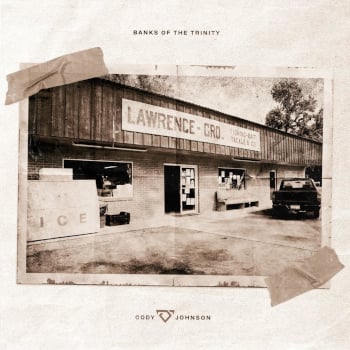
Cody Johnson has never been much of a writer. Yet like one of his heroes George Strait, Johnson has been a hell of a song picker. But so many of the lyrical hooks on this album are so shallow, they set only skin deep. Even the inspiring nature of Cody Johnson’s music is only evident in fleeting moments. The same goes for anything that feels personal to Johnson himself. Instead you get a curious amount of R&B-style love songs, and list lyricism indicative of Bro Country.
Banks of the Trinity is not a bad record by any stretch of the imagination, and there are certainly some strong offerings from the 16 tracks that will likely go on to become iconic in the Cody Johnson catalog, including the title song. But the album is a bit curious in its overall approach and outcome. Some mainstream country performers these days are rising to the “more country” moment and really experiencing a major boost. Others like Lainey Wilson and Jon Pardi who like Cody Johnson started in that “more country” world have strangely decided to start playing it more safe, or branching out.
Where Cody Johnson’s last two albums Human (2021) and Leather (2023) surprised you at multiple turns with the depth of songwriting and the attention to twang, Banks of the Trinity surprises you with the angling for mainstream acceptance from a guy that already received it in the most demonstrative ways with an ACM Entertainer of the Year win. There are some good songs here. But considering it as an album, it feels a bit weak.
Cody Johnson did not win Entertainer of the Year from being the most popular artist in country. He won it for being the most country of the most popular artists, and the most authentic. Will Banks of the Trinity with its perhaps more “accessible” sound to markets adjacent to country take him to the next level? That feels like the hope for it. But it could also illustrate a peak since instead of leading country music in one of its most country eras, Cody is now following other Entertainer of the Year winners like Lainey Wilson and Luke Combs into a more sensible and safe version of the music overall.
6.7/10
Stream/purchase Banks for the Trinity .
Song Reviews:
1. “Horseback”
With different production, this could be a tractor rap song. Sure, this is an energetic and engaging track to suck you into the rest of the record. But the lyrical hook is very weak, simply relying on the difference between “horse back” and “horseback” as opposed to trying to leverage a true double entendre. Cody might have been better served by leading off with the title track, and then trying to make the rest of the album more personal to that theme.
2. “Hello Lonesome”
From a musical standpoint, this is arguably the best track on the album. Super traditional yet immediately infectious, it’s shows off the best qualities of Cody Johnson as a mainstream country traditionalist. The writing isn’t exceptional, but solid. Why we didn’t get more songs like this is curious.
3. “Fool Proof”
One of the best up-tempo songs on the album, the energy and rhythmic infectiousness pull you in, while the prominent fiddle keeps it country enough. You can tell Cody and Brothers Osborne had fun cutting this otherwise cautionary drinking song.
4. “Take Me Back (Leave Me There)”
This song sung by Chris Stapleton would be one of those tracks that he knocks out of the park, and makes you not care that it’s not really country. But it’s Cody Johnson singing. And even though Cody does a good job with it, you still wonder why an R&B-style song like this made it on the album, and what the point of it is beyond being a play for country or AAA radio.
5. “Banks Of The Trinity”
The title track is one of the best of the album, and could have set a better mood and perspective for the work as a more cohesive expression if it wasn’t more isolated in its theme from the rest of the songs, save for the final track on the album “Yippy Ty Oh Hey Hey.” Nonetheless, “Banks Of The Trinity” does give some personal touch to the record, even if it wasn’t written by Johnson himself.
6. “I Want You”
Not a bad song at all, but one that hits on the recurring theme of Cody trying to land a lyrical hook, but just not having any gusto behind it thanks to weak songwriting. The title is actually the hook too, delivered naked, as if it will resonate deeply, which it might with a passive audience. But there’s nothing clever, novel, or unique here. It’s just a nondescript average love song.
7. “I Have”
It takes you seven songs into this album to find one of those inspiring efforts from Cody Johnson like the ones he’s defined his career with. But “I Have” is no “‘Til You Can’t” or “The Fall.” It’s hampered in part by the programmed drums that start it off and emerge at other times in the song, along with an overall more rock than country approach. The song also doesn’t really go to an inspiring place like it wants to. All that said, Cody Johnson really does the best with what he’s dealt with the song, and turns in one of the album’s best performances.
8. “Bible For A Boy (For Jaycee)”
You can tell this was a song written by five songwriters in the way the plot sometimes gets lost, and the verses and rhymes implode on themselves in the end. Though you don’t want to downplay the sentiment, this song just comes across more as pandering than personal, despite the song being named after one of Cody’s kids (yet Cody didn’t contribute any writing to the song).
9. “Kissing A Married Woman”
This is another song where you figure out the plot twist before it reveals itself, and so the whole premise of the song sort of falls flat. It’s like the network TV version of trying to be a clever song, but has to make everything patently obvious to appeal to a wide audience as opposed to trying to hide the plot twist beyond the first chorus. Similar to other songs on the album, “Kissing A Married Woman” feels more pop rock than country, salvaged somewhat by a sometimes present fiddle.
10. “Every Man”
This is what you want from a Cody Johnson song. “Every Man” features good writing that’s still easy to digest, reflective, even a little vulnerable, with steel guitar setting the mood, not rock guitar. It still might not be anything more than a solid album cut, but it’s the kind of material Cody Johnson should lean into, because he does it so well and it’s become his signature. “Every Man” is written by Drew Kennedy, Gordie Sampson, and Travis Meadows.
11. “Motel Miss You”
This is one of the album’s better tracks, a little bit offbeat and silly in a good way, despite the Splitsville storyline. The instrumentation picks up on the playful spirit of the song and plays along. This is probably not a signature song from Cody Johnson or something you’ll hear in concert. But it gives the album some good texture.
12. “Shoot The Bull”
Cody Johnson and Luke Combs try to put together their own version of “The Conversation,” with the two exchanging info about Texas vs. North Carolina. A lot of good energy and attitude is captured in the song, but once again the hook presented in the chorus just isn’t something that lands. So you’re just sitting in a bar shooing the bull? What’s remarkable or interesting about that? The numerous songs with shallow, nondescript lyricism add up on this album.
13. “Cricket On A Hook”
This is a list-tastic Bro-Country song, only rendered with more traditional country instrumentation. Instead of speaking to the trials and tribulation of the day, this song tells the audience to ignore them and just go fishing. Maybe it’s a “fun” song, and there’s nothing wrong with a few of those on a record. But “Cricket On A Hook” feels like one fun song too many, and one that could have offered something more than empty calories.
14. “Time Bomb”
This is Banks of the Trinity‘s second Chris Stapleton-inspired R&B/country soul track. Cody Johnson really knocks it out of the park, and shows off his pipes. But you’re still left wondering what the point of this song is, let alone two of them on this record. Cody Johnson is supposed to be the guy bringing country back. One R&B song gives the album some spice. Two feels self-indulgent, especially when you don’t get more of the type of songs you crave from Johnson.
15. “Thank Somebody Country”
This is one of those songs that gets you pumping your fist, even if it works in the realm of cliche—and despite the title, carries more rock influence than country. Similar to “Bible For a Boy,” there a little signaling and pandering going on here. But this track isn’t as much “bad” as it is as forgettable similar to too many of the tracks on this record.
16. “Yippy Ty Oh Hey Hey”
It shouldn’t be surprising that one of the best-written and most personal songs on the album is the only solo-write, and the only song written by Cody Johnson himself. On this acoustic solo track, Cody goes into his familial history, weaving in references to the Trinity River. This is the theme that needed to be presented earlier in the album, and then attempted to have more songs than just two reference it to create an more cohesive and personal work. Don’t let the rest of the album hold this track back though. It just illustrates what this album could have been with just a little more personal effort from Cody.
– – – – – – – – – – –
If you found this article valuable, consider leaving Saving Country Music A TIP.
June 29, 2026 @ 7:40 am
This is a good review and kind of shadows my own thoughts. He set a high bar with Leather and failed to clear it here. It’s not a bad album, just not one of his best. I might even rank one of his pre-Nashville albums ahead of this.
My favorite tracks are:
2. Hello Lonesome
5. Banks of the Trinity
6. I Want You
8. Bible For a Boy
11. Motel Miss You
13. Cricket On A Hook
16. Yippy Ty Oh Hey Hey
For those of a certain age, you’ll hear a nod to the old Tom Bodett Motel 6 commercials in the first few seconds of Motel Miss You.
The last track is the strongest; just great storytelling with a guitar. I wish Cody would include his songwriting more. The Mustang was a strong co-write on his last album.
June 29, 2026 @ 7:44 am
Disagreed. This feels like a Rotten Tomatoes review where the fans outweigh the critics ( i.e. “Michael). There is a lot to love with this album, and it’s a refreshing change of pace (Horseback being just one example).. This record is just as strong as, and even surpasses in a few places, “Leather.” So what if he’s offering new sounds? He’s not Tucker Whetmore or Bailey Zimmerman – he’s Cody freakin’ Johnson. The songs are great. and my first impression was he leaned even MORE into country on this album. It’s been on repeat since it arrived Friday. I doubt he’s going to have any difficulty during this new era. That CMA EOTY trophy may be next.
June 29, 2026 @ 8:19 am
Well see how the ratios play out here, but I’m not here to convince anyone this is a bad album. Whenever you have a review like this, it’s going to be taken as a negative one, even though it’s not. There’s some good songs here and it’s not a bad album by any stretch. I just expected/wanted more from Cody.
June 29, 2026 @ 8:10 am
I expected worse after reading the review and then listening to a few tracks. From a first listen the thing that turns me off from listening more is how polished and produced many of the tracks sound. A couple of the straight-forward tracks remind me of the AI Suno created songs people post on their own Facebook pages. Of course I’m not saying or implying any of these songs are AI or AI influenced but how can artists like Cody Johnson and Luke Combs differentiate their music from AI? (even though AI stole from these artists) I’m not trying to make this into another AI discussion but it’s hard for me to want to listen to certain songs that sound similar to what AI creates, even though I know Cody Johnson did this style of music prior to SUNO.
This make get some blowback and I’m ok with it….I can hear pitch correction on certain notes and THAT turns me off. I don’t understand why the industry standard demands such absolute perfection to where the vocals have to be tuned in places. Cody Johnson can sing. The computerized perfection is soulless. Many times the instincts of artists and musicians is better than that of the producers and considering how mainstream Country is reverting to more traditional sounding Country I wish the producers would approach this more like the 80’s and 90’s and just forget about 2006-2026.
June 29, 2026 @ 8:21 am
I’ve accused Cody Johnson of using Auto-Tune in the past, and though I wouldn’t necessarily do that here, there is definitely some filtering on the vocals at times that make the voice sound electronic. There is also some stacked vocals where they take three vocal takes and mash them together that can be distracting.
June 29, 2026 @ 8:35 am
When pitch correction takes a sang line and “corrects” it directly on A440 pitch, that is what makes it sound electronic. There isn’t another vocal effect that makes vocals sound electronic. I’d compare it to a really good horn player vs a keyboard moddeling the same sound. I’ve noticed on some other modern songs where the vocals are doubled on the same note and pitch and it sounds awful. It was done briefly on the Morgan Wallen / Ella Langley duet and the line they did it on was awful and I have no idea how that made it onto the record.
June 29, 2026 @ 11:11 am
The altered vocal sound is a huge pet peeve of mine. Assuming Strait is correct and this is entirely a result of Auto- Tune, it’s just unnatural sounding and obnoxious to my ears. Why is every modern country album subjected to this most annoying ” feature”. Does the producer believe no one will notice a robot sounding electronically enhanced voice? Granted its not as obvious as a modern day R&B recording where its over the top, but its marring the vocal quality of the artist noticeably. Cody Johnson has a killer voice and needs nothing added. His vocal is a strength. Too bad modern production is wrecking the end product.
FWIW l like many of the songs on this record. As I repeatedly have said, country music is at core not complex, and while we admire a Kristofferson level song, most songs needn’t be sophisticated intellectual masterpieces. I know that take puts me continually at odds with the SCM Americana super- fans, but that’s the truth of the matter. Go back in time and listen to the bulk of what makes up the country gold standards in the American song catalog and you will begin to understand. Cody Johnson is one of the good ones currently touring. This album isn’t bad aside from the aforementioned over-production and maybe a few generic list songs that could have been left off.
June 29, 2026 @ 11:46 am
This is my own term but I call them “listening songs” vs songs that work in a bar or jukebox settings. Some songs work well when covered by a band, and other songs just don’t because they require the crowd to really listen. It’s ‘The Road Goes On Forever” vs ‘The Fireman’. Great songs can have simple songwriting but a great overall feel to where the crowd doesn’t have to listen very hard.
June 29, 2026 @ 8:12 am
I think this review is almost a bit too harsh. It’s not the deepest record, similar to Zach Top’s country records. If this is what we get when we ask for more country, I’m more than happy with it. I do wish he’d have kept cutting Ian Munsick songs after “Leather” and “Long Live Cowgirls,” because they just work well together.
June 29, 2026 @ 10:54 am
Ironically, the latest Zach Top album has stalled a lot of his momentum. And a big chunk of that is the songwriting quality/content was mostly forgettable on that album.
I get that not every album can or should be Guy Clark level of quality songwriting, but I also think it sets back the push the push for more “traditional sounding” songs/artists at country radio if the level of songwriting can’t rise above Hallmark Greeting Card or 90-inspired ditty.
Is this better than Morgan Wallen or (shudders) FGL? Of course, but I also think it is fair for reviewers to be critical and to question if this level of songwriting is a good enough effort to really bring reinvigorate the neo-traditional (or whatever label you want to give) movement at radio and in pop culture.
June 29, 2026 @ 12:21 pm
Yeah I agree. I think the biggest issue is when the lyrics on the chorus aren’t memorable and well-written. The slick production can cover up mediocre songwriting. Imagine an average bar band doing the songs on this album…It would sound boring. Take the songs ‘I Never Lie’ and ‘Til You Can’t’ or even ‘Drinkin’ Problem’ , they work in bar band settings and they happen to be the best songs from those guys. Country songs at their best are better than the artists singing them. With Cody Johnson he is better than most of his songs.
June 29, 2026 @ 12:35 pm
Ding ding ding. I criticized the songwriting of Zach Top’s last two albums, and I didn’t do so to slam the guy, but because I was worried that without more substance behind the music, his momentum was going to flame out, which we’ve been seeing happen. This is the risk Cody Johnson runs with this album. I’m just not hearing the same type of inspiring moments from his last two records. The songwriting is “just okay,” which I could almost understand if Cody was writing everything. But he’s not. He’s an Entertainer of the Year. He can get his pick of the litter for songs. I’m just surprised they didn’t show a big more patience in pursuing better written material.
June 29, 2026 @ 2:36 pm
Maybe the question we should be asking is, “If these songs are what Cody believes were the cream of the crop, what songs did he say no to?”
Of course we’ll never know what obligations he has with Warner Records to put out a new album. Leather was Nov 3, 2023 with the Deluxe Edition on Nov 1, 2024.
As I can’t imagine the suits were interested in one of their cash cows going out for a 3rd summer of touring on largely the same catalog, Banks of the Trinity is what Cody came up with in a relatively amount short time.
June 29, 2026 @ 4:55 pm
“Banks of the Trinity is what Cody came up with in a relatively amount short time.”
There is no relatively short time. Before an artist even releases a record, their team, producer, label, management, etc. is looking and listening for songs to put on the next record.
June 29, 2026 @ 5:30 pm
Yeah, there should be whole armies writing for Cody Johnson, and there probably is. It’s just they only work with selected publishing houses. Any song on Addison Johnson’s new album would have been an improvement over any song on Cody’s.
June 29, 2026 @ 8:12 am
I am very disappointed with this album, which is average at best. There isn’t a single truly outstanding idea, composition, or arrangement. “Solid” is perhaps the most polite way to describe the album. Hopefully, his next album will be better.
June 29, 2026 @ 8:23 am
This is my issue. There’s nothing necessarily wrong, but there’s nothing really right. If you’re not going to write your own songs, you can come up with some better material than this, and do a better job representing it in the studio. To Cody Johnson’s credit, I think all of his performances are top notch. But the songs just don’t go anywhere.
June 29, 2026 @ 1:22 pm
At least there’s nothing hip-hop, disco or EDM influenced on it. I am hearing so many songs with EDM influences on The Highway and mainstream radio that I’m fearing it may be the Nashville wave that washed over the nascent traditionalist uprising.
June 29, 2026 @ 1:47 pm
Mainstream country radio and The Highway are in no way barometers for what is popular or successful in country music. They are niche markets getting more niche by the minute trying to microserve the decreasing numbers of passive listeners who channel serf between stations and don’t want to hear distinct differences between the country, rock, pop, and hip-hop channels. It’s a dying medium. iHeartRadio just laid of yet another huge batch of employees.
June 29, 2026 @ 2:12 pm
What you write about mainstream country radio is very interesting. It would be great if you could write a more detailed article about it.
June 29, 2026 @ 8:22 am
That’s a very fair review of the album.
For me the biggest misses were:
– Cricket on a Hook…I’d be shocked if CoJo was anything less than the 40th artist to be pitched this song. It was probably meant to show up as Track 27 on a Morgan Wallen album but somebody forgot to press record that day and nobody could be bothered to re-cut it.
– Take Me Back and Time Bomb…this is a classic case of somebody convincing Cody that, because he’s got a big lead in the trad country race that he should “branch out” and maybe take a few laps in Chris Stapleton’s car too because variety is always better except when its not. A darker version of me would call this CoJo’s “just the tip – Chris Gaines edition” moment. The songs arent anywhere near the worst on the album for me but they’re just really out of place.
I was a bit disappointed two songs he released in the last few months didnt make the album. Blame Texas seems destined to make the CoJo live show rota (maybe it still will) and Footlights (a Merle Haggard cover) would’ve been a great fit for what’s supposed to be a nostalgic, autobiographical album.
June 29, 2026 @ 8:27 am
I’d rate this closer to a 7.5. Other than the title track and the Combs and Osbornes collabs, it’s strong work and highlights Cody’s range and versatility. I’ll never complain about soul-influenced country tracks, but that’s my personal bias showing. And criticizing a song with quality melody and production like “Kissing a Married Woman” for not breaking new ground lyrically seems a bit unfair.
Personal favorites:
Hello Lonesome
Banks of the Trinity
Kissing a Married Woman
Motel Miss You
Time Bomb
Yippy Ty Oh Hey Hey
June 30, 2026 @ 2:58 am
…since you are pointing it out, howard – “kissing a married woman” shows cody johnson at his best: an apple polisher never missing an opportunity. a sugar coated cereal box tiger for us frosted flakes lovers.
June 29, 2026 @ 8:35 am
I gave it a quick bump through, and I thought this is just more boring “vanilla cowboy” music that would never make my rotation. I know I always say it, and I will again. 16 songs is too many when 30 albums come out a week. I’m not going to sift through em to find 8 good ones, there’s just too much better music being released. God bless this man if he can play arenas. Jinks > Johnson.
June 29, 2026 @ 8:43 am
It is different to Leather which I really enjoyed. It is good that it is a bit different. It is early days but I am enjoying this album and for me it gets better with each listen. Perhaps a little less country than his previous releases but still a lot more country than most of the major releases. Whilst I would not rate it as high as Leather (yet), it is a great listen and maybe more of a 7.5 for me and my rating might well increase as I listen to it more. It is a good album.
June 29, 2026 @ 11:22 am
I hope someone can name the perfect album! I’ve been listening to country music for 60 years. Out of every album, there are only one or two songs that stand out. If you listen to Willie’s Roadhouse, they only play the hits of many artists. Of all the country that has been sung over the last 100 years, all artists only have a few #1s. So like what you like and quit complaining!
June 29, 2026 @ 12:37 pm
Well this is the reason I offered song reviews for this particular album, to hopefully guide people to the song on this album they might like. A lot of filler to sift through on this one.
June 29, 2026 @ 1:19 pm
Not exactly country, but The Eagles Hotel California is about as close to perfect as you’re gonna get.
June 29, 2026 @ 4:09 pm
To be honest Silver Z, I never liked the song “Hotel California” from the time it came out.
June 29, 2026 @ 5:24 pm
And among Eagles albums, their self-titled debut, On the Border and Desperado offer much more for country fans than Hotel California. Even One of These Nights has the excellent Ol’ 55, Lyin’ Eyes and Hollywood Waltz.
June 29, 2026 @ 5:02 pm
Rodney Crowell’s Fates Right Hand, Steve Earle’s The Mountain, Willie Nelson’s Spirit, Jon Randall’s Walking Among The Living, and Jason Isbell’s Southeastern are five albums off the top of my head. If I looked in my collection, I’m sure the list would be really long.
July 1, 2026 @ 2:29 pm
Out of the nearly 1,500 CDs I have one my collection the closest to a perfect album for me is Here To Jackson by Harris and Ryden. Fortunate got to see one of their two reunion shows they did a little over a month ago in Midland.
June 29, 2026 @ 1:13 pm
Pretty much exactly my thoughts. A few good songs that are drowned out by painfully average songwriting in between them. It’s funny that Luke Combs is featured on this because I had similar thoughts about his latest album. It looks like Luke’s bet on safer, radio-friendly songs has worked out so far on the charts, so maybe it will for Cody too.
June 29, 2026 @ 1:44 pm
I’ve come to the Cody Johnson party late. I’ve never really been a fan of the few radio singles I’ve heard of his, so never checked out any of his other albums. Having nothing to compare this album too, seemed like a mixed bag. I ended up downloading a few tracks.
2. Hello Lonesome
5. Banks of the Trinity
11. Motel Miss You
13. Cricket On A Hook
The rest of the album didn’t do it for me, and accouple songs just felt out of place on the album.
June 30, 2026 @ 2:36 am
…”…crank up a little hank and shoot the pool” – in case there’s no bud light or dog at hand in certain circles?
June 30, 2026 @ 6:45 am
I think Cody would be well served if he released two albums a year with 9 songs a piece. One of them could be actual country, and the other could be whatever it is he’s doing on some of the stuff here. I want to like Cody, but every album presents some good to great songs and then stuff you have to endure.
June 30, 2026 @ 5:01 pm
The title song sounds like an AI chatbot wrote the lyrics. Hard pass on this.
June 30, 2026 @ 7:56 pm
Man, I used to really love Cody Johnson when he wrote the songs. I still crank those albums. They felt authentic.
We sugarcoat around it, but he sold out. It worked. He’s rich now. I’m not even hating on it. I’m sure he’s laughing all the way to the bank.
All the stuff about “picking out good songs is a skill” and “he sings the best song, wherever it comes from” is PR fluff.
July 2, 2026 @ 6:40 am
That’s right. This is the reason I prefer to listen to Texas country/Red Dirt bands or singers who stay in TX (well, or OK, KS, LA, etc.). When they go to Nashville, I don’t know what happens but the sound changes so much, even the ones who keep a more traditional sound, maybe it’s me being too suspicious of Nashville, but it feels like they drown the good instrumentation and focus more on the vocals, I don’t really know what happens. It’s not the same. I love Cody Johnson, I respect him, mainly because I’m from Spain and I’m constantly surrounded by shitty music, so contemporary country sounds like heaven, but I admit he’s not my favorite. His first albums are really good. To be fair, I don’t think he wanted to be a pure traditionalist because, like many other artists from the TX scene, he always incorporated modern influences. I’m ok with that as long as those influences don’t become the main skeleton of the song, and so far I think he’s kept a sound that I can tolerate. I always mention him to friends and people here in Spain as an example of modern country music because to a Spanish audience, he’s a traditional artist through and through. Considering my background, I lack the capacity to tell if a guy is from Appalachia, Oklahoma, or Pennsylvania by listening to their music, but I can tell when independent artists go to Nashville and adopt a broader sound, it’s weird, hope it makes sense and I’m not causing any diplomatic crisis two days before July 4th.
July 1, 2026 @ 10:07 am
I knew this album would disappoint after hearing his comments on a radio’s Nashville Minute segment.
July 1, 2026 @ 3:17 pm
This album is so much better than the snoozefest that Leather is. Cricket on a Hook is a great country music song. Sorry every country singer cant be a junkie singing about how awful their life is.
July 1, 2026 @ 3:23 pm
“Sorry every country singer cant be a junkie singing about how awful their life is.”
Not sure anyone ever said otherwise, but okay.
July 9, 2026 @ 12:40 pm
I am so proud that Cody has achieved so much success . I worked with Cody’s dad at the prison , then Cody at the same unit . I NEVER imagined all this stardom . I’m proud that Trent Willmon is behind him . Hopefully he also is reaping the benefits .I don’t know Trent personally but I know his mom . Good people … Allof them.
July 21, 2026 @ 11:18 am
From the moment I heard “Hello Lonesome,” I thought Cody had a chance to push radio boundaries. It feels like something Zach Top would’ve done had he heard it – but Cody’s vocal delivery is probably tougher. Also, the production is a cool taste of old Bakersfield. Hell, even the hook is a nod to Buck Owens. Acts like Jake Worthington, Drake Milligan, or even Emily Ann Roberts, are recording stuff like this and it’s awesome, but Cody is the radio darling right now. Missed opportunity to swing country radio in that direction.
October 24, 2026 @ 12:22 pm
“Hello Lonesome” is a rip off. The chorus/hook was stolen from Casper McWade’s “Hello Lonesome”. Then the verses are just the typical Bs filler.