

“First Lady of the Mandolin” Donna Stoneman Has Died
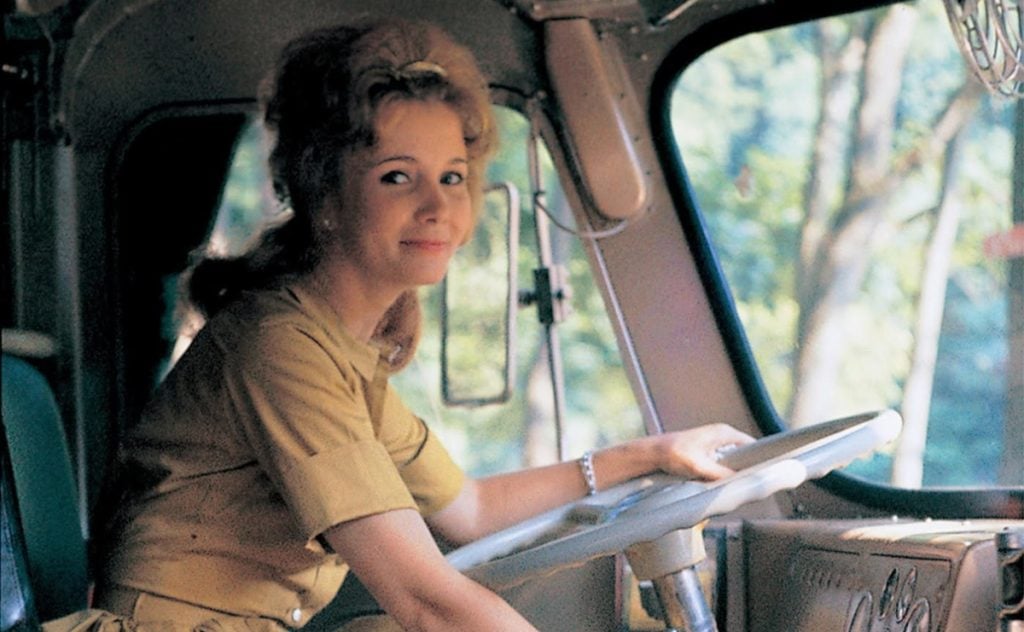
The First Lady of the Mandolin has died. And with her passing, the story of one of the most important families in country music history comes to a close. Ernest “Pop” Stoneman’s success predated the formation of country music and 1927’s “Big Bang of Country Music,” also known as The Bristol Sessions. Along with his family, they would create the foundations of country music, and contribute greatly to it for many decades. Donna Stoneman was the last of that lineage. She has passed away at the age of 92.
Donna wasn’t just any mandolin player. She was a show stealer from the mandolin position, not just from her world-class playing that had her fellow mandolinists from across the world of bluegrass singing her praises, but the energy and enthusiasm she brought to the instrument, dancing around on stage, featuring the mandolin as a lead instrument, and leading the charge as a woman playing in what was very much a male-dominated discipline. Her other nickname was “Little Dancin’ Donna” with the way she bounced around the stage.
Donna’s playing earned her rare praise from fellow mandolin player and Father of Bluegrass Bill Monroe, as well as Jethro Burns from Homer & Jethro. She also contributed mandolin to the pioneering bluegrass album of Rose Maddox in 1962, and was a primary member of the Blue Grass Champs, which was an extension of the Stoneman Family.
Donna Stoneman was born on February 7th, 1934 in Alexandria, Virginia to Ernest V. “Pop” Stoneman and Hattie Frost Stoneman. She was one of 23 children from the musical family. In 1924, Ernest “Pop” Stoneman had a hit with “The Sinking of the Titanic”—three years before The Bristol Sessions. He was set to become one of the first country music stars, but then the Great Depression hit, and Pop already had over a dozen mouths to feed.
Donna Stoneman grew up in poverty conditions in Virginia and Maryland. Her early childhood was spent in a one-room cottage with the rest of her large family. She left formal education after the 7th grade, but learned and performed music from a very early age. At first she wanted to be a banjo player like her sister Roni, but due to the instrument’s weight, decided to pick up the mandolin. She obtained a Gibson F-5 at the age of 18, and playing mandolin became her life’s calling.
Donna and her banjo-playing sister Ronni joined the family band around the same time, and right before they won a contest on the televised Arthur Godfrey’s Talent Scouts show in 1956 as the Blue Grass Champs. The band quickly became regulars on TV shows of the era. 1962 saw their debut on the Grand Ole Opry, and soon The Stonemans became known as one of the most important family bands in country music. They officially moved from Washington D.C. to Nashville in 1966, even hosted their own series called Those Stonemans between 1966 and 1968. They also won the CMA’s Vocal Group of the Year award in 1967.
Donna Stoneman was considered a star at the time, or as much as you could be considered one in bluegrass. But when she started experiencing frustrations in the country music industry, as well personal challenges including the dissolving of her marriage in the early 1970s, she went through a personal transformation, and devoted herself almost strictly to religious and Gospel music. She became an ordained minister in 1982, and traveled internationally, as well as worked on Native American reservations and in prisons.
Later in the 1980s, Donna Stoneman would rejoin the reunions of the Stoneman Family Band in various incarnations, and kept a long-time partnership with sister Roni, releasing albums as recently as 2020. When Roni passed away in 2024, it left Donna as the final link to the family’s vital musical legacy. Donna’s death truly marks the end of an era, and the passing of a living link to the very formation of what we call “country music” today.
Donna Stoneman wasn’t just a mandolin player or a family band member. She brought a passion to the music that was conferred to audiences, and made both the mandolin, and elemental string and bluegrass music accessible to many. Donna Stoneman was a spark that is responsible for the raging fire that has taken bluegrass to the area level, across continents, and kept it a very vital and vibrant form music musical expression well into the digital age, despite all odds.
– – – – – – – – – – –
If you found this article valuable, consider leaving Saving Country Music A TIP.
June 30, 2026 @ 5:16 am
Trigger, you have a gift for writing thoughtful and informative obituaries. Thank you for this article. I know these things are inevitable, but it’s still very sad when the old guard passes on.
June 30, 2026 @ 8:30 am
The Stonemans are bedrock to Country and Bluegrass music. They have a fascinating story and it’s well worth going down the rabbit hole and discovering. So much talent and virtuosity to be found. Roni could shred a banjo as well as anybody. I was checking out some of her Hee Haw clips and she held her own beside Roy Clark and Stringbean and Grandpa Jones and Kenny Price. Interestingly she played Scruggs style banjo while Jones and Stringbean were all about clawhammer. Donna was also a killer picker on that mando and she no doubt inspired some great pickers along the way. Im wondering if she’s a hero to Sierra Hull.
I read that there were to be found, 7 different bands composed of various members of the Stoneman family. Apparently all the 13 kids of Pops were players. He had 23 kids but 10 of them did not survive childhood. Going through the Great Depression was brutal on them. Glad you wrote this Kyle, they’ve been on my radar for years but clearly more people need to know who they were. I think their legacy needs rekindled.
June 30, 2026 @ 1:52 pm
Nice tribute— I know you know about the music, so it was good to see from you. That was rough reading about the ten kids who didn’t survive childhood.
Thanks, Kevin
Tom
June 30, 2026 @ 9:20 am
i’m getting started on mando and that clip is mind blowing! R.I.P.
July 2, 2026 @ 10:57 am
donna & roni’s brother scotty taught them both to play their instruments like men and not in a “ladylike” position common at the time. theres a nice video on youtube of all three stoneman sisters being interviewed https://www.youtube.com/watch?v=3H2PyUk7e4E. dunno if its really true or not but supposedly after watching donna play bill monroe conceded she was a better player.
July 5, 2026 @ 12:31 pm
Trigger, I know that obituaries of this kind don’t generate as many views or comments as some of your other articles, but we appreciate the time and thought that you invest in them, and they’re one of the reasons why SCM is my first and often last destination for country music news.
July 10, 2026 @ 9:37 am
I second the motion. Looking backwards in fact expands our horizons.