

Joe Nichols Reveals How Nashville Is Using New AI Tools
“I’ve heard artists say this. ‘I don’t use any AI. I don’t use any Suno for my stuff.’ Bull crap. I’m telling you, I’ve seen singers out there give interviews where they’re like ‘I don’t do that. I don’t do that.’ I’m telling you for a fact, LIE. They’re lying through their teeth. Maybe at some point they said, ‘I’m only considering THIS to be AI or Suno or whatever. But yeah, they do that. Whether they know it or not is sometimes another story. But they do.”
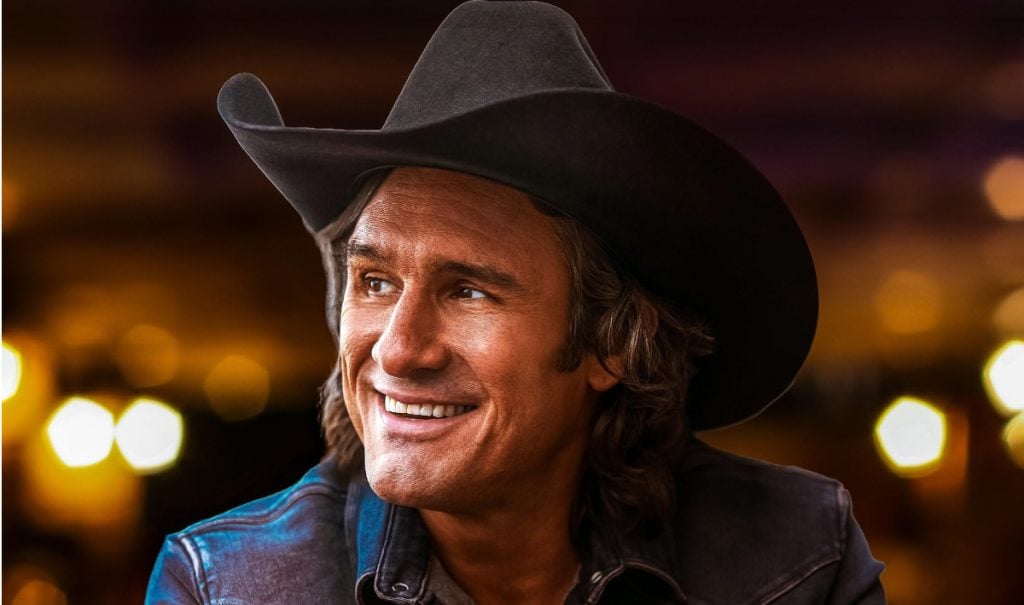
These were the recent revelations from country artist Joe Nichols talking to Evan Paul at Taste of Country where the country traditionalist also revealed how Suno played a role in his new song “Say La V.”
According to Nichols, “Say La V” writers Brett Warren, Jason Sellers, and Lance Miller did not use AI to write the song itself, but did put it into Suno to spit out a demo they could then send to Nichols and other prospective performers while pitching them to record it.
“They pulled the song together as a joke,” Nichols explains. “Then they came up with a catchy melody. And then they put it through one of those AI-generating, ‘What would this song sound like if it had these prompts?’ And it came out really super catchy.”
They then sent the Suno demo to Nichols who at the time was the chaperone on a Washington D.C. trip with one of his kids, but listened to it, and sent it back saying, “Too pop!” But he kept humming the melody, and as time went on, he had a change of heart and decided to record and release a more “country” version of the song. “Say La V” came on on July 17th. And frankly, it still sounds pretty pop.
The revelations in the interview have some worried just how much AI assistance is creeping into the songwriting and production of country music, especially if a more traditional and older artist such as Joe Nichols is working with it, let alone the 20-somethings looking to score their first hit. Nichols goes on to reveal,
“I’ve written some things that I put into Suno or one of those to see if I’m looking at it the way other people would look at it, the algorithm would look at it. Do I hear this song as a bluesy Gospel song, or does it come out as a bluegrass song, and a different vibe completely? So it is helpful to tell you if you’re on the right track.”
Nichols then clarifies, “I don’t go any further with that with Suno. I don’t want it building anything for me. I want it to tell me where my blind spots are, what I’m not paying attention to … the singers on Suno are amazing. I don’t use those because the singers from Suno are the best singers in the world combined as one singer. So it’s impossible to do something as good as Suno.”
But there are still some moral dilemmas when dealing with Suno in the music creation process, even if it’s not being used to create the finished song itself. First, most all record labels—mainstream and independent—have pending lawsuits against Suno for ripping off their copyrights, and the copyrights of artists like Joe Nichols. Suno uses the existing catalog of recorded music to compose its prompted songs in a matter of seconds, and does so royalty free. So as record labels sue Suno, the artists signed to them are using and supporting the tool.
The second dilemma is if a song was written by humans, but used a Suno demo to either flesh out the writing or influence the production, does this need to be disclosed as “AI-assisted” under the recently universally proposed AI labeling, even if Suno is not writing or populating the music of the song in full?
Also, along with not considering the slippery slope of people who rely on copyrights to protect their intellectual property like songwriters and performers, there are other downstream effects to consider. The building of data centers has become an almost universally-repudiated practice on a local level. Those data centers are being built in part to build out the infrastructure to support songwriters using Suno to create demos, and deliver them promptly.
On Tuesday (7-20), streaming service Deezer—which has been in the lead detecting and tracking AI-generated content—said that for the first time, the amount of AI songs uploaded to the format was over 50%. Even though many of these songs never go on to be heard or become popular, it’s still a massive volume, equating to about 91,000 tracks per day. The company also reveals that often, the majority of streams these tracks receive are fraudulent, up to 85%.
Later in the conversation with Joe Nichols, Evan Paul of Tastes of Country asks him, “But what’s the difference between Auto-tune though, and singing it and having it Suno your voice?”
Joe Nichols responds, “Ultimately, I don’t view it much differently because Auto-tune saves time. But here’s the thing about Auto-tune that really drives me crazy. We have developed a generation of singers that sing like Auto-Tune. The nasally pitch and pinch in their vocal.”
Auto-tune was never originally meant to pitch correct an entire performance, either live or in the studio. The point of it was when you had a singer that turned in an incredible performance, but perhaps a note or two was flat. Auto-tune allows you to save the performance, but correct the pitch on those particular notes.
Some have equated Auto-Tune to AI, but it’s a completely different tool. Auto-Tune can’t create a vocal performance for an entire song in seconds like Suno, it can only correct the pitch of an existing one. But similar to how some artists might sing to mimic Auto-tune, the use of AI could also influence how human creators write and perform songs, even if they don’t use the technology directly.
Joe Nichols continues on to say, “Ultimately, if you’re using electronic help, you’re using something else that’s not organic art. But to me, something that’s AI—something that’s not real, people hear. It’s inauthentic. This is why live music is our last frontier. And it drives me insane when I see other artists on these festivals that I play on, and I hear them out front and they sound amazing. I’ve never heard this person sing like this in years. They sound so good. And their crew guys are like, ‘Yeah, of course we’re ‘tuning it.'”
Nichols continues, “[Live is] the one time that you can be honest and authentic, this does not save time. This just makes you look like you’re perfect, and that’s bull crap. If you’re not good enough to come out here and do it 90 minutes, then you’re not good enough. Get better. I can’t stand that. I don’t do that, and there’s a lot of artist that don’t. But there’s a lot of artists that do.”
But Auto-Tune started as a time saver in the studio. Then it became a crutch for certain performers who can’t sing to create an entire career from. A similar slippery slope is presenting itself for AI. Today, songwriters can use it to build out demos, or test songs for appeal “in the algorithm.” Tomorrow, it could be full integration with the software to replace the need for co-writers, or musicians, and ultimately, any human as AI reveals it can do everything in the music making process, and not complain about copyrights or coffee breaks as music creeps toward full digital integration, leaving the human element that’s so integral to music behind.
– – – – – – –
If you found this article valuable, consider leaving Saving Country Music A TIP.
July 21, 2026 @ 8:29 am
Thanks for this article, Kyle. We appreciate you keeping up on all the latest craziness.
July 21, 2026 @ 8:32 am
I appreciate his candor, but it ensures that I’ll never listen to “Say La V” or any new song he ever puts out.
July 21, 2026 @ 10:25 am
Frankly, “Say La V” sounds AI. I appreciate the candor and honesty from Joe Nichols. He’s being more “real” in this interview than most. But I’ve always wanted him to be more principled, and more of a traditionalist than he is throughout his career. He’s right there, but ultimately will let you down at some point. I won’t be writing off his music in total, though.
July 21, 2026 @ 1:20 pm
I’m not surprised at Nichols’ stance.
He fully admitted that he sang radio dreck in exchange for album cuts.
He is the Missouri Compromise of country singers.
July 22, 2026 @ 5:57 am
He and Jon Pardi are pretty much traveling the same road.
July 22, 2026 @ 11:30 am
That is the first time I have seen or heard the Missouri Compromise used in describing a person and it’s amazing! Thank you!
July 21, 2026 @ 9:01 am
Compromise and bartering are the first trips down the slippery slope.
July 21, 2026 @ 9:04 am
Unfortunately, within a couple years this won’t even be a topic anymore. It will just be the way it is. No one will ask, “Is that AI?” – it just won’t matter to enough people to be a thing people wonder about. I’m sure AI labels will be a thing for a year at best before fading away with a global “Why bother?”
Auto-Tune still comes up once in a while, but rarely – so few people give a shit. Drum machines? Again – so few people care anymore. MIDI – never.
The industry will gladly let it take over completely. No artists, writers, producers to pay? Sign them up today! EDM has already prepared the world for “live music” meaning, stare at a laptop on a table while lights flash. People will probably pay $100s to go watch their favorite AI band live on a screen in an amphitheater.
Good times.
July 21, 2026 @ 9:44 am
Believing that people will have money to spend on concerts a few years from now is a pretty big assumption. AI isn’t confined solely to the music industry and the music industry will be one of the first to implode once the job losses really start hitting.
July 21, 2026 @ 10:02 am
People will. The fear mongering is hilarious.
Sports leagues have burgeoning attendance. Simply put, most concerts are way overpriced with ticket fees and fans are realizing most singers are not worth the squeeze.
July 21, 2026 @ 12:49 pm
Is it fear mongering or is it just using what AI companies (and their boosters) say is gonna happen?
I see this retort a lot that the “fear of AI is overblown”. And I agree – mostly because I don’t think the technology is all that good NOR do I think the companies pushing it (OpenAI, Anthropic) have a prayer when the money train shuts off to stay afloat without raising prices so high it kills demand for their product.
But I do think it is fair to say “how is anyone going to consume if AI is so good it kills all the jobs”. That is what Big Tech has been saying for 2 years now, only stopping that message when they realized how much people hated it and the tech they are pushing.
July 21, 2026 @ 1:18 pm
Fear mongering about thinking people won’t have money for concerts.
July 21, 2026 @ 2:25 pm
CK,
Sports leagues have burgeoning attendance because people cling to the tribe and to the circus when times get tough. Sports exploits the ingrained human need to be part of a unified group. It also provides the entertainment that low-IQ people get comfort from.
As things get worse, I expect sports to become more popular, and for music to become less meaningful than it already is, which is hard to imagine given what we’ve seen over the last 2 decades.
If you have an argument for how or why things won’t keep getting worse, I’m all ears.
July 21, 2026 @ 3:50 pm
Honky,
People will still have money to spend on concerts, if they so choose. I disagree with Adam S that the money won’t be there.
With Gen Z and some Millennials, they view cost and money in an interesting way. A coworker was lamenting that the younger graduates complained about the cost of the annual football golf outing. It was easily affordable. I told him that for younger folks the cost only matters if the event or item is something they are lukewarm about. Otherwise, swipe the credit card. The younger alumni simply weren’t excited about a golf outing like the 1970s and 1980s generations. So the cost became their excuse.
I had another former coworker who maintained an apartment in town, then moved in with her boyfriend who lived 90 minutes away. As an assistant coach, she had to commute everyday. She daily drank $6 Starbucks drinks. Then, she complained about not having any money. I suggested that cutting down on Starbucks drinks. She looked at me, as if I shot her dog. For her, that drink was a necessity, not a luxury.
I agree that sports are tribal events. Music can become tribal as well and those singers, like Swift, who can create that connection will survive. The biggest issue for concerts are the ridiculous prices and the consumer is finally wising up.
July 22, 2026 @ 6:05 am
I’m asking why you believe that. The cost of living is rising faster than wages. I presume you believe that will stop soon. Why do you believe that?
In your response, you explained how people allocate money towards what they enjoy the most, but that’s always been true. That doesn’t explain how or why the cost of living will get more in line with wages any time soon.
July 21, 2026 @ 10:18 am
There are absolutely genre’s that are going to get swallowed up by AI “slop”. First (ironically) will be EDM – do people care enough about Diplo or Steve Aioki to care if a human being is DJ’ing or if a bot is? I’m skeptical folks who listen to EDM care enough about the former to avoid the latter.
Mainstream “pop” is also likely screwed to some degree.
But I do think you are overstating peoples acceptance of AI. People *HATE* it. AI/Data Centers are the one thing uniting lefties and righties across the country right now. People bitch all day about AI slop overtaking YouTube and Facebook. People bitch all day about AI being shoved into Chrome, Outlook, etc. Young people publicly humiliate anyone who brings up AI at commencement speeches.
There are always gonna be people who are like “you don’t get it man, this is the future!” and embrace it. But that is not the norm. And I don’t see that changing anytime soon. AI is a symptom of a broader societal pushback against Big Tech that is not going away.
Blue Collar folks are pissed off at Big Tech and AI for raising their utility prices. White Collar folks are pissed off at it threatening their livelihoods.
I don’t see those same folks being like “oh, let me pay $1k to go see an AI bot spit out crappy Country Music”.
July 21, 2026 @ 12:55 pm
Mainstream Pop is at the point where only Nepo Babies can find fame.
I still see a lot of people around me at my job and outside who love AI and believe it to be the future. From where I stand I see more people on the Republican side who are unwilling to understand the social and political issues of 2026 for what they are and are choosing to regress into Right V Left arguments of 2010.
I partly think the AI datacenter build outs are both prop up the AI stock market until the whales exit the market and leave everyone else holding the bag, and as a trojan horse for something else like governement takeover of water rights and implementing an American ‘Stasi’ to prop up the GDP with a mass survelliance structure.
July 21, 2026 @ 10:27 am
I respectfully disagree with this assessment. My prediction was that by Q2 of 2026, AI would have virtually completely taken over. But the biggest obstacle has not been the technology, the industry, regulation, or lawsuits. It’s been the public. Sure, some in the public don’t care. But most do. And many still do care about Auto-Tune, and in country music, drum machines.
It’s the public backlash that is saving us from the AI revolution at the moment, not fueling it.
July 21, 2026 @ 12:25 pm
I never saw it coming that soon. The hype of what AI can do has always been 3 years ahead of what it can actually do.
As of now – any music, art, code done with AI that actually comes out “good” is being done by a musician, artist, or programmer. Most people who hate it, hate it because they can’t make anything good with it. That’ll change. Once every rando has the ability to make their own music that actually sounds good – that hate will die off fast.
There’s never been tech that almost everyone didn’t hate in the beginning.
The next 2 years is going to change more than the last 20 – much for the worse – but that’s for money to decide – not people…
July 21, 2026 @ 12:38 pm
I 1000% disagree with your take “there’s never been tech that almost everyone didn’t hate in the beginning”.
People were not packing City Halls and County Courthouse Boardrooms to protest email. They were not creating slang like “clanker” to the first people who owned an iPhone.
While there have always been holdouts in society, the vast majority of people embraced new technologies as they came. In part because it was clear how they made lives easier for folks. The iPhone put a computer in your pocket. The web enabled you to connect and consume content with others outside your physical location.
What’s the sales pitch with LLM’s/AI? It will take your job and raise your utility prices so you can’t afford the home you already can barely afford all while losing your job. All of that while being run by either some of the worst people on the planet (Sam Altman) or the worst companies on the planet (Google, Microsoft, etc.).
Cool.
July 21, 2026 @ 10:31 am
I’m holding out hope. The Z’s are especially rebellious against AI but more from a fear of having a job standpoint. If they can take the charge to the arts then there’s hope. Its the older working generations (X & M) that are feeling like we have to embrace it in our business lives to keep up……which is a natural progression of a technological advancement…..no different than the internet or robotics. Aside from nature, the arts is what makes the human condition authentic or inauthentic and that must be preserved or the line of man vs. machine disappears.
July 21, 2026 @ 10:53 am
There is a big generation divide here. Folks were making a big stink about Mr. Lebowski’s comments a few weeks back on the mullet’s podcast. The Charlie Daniels Estate is out there pushing AI videos like they’re cool. Folks just need to get informed how unpopular this stuff is, and at least weigh that into their decision making.
July 21, 2026 @ 12:41 pm
I’m just gonna call it like I see it. The people I see consuming this AI slop the most are boomers. They are the ones posting or re-posting AI slop videos or pictures on Facebook and the like. Gen X is also in there a bit, but I’m not surprised that the Charlie Daniels Estate is pushing AI videos when “Granpappy John” is happily eating up the AI slop that has infested his Facebook timeline.
July 21, 2026 @ 1:10 pm
Hey, boomer here Mike. Sorry we’re still alive.
July 21, 2026 @ 1:14 pm
They wrecked the country in the 60s and they are at it.
July 21, 2026 @ 1:41 pm
Got nothing against Boomers except those in D.C. who are on deaths door and won’t turn over the keys to Gen X or Millenials. But anecdotally they do seem to consume more AI slop than other generations. The “You Won’t Believe What Clint Eastwood Said” AI slop on YouTube ain’t aimed at younger generations in my eyes. Same for the Dolly Parton slop.
July 21, 2026 @ 11:30 pm
Boomer here who agrees that my generation is sharing way too much AI slop. I’m growing very tired of having to tell people my age that the “heartwarming” story they shared is totally bogus. I don’t care who thinks I’m mean. People, use your brain while you still have one.
July 22, 2026 @ 5:10 am
YAY! for Boomers on SCM!!! We shall rise up and not be cast aside….LOL I agree with Linda. If I see one more bullshit “feel good” story about a poor dog nobody wanted to adopt, I’m going to vomit. I’m sick of all the AI YouTube channels as well.
July 22, 2026 @ 11:34 am
I wish I could delete the above misplaced comment. Sorry. 😂
July 21, 2026 @ 10:55 am
I think in this case the comparison to MIDI is very apt. If somebody threw together a demo over some MIDI tracks, I wouldn’t expect that to be disclosed in the liner notes of the final single. Likewise, human performers on a demo don’t get credited in the final cut. It’s a demo.
July 21, 2026 @ 9:11 am
Yeah I dont think so Sam Cody.
I think it will be a topic. a big one.
July 21, 2026 @ 9:44 am
Music row songwriters have to be doing this or at least song ideas and half their lyrics are ran through a.i……songs are so repetitive every body trying to be Morgan Wallen and play party backwards baseball hat country
July 21, 2026 @ 10:08 am
There is little difference between using AI and having ten co-writers stacking cliches.
July 21, 2026 @ 10:26 am
Empty whiskey bottles, coffee cups and cigarette butts.
July 22, 2026 @ 12:37 pm
Today it’s empty cans of energy drinks, half empty boxes of greek yoghurt, empty boxes of antidepressants and probably bits of eco-carrots on the floor.
Explains the quality of the songs.
July 21, 2026 @ 10:29 am
There is a huge difference between AI and everything else. And people constantly comparing it to other things are playing a very dangerous game by trivializing the effects this technology is already having. There’s just nothing that compares being able to put a two sentence prompt into Suno and spitting out a completed song in seconds.
July 21, 2026 @ 11:54 am
Can AI go on hook?
July 21, 2026 @ 8:10 pm
No. The Hook is an anti-AI space, and we specifically built it to be an answer to the disruptions AI is creating.
July 21, 2026 @ 1:15 pm
Correct.
Just for fun, I tried Suno to see the situation.
You can generate a full song in any genre.
July 22, 2026 @ 12:54 pm
Are those AI songs really any worse than the majority of the non-AI songs out there today?
July 22, 2026 @ 1:55 pm
Whiskey, coffee and cigarettes would help, in my opinion.
July 21, 2026 @ 10:26 am
I don’t know Joe Nichols music, but that songs sound like a suno prompt to make a danceable Jimmy Buffet song… and I love Jimmy Buffet
July 21, 2026 @ 10:31 am
Was wondering if you were going to write about this. Also saw at a Keith Urban performance the other day he said “Fuck AI”. Wonder how much of a divide there really is among country artists and the usage of AI.
July 21, 2026 @ 10:50 am
AI can make better music has than Keith Urban has been making for 15 years, so him saying that means absolutely nothing.
July 21, 2026 @ 2:11 pm
Bad music by a human > bad music by AI
July 21, 2026 @ 3:44 pm
I very much disagree. A human being knows better than to release Ripcord or Fuse or any of the other bullshit Keith has released after Defying Gravity, which was his last tolerable album. A machine does not.
July 21, 2026 @ 10:47 am
“The building of data centers has become an almost universally-repudiated practice on a local level.”
I fear this is like universal repudiation of factories in the 1820s.
If AI really is going to change the world, it’s going to do it with or without your permission. Let’s not let this one leave us behind. 99% of the objections raised (water! electricity! noise!) are just engineering problems.
July 21, 2026 @ 10:56 am
” 99% of the objections raised (water! electricity! noise!) are just engineering problems.”
Sure, but solve them. Don’t act like the onus is on the public to put up with it because AI is going to cure Cancer (which it likely won’t.) There’s also a very fair concern were absconding with land and resources for something that 10 years from now, won’t need as much. Just like factories, you have overbuild, then you have these husks of industrialization taking use useful land and becoming blight for communities.
July 22, 2026 @ 12:18 pm
Are we going to get a chance to solve them, or is NIMBYism going to block this before we do so?
I grew up in a place that industrialized before anybody else in the USA and rusted out long before the rust belt did. Don’t think I don’t understand blighted husks. But would we have been better off as a country if we’d never industrialized? It’s ridiculous to think so.
We are Americans, not Americant’s. Let’s face today’s problems, and let’s solve them. Let’s not borrow trouble. What if it is an overbuild? Millions of solid blue-collar Americans are going to cash the checks from building the data centers, and many others will work in them. If we have to tear them down later, we’ll tear them down. And let’s not act like America is built out already. We have lots of land. Including a bunch of blighted husks that could be repurposed or torn down for it.
July 21, 2026 @ 11:03 am
“Just engineering problems” is something Elon has been saying about self-driving cars for over a decade now.
Your assumption that Data Centers can use less electricity, emit less noise, and suck up less water can just be solved by *waves hand* engineering improvements.
I have no doubt that some of those issues can be improved by better engineering. But I’m skeptical Big Tech can 100% solve them as your comment seems to imply.
Maybe it’s my gray hairs, but I recall a time when “don’t worry, Chrome will use less RAM, just need to engineer our way out of it!” or “don’t worry, we don’t need to expand fiber networks in rural America, fixed wireless will totally be able to provide the same speeds – just gotta engineer it!”.
Improvements on both those fronts HAVE occured. Fixed Wireless networks CAN push more data now. Web browsers and applications have improved efficiency somewhat. But this idea that water usage, electricity, and noise can be eliminated by throwing some more engineers at it is greatly overstated IMO. Fixed wireless is still crappier than Fiber. Software applications and web browsers have only gotten more CPU and RAM intensive over time.
But by all means, contact Google and Meta and tell them you want a data center next to your home. I’m sure they would love it – don’t worry, the engineers will figure it out.
July 22, 2026 @ 12:49 pm
‘“Just engineering problems” is something Elon has been saying about self-driving cars for over a decade now.’
You know that you can go buy a Tesla with a very capable Level 2 driver assistance program? Like, it’s in production right now, not vaporware? And that large percentages of ordinary driving can be handled by the robot? And that you can visit numerous American cities where Waymo and others are taking on fare-paying riders with no driver at all in the vehicle? Or you can go buy a Hyundai of all things, and the lanekeeping will safely change lanes for you if you just hit your signal light? This is real, and getting better.
‘Your assumption that Data Centers can use less electricity, emit less noise, and suck up less water can just be solved by *waves hand* engineering improvements.’
Well, actually I’d argue that the main engineering advancements for electricity are on the supply side, not the demand side. We’ve been sitting on the free energy glitch (nuclear) for 80 years now and drastically under-utilized it. What would America look like if energy were too cheap to meter? Pay $50 a year or something to connect to the grid and use all you want. Very doable for Americans.
And there are lots of ways to make data centers use less water, or at least consume it in places where it’s hardly a precious commodity.
‘“don’t worry, we don’t need to expand fiber networks in rural America, fixed wireless will totally be able to provide the same speeds – just gotta engineer it!”.’
Oh, look, another one we can thank Elon for! Well, this is awkward.
‘But by all means, contact Google and Meta and tell them you want a data center next to your home. I’m sure they would love it – don’t worry, the engineers will figure it out.’
Come on. You take advantage of dozens of technologies you wouldn’t want in your back yard. Do you want access to a sewage treatment plant? Do you want it in your back yard? Let’s be serious and start solving serious problems.
July 21, 2026 @ 11:06 am
The future sucks
July 21, 2026 @ 6:49 pm
There ain’t no future in the past.
July 21, 2026 @ 7:15 pm
It’s kinda funny, Luckyoldsun, that song’s pretty old now and it’s still better than anything being put out now, so maybe there is a future in the past.
July 21, 2026 @ 11:12 am
You left out Joe Nichols also criticizing artists for using live pitch correction. You ignored reporting on Ella Langley saying how a major artist suggest that she use it and how “everyone” uses it. I’ve talked about it for over a year and you argued with me on the point every single time. And you are a bitch for refusing to post multiple comments I have made recently. You’re a drummer who lacks the ability to hear pitch and you refuse to admit that you were wrong.
July 21, 2026 @ 11:31 am
Keep reading Strait. I included those comments from Joe Nichols. ???
As far as the Ella Langley comments, I didn’t see them until many months after that, though I have referenced them in passing. I can’t cover every quote for every country artist.
” You’re a drummer who lacks the ability to hear pitch and you refuse to admit that you were wrong.”
I have written articles directly calling out George Strait, Cody Johnson, and others for using pitch correction on albums, and others for using it live. I did a dedicated article on Ian Munsick using backing tracks and other stuff. Not sure why you’re making this personal to me.
July 21, 2026 @ 11:35 am
My previous contentions have been that the overwhelming majority of major artists use live pitch correction, which you denied as being true. Even when I accused Parker McCollum and gave specifics. Every major artists with few exceptions are using live pitch correction in their performances.
July 21, 2026 @ 11:42 am
Strait,
You’ve always been unusually accusatory on this point. I definitely don’t disagree that the use of Auto-Tune is significant. This is the reason I made sure specifically to include Joe Nichols quotes on this issue. I also think there’s lots of artists who refuse to use Auto-Tune. With independent artists, it’s almost unheard of.
July 21, 2026 @ 11:59 am
“unusually accusatory”
So that’s a bad thing even though it turns out I am correct?!
Again, my contention is with major artists using it, and this includes Parker Mccollum. They use live pitch correction in churches. It’s not something only George Strait or Cody Johnson can afford. There is this knee-jerk reaction to not want to believe one’s favorite artist is using some kind of ‘trickery’ onstage. As a listener it bothers me because it’s the red line in the sand over whether or not I will pay money to see someone in concert. Heavy pitch correction on albums and live pitch correction was the groundwork for accepting AI into music. Regardless of Pandora’s box being opened with the technology it was the public’s ignorance on the issue that led to AI being socially acceptable. That’s why I care.
July 21, 2026 @ 11:18 am
He’s describing a workflow similar to mine. I write a song, play a demo, upload the demo, add production, and see if under the stress of production it sounds like I intended or not, edit accordingly, and I may or may not repeat depending on how obvious the issue is. Two specific examples: on one song, it helped me figure out that my chart didn’t work because I had a verse structure that was actually 9 bars, 9 bars, EIGHT bars, 9 bars, which wasn’t immediately obvious to me. On another example, it accidentally gave me a female vocalist, and that error completely changed how I understood my own song, which resulted in me writing a second verse that tied the narrative arc together in a much better way – it’s just not a song for a male vocalist anymore. It doesn’t write anything for me. It’s basically a band in a box that gives me a much faster snapshot of what something might sound like played a couple different ways than if I spent a week piecing together parts that don’t reflect what an “A team” studio product would sound like, since I don’t play six instruments at an expert level. To me, this is the right way to use it. The wrong way is when you let it take control of the melody, and the actual writing, which is artistically suspect.
July 22, 2026 @ 12:18 pm
This sounds like a totally reasonable use and not dissimilar from a lot of other uses. Taking the framework of a thing and filling in some gaps to see if you’re heading in the right direction or not is a very useful exercise and can save you a lot of time. It’s when the bot starts building the framework that things go downhill. They will always generate something derivative because they choose the most likely thing to follow next. They simply cannot create, they can only follow the mainstream.
July 21, 2026 @ 11:29 am
Part of me wrestles with the AI music stuff. And I haven’t, to my knowledge, heard any AI music other than the Cain Walker stuff that was mentioned in Trigger’s post the other day. I checked it out.
Know what?
It wasn’t bad.
I said what I said.
Does that mean I thought it was good? No, not really. I wouldn’t listen to it on my own. I also don’t have at trained ear to know what it makes it “sound like AI” other than some of the production…but you can have shitty production no matter what.
Ultimately, I keep coming back to…well, you like what you like. I used to make fun of people for their music tastes (still do, just not to their faces) and then I turned 15. If you look at all of the comments that are on this Cain Walker song, it seems a lot of people like it. Do they care if it’s AI or not? Do they even know? Hard to say.
For Trigger, I think despising AI music is very real. I think he genuinely wants to find and promote artists that are struggling to make a career. And the idea that someone can fuck around with a computer, put it on YouTube, rack up views and make money flies directly in the face of that. But I also don’t know if I agree with the idea that if I’m listening to Cain Walker, I’m taking away from someone else.
For others, I think it’s…not wanting to hear a song, really like it and then find out the person who allegedly made it doesn’t exist. It’s the feeling of being duped, that someone pulled one over on you…that the beautiful girl you were talking to online really isn’t who she says she is. That if you heard a heartfelt lyric, it hit you and stuck with you, someone actually wrote it and you can identify with their experience even though you’ve never met that artist. I identify with that.
I also identify with the lived experience of seeing someone in concert and as far as I can tell, that’s impossible here. I’ve got no interest in seeing Ella Langley, but I’m glad she’s out there. I’ve got no interest in seeing Morgan Wallen but I’m glad to know that a lot of people saw him in Baltimore this last weekend and had a good time. I saw Rattlesnake Milk last year in a small club with about 150 people, it was fantastic.
Maybe some people don’t care about that. I can’t relate to that, but it is what it is.
If it sounds like I’m defending AI, well, so be it. I’m really not, especially if I just told you that I wouldn’t listen to Cain Walker on my own knowing it was AI generated.
But to borrow a part of a Berra-ism, if people are going to like what they like, how are you gonna stop them?
July 21, 2026 @ 12:16 pm
I think the art is the reflection of culture so there is a duty to have gatekeepers. Yeah there will always be a chunk of society that doesn’t care what it consumes but music has a spirtual component to it. For example can you tell a difference in a person who chooses to watch quality well-made movies vs someone who only watches American Pie straight-to-DVD releases and other stupid smut? I’d liken it to people who mainly eat fast food vs eating healthy. I’m not saying remove people’s choice but there should be a collective distinction and respect for what is considered better art. I’m struggling to find out to word it best but without some appreciation of meritocracy and an understanding that talents aren’t given out equally, that culture devolves into a form of nihilism. There is rot inside a person who like GG Allin but hates bands that are objectively talented like Steely Dan.
July 21, 2026 @ 3:04 pm
We agree.
July 21, 2026 @ 11:49 am
As I have posted here before, Ai is for the lazy, the talentless, and the parasitic. The fact that these writers used Ai for this song, and I’m not buying the whole “They pulled the song together as a joke” bullshit from Joe, is telling. Talk about firing bullets into the already dying music row corpse that feeds you.
I’m glad you continue to cover this topic, Trigger.
July 21, 2026 @ 2:49 pm
Like any tool AI can be used badly – as a substitute for doing the work of writing for yourself – or as just a tool that helps you mock up a demo of a song you wrote. When it costs $1000-1500 for a full band demo or $300-500 for a vocals+guitar+accent instrument, it’s helpful to iterate on how the production might sound BEFORE you spend the money.
July 21, 2026 @ 4:03 pm
If you’re paying $1000-$1500 for a demo, you need to network better. If a song can’t stand up on its own as an acoustic guitar/vocal work tape recorded with your phone, all the Ai magic in the world isn’t going to get it ready for a full demo (or make it better).
Not too many labels or artists are going to listen to an Ai demo and go, “Oh yeah, we need to record this.” Unless, as in this case, the writers are friends with the artist they’re pitching, too.
July 21, 2026 @ 11:57 am
Have you seen his lyric video for this song? Blatantly and completely AI.
July 21, 2026 @ 11:57 am
A.I is here to stay there is no escaping, it is laughable to see some artist come out against A.I when in secret they are checking it out
I am a lyricist and I use A.I for composing idea, my hope is to showcase this one say to publishers and composers who can now create full human versions of my lyrics
that is how I use A.I as a tool as a lyricist.
I am not lying about it
July 21, 2026 @ 12:46 pm
I don’t mean this personally.
But your lyrics are just as replaceable as the musicians to make a demo. In a world where everyone has access to this “tool”, why would any publisher or label need or want you?
July 21, 2026 @ 1:57 pm
lyrics are 100% human, I write all the lyrics, I have not and will never use A.I for this because this has to to with language and words and I rather have it come from a human and I already know I am an ok to good lyricist
from what I have heard A.I lyrics are pretty gibberish, generic, predictable and simple. you can tell A.I lyrics
I think when it comes to song writing, lyricists are still the lucky ones because A.I is no where near good as using and rhyming words in a natural way or in a sophisticated way
A.I adapts to composing music and melody better because we already have things like melody mixer and software piano and guitar
however you can tell an A.I vs a human lyrics
if you don’t believe me check out my showcase page, I put it outhere because I want to find a composing partner
https://www.youtube.com/channel/UCrkPSDUlH2ClF62eXNSv9qg
this is the future and I wish some artists will stop pretending that they have not use A.I for ideas or getting their melody from A.I
July 21, 2026 @ 12:06 pm
Joined a songwriter worksheep at a festival recently. Everyone who attended shouted out ideas and a song was put to paper. The person hosting sang the song, played it on guitar and all but at the end they typed it into Suno and we heard it back as a full song. Basically they mentioned it saved them time from having to put together a full demo with a band in a studio and allowed them to see how it would fit with different styles. This host has done pretty well prior to Suno, but can see how it helps with efficiency.
July 21, 2026 @ 2:03 pm
I do use suno for ideas of how I want my song to sound, as a lyricist
what I think suno can be good for is to give you a good lead on where to go with song
Suno can serve as an art direction for the final product
so while I use A.I as my composing partner, if i was to give my lyrics to a real human composer, I will tell them that the final song should not sound like the A.I version but they still need to be in the main genre
July 21, 2026 @ 2:19 pm
I’ve heard an interesting take on the “ai as a writing partner” justification. The idea is that a human writing partner can challenge you, disagree with you, force you look at your choices and see what you can do better. AI does not do that. AI reinforces your ideas instead of pushing you towards progress.
Not here to argue with you about it, just offering a different perspective.
July 21, 2026 @ 12:55 pm
I was listening to my rip of my “Okeh Western Swing” album earlier today.
Then I read this column.
Then I went back and put that album back on. I sure am glad we have all the old stuff preserved in some way.
July 21, 2026 @ 1:02 pm
Friends, it’s a battle worth fighting but the war will be lost, if it’s not already. This Jeannie is not going back in the bottle.
July 21, 2026 @ 1:29 pm
Agree, in human history I’m not aware of any instance when the genie was put back in the jar after it was loose. Many are the movements that tried to roll back technological “progress”, none of them lasted long, none of them were successful.
July 21, 2026 @ 1:28 pm
I truly don’t understand how any creative person who is trying to make it with their art could embrace AI.
Sure, it’s cool that you can generate a complete song based off your lyrics or idea, and your immediate friends and family might even say “Neat, Bro!” But this doesn’t work long term, certainly not to a broader audience. When literally anybody can do or create the same thing, you don’t stand out and nobody cares about YOUR slop.
July 21, 2026 @ 2:55 pm
It’s a production mockup tool. AI writes terrible lyrics IMO, but if you perform a demo of a song you’ve written and upload it, you can get a quick snapshot of what it will sound like with different kinds of production, and those snapshots themselves are useful for understanding what your next revisions might be simply by being able to hear the song in different contexts. If you’re using it to actually write for you, yeah, the results are gonna suck dick and are for sure anti-art. If you’re using it to mock up production, that’s a completely different, and completely valid use case, which I don’t regard any differently than using photoshop to edit photos. The results are only ever as good as the inputs given.
July 21, 2026 @ 8:24 pm
The problem here is production isn’t just a succession of 1’s and 0’s. Depending on who you bring into a studio, the chemistry between the players, the studio itself, even down to the amplifiers and mics you choose to use, all of this goes into the artistic process. Music is supposed to be hard, time consuming, and inefficient.
July 22, 2026 @ 7:53 am
Again, the key word here is “production mockup” – a sanity check on the song as I write, and at most a framework for actual players for the real demo. Which I think is a defensible workflow.
July 22, 2026 @ 8:06 am
The problem is that the decision AI makes is going to affect the outcome, which means the influence of the algorithm is creeping into the creative process. Similar to how Joe Nichols said artists are now starting to sing like Auto-Tune, the music is going to become more algorithmically influenced.
I understand the idea of efficiency and cost effectiveness. But nothing about music is supposed to be efficient or cost effective. It’s music. It’s an expression from the human soul.
July 21, 2026 @ 3:44 pm
I had the privilege of being backstage at a big show for some high end Nashville songwriters in Montana this spring. The songwriters in question have written a great many songs cut by everyone from Reba to George Strait.
Backstage after the show, everyone was chatting and Suno came up. Several of the Nashville crew admitted to doing exactly what Joe Nichols was doing and thought it was justified. They were bragging about how easy it was. Then they were very taken back when several of the junior songwriters who were there to meet the legends snapped back at the use of AI in any capacity. It got really tense really quickly. A couple of the guys and their handlers tried to backtrack and make it seem like they’d only used it for enhancement to what they had created themselves but the damage was already done. They had let the secret slip that even the legends were using Suno and covering their tracks. It was a peek behind the curtain and now I just assume they are all doing it.
They may keep trying to justify it but the main groups have already poisoned the well and broken the trust.
My solution is to just listen to the records that pre date the technology that ruined human songwriting…
July 22, 2026 @ 11:07 am
Interesting story. Thanks for sharing. They’ll use it until they no longer have jobs and then cry and demand the government step and in and do something. Talk about hastening your own demise.
July 21, 2026 @ 4:57 pm
Human made music won’t be fully replaced by AI. At least as long as me and likely you are still alive. The reason is simple, humans have a strong desire for authenticity. If you see music as simply an object, then yes that can be done by AI. With music, not only do we want the song (the object) but we want to know the stories behind it. Who made this? When? Why? Where did they record it?
Two people can create basically the same song, one on their own, the other with AI. The person who created the song on their own will have a backstory, and a human face and body to play live shows and interact with fans, do interviews, and more. The AI will not have any meaningful or authentic story behind it. Even if the songs come out the essentially the same, people will want the human version.
People also want the humanity in the music and lyrics. Knowing the lyrics a human wrote that they actually experienced, and you can relate to creates a connection to the music and the artist that AI can’t replace.
Humans also like minor imperfections. Listen to Jimi Hendrix, he can hit the wrong note and bend it to make it right, and we crave that authentic moment.
Maybe kids who grow up with AI will see this differently, I don’t think the entire lot of them will. The likely outcome of AI in music is augmentation. But some will reject it entirely. Those authentic and original artists will be the Etsy market of today, and some will be rewarded for it.
July 22, 2026 @ 11:04 am
“The reason is simple, humans have a strong desire for authenticity.”
At one time they did, Cal. Now the majority are lost in the whirlwind of fake everything, the immediate gratification of a fast-food lifestyle void of authenticity and meaning; they look for the easiest way, take every short-cut available to them regardless of the cost to themselves and others.
The good news is that we have decades of great music behind us to always go back to. And soon the guy or gal strumming their acoustic guitar (or plunking a piano) and singing in your local watering hole will be what the few authentic people left crave the most. Support live and local.
July 22, 2026 @ 11:10 am
“Now the majority are lost in the whirlwind of fake everything, the immediate gratification of a fast-food lifestyle void of authenticity and meaning; they look for the easiest way, take every short-cut available to them regardless of the cost to themselves and others. “
I just don’t know if that’s true. It’s most certainly true for some people. But there are a lot that avoid fast food. That’s why fast food chains and chain restaurants in general are struggling. People are going more towards slow food, and cooking for themselves. I think this is an indemnity again AI. People are pushing back against it. In the ’80s, people though the microwave and TV dinners would revolutionize food. Why spend so much time cooking and cleaning? But people pushed back, and the product has only shown slightly modern improvement over time.
July 22, 2026 @ 11:21 am
Maybe you don’t want to believe it. I get that. All art, including what you do, Trigger, (and yes to anyone else who questions this, it is art) is on the bubble. I hope you’re right, and people push back hard against Ai across the board, but I don’t have much faith that will happen.
As far as fast-food places struggling, all businesses are struggling because a lot of people are struggling. When it costs the same to go to a fast-food joint as a sit down joint, chains are going to suffer.
When I use the term fast-food lifestyle, I mean instant gratification, the whole everything now without effort attitude that is so prevalent in our society.
July 22, 2026 @ 1:31 pm
It’s not just authenticity that people want with music, it’s a connection to the creator of the music. That’s one reason why I say the likely outcome of AI in music is augmentation. I could easily see an artist, like the one mentioned in the article, using AI to help create the music, even though that is a shortcut that dilutes the music, but it will still be performed by and driven by a human artist. I’ll admit I use AI to create a recipe that I cook, one reason is I can’t stand recipe websites, but I am still cooking. Music, especially in pop, which is terribly monotonous, could turn out the same way. There will still be room for organic music, and artists who explicitly say they do not and won’t use AI, and some people will gravitate to that because they can relate or identify with the artist story. Either way, the impact of AI in music will be tremendous.
July 23, 2026 @ 6:47 am
Fast food chains are struggling because their prices flew past the rate of inflation.
Not because people suddenly craved real food.
July 23, 2026 @ 7:23 am
Nah, it’s both, and we’re a good decade into the slow food revolution that has been confirmed by many studies and statistics.
Again, the public is speculative of AI. This is also confirmed in polling. Of course, this doesn’t account for everybody. But being overly cynical about it and saying the masses are adopting it and don’t care is incorrect. Being against AI is one of the very few things that unites the right and the left in the United States.
July 23, 2026 @ 9:44 am
The percentage of people over 20 who consume fast food daily is nearly the same now as it was in 1999, according to the CDC and Research Gate. Any downturn in eating fast food would have to be from the price and quality – both of which are worse now. The quality of slow cooked food in restaurants isn’t any healthier than fast food. It’s all full of seed oils and BS ingredients. It’s only a small percentage of the population that goes out of their way to read and understand ingredients labels and spend more on healthy organic food.
It also doesn’t help that when a brand becomes succesful for it’s “healthy” ingredients it is almost certainly bought up by a larger company and then it’s quality ingredients are replaced by crap. (cough* Amazon buying Whole Foods *cough)
July 22, 2026 @ 1:43 pm
Can’t go back and edit a comment… I used the word augmentation, which is still relevant, but what I should have said is “using it as an assistant.”
July 25, 2026 @ 8:04 am
Jimmy, in defense of your comment it is true that people will seek the path of least resistance when given more than one choice. On the creator side it used to be that if you wanted to play music you had to seek out instructors and practice your instrument all the time. There was a financial cost to this as well. If you wanted to record music you had to pay for a professional studio with an engineer that knew what they were doing and there was a cost for that too. I think music quality overall started to decline when home studios became popular and affordable. Any one with a small budget and little know how could make music and put it on Myspace (lol) or Bandcamp. Now with AI the process is even cheaper and easier. People with zero experience in music can make a song with a prompt and promote it online. The music ecosystem is flooded with this music slop. AI will likely never create a style or songs as great and defining as the Beatles or Nirvana but it can create a lot more of The Monkeys or Puddle of Mudd, the rip offs of quality music that talented and hard working humans made with investment of time, money and collaboration.
July 25, 2026 @ 9:41 am
Cal,
Did you mean the Monkees?
July 25, 2026 @ 12:00 pm
Yes, didn’t mean to spell it that way but both are fitting. They were put together by a corporation and didn’t write the songs or play any instruments, at least on their first couple albums. I don’t dislike them but they weren’t an original act, more of a satire type band.
July 21, 2026 @ 7:52 pm
That’s really sad. I do believe a lot of artists are using AI to write and record, and it’s totally out of control.
But I also think artists are rushing so hard for success that they forget how the really good songs were made.
Songwriters like Harlan Howard, Willie Nelson, Alan Jackson, Hank Cochran, Merle Haggard, Bob McDill, Don Schlitz, Paul Overstreet, Loretta Lynn, Dolly and Chris Stapleton wrote songs we’re still singing today.
But the real point isn’t who’s using it. It’s that most people listening don’t give a damn. They’ll stream and share anything, even a song sung by an AI voice, or by an “artist” who doesn’t exist.
I believe that you want a song for a short time with no story behind it, use AI. If you want a song that stands and crosses generations, use your own intelligence and your heart, and let things happen.
BTW, I didn’t like this song of Joe’s the first time I heard it. He’s such a great singer, but unfortunately his latest songs aren’t showing his potential.
July 22, 2026 @ 1:52 am
Joe Nichols has long been one of my favourite singers. He has a great voice. I don’t think much of the song. He should not be criticised for his honesty. I do not like or really understand AI and I want the real thing. Sadly, it seems to be getting harder to be sure what the real thing is. Most will use whatever will make life easier (as they do when typing or using their phone or photography etc). I have a friend who has recommended me a few songs which he really likes by artists I have never heard of and both turned out to be AI (I google searched!). I am not sure I will always be able to tell. Sadly, I am not sure the march of AI in music can be stopped. As with most things, it will probably become the norm.
July 22, 2026 @ 11:13 am
I shake my head when I read and hear people talk about how they only use the technology to help flesh out their work. Soon no one is going to care about your ‘work’ because there are companies that have bene creating Ai songs, instrumentals, you name it, at such a pace their catalogs rival companies like Spotify. That’s right, all fake music, just like the shit you’re creating. Your ‘work’ won’t be needed. It’s all going to come from the three or four sources. But hey, go on and create your fake music and play it for your five friends and pretend you’re a creative.
July 22, 2026 @ 1:00 pm
Skynet already exists.
July 23, 2026 @ 3:03 am
To be fair, I’m actually ok with A.I. music as long as there was human input. My son has Opitz Syndrome. He’s had it since a baby. He has a stack of papers written from 2008-2014 cause he is a hobbyist. He recently picked up the pencil again in 2023 after realizing what ai can do for good. What he does is this. He writes his lyrics first, he copy’s and pastes it into GPT with “Refine an fine-tune my lyrics without losing my voice and No ai clichés.” Now he goes back takes GPT’s skeleton and rewrites areas that works and Doesn’t Work to keep his voice. Then what he does is takes the final product records his voice singing on his phone and uploads that to Suno. Then he takes it and prompts a highly detailed musical prompt. If you don’t approve my take on this that’s fine. Cause what I see it as, AI Assisted.
July 23, 2026 @ 5:23 am
Out here in the cornfields, I’m part of a community that writes and plays music. Sometimes for money, most times not. This community includes old folks, middle-aged folks, newlyweds, young folks, and little kids.
We all talk. We know our families. We keep tabs on the news. Dances in the summer are the best: when the sun sets over the fields, the fireflies bob like buoys over the grass, and nothing smells as good as the open barn. In this world, we learn from each other, talk about instruments with each other, and make music for each other. Music is like holiday for us.
We are not interested in music as a product but in music as a culture — our culture. It’s not perfect, it’s not always as strong as it could be, but it’s there as something we dedicate ourselves to growing.
People need to rediscover their humanity.
Maybe they would appreciate it more.
July 23, 2026 @ 12:23 pm
When I first heard A. I. music it was only ridiculous/funny songs about the struggles that come from gluing certain parts of your anatomy together. Hard to believe that turned into something so destructive so quickly.