

The REAL Message Behind the Hank Jr. / Chris Farley SNL Skit
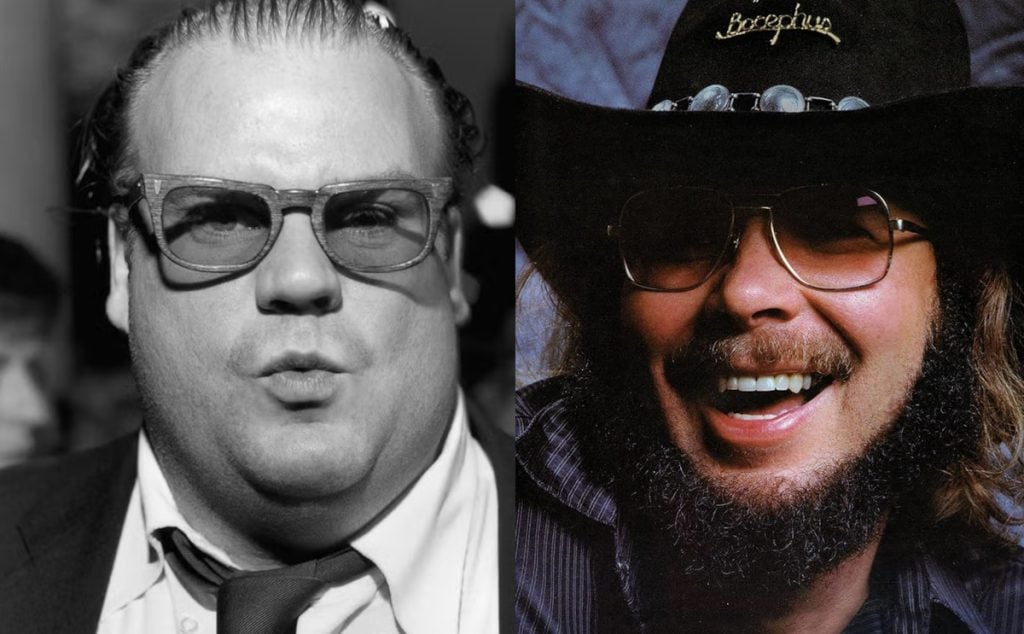
Recently, a Saturday Night Live skit featuring comedian Chris Farley impersonating Hank Williams Jr. has been making the rounds online. Originally aired as part of Season 23, Episode 4 on October 25th, 1997, the skit is quite hilarious, with Farley playing an overly-exaggerated caricaturist version of Bocephus, and Will Ferrell and Tim Meadows playing snooty studio engineers mocking the country legend. But the most recent viral clip shows only the first portion of the original skit, and keeps out an important social commentary that the original segment included.
The premise for the skit was Hank Jr. recording the names of the teams for the Monday Night Football theme song that he sang between 1989 and 2011, which was based off his hit song “All My Rowdy Friends Are Coming Over Tonight.” Bocephus was fired from that position during a social contagion in 2011, then came back between 2017 and 2020 before being permanently replaced.
Whiskey Riff recently ran a story on the SNL clip, and numerous other social media accounts have been rebroadcasting it. How people are able to take clearly copyrighted material like videos and post them all over the internet is quite quizzical, especially since you can’t post a video on YouTube with even five seconds of a copyrighted song in it without it getting flagged. Also, this stuff takes away from today’s creators, including musicians looking for attention in the algorithm. But that’s a topic for another day.
At the risk of showing my age, I remember witnessing the Hank Jr. SNL skit in real time in 1997 when Saturday Night Live was considered by many as essential viewing, and have referenced the skit in articles previously. The second half is really the most important part of it, after the most recent viral video cuts off.
Long story short, after a drunk “Bocephus” makes an ass of himself in front of the snooty New York studio engineers, they start making fun of him, and Hank’s friend named “Jack” who he brings in the studio with him. “Isn’t there a barn somewhere where Jack should be sniffing glue in?” the Will Ferrell character asks. Then Tim Meadows pips in, “Someone should tell Jack they’re taping Hee-Haw three doors down.”
That’s when the segment turns a bit more serious. Chris Farley portraying Hank Jr. pipes up, “Hey that ain’t cool. Why y’all making fun of us?”
The Will Ferrell and Tim Meadows characters continue to mock before Chris Farley says,
“Listen man, I sing music for working people. I know it isn’t the most sophisticated stuff in the world, but it comes from the heart.”
“We didn’t mean to make fun…” the Will Ferrell character then says.
“Yeah you did,” Farley retorts. “And I understand. We must look pretty ridiculous to you folks. Truth is, people like us don’t have many role models. So may career is important to many people … all I’m trying to do in my own kind of awkward way is bring people together.”
I’ve searched for the whole segment many times, but have only found snippets of it. But after seeing it go viral once again, I did a deeper search, and did find the whole segment on Instagram (sorry, not embeddable).
The sketch turns a little silly again after the above commentary, with everyone singing a more genteel version of “Are You Ready For The Football?” But it ends with Chris Farley turning to the camera and saying, “Remember, no matter how dirtbag anyone seems, underneath it all, they still got a heart. I should know. I’m Bocephus.”
Of course, this is SNL, and the skit is not meant to be taken too seriously, and someone can run the risk of doing so. But like all great comedy, it’s the element of truth behind it that makes it so potent.
Country artists, country fans, and country music in general are commonly looked down upon by the upper crust of American society, including by many of the media personalities that are tasked to cover it, like Jon Caramanica at The New York Times, and the Rolling Stone Country crew. In truth, they see many country artists and their fans that don’t share their values as uncouth, uneducated, and beneath them, and you see the bleed through into their coverage.
Hank Williams Jr., Morgan Wallen, Kid Rock, Jason Aldean, and others have become the favorite punching bags for many, and in certain respects, for good reason. Some of the criticism they’ve brought on themselves, and it’s legitimate. But attacking and attempting to “cancel” them under spurious circumstances hasn’t resulted in their depreciation. It’s only made them more popular.
Why? Because like the Bocephus portrayal in the SNL segment illustrates, many country artists over the years have become role models and folk heroes for people who otherwise don’t have any, similar to how hip-hop stars are regaled in depressed urban communities. Fans revere these individuals as representatives of themselves in the greater culture, and see their struggles for acceptance and legitimacy as parallel to their own.
Even if you think this assessment is a sad commentary on country music or the state of America, understanding why people find such appeal in these characters is important to understanding their popularity, especially if you feel like that popularity deserves to be addressed or even challenged.
The broad brushing of America’s rural population as a bunch of hayseeds who don’t even know how to keep their own self-interests in line is a dangerous stereotype. Everyone does have a heart like Chris Farley’s portrayal of Bocephus says, and deserves respect and basic human dignity, especially if you want that respect to be reciprocated.
– – – – – – –
If you found this article valuable, consider leaving Saving Country Music A TIP.
August 13, 2026 @ 12:10 pm
Great article, and I’d encourage anyone who is interested in this sketch to look at the context behind Chris Farley’s hosting gig. From all accounts, it was a sad trainwreck that is largely evident onscreen. Farley’s portrayal of Bocephus had more to do with the physical/mental state of Chris Farley, himself, than any knowledge of the artist he was impersonating. Farley needed serious help and should probably not have been allowed anywhere near that soundstage.
I remember watching the episode when it aired, too, and thinking that Farley had changed since he was in the cast, and not for the better. It wasn’t much longer after that that he was gone.
August 13, 2026 @ 2:16 pm
Kind of like in 1982 when Andy Kaufman broke character and threw an onscreen fit because he didn’t like the way he was portraying Elvis in an SNL skit.(I remember seeing it live. I thought Andy had lost his mind.)
Two years later, Andy was gone.
August 13, 2026 @ 12:46 pm
Hank is a complicated figure. He wrote so many great songs yet he’s also been a drunken idiot who is full of shit. I believe it was 5 years prior to this Hank Jr had to go on TNN and apologize for his drunken behaviour in concert. The soundboard recordings from the Kansas 1992 show where he was famously obliterated drunk is on Youtube. He already had the reputation of beng a drunken idiot at times.
Chris Farley (Dana Carvey is another) who had heart when they “made fun” of people. I can rewatch those episodes. Never willingly watched Scarlett Johnanson’s husband or any of the newest cast.
August 13, 2026 @ 1:26 pm
The drunkest, rowdiest crowd I ever sat among was at a Hank Jr/Waylon show in Orange county in the 80s. The concession stand ran out of beer before intermission and the crowd was stomping so loud for Waylon that I could feel the floorboards shaking. They don’t make concerts like that anymore.
August 13, 2026 @ 6:05 pm
You always have to remember that Hank fell 500 feet down a mountain and had multiple skull fractures and his brain exposed to the elements for hours. You mix that with various substances and it’s quite the combination.
August 13, 2026 @ 2:51 pm
Yeah I feel like before we had bro country we had bocephus and all the same criticisms of bro country being dumb and shallow were basically leveled at Bocephus and his initiators.
August 13, 2026 @ 4:22 pm
*imitators. Damn tiny screen.
August 13, 2026 @ 5:02 pm
I see the point in saying that Hank Jr laid the groundwork for what would become Bro Country but he had deeper songs too. Hank incorporated blues and southern rock into his music. Luke Bryan and Jason Aldean don’t have their own ‘Old Habits’. Some Bro Country apologists may bring up ‘Drink A Beer’ or ‘The Truth’ but neither wrote those songs and they were early in their careers. Lyrically Bro Country is mentally stunted at 22 yrs old. Hank Jr was all over the place.
August 13, 2026 @ 8:49 pm
I agree and was actually there at the height of Hank Jr’s fame. With the exception of a few songs, I don’t recall his output being dismissed as dumb or shallow. He was widely acclaimed and awarded. He was writing deeper songs in his 20s than these bro country clones are recording in their 40s and 50s.
August 13, 2026 @ 8:21 pm
I know. I’m a fan from back when Jr. was doing Dick Clark package shows so I saw him before and after. I did a photo shoot with him in 1981 and saw him without the glasses and hat. He had one eye going off in a different direction and a huge dent in the top of his head. Once he got himself pulled together he looked fine but seeing the damage was scary.
August 13, 2026 @ 10:03 pm
Linda, what photo shoot was it? Were you on the Rowdy album cover!?
August 14, 2026 @ 11:30 am
No, that was model and actress Carole Mallory. She was in the Stepford Files and is still active on Facebook. I was the editor of a country music magazine so we regularly shot photos of country acts.
August 13, 2026 @ 12:51 pm
I have long viewed the reason so many “upper crust” (mostly) coastal folks look down on the genre as being due to politics AND it is one of the only relevant genre’s you can poke fun of and not get “canceled” in the process of doing so.
On the first point, well, fair play I guess as mainstream country music has embraced Republican politics to a degree I think has harmed the genre more than helped it (see the long-term impact still being felt of the genre blacklisting the Dixie Chicks). Even if country music “values” when it comes to culture issues have always aligned more with Republicans, the genre would have been better served casting itself as the music of the working class which cuts across political and even some social lines. But I digress.
On the second point, fact is if SNL or any non-African American mainstream comedian poked fun of Hip-Hop artists or culture the morons on Twitter, Instagram, Bluesky, etc. would be leaping mad. Rock/Metal is barely relevant in 2026 with some media markets no longer even having a proper Rock/Metal station in them. I guess you could poke fun of the pop-folk of Noah Kahan or the Lumineers, but….meh. Cool, a kombucha joke.
Broadly speaking I have long been uncomfortable with how mainstream country music in 2026 is seemingly content to sell a “lifestyle” to bored suburban moms and dads who want to throw on jeans and cowboy hats a couple weekends a year and pretend to be country in their expensive trucks. At it’s best the genre has always been the voice of the working class, but that is harder and harder to find in the mainstream world of the genre. Guess there is more money to be made selling “Field and Stream” subscriptions to folks flying into Jackson Hole than there is singing about the plight of the working class in 2026.
Thank God you CAN find those songs in the digital age if you step outside the Nashville machine.
August 13, 2026 @ 1:27 pm
I don’t think politics has anything to do with the long-running stereotype. The South went all blue in the 76′ election. Tennessee went blue in 92′ and 96′. I would say it’s more about the cultural differences that date back past the Civil War. TV execs and elites couldn’t understand why The Dukes of Hazzard and Smokey and The Bandit were so popular. There has long been a cultural division between Hollywood and New York City where they haven’t viewed the “flyover states” as culturally equal to themselves.
August 13, 2026 @ 2:20 pm
Like CBS’ “Rural Purge” of 1971. But, “Hee Haw” (and Lawrence Welk) went into syndication, and became MORE popular.
August 14, 2026 @ 7:53 am
Truth.
And we flyover types think Hollywood and East Coast ivy types are usually hot house flowers with sticks up their asses who can’t change the oil, build a fire, or catch a fish.
August 13, 2026 @ 2:56 pm
I have often said that modern mainstream country takes place in the same parallel universe that truck ads are from. Truck ads are not aimed at actual working class people. They’re aimed at well off white collar people who are insecure about their own manhood.
Nick shoulders just released a remake of the classic song Im Busted, remade for today’s working class’s actual issues.
August 13, 2026 @ 3:44 pm
That’s why I drive an vintage Morris Mini.
I don’t need no enlarger.
August 13, 2026 @ 11:07 pm
I don’t like politics.
I don’t like boxes.
I like real, truth, and beauty. At least I think I appreciate those things.
I just searched for, and watched, the Volvo Trucks commercial with Jean-Claude Van Damme doing the split inbetween two driving trucks.
Sometimes certain things align, and combine, and result in something beautiful or remarkable or noteworthy.
August 14, 2026 @ 9:14 am
When I think of beauty I imagine a curly haired woman with no tattoos in a polka dot dress….not the ‘Muscles from Brussels’ doing splits. I say this as someone with multiple Van Damme movies on VHS
August 14, 2026 @ 10:25 am
Not even when he’s all oiled up?
August 14, 2026 @ 10:26 am
My comment was a response to another comment about truck commercials in general. That comment got me thinking about the Van Damme truck commercial as I would not necessarily view that Van Damme commercial as being an example of the kind of truck commercial the other commenter might be talking about.
The beautiful or remarkable or noteworthy thing with the Van Damme Volvo commercial is that it is a possibly pretty unique combination and interaction of some nice cinematography (if that’s the correct term), a cool idea (doing the splits in between two trucks), the contrast of an action movie hero being all philosophical and poetic (the actual words he’s saying), the skill involved (by both drivers of the trucks and Van Damme), and the reaction of the people watching the commercial (e.g. see comment section on youtube).
Sometimes things combine and interact and result in something beautiful, magical, noteworthy, amazing, or remarkable.
August 14, 2026 @ 11:26 am
Your ideal woman sounds like Betty Boop.
August 14, 2026 @ 8:26 pm
Anybody else remember the episode of the Simpsons where Homer lusted after a huge fictional SUV called the Ponderosa after hearing Hank Jr’s commercial for it? Hank did such a great job doing the ad you’d swear there really was such a vehicle.
August 14, 2026 @ 9:32 am
“Nick shoulders just released a remake of the classic song Im Busted, remade for today’s working class’s actual issues.”
I listened to the song and kept wondering whether there would be a final verse that sort of called out the powers that be (or whatever he could focus on) and use “they’re busted” as a way to use the “busted” thing and sort of provide a twist at the end.
Anyway, I made some lyrics in the style of Riddy Arman (as a result of your comment a while back) and send it to her. I haven’t heard back for about two weeks. If you can play the guitar and would really like to take a look at the lyrics I wrote (attempting the dark lyrics style with vivid imagery you mentioned recently in the comment section) to see whether you want to possibly try and make a song with ’em let me know (I can post ’em here if that’s okay with Trigger and you, and you can maybe see whether a song can be made for The Hook with ’em?). Otherwise, the lyrics would just be sitting here on my computer as I can’t play or sing myself.
August 14, 2026 @ 11:37 am
You could just send me an email:
honkytonkheartache@gmail.com
August 14, 2026 @ 12:34 pm
I just sent the lyrics to that e-mail address 5 minutes ago (or something like that). The lyrics are in line with the comments you made recently on here about vivid imagery and dark lyrics and some songs by Riddy Arman and all of that.
August 13, 2026 @ 3:37 pm
The coastal elites fired potshots at the heartland long before the Dixie Chicks drama.
August 14, 2026 @ 2:50 pm
>On the second point, fact is if SNL or any non-African American mainstream comedian poked fun of Hip-Hop artists or culture the morons on Twitter, Instagram, Bluesky, etc. would be leaping mad.
Rap gets mocked all the time, including on SNL. Everything does. It’s 2026, no one has to be nice or empathetic to anyone anymore because that was woke.
August 13, 2026 @ 1:21 pm
I grew up in Montgomery Alabama listening to country music on the radio before moving to LA and listening to more country music, this time at venues like the Palomino Club and the Troubadour. I’ve always been annoyed by the way country fans are portrayed as ignorant goobers but also the way Nashville seems to be music for listeners in the Southeast while ignoring the rest of us.
Back in the late 80-early 90s I spent practically every Tuesday night at the Palomino in North Hollywood, hanging with country musicians and fans who were pursuing their careers, making contacts or just enjoying artists like Rosie Flores, Dale Watson, Buddy Miller, Lucinda Williams, Deke Dickerson, James Intveld and more.
Not all of us are hicks, not all of us grew up on farms and not all of us want to hear songs about pickup trucks and beer written by committee. I wish Nashville would acknowledge that.
August 13, 2026 @ 1:53 pm
Just curious, ma’am; did you ever cross paths with Rick Vincent – a Cali fellow – who released a cd (A Wanted Man) on the infamous Curb in the early 90’s?
He sounded very promising, but disappeared quickly and went on to write childrens books instead.
August 13, 2026 @ 9:16 pm
I don’t recall a Rick Vincent but I met a lot of artists back then. We used to refer to that label as the Curb Artist Protection Program because singers would sign and never be heard from again.
August 17, 2026 @ 1:47 pm
“Ain’t Been a Train Through Here in Years” is one of my favorite country songs ever. Knocked me out when I saw the video on CMT in high school, and still knocks me out. I tracked down Rick Vincent’s one Curb album on CD and keep it in heavy rotation.
August 13, 2026 @ 4:24 pm
Linda, I’ve been curious for a while about whether anybody really documented that scene. Obviously it’s documented in the compilation A Town South of Bakersfield. I think I bugged both Dickerson and Christopher Burkhardt about this a few years ago and neither of them knew of anything that had been written about it. Do you know if there were people writing about that scene in like the local music press at the time ?
August 13, 2026 @ 8:32 pm
Yes, there were but unfortunately one of them has left us. Billy Block was the drummer in the Barn Dance band and also wrote for the Music Connection. Ronnie Mack, the producer of the Barn Dance, has saved some stuff over the years.
I was the editor of a country music magazine at the time and wrote some about the LA scene but didn’t really save anything in print. I’ve been examining my own memories lately and collecting some of them while I still can.
There’s a documentary about the Palomino Club being shopped around now but I haven’t seen it.
August 13, 2026 @ 10:48 pm
The Palomino was legendary. Wish I was old enough to have been. At least I’ve seen the preserved sign at the Valley Relics Museum.
I certainly didn’t grow up “country”’l, but I did grown up in Iowa before coming to the West Coast for college. There’s something deep down about good country music (like Hank Jr. c. 75-early 80s) that hits deep.
August 13, 2026 @ 11:19 pm
I feel privileged to have moved to LA when I did and have the opportunity to see so many legendary acts at the Palomino between 1972 and 1995.
August 15, 2026 @ 7:24 am
Amen to the Palomino Barn Dance scene in 88-94! That was a magical time with some great music and good people. “There is a season, turn , turn, turn…” I’m sure we rubbed elbows there.
August 13, 2026 @ 1:40 pm
There are so many great SNL sketches that are basically lost to time now because of licensed music. The Neil Diamond storytellers sketch is probably my favorite thing SNL ever did but you can’t find it anywhere.
August 13, 2026 @ 8:33 pm
Doesn’t Peacock have all the complete SNL episodes?
August 13, 2026 @ 11:22 pm
Any sketch involving music is likely to be excluded from the archive unfortunately
August 15, 2026 @ 8:37 am
No. Unfortunately it doesn’t get included anywhere they show old SNL episodes. I think it’s something to do with the license that allows it to be used on live TV doesn’t transfer anywhere else. At least not without paying a huge fee. And if Neil Diamond’s people have a say in it I highly doubt they’d sign off considering it wasn’t exactly a flattering portrayal of the guy or his music. Very, very funny though.
August 13, 2026 @ 1:47 pm
Hank Jr.’s best songs have aged like wine. “Dinosaur,” “Dixie on my Mind,” “If Heaven Ain’t a Lot Like Dixie,” “A Country Boy Can Survive,” “Fat Friends,” “Texas Women,” “Whiskey Bent and Hellbound” are classics.
August 13, 2026 @ 1:47 pm
‘Old Habits’ ‘O’d in Denver’ ‘Family Tradition’ ‘Blues Man’ ‘Born To Boogie’
August 13, 2026 @ 10:56 pm
And “Feelin’ Better”, “Living Proof”, “I Don’t Have Any More Love Songs”. Did many great and unexpected covers too.
August 14, 2026 @ 5:11 am
“Outlaw Women”, “Arms of Cocaine”, “Kncxville Courthouse Blues”. Hank Jr has some absolute classics
August 15, 2026 @ 12:41 am
Yep, wild women and cocaine leads to divorces.
August 15, 2026 @ 8:16 pm
To Sofus – Yeah but they can also lead to great country songs.
August 13, 2026 @ 2:00 pm
Don’t forget “Montana Song”, that’s one of his overlooked diamonds.
I always found his MGM years to be the most interesting part of his career, warths and all. There’s something about the vulnerability he let shine through, mostly missing from his more widely known later recordings.
August 13, 2026 @ 4:43 pm
Oh man – the whole “Hank Williams Jr. And Friends” album is a friggin’ classic! The beginning of his breakout era and mostly overlooked. Thanks for mentioning it, Sofus.
August 14, 2026 @ 10:12 am
Yes, it’s one of his very best albums. He re-recorded “Montana song” a decade later.
I’m not too keen on the Bochephus era, he opened the door for bro-country. Sure, lots of keepers post-75 too, but his country years on MGM beats the southern rock of the Capricorn years.
August 13, 2026 @ 9:18 pm
I suspect that Hank realized that rowdy Bocephus was what the public wanted so he gave it to them.
August 14, 2026 @ 7:05 am
“The public has always expected me to be a playboy, and a decent chap never lets his public down.”
Errol Flynn
August 14, 2026 @ 11:25 am
Errol Flynn was a terrible person but an unforgettable movie star. Rick Nelson bought his old house in Hollywood and found hidden cameras in strategic locations.
August 15, 2026 @ 12:56 pm
Yes, I am aware of Flynn’s flaws.
His autobiography already painted that picture.
August 15, 2026 @ 8:14 pm
My Wicked, Wicked Ways has to be one of the great celebrity autobiographies of all time. I bought a used copy at a bookstore on Hollywood Blvd back in the 70s and I still have it.
August 18, 2026 @ 1:17 am
It also robbed us of countless of great talents and songs, so in the end it’s a pure negative.
You’re never better while you are under the influence, you are just less critical.
August 13, 2026 @ 2:24 pm
Hank Jr. wouldn’t censor me.
August 13, 2026 @ 2:38 pm
Hank Jr. probably wouldn’t also bring up Covid and a bunch of other polarizing topics in a non-sequiturs simply to try and train wreck the comments section because he’s an incorrigible troll.
August 13, 2026 @ 2:55 pm
I think Hank might do that.
August 13, 2026 @ 3:34 pm
Absolutely.
August 14, 2026 @ 1:31 am
Like politics isn’t the reason most look down on country and it’s fans🤣 but at least people like you that try to be as complete opposite cause you care what they think in effort to be more accepted by them🤣
August 14, 2026 @ 2:51 pm
That actually seems like one of the most likely things Hank Jr. would do.
August 14, 2026 @ 2:53 pm
Hank Jr. said nothing on record about Covid. Ever since his fallout with Fox News and losing the Monday Night Football gig initially, he’s made no political statements, and on purpose.
August 18, 2026 @ 11:11 am
As an entertainer, he’s more than likely vaccinated but seems he is still hollering his MAGA moronic cult love upon exiting his shows singing “if you don’t like Donald Trump, you can kiss our ass.”
August 13, 2026 @ 3:57 pm
I agree. He would likely punch you in the face, though. Or at least he would have in his prime.
August 13, 2026 @ 4:27 pm
Punch me for mentioning the “educated” wearing paper masks for several years?
August 13, 2026 @ 5:02 pm
This is not an article about Covid-19. Any further comments on Covid-19 or other political topics no t relevant to this story will be deleted, as well as all other troll comments attempting to train wreck an important discussion on an important topic.
August 14, 2026 @ 9:54 am
Yeah, I know. The article is about Linda Cauthen.
August 14, 2026 @ 11:22 am
To Jilm: What the hell are you talking about? It sounds like your last shred of sanity has managed to finally make a run for it.
August 14, 2026 @ 11:50 am
Nearly every article Kyle churns out turns into a de facto Linda Cauthen memior/gossip column.
August 14, 2026 @ 12:13 pm
Linda Cauthen is a valued member of the Saving Country Music community, and I’d glad she’s been piping in with her insight and stories as someone who’s covered and been around the music for many years.
If it was up to you, nearly every article I churn out would become a de facto slag pit on cultural wedge issues. It’s lame.
August 14, 2026 @ 12:40 pm
Nearly every article? Nope, just the ones about subjects that I have knowledge about or interest me. Unlike you, I don’t feel motivated to drag my personal grudges into threads where they don’t belong. If I did the whole group would be aware of my longtime loathing for John Denver.
August 14, 2026 @ 5:40 pm
Linda, I appreciate your insight and knowledge. Thanks for commenting.
August 16, 2026 @ 2:44 pm
Ms. Cauthen obviously has insight and experience to add to the comments discussion. I personally would prefer she commented less.
August 13, 2026 @ 2:57 pm
Most SNL viewers had never seen or heard Hank Jr. apart from on Monday Night Football, so Farley didn’t need to do any sort of good impression of him at all, for the sketch to work. Farley being grossly overweight and portraying Hank as a complete slob was and added bonus for the shows viewership.
Here’s a more credible impression of Hank Jr. by Richard Thomas, probably in the late ’90s or early ’00s, recounting his first telephone conversation with Jr. when he was preparing to portray him in the “Living Proof” biopic.
https://www.youtube.com/watch?v=yzbN9Gbvbdw
August 13, 2026 @ 8:41 pm
In 1981 I interviewed Hank about the Living Proof TV movie done from his book. His first choice to play him was Beau Bridges but the network wanted Thomas because of the Walton’s.
Trivia: The sexy redheaded groupie who took Hank’s virginity in the movie was played by Naomi Judd, who was pursuing an acting career at the time.
August 13, 2026 @ 9:31 pm
I hope you caught Hank on one of his good days.
Richard Thomas is a very good actor who was trying to break away from being typecast as John-Boy Walton. I think he was a good choice for the role. He portrayed the early pre-Bocephus Hank as a normal guy who just happened to be the son of a deceased legend whom he was under pressure to live up to. But I have no problem believing Richard Thomas’s recreation of his first phone conversation with Hank Jr.
August 13, 2026 @ 10:21 pm
Trust me, I’ve caught him on good and bad. When he was bad, he was a total jerk. He yelled at my dad for looking at him. Daddy just happened to look up from what he was doing at a friend’s business and there was Hank standing in front of him so he probably stared at him.
August 13, 2026 @ 3:48 pm
Hot take that absolutely no one here is going to agree with: Hank Jr.’s 51 year career (counting since ’75) is more important than Hank Sr.’s 6 year career (even though just about every song Sr. wrote has become a country standard).
August 13, 2026 @ 4:28 pm
I think jr is equally as important. Alan jackson looked up to hank jr so its all good.
August 13, 2026 @ 6:15 pm
Glendel, that’s not a completely irrational thought, but the original Hiram Hank Williams is absolutely one of the top 3 most consequential and important founders of Country Music. His importance can never be trivialized. No one in the 40s was a bigger star than him, and all those golden age singers in the 50s and 60s patterned themselves after him, desperately wanting to sound just like him. And you rightly note that he has all those American song standards. IMO.
As for Jr, once he hit the ground running after recovering from that fall on Ajax Mountain, and reinvented himself, the Country Music world was never the same. He was and is to this day a one-of-a-kind superstar unlike any we’ve ever seen. Obviously his career was much longer than his dear father, so its not a fair comparison, but Bocephus sold MILLIONS of records and toured like a king. His music was the music of the blue-collar working man, the farmer in Iowa, the steel worker in Pittsburgh, the redneck auto worker in Detroit, the Cowboy in Montana, the biker in Michigan, the southern rednecks in Georgia and Florida and Alabama and all points in between. His knack for writing compelling and lasting songs that resonate yet today is quite the feat. I do think some of his detractors forget what the true audience for Country music is and was. Country music wasn’t simply about plain hill folk protesting working conditions, though I think the Americana folks would like us to think that, and they desperately write these think pieces trying to assert that. Country music was a cultural facet of working people’s lives all over America, and a big part of that is and was ENTERTAINMENT and FUN. And a lot of that fun was rowdy and wild like many of the people who embraced it. This idea that Country music should be as big as possible and appeal to everyone globally is completely insane. Its at heart a cultural music of working class American people, and its every bit as valid as Rock and Roll, R & B and other genres that relate to specific cultures. Hank Jr made his mark, he’s a true legend and that’s nothing that needs apologized for.
Quoting the great Charlie Daniels ” you intellectuals may not like it, but there aint nothin’ you can do, cause there’s a whole lot more of us common folks than there ever will be of you.”
August 13, 2026 @ 8:11 pm
It is a credible take.
What hurts Hank Jr. is his decline phrase. Hank Sr., because of his death, never had one.
If Clint Black dies in 2001, he is in the HOF. See Keith Whitley.
August 13, 2026 @ 9:24 pm
IMHO Hank started to decline after the death of Waylon and Kilgore because they had provided the guidance he needed.
August 14, 2026 @ 6:41 am
I don’t think that is irrational but the main difference is that Hank Sr wrote great songs such as I’m So Lonesome I Could Cry, that are part of the Great American Songbook…I’m not sure longevity is a factor…Jim Croce , George Gershwin and Blaze Foley had short lives but their songs are timeless
August 14, 2026 @ 9:23 am
I disagree because all Country acts after Hank Sr are standing on his shoulders, including Hank Jr. You could argue that Hank Jr’s visible influence in Country music has lasted longer based on how many more of his songs have been Country standards and have remained standards for longer.
August 14, 2026 @ 11:17 am
I love Hank Sr as much as anybody but at least for his short life and a couple of decades after, his exposure was limited to listeners of country radio. OTOH, Jr came along in the time of TNN, CMT and Monday Night Football. He was a household name and an influence on several generations of fans and musicians of various genres. He’s kinda trashed his legacy with bad behavior and bad decisions but you can’t deny his influence.
August 14, 2026 @ 3:02 pm
If you can trace any kind of meaningful straight line from Morgan Wallen’s sound to Hank Sr.’s sound, I’d welcome you doing so. Country music essentially does not exist as a musical genre, and hasn’t for decades. What is referred to as country music is several different kinds of bland rock music united solely by lyrical content, and lyrics don’t define a musical genre.
This state of affairs is directly attributable to outlaw country. The outlaws were great, but it also turned out that the establishment they were tearing down was largely right. By the end of the 20th century, no one could credibly be argued to be making country music anymore. Even if you want to say that genres can evolve, I’ll certainly agree with you, but this is not a case of that. There is no such genre as country, because if you changed the lyrics and the vocal stylings, you would have a collective of bland rock bands with no musical tendencies actually tying them together and/or setting them apart from rock. The only music you could reasonably call a “country music genre” has been reclassified as “roots” or whatever the name for it is now, and there’s certainly no establishment able to push it.
So is Hank Jr. more important? For his impact on mainstream pop culture, absolutely. But for country music? I guess it depends on whether importance is measured in what you built or what you destroyed. Hank Sr. helped build country. Hank Jr. helped destroy it. It was probably always destined to be destroyed, because the urbane and cosmopolitan world that was coming was never going to have much use for the kind of music Hank Sr. played. Not even the redneck cosplayers who swear up and down they love Hank Sr. actually listen to a lick of his music. But the inevitability of the genre’s demise does not remove the responsibility for hastening it from the hands of Hank Jr.
August 14, 2026 @ 4:06 pm
“Country music essentially does not exist as a musical genre, and hasn’t for decades. What is referred to as country music is several different kinds of bland rock music united solely by lyrical content, and lyrics don’t define a musical genre.”
I don’t know why I keep seeing these kinds of deeply cynical comments on an outlet that is constantly highlighting music that so defies these blanket, “old man yells at cloud” proclamations. And if people truly believe them, why would even come to an outlet like this?
I can understand coming to that assessment for someone like Morgan Wallen. But he doesn’t define country music for “decades.”
August 15, 2026 @ 7:47 am
Jono 11. It takes all kinds. We do have a wide swath of opinions on the SCM commenting panel. I think yours might represent one of the most strict takes I’ve seen in recent times. Respectfully, however, why stop there? Let’s take your ideas a little farther. Country Music as it was invented by immigrants and settlers in the Appalachian region of the USA, was essentially hill people and rural folks out in the hollers and desolate places, making primitive sounding old-timey music with fiddle and guitar and banjo. Square dances, hoe-downs, jigs and reels etc. There was perhaps nothing more natural and organic than that, Real Country Music for authentically rural people making music for pure entertainment with no commercial aim in mind. Why don’t we just stop it there and say that the day Ralph Peer set up to record The Carter Family and Jimmie Rodgers, that was the day Country Music died. Commercialization of the music began in earnest. And then AP Carter and Lesley Riddle began combing the hills looking for more material to record. Weren’t they then in essence, the first sellouts looking to make a buck with music that was never written for commercial gain? And don’t get me started on Chet Atkins and what he did with Country-Politan and the famous quote when asked ” What is The Nashville Sound?” He shook some pocket change as his reply. In fact while we are at it, how about Fiddlin John Carson who made what some believe is the first recording of a Country song. We ought to refer to him as Sellout John Carson perhaps. Do you get what I’m saying? We can basically declare that there never was any Country Music the day those folks appeared and wrap the whole thing up and call it a day. Wha to listen to now…hmm maybe some Mozart?
August 16, 2026 @ 4:09 am
Mozart, the first pop star, sold his craft to the highest bidder.
Actually, that’s what they all did, from the Renaissance period to these modern times.
August 16, 2026 @ 7:05 am
Yes, even the earliest men who made cave drawings, they were doing it solely to impress chicks and earn a greater share of the meat supply of the tribe.
Cynical bullshit.
August 16, 2026 @ 7:55 am
Good one Sofus. Mozart was a sellout too!
Hopefully though most understand im using a bit of sarcasm here. 😆
At the end of the day, music is ENTERTAINMENT!!
August 17, 2026 @ 4:53 am
Kevin; to survive on the income, we must all give the customer what he wants, be it music, movies or hardware. We gotta serve somebody, to quote ol’ grump Dylan.
Always been that way. Some give in to the trends hoping to cash in some big bucks, while others sticks to the marginal route, or drops out completely. Johann Sebastian Bach, in a letter, lamented the fact that he never earned the same amount as his contemporary Telemann (he also stated that he needed more money to survive, since he had so many kids…).
August 15, 2026 @ 1:29 pm
Spot on.
August 14, 2026 @ 11:18 am
More like 62 years. The first time I saw Jr in concert was in 1964. We were both 15.
August 13, 2026 @ 4:26 pm
Well hanks response to this would be to start singing a little family tradition. Im sure he like many of us doesnt really care.if only country artist popular today and that would include the media darling were even somewhat as country as hank, the music might be ok but they arent. And though im not from dixie, i still believe in those words. If heaven aint a lot like dixie, i dont want to go.
August 14, 2026 @ 4:25 am
Who wrote the skit? Someone will know.
August 16, 2026 @ 5:56 pm
Rick Vincent was a very promising,handsome cowboy sort who should have been a huge star.Why didn’t he and I’m glad he’s writing children’s books like one of my buddies.
August 17, 2026 @ 3:07 am
He recorded for Curb, that’s why. It’s the purgatory of country music.
That, and he never had a hit, sadly, just like the numerous talents of Step One Records, Jack Robertson among them.
August 17, 2026 @ 1:46 pm
“Ain’t Been a Train Through Here in Years” is one of my favorite country songs ever. Knocked me out when I saw the video on CMT in high school, and still knocks me out. I tracked down Rick Vincent’s one Curb album on CD and keep it in heavy rotation.
August 31, 2026 @ 10:04 am
Morgan Wallen, Kid Rock and Jason Aldean get shit on because they suck ass at making good songs. Kid Rock is a rich kid from Detroit cosplaying as a hillbilly while making homoerotic propaganda videos with nepo baby and raccoon penis aficionado RFK Jr. Bocephus, while certainly capable of writing and playing great songs has been a pretty consistent asshole for decades. He is also responsible for the ridiculous “Japanese” nickname he gave Waylon Jennings. These clowns aren’t victims of snobbery, for the most part they suck so hard at music and as people that they never should have been famous to begin with. Also Kid Rock rhymed the word “things” with “things” in his musical abomination All Summer long.