

Album Review – Miranda Lambert’s “Crisco”
Country pop (#530.2), Classic Country (#510.1) on the Country DDS.
This album is fine. It’s meant to be fun. It’s meant to be fluff. And similar to the Sturgill Simpson/Johnny Blue Skies “disco” album from earlier in the year, if you take this business too seriously, you run the risk of the joke being on you. And on the surface level, you also appreciate the risk this album takes, trying to do something different, and attempting to spark a trend instead of follow one.
Crisco is not meant to be an exploration of involved songwriting like Miranda’s albums The Weight of These Wings or The Marfa Tapes. It’s meant to be a dance record, and a departure from the regular rhythm of country album releases. It succeeds in this effort. It just happens to be that “success” in this case comes after setting the bar quite low.
We live in an era when little if anything is new. This is nothing new in itself. It’s been the morass much of American culture has been stuck in for an elongated period. Movie remakes and rehashed ideas dominate the marquees. Nostalgia is the well we’re all drinking from because everything contemporary feels fake and empty. So people look to the past to find something with feeling. That’s why the catalog of past albums far surpasses new releases in overall consumption, while even pop stars like Bruno Mars and Lady Gaga lean into vintage pastiche.
What makes country music unique is it’s always looked to the past for inspiration, or direct influence. Even when The Carter Family and Jimmie Rodgers were recording in Bristol in 1927 during the “big bang of country music,” they weren’t playing the songs of the day. They were performing the songs of generations past, carried down in oral traditions. On the surface, Miranda Lambert is doing something similar by mixing ’70s disco sounds with ’70s country influences, along with more modern sentiments.
The greatest thing about Crisco is its concept and sonic approach. The lush string arrangements and simple grooves make for an easy listen. But the concept is also it’s greatest burden. It seems to think that making catchy, vintage-inspired music is enough. Many of these songs don’t really say much of anything. The title track is basically just a song about mixing country and disco as opposed to using that as the backdrop to tell a story, or explore something deeper. “A Song To Sing” with Chris Stapleton is about writing a song to sing. The Ella Langley duet “Snakeskin Boots” just sort of comes and goes.
Miranda Lambert name drops “Islands in the Stream” in the title track as an example of disco country. And sure, it was written by the Gibb Brothers of the Bee Gees. It also happens to be an excellently-written song that explores a deep and involved human experience delivered with poetic feeling, and named after an Ernest Hemingway novel. There’s nothing like this on Crisco. Miranda Lambert also mentions the song “Afternoon Delight.” But she fails to mention how polarizing that song was, and how it made the Starland Vocal Band a “one hit wonder.”
Some have memory holed just how vilified disco was in its era, especially by country fans. It was seen a vapid frap. Sure, it was “popular.” But it was popular like how Nickelback and Bro-Country were popular, meaning by the go along masses instead of distinguished consumers who often found this music downright reprehensible. Making fun of disco became its own genre of entertainment, just like Bro-Country. There were television sketches and “Death Before Disco” T-shirts sold en masse.
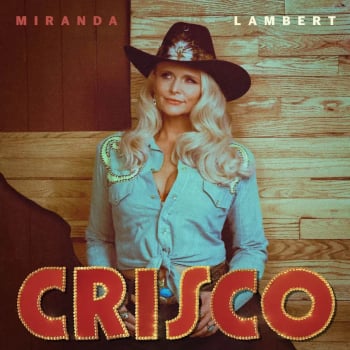
Some have also complimented Crisco for pulling from the influence of yacht rock. Once again, we seem to forget just how lampooned yacht rock was in its era. Are we so thirsty for sounds of the past that we’re pulling from influences that decades ago were declared creatively vacant and bankrupt? What is the value of this exercise?
Even if the sounds of Crisco stimulate a positive nostalgic reaction, the writing pretty consistently says so much nothing, it lends to an experience that might be initially pleasant, but ultimately hollow. Did they really try to take the cutting onions cliché and turn it into a country song in 2026? Compare that to the inventive nature of Johnny Russell’s “Act Naturally” recorded by Buck Owens in 1963. What happened to those novel sentiments explored in otherwise simple country songs?
But remember, this isn’t supposed to be a songwriter record. It’s supposed to be a fun record. A song like “Whiskey Business” is what this album is all about. But even then you can’t help wondering what some of this writing is going for. “All up in this whiskey business, and business is good. Stealing kisses and knocking on wood.” What exactly are we knocking on wood for, because it rhymes?
When Kacey Musgraves cut the disco-inspired song “High Horse,” or Lainey Wilson recorded “Grease,” or even Miranda Lambert went for it with “Little Red Wagon,” these songs made the purists shriek, but they were also pure fun. They were also just one song in a greater album concept that looked to deliver a much more fulfilling and longer-lasting listening experience. That’s what Crisco is missing. It’s all crust, and no filling. It’s the private equity version of a classic country album.
That doesn’t mean Crisco doesn’t have some impressive moments. It’s amazing how you can gaze through a record and simply by looking at the songwriting credits, you can find the best track. That’s the case with Crisco and the song “To Everything” co-written by Ashley Monroe and Waylon Payne. This is a perfect example of how Crisco could have been more than just a shallow nostalgia kick. “Right Where We Left It” also exhibits an elevated level of songwriting that the rest of the album lacks.
Crisco is one of those records where you can find a lot to criticism, but ultimately, if it comes on, you struggle to find it offensive, and might even find yourself tapping your toes. It’s not as much about it being a bad album. It’s what Miranda and producer Jesse Frasure could have done by taking this concept and marrying it with quality songs. Instead, Crisco just delivers a lot of empty calories, however harmless they might be.
6.7/10
– – – – – – – –
– – – – – – – – – – –
If you found this article valuable, consider leaving Saving Country Music A TIP.
October 5, 2026 @ 7:32 am
As a big Miranda fan, I’m just going to hope this is a phase and she needed to make this album to get it out of her system. This is the opposite of Marfa Tapes. I hope she turns around back toward Marfa soon. Elevator country music does not become her.
October 5, 2026 @ 7:37 am
You can’t have 12 To Everythings. I think this is a much, much better record than you give it credit for, as I will explain on Wednesday at http://www.countrywol.substack.com.
Also, it is NYACHT rock.
October 5, 2026 @ 7:45 am
I’ll have to go back and re-read the review, but I don’t think I was advocating for 12 versions of “To Everything.” I just don’t want 10 versions of “A Song to Sing” or “Crisco” which are songs about songs instead of saying something deeper. Even when you’re having fun, you can be clever, you can say something a little deeper in a verse or two. This music just isn’t good or original enough to simply rely on the music itself.
October 5, 2026 @ 7:54 am
Actually, “A Song to Sing” is a pretty standard love song, not a song about songwriting. They’re calling each other “the harmony” and “the melody.” The songwriting part is just a metaphor.
Like so many others of my generation, I hated disco when it bubbled up from the club scene and wound up pushing genuine r&b off the radio. But my opinion of it softened with time, and now I can even listen to “Silly Love Songs” and actually hum along rather than grumbling about how McCartney had soiled his Beatles legacy. And yes, I liked “A Song to Sing” instantly and either like or very much enjoy most of the tracks on this album. It’s extremely well crafted, which you’d expect from the people involved in the concept and production.
But I do worry about the copycat knock-on effect if one or two of these tracks become radio singles and connect far better than “A Song to Sing” did. There’s a disco element in Koe Wetzel/Ella Langley’s “Jaded,” and that is an absolute smash headed for multiple weeks at No. 1 in the near future. You can also detect it in Luke Combs’ pulsating “Rethink Some Things,” which leans more toward R&B but still has something of a smooth disco groove to it.
The big problem with musical copycat fads is that the quality drops off sharply even as it gains in airplay and popularity, and attracts listeners who otherwise wouldn’t listen to the genre that was being changed by them. “Jaded” and “Rethink Some Things” are well-executed, well-produced and at least average lyrically. Kind of like “She Works Hard for the Money” and “Bad Girls,” from Donna Summer’s more mature years, post-disco crash. What I dread is this subgenre turning into “Get Dancing” or “A Fifth of Beethoven” or even, God help us, “Disco Duck.”
Great review, and the 6.7 is appropriate for an album that is very much mainstream but largely resists the worst elements of mainstream country — lists, pickup trucks and trap beats.
October 5, 2026 @ 7:59 am
I just want to say that to Trigger’s point- possibly even the silliest of silly songs “You Can’t Rollerskate In a Buffalo Herd” makes a surprisingly deep point. In the middle of all of these bizarre and ridiculous scenarios then setting your mind to being happy seems relatively simple. Sometimes we need to shake ourselves off and go “at least I’m not taking a shower in a parakeet cage.” Yes, it’s blatant fun. It IS possible to do both. On the Gospel side of things Kenny Hinson did something similar. He wrote a humorous song about how hard it is to write a song about how amazing God’s love is. Humor or silliness and depth do not have to be mutually exclusive.
October 5, 2026 @ 8:00 am
I don’t know if this is how it’s always been but I am seeing more and more effort to sort of reclaim the stuff that was popular when people my age were kids but was viewed as low rent at the time. Like in music I am thinking of how I see more and more people saying limp bizkit was actually really good music. Which it’s fine you liked some shitty stuff as a kid but just cause you liked it as a kid doesn’t mean it was good.
October 5, 2026 @ 9:16 am
Going back and trying on nu metal, Bro-Country, disco, rap rock, or whatever else is a sign of creatively bankrupt times where nobody has a new idea. Though the ’90s country thing has been slightly better in quality, it still suffers from this imitation aspect as opposed to trying to be inspired by an era and bring something new to it.
The panacea to all of this is better songwriting. Everyone’s so focused on sound and era, they’re missing the part of the music that is most likely to connect with the audience.
October 5, 2026 @ 8:30 am
I’ve listened to it twice now and I liked it more on the second go round. “Crisco” and “Cutting Onions” were the worst for me, but like you said, they’re not so bad that they’re offensive. I liked several of the songs (I think “Two Things Can Be True” and “Say I Love You In a Song” will probably make my playlist). I guess for me, the whole thing just kind of fell flat. For all the hype surrounding this project, it seemed uninspired to me.
I will say MCA should release “Snakeskin Boots” as a single – not because it’s good (it isn’t) but because everything Ella Langley touches turns to gold and Lambert could use a radio hit.
I will say your observation about not expecting this record to be anything other than fun is spot on. I think the reason I disliked it so much on the first listen was because I was looking for so much more. Taken for what it is, It’s easier not to judge it for what it isn’t.
October 5, 2026 @ 8:42 am
For the record, I was not at Comiskey Park here the night of Disco Demolition in 1979, but had my friends and I known it would go down in history, we would have been. No, instead I was at home in my basement honing my craft as a drummer, trying to learn Rush’s Farewell To Kings note for note. As an 18 yr old rocker, I hated everything that Disco was and stood for. But like Howard said above, over time I came to love all the Saturday Night Fever tunes and the like but not take them too seriously…lol
I’ve been spinning this out on the bike trail the last few days in the beautiful sunshine, and I have to say much of this record is just fun and makes me smile. Like Sturgill’s album, it’s not going to make my rotation or anything. I really like what Chasen Wayne did by just throwing one song like Easy Money to dance to into an incredible album to mix it up a little bit.
October 5, 2026 @ 8:51 am
To build on your brief “Mutiny after Midnight” comparison, the reason some otherwise well-sensed people gave it a “10/10” was that it did an excellent job of capturing the cultural moment in which it was released. Musically, the record kind of dragged and only really had 3 or 4 songs that sounded complete, but it still had the aforementioned element that impacted how people viewed it. In many ways, the letter Sturgill published about the record was better than the record itself.
I only bring all this up to point out that “Crisco” works in almost the exact opposite way, and, as you pointed out, that’s kind of the point (for better or for worse). This is an album written to be catchy and easy to listen to. The crux of even being mildly innovative in popular music is that you risk alienating large slews of listeners, so it’s hard to blame Miranda Lambert for saying that just getting people to accept the explicit genre mish-match is enough of a bridge to cross.
Either way, good review. I do wonder what the trend will be once this disco-reprise thing blows over, but that’s a conversation for another time.
October 5, 2026 @ 9:21 am
It was definitely the political/cultural moment that many seized on with Sturgill Simpson, and had them screaming “10/10!” and the only way anyone could ever disagree is if they were a bootlicking fascist.
But I really fail to recognize if we’re in a moment when disco truly is in a resurgence. Is this really the case, or is it wishful thinking by Miranda? I think she’s trying to spark a resurgence in it. But I just don’t know if this album has the gusto to do so. Sure, Sturgill’s almost had a lot of buzz out of the chute. I don’t see a lot of people talking about it now though. They’ve moved onto Ian Noe, or John R. Miller, who are Appalachian artists who are leaning into their songwriting roots instead of forgoing them to put out a “dance” record. I just don’t think any of this stuff has staying power.
October 5, 2026 @ 9:07 am
I enjoyed the album and thought it was deserving of a better score and review. Aside from the Stapleton song
October 5, 2026 @ 9:15 am
Interesting, Lambert just posted on social media that the downloaded version of the album contains a remake of Roseanne Cash”s “Seven Year Ache.” That has me intrigued.