

Separating the Signal from the Noise of Sturgill Simpson’s “Mutiny” Leak
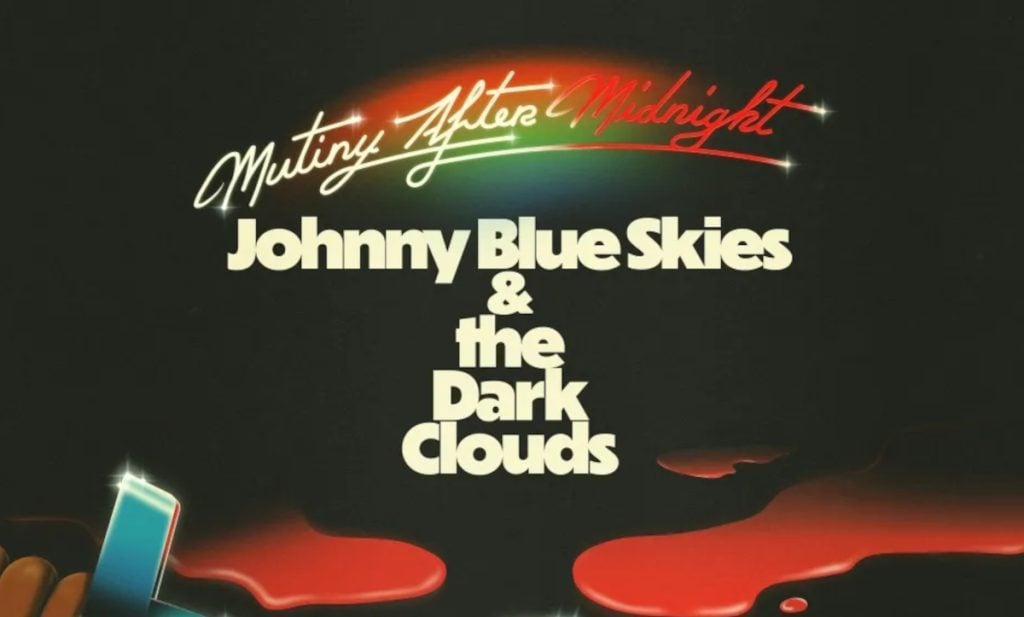
The second album from Johnny Blue Skies and the Dark Clouds (Sturgill Simpson) called Mutiny After Midnight is not officially out until Friday, March 13th. But it’s fair to wonder if that March 13th date is relevant to anything at this point. After leaking the album on March 1st via YouTube, the album is basically out in the wild at this point. And monitoring social media, dozens and maybe hundreds of people already have their physical copies of the release to boot.
So how did we get here? Why was one of the most anticipated releases for many fans in independent music leaked on YouTube nearly two weeks prior to its proper release date? It’s hard to rationalize why Sturgill Simpson does a lot of the stuff that he does. He likes to keep fans on their toes. But populating a timeline of all the details from the announcement of the album to the YouTube leak itself seems to paint a pretty clear picture.
First, let’s dispatch with this idea that the leak of the album had to be some sort of brilliant stroke of marketing genius, and not the result of Sturgill Simpson’s hand being forced. Not to completely discount the idea that leaking the album early could result in some sort of promotional boost—especially since the initial plan was to make the title only available in physical copies. But it’s very unlikely that’s the reason Sturgill uploaded the record to YouTube on March 1st.
Let’s remember that when Mutiny After Midnight was first announced, it was made explicit that it would be a physical only release. The press release from the publicist Shore Fire Media expressly states it would be available on vinyl, CD & Cassette Only. Here are screenshots from the press release verifying this.
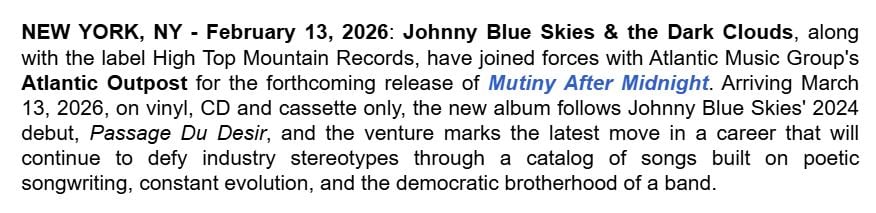
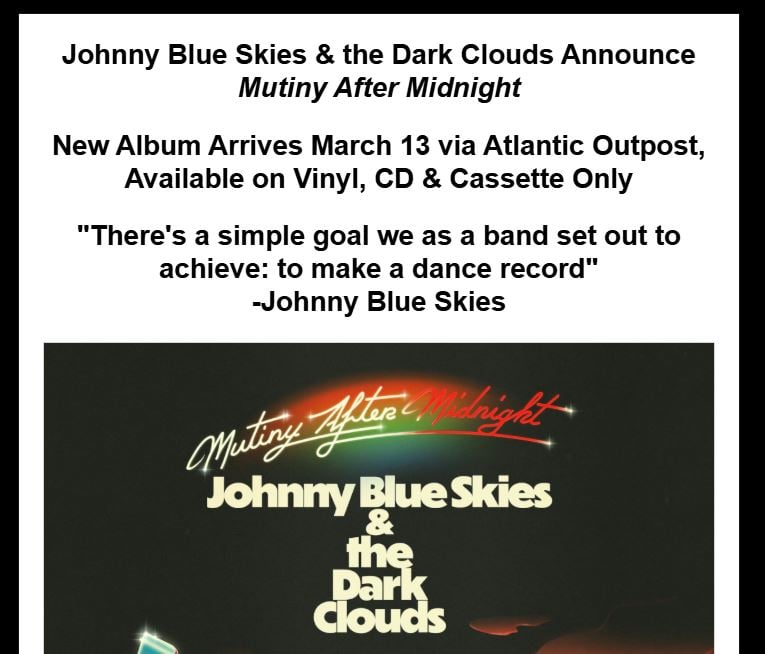
If Sturgill Simpson and his label purposely misled the public by claiming Mutiny After Midnight would only be available in physical form when they fully knew they would release it digitally as part of their marketing or release strategy, this would very directly engage them in a deceptive business practice.
This release wouldn’t be tantamount to a Garth Brooks-style marketing scheme. This would be even worse because it would be predicated on an outright, verifiable lie that very well could fall into the purview of the Federal Trade Commission if complaints were brought, or a class-action lawsuit from fans who pre-ordered physical copies was filed, however unlikely this might be.
Physical copies of music come with much greater margins for both a label and an artist. By feigning limited availability, this would have driven higher margin physical sales of the album only to then undercut these consumers with a digital release later, and a free one on YouTube nonetheless. So all the Sturgill Simpson fans who believe that Sturgill had this digital leak pre-planned and is playing 4-D chess with the YouTube leak are not taking into account the full perspective of the situation.
Let’s also not forget the vociferous praise Sturgill Simpson received from many of these same fans and from multiple media outlets when the physical-only strategy was first revealed. He was seen as sticking it to the streaming services for their egregious, penny-fraction payouts to artists. But the irony here of course is that of all the streaming services, YouTube pays out the least, and by a wide margin.
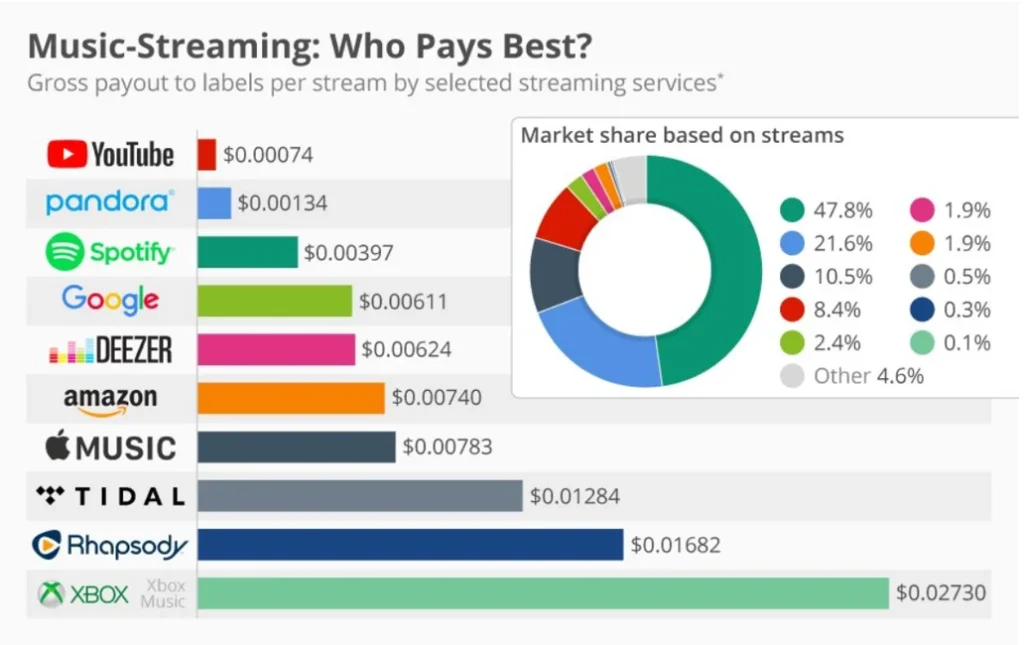
So clearly, if Sturgill Simpson and Atlantic were looking to make as much money as possible, the last place they would release Mutiny After Midnight digitally as an exclusive would be YouTube. Does releasing the album on YouTube two weeks before the official release even make any sense when it comes to a way to generate a buzz for the album that would result in greater exposure for it, and/or perhaps greater financial returns? Not really.
If one wanted to create a buzz through a leak, you would likely do the leak 24 to 48 hours before the album release, not two weeks before. This way you would get the internet milling interest, but it would still be within the window you want interest to peak to hopefully pierce through to the popular zeitgeist right on your release date, coinciding with media coverage, and the natural attention a release date receives.
As it currently stands, the release date for Mutiny After Midnight is almost irrelevant. Media outlets that had scheduled coverage for March 13th have either moved that coverage up in staggered or rushed schedules, or might even cancel coverage outright on that date since it no longer feels relevant. That doesn’t mean the album hasn’t received ample media coverage, or runs the risk of going overlooked. But its hard to claim that what happened with the Mutiny After Midnight leak aligned with any sort of planned rollout.
So why did Sturgill Simpson leak Mutiny After Midnight like he did? It’s not because he wanted to, or was planning to. It’s because he was forced to because the actual marketing strategy that he looked to implement backfired, verified by Sturgill’s own now-deleted social media posts.
On February 27th, Sturgill Simpson took to Instagram to declare in a now-deleted post, “TREASURE HUNT ALERT! 10 copies on shelves at your local record shop in select markets… run bitches. I’M THE CAPTAIN NOW.”
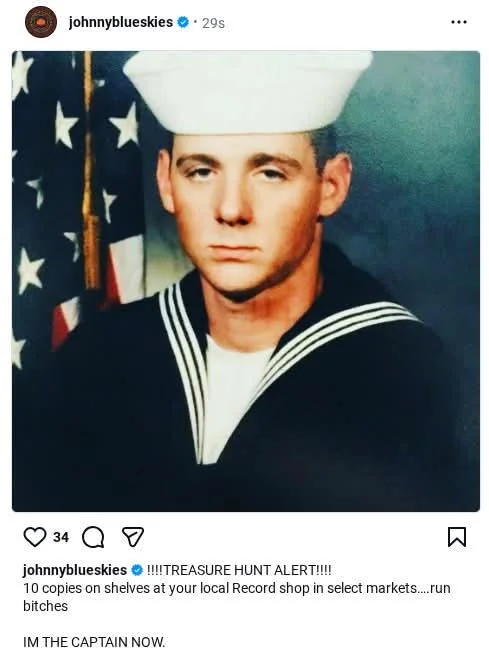
Though the treasure hunt on its face was a great idea—especially since at this time, Sturgill’s plan was for Mutiny After Midnight to still be a physical-only release—it was ill-advised, and for a host of reasons. If the ten copies simply landed in the hands of superfans who at the most posted photos or small videos of themselves holding or playing the album, then yes, this would have all fed into a smart gonzo marketing strategy.
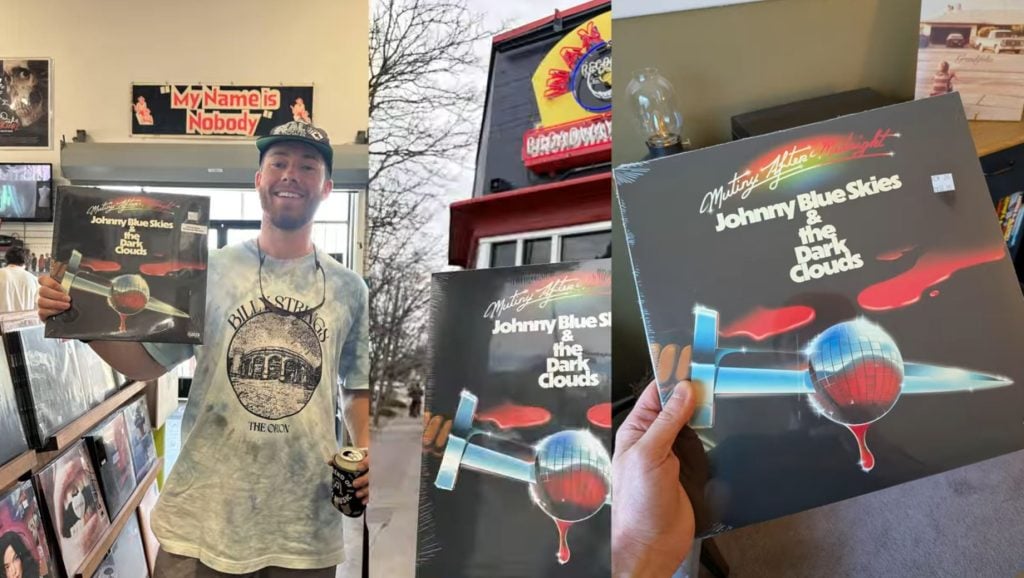
But in truth, this injected the album and all its contents onto the internet for wide proliferation, however inadvertently.
First, the treasure hunt didn’t just result in 10 copies being sent into the wild. Dozens, maybe hundreds, maybe even thousands of copies were disseminated through these local record store giveaways. As Sturgill Simpson fans with dollars in their hands started appearing at local record stores asking for Mutiny After Midnight, some record store employees started opening up their stocks, and selling copies beyond the 10 designated for the treasure hunt.
Furthermore, copies then started populating on resale sites, and then of course, digital tracks ripped from the vinyl began populating on pirate audio sites. At this point, the album was officially leaked, with Sturgill and his team having nothing to do with it, aside from instigating the situation with the treasure hunt.
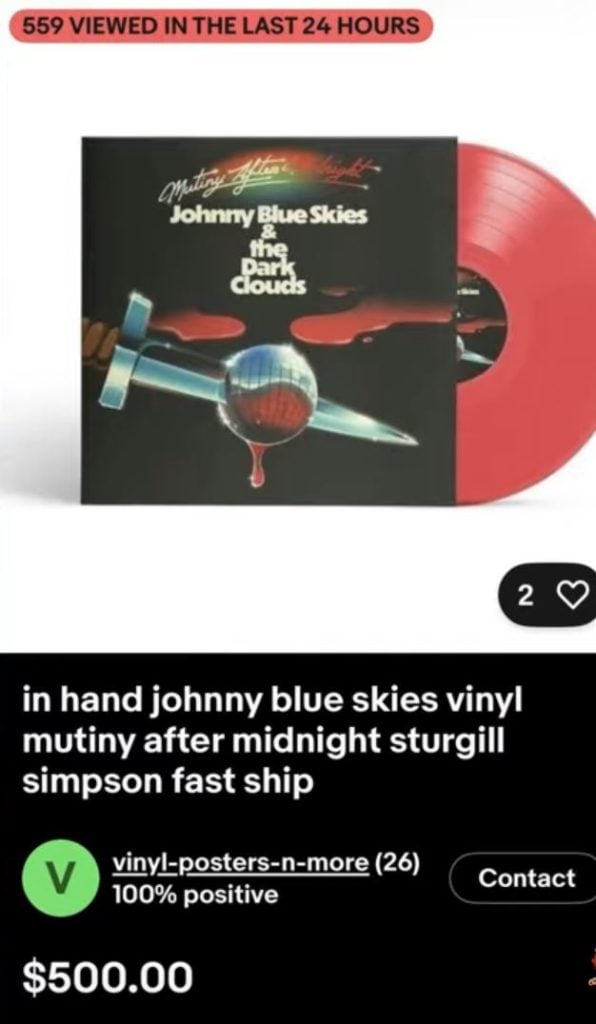
In many ways, the decision to release Mutiny After Midnight as a physical-only package preordained the leak before it ever occurred. It takes a level of either hubris or ignorance in 2026 to believe you can control the flow of audio tracks on the internet.
In fact, Saving Country Music has reported on artists having their music stolen even before they’re able to release it, resulting in the loss of the rights to their own music, and on artists like Jesse Welles releasing video audio onto streaming services en masse as an indemnity against stolen audio being uploaded onto streaming services. It’s no longer an elective decision to release your music via streaming sites. It’s a requirement, whether you’re Sturgill Simpson, or a local artist with less than 100 fans.
It wasn’t very likely that the songs of Mutiny After Midnight would make it onto the internet right after the release, if not before. It was a guarantee. The only way to attempt to control this activity is to upload the tracks digitally yourself. That is why Sturgill Simpson decided to leak Mutiny After Midnight personally as opposed to having the pricks who secured early copies dictate the flow of his music.
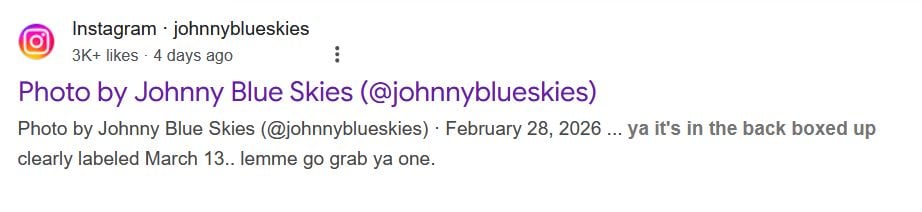
This is also verified in many respects by a now deleted message Sturgill Simpson posted on Instagram on February 28th amid the flood of copies placed in the public via local record stores as part of the treasure hunt, saying, “ya it’s in the back boxed up clearly labeled March 13 … lemme go grab ya one.”
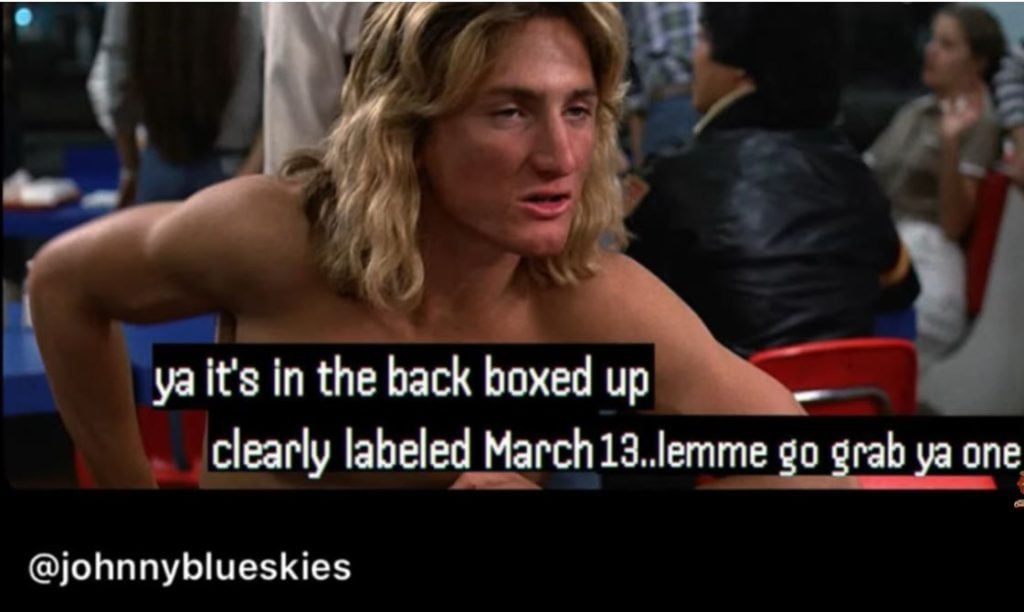
Ironically, most all of Sturgill Simpson’s albums has been leaked prior to their release. It’s an issue that has plagued his entire career.
But don’t discount Sturgill’s leak of Mutiny After Midnight on YouTube totally as the result of folly. With the album clearly out there in the wild, Sturgill felt a responsibility to his fans to not reward bad actors as die-hard pre-order customers sat and waited until March 13th for their copies. By leaking the album on YouTube, he democratized the listening experience for everyone, and did so probably at his own financial expense due to the meager payouts from the YouTube format.
It also happens to be that free and ad-supported streams are weighted less than paid-for streams on things like the Billboard charts. This means with the YouTube leak and the staggered release cycle, Mutiny After Midnight‘s chart performance will be significant injured—not that Sturgill Simpson is worried about such things, necessarily.
You also want to give credit to Sturgill Simpson for trying to do something different, for trying to emphasize the importance of the psychical format, and for trying to get people to once again think about music less as background noise, and more as something you actively participate with that has an inherent value.
Unfortunately in the internet age, these principles aren’t difficult to hold by, they’re perhaps impossible. The release of Mutiny After Midnight verifies this.
– – – – – – – –
If you found this article valuable, consider leaving Saving Country Music A TIP.
March 7, 2026 @ 9:18 am
How many copies do think were originally pressed?
March 7, 2026 @ 9:32 am
I don’t know. I do know that for a moment the CD version and maybe one of the vinyl pressings was showing sold-out, but they have since been replenished. Maybe also the plan at some point was to offer limited copies, but I’m not seeing any evidence of that right now.
March 7, 2026 @ 10:19 am
I heard a minute or two of the leak. I’d rather hear piss hit the asphalt than any more of that garbage.