

The Ballad of Todd Snider
Editor’s Note: This story has been updated with bodycam footage of Todd Snider’s arrest (see below).
Singer, songwriter, and storyteller Todd Snider is the great American anti-star. That’s how he started his career, that’s how he rose to prominence, and that’s how he falls from grace. Todd Snider doesn’t belong on TMZ, no matter how tawdry the details of his recent arrest are. He’s a cult figure that rewired the brain of alternative American music, and became and inspiration to a generation of songwriters.
Now that his name has been slathered across headlines from publications that otherwise wouldn’t bother to say a peep about Todd Snider, it feels appropriate to take a deep breath, a step back, determine how we go here, and how we can unwind the situation to make sure this critically-important member and contributor to the music community is cared for.
To understand the story of Todd Snider, geography is key. He was born in Portland, Oregon and was raised in nearby Beaverton, but that might be the most unimportant geographical detail of his biography. After attending junior college in Santa Rosa, California briefly and dropping out, Snider ended up in San Marcos, TX, not Austin just 30 minutes up the road, but San Marcos.
While living in San Marcos in the late ’80s, Snider saw Jerry Jeff Walker perform—just himself and a guitar—at the legendary Gruene Hall in nearby New Braunfels. With little or no music experience beyond blowing on a harmonica some, Todd Snider decided he’d been placed on this earth to be a songwriter. Todd bought a guitar, and started writing songs the very next day.
When you think of Todd Snider, you might not think of Texas or the Texas Music Scene, but Texas played a major role in his musical maturation. He met Kent Finlay, the legendary proprietor of the Cheatham Street Warehouse. It was Finlay who introduced Todd to songwriters like Guy Clark and John Prine. Soon Snider was drawing his own crowds in the San Marcos songwriting rooms, and started driving up to Austin to perform.
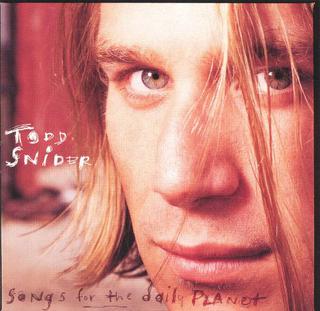
But it’s not San Marcos or Austin that would become synonymous with Todd Snider when his career started to take off, save for his spirited, and under-appreciated appearance on Season 21 of Austin City Limits in 1996. At the time, Snider’s debut album from 1994 called Songs for the Daily Planet was really taking off. The Daily Planet was a club in Memphis that became Todd Snider home base after he moved there around 1990 looking to work with songwriter Keith Sykes. Snider’s father moved to Memphis in 1989, and had passed Sykes a demo of his son’s stuff.
Keith Sykes introduced Todd Snider to two very significant people. The first was John Prine, who Todd would remain a close friend of and consider a mentor all the way up to Prine’s death on 2020. Sykes had also once been a member of Jimmy Buffett’s Coral Reefer Band. Sykes got Snider on a show in California opening for Buffett, who personally witnessed Snider’s set, and offered him a deal on his Margaritaville Records, distributed by MCA.
Songs for the Daily Planet might have been written for audiences in a club in Memphis, but it would take Todd Snider nationwide. It was co-produced by the legendary Tony Brown, who was just inducted into the Country Music Hall of Fame. It wasn’t really a country album and it wasn’t meant to be. It was more of an alt-country, singer/songwriter album with a full band. Among other notables, the album featured Eddy Shaver, the hot shot guitar player and son of Billy Joe Shaver.
“Alright Guy” is the song that would become Snider’s signature tune. Country artist Gary Allan even made it the title track to his 2001 album. Jerry Jeff Walker covered the song in 2001 too in a full circle moment for Todd Snider. Mark Chesnutt covered Snider’s song “Trouble” on his 1995 album Wings. No different than his songwriting heroes, Todd Snider was influencing mainstream country and landing cuts while still distinctly remaining himself.
But the song whose importance seems to be forgotten from Snider’s first album was the hidden track at the very end, “Talkin’ Seattle Grunge Rock Blues.” It was a commentary on grunge music, told through a band that refused to play, but became successful anyway. It really was the song that introduced Snider to the world as it was picked up on college radio and even mainstream rock stations. As a hidden track parody, it was the perfect anti-hit to launch Todd Snider’s unlikely career.
Snider would release two more albums for Margaritaville/MCA, Step Right Up (1996) and Viva Satellite (1998). Neither was as successful as Songs for the Daily Planet, though some still consider Step Right Up one Snider’s best. It was during the recording of Viva Satellite that things started to turn sideways. There were rumors of drug use, then tell-tale signs of it seen publicly.
In May of 1998 while Todd Snider was performing at a private party for MCA brass, he ended up insulting those in attendance early in the performance and then walked off stage. This was the first sign that the peace-loving, whimsical, storytelling Snider had a dark streak. He was ultimately dropped from the label.
However, Todd Snider found a soft landing with his friend John Prine’s Oh Boy Records, releasing three albums through the label, most notably 2004’s East Nashville Skyline. Once again, geography played a major role in the Todd Snider universe. The title was a play off of Bob Dylan’s Nashville Skyline, but it really was Todd Snider helping to define the emerging influence of Nashville’s east side where creative types flocked to in order to get away from mainstream country’s power base, and to find affordable housing.
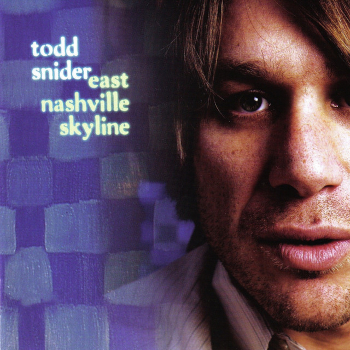
In the modern era, there really was East Nashville before Todd Snider’s 2004 album, and East Nashville afterwards. In many ways, the album helped spark the current independent country revolutionary era as so many performers from throwback hipster country to indie rock-inspired Americana congregated in one geographical area. It wasn’t the title of East Nashville Skyline though, but songs like “Play a Train Song” and “The Ballad of the Kingsman” that made Snider like a guru to many up-and-coming musicians. This was also the period that Todd Snider’s music became much more political.
What also elevated Todd Snider to cult hero status is that he’d written the first version of the song “Beer Run” that appeared on his 2002 album New Connection, though he’d been performing it live well before that. When Garth Brooks released a song of the same on his Scarecrow album, controversy and lawsuits ensued. Snider ended up writing a song called “If Tomorrow Never Comes” as sort of a kiss-off to the situation.
Snider would tell his “Beer Run” story in concert regularly, along with many other tales from his time in music. His storytelling became legendary, leading to his 2011 album Todd Snider Live: The Storyteller. But following a somewhat regular pattern, each time Todd Snider found an elevated level of success, it was proceeded by a fall from grace, however slight or pronounced. This kept Snider from breaking out into the bigger consciousness.
In songwriting circles and in East Nashville though, Todd Snider was revered as a saint, often being forgiven for missed or canceled tour dates, or other personal indiscretions that would creep into people’s experiences with the songwriter. In the past five years however, those indiscretions, canceled plans, and the general chaos that surrounded Todd Snider that in some respects was forgivable and endearing previously ultimately became unbearable.
The pandemic was tough on everyone. But for some, it was tougher than others. 2020 saw the death of both good friend and former label boss John Prine on April 7th due to Covid-19. Then Todd Snider’s songwriting hero and the inspiration for his entire career, Jerry Jeff Walker, died on October 23rd. This put Todd Snider in a dark place.
But it wasn’t just the emotional distress that put the acclaimed songwriter in a lot of pain. A diagnosis of spinal stenosis had kept him off the road since 2022, and made the famously affable, good-humored, if not passionate and outspoken Todd Snider turn irritable and morose. According to people close to Todd Snider, the daily pain is acute and unbearable for Snider, and the pain pills he takes to stave it off have led to his addiction issues rising to the surface once again.
Todd Snider’s long-time manager Burt Stein (also the fmr. manager of Motley Crue) left the picture in 2023. Todd Snider’s long-time tour manager and business partner Brian Kincaid also left a few months ago. According to those close to Todd Snider, he’s been telling people, “I’m a junkie and I’m going to die a junkie, and it’s okay.”
But this shouldn’t be okay with anyone in the music industry, from the Texas music scene where Snider got his start, to Memphis where Todd regaled audiences for years and launched his career in earnest, to East Nashville where he helped seed the roots music revolution that acts as a counter-balance to the ills of the mainstream country music industry and Music Row.
You can hear the pain Todd Snider is suffering through, and the sense of being forgotten in the lyrics of Todd Snider’s new album High, Lonesome, and Then Some released October 17th via Thirty Tigers. Instead of singing, Tod Snider is often talking in the passages, as if he’s struggling to perform through pain. There has always been a darkness to Snider’s music, but it was always chased with humor, or glossed over with a good story. That is mostly gone.
According to people familiar with the situation, Todd Snider should have never embarked on the 13-stop tour that started in Englewood, CO on October 30th, and ended abruptly in Salt Lake City, Utah on November 1st. Fans who arrived at the show saw equipment being loaded into the venue, and no indication that anything was wrong. But the show was eventually cancelled. Then a message went out to fans on November 3rd via “Aimless, Inc.,” which is Todd Snider’s record label.
– – – – – –
We are heartbroken to announce the cancellation of the High, Lonesome and Then Some 2025 Tour dates. Ahead of Todd Snider’s show in Salt Lake City, Todd sustained severe injuries as the victim of a violent assault outside of his hotel.
Todd will be unable to perform for an undetermined amount of time. We deeply apologize for the cancellation and any inconvenience it causes. We appreciate your understanding as Todd receives needed medical treatment. We hope to have more information on new dates.
– – – – – –
But this ended up to just be the beginning of a saga that concerned fans, long-time friends, and even the police are trying to unravel. What’s for certain is the statement doesn’t even begin to paint the full picture of what happened.
According to Salt Lake City Police Detective Michael Ruff, on Sunday afternoon (11-2) at about at about 3:40 p.m., Snider flagged a bystander down at 245 S. State Street, and asked them to call police. Snider ended up talking to the dispatcher, and told them he’d been assaulted and robbed the night before. When police arrived “he basically told [officers] he’d been in town with his band, and the band left him,” says Detective Ruff. “All he could tell [officers] was he was mugged at the venue he was supposed to play at.”
This information contradicts what was in Todd Snider’s original statement, since Snider claimed he’d been assaulted outside of his hotel. Police also observed at the time that Snider had staples in his head, and appeared to have been treated at a hospital or other medical facility previously. Snider then asked officers if they could take him to the hospital so he could have some place to sleep. The officers refused, and unable to determine exactly what happened to Snider, left the scene without looking further into the alleged assault against Snider.
This is when Todd Snider made his way less than two miles east to the Common Spirit Holy Cross Hospital. It is uncertain if Snider was ever treated at the Holy Cross hospital. But when hospital staff asked Snider to leave, he refused and became belligerent, demanding treatment. Police were called once again. Snider was arrested for suspicion of criminal trespass, threat of violence, and disorderly conduct—two Class B misdemeanors and an infraction.
Also, according to security staff at the hospital, Todd Snider was “cussing and screaming,” and that at one point Snider bragged that he was “richer than them” and that they’d “never be anything.”
Saving Country Music has reached out to Todd Snider’s publicist for further clarification, a statement, or any other information about what happened to Snider in Salt Lake City, or what his current status is. As of this post, there has been no response.
According to people close to Todd Snider, he’s been frustrated at the state of his life and career, feeling like he’s been left behind, and his contributions overlooked. Combined with the severe spinal stenosis that has inflamed his addiction issues, it has made his life unbearable, and Todd unbearable to be around.
The question now is if the music community will simply continue to simply gawk at his problems and gossip about them, or rise up to attempt to get Todd Snider back to a comfortable place? Much of this work must come from Todd Snider himself, just how it’s many of his own decisions that have put his life and career in this precarious position.
But the hard lessons we all had to learn with the passing of performers like Luke Bell, Justin Townes Earle, and many others are ones nobody wants to have to endure again. The music is so often there for us in dark times. The question is, will the music community be there for someone like Todd Snider, and how can be be reached?
Whatever happened in Salt Lake City and whatever led to it, it very well might make for one very epic Todd Snider song and story someday. But we’ll only get to hear it if he’s still around to write, sing, and tell it. It should be the imperative of us all to make sure that day comes, and many more days for the wild, whimsical, tortured, often troubled, but tantamountly important musical contributions of Todd Daniel Snider.
– – – – – – –
If you found this article valuable, consider leaving Saving Country Music A TIP.
November 6, 2025 @ 11:53 am
Very well written. I expected that there was more to the assault story.
I’ve been a fan of his. I have several of his CD’s and have seen him in concert a couple of times. I couldn’t get through his latest release. I hope he does get the help he needs.
November 8, 2025 @ 5:07 am
“Hopefully he will reach out for help” WHAT DO YOU THINK HE WAS DOING? He was turned away from a
hospital! HOLY CROSS hospital. Why? Because of his language? The man was in pain and most likely suffering from withdrawals. He was denied the help he was desperately pleading for. Sure, they may have treated his superficial wounds. But what of the more serious internal, mental crisis that should have been obviously apparent to a room filled with people who’ve been professionally trained to handle such an ordeal? NO! They have him thrown in jail. SHAME ON YOU HOLY CROSS! …Sleep well.
November 6, 2025 @ 12:05 pm
Hard Luck Love Song (based on a Snider song) is a great movie for those that haven’t seen it!
November 6, 2025 @ 12:36 pm
My Dad first turned me on to Todd in the 90s, and although i was more into punk, metal, etc. I could appreciate this one small thing we shared. Fast forward 20 or so years and i consider myself lucky to have seen him perform, even though threatened to leave the gig and ended up just playing songs and not telling all the stories we had come to hear.
Seeing his live streams during covid, especially the Prine memorial episode, was huge during that time.
I truly do hope we get to hear the story and song about SLC someday and that Todd tells it more many more years to come.
November 6, 2025 @ 12:48 pm
Someone should get that guy to a chiropractor. At least it would be a drug free alternative
November 6, 2025 @ 1:48 pm
I heard a long-form story a few years back on public radio, told in first-person narration, about how hard it was to get off pain pills. If it’s the same for everyone, he’d need a lot more than a chiropractor.
November 6, 2025 @ 3:53 pm
As a chiropractor, I can say stenosis is tough to treat. Depending on where it is, what it is caused by and how long its been there. There seems to be some good prognosis with stem cell treatments. But the person has to want to seek treatment and not want to go the pain pill route. And even adjusting someone with stenosis is not going to reverse it. Even surgery has less than a 50% success rate. The best treatment options tend to be a combination of different specialties and a big lifestyle change by the person suffering.
November 7, 2025 @ 7:30 am
He has a chiropractor, PT, physician, he does exercises multiple times a day and has abs of steel, trying to address his pain. Surely a chiropractor can see how effed up his shoulders are, after they put him in cuffs. He wasn’t referring to the cuffs hurting his wrists, he was talking about his shoulders hurting him, as well as his head.
And it isn’t addiction if the person is physically dependent. Everyone’s acting like he’s “just” a drug addict when he’s a brilliant artist with a beautiful soul.
November 7, 2025 @ 4:03 pm
Being an addict and an artist with a beautiful soul are not mutually exclusive. It seems pretty clear that Todd has been an active addict for a long time. Believe me, I know how incredibly hard it is to get off drugs and alcohol. I’ve been sober since 2018 by the grace God; I never thought I could get free of it. Prayers to Todd that he can find the way out of the prison that he’s in. Being an addict is not a character flaw, it’s truly a disease, but it takes the unique combination of a power higher than ourselves working in us alongside a complete willingness on the part of the addict to let go of the chains that have bound them.
November 7, 2025 @ 4:39 pm
@DrJ– And here I thought you were a basketball player.
November 6, 2025 @ 12:49 pm
A nice historical summary of Todd’s music career. I’ve been a Todd Snider fan for many years, and I have all of his CDs, read his book “I Never Met a Story I Didn’t Like,” and attended one live show. I recently bought his new CD “High Lonesome and Then Some” but I need to give it a few more listens as it is new and just a little difficult to dig into – via the writing and production.
Given the differences in the current reports, there is a truth in there somewhere. As you note, Todd will likely present his side of the story sometime in the future when he is able to do so. In the meantime, I will return to the new album and likely dig back into some of my favorite Todd songs that feature his humor, heart and grit.
I hope Todd will sort out his troubles and get back on track with his music.. and tour when he is healthy and in good condition. Keep on truckin’ Todd.
November 6, 2025 @ 12:55 pm
Excellent article. I believe another person close to Todd that affected him was Neal Casal who a member of the Hard Working Americans project. Although I have several of his albums and have seen dozens of concerts the last album did not do anything for me. I wish the best for him as he battles through his situation.
November 6, 2025 @ 2:38 pm
And his best friend, comedian Richard Lewis.
November 6, 2025 @ 4:04 pm
And Jeff Austin. There was a run there where Todd lost a
Ton of his friends in a very short time.
November 6, 2025 @ 4:40 pm
And don’t forget Cowboy Jim, right before COVID hit.
November 6, 2025 @ 5:04 pm
And Billy Joe Shaver.
November 7, 2025 @ 12:27 am
And Peter Cooper.
November 7, 2025 @ 8:06 am
And DB Cooper
November 6, 2025 @ 1:03 pm
A beautiful account of his long and troubled career. I very much hope the hopes you expressed at the end — that Todd will get the help he needs — bear fruit. There is a pledge that closes some AA meetings: “I am responsible. When anyone, anywhere, reaches out for help, I want the hand of A.A. always to be there. And for that I am responsible.” If Todd reaches out, I have no doubt plenty of people in the music community would answer.
November 6, 2025 @ 1:20 pm
What everyone above said. Great account of TS. Have seem him at least 5-6 times in concert, both full band and solo. But not in the past 15 years and was hoping to see him again. His story telling via song and with stage banter is unsurpassed. Seriously funny dude. Hope he can get the help he needs.
Thanks!
November 6, 2025 @ 1:21 pm
Incredibly well-written piece, Trig.
The statement that’s attributed to him, from friends who’ve heard him say something about him being a junkie and dying a junkie, and him being alright with that fate has an eerie similarity to something that the late Layne Staley allegedly told one of the members of Alice in Chains in the years when Staley was holed up in his condo, high as a kite and not making music. Staley was a good man with demons, as is Snider. Hopefully he’ll pull through this, but having Todd Snider alive and with some quality of life is more important than Todd being able to play and sing for us at the end of the day.
November 6, 2025 @ 1:28 pm
Love Todd. Have seen him quite a few times. Praying for him. Only time I saw a bit of his dark side was when he played the Newport Folk Fest. Guess his ex-inlaws were in the tent where he was playing. He was not happy about it. They ended up leaving and he later explained the situation to the crowd.
November 6, 2025 @ 1:40 pm
Is there any chance the altercation could have been with a band member? Don’t get why the band would leave him. Something doesn’t add up? Has anyone interviewed anyone in the band? Most times I’ve seen Todd have always been solo shows (except once at the Paradise in Boston with a band).
November 6, 2025 @ 3:42 pm
“Something doesn’t add up.”
Nothing adds up.
The story that Snider told was not accurate–as was noted, he changed his story, as to even the place where the claim assault occurred–so the real story could be anything.
Seems possible he fell or had an accident on his own; or he may have goten into an altercation with a stranger, with Snider gettigng the worst of it; or it could have been something with someone he knows, like a band member.
I doubt that Todd Snider will be demanding for any further police investigation. (I hope he gets the criminal charges against him for disorderly conduct resolved, possibly with an agreement to get mental health/”anger management” or substance treatment).
I’m perfectly fine with never learining the truth of what happened.
November 8, 2025 @ 4:53 pm
I’ve seen him half dozen times since 2012 and I’ve never seen him with a band.
November 6, 2025 @ 1:57 pm
Sending all positive energy to Todd. You got so many of us through the lock down 5 years ago with your free shows from
The Purple Building. We all felt the loss of your heroes, John, Jerry Jeff then Jimmy. Your tributes to them were amazing and emotional. Get yourself better. We all want to keep seeing you and listening to you for a long time. I hope to be
seeing you in Clearwater for the show in late January 2026.
November 7, 2025 @ 12:31 am
This a thousand times forever. You’re a legend Todd
November 8, 2025 @ 11:14 pm
Oh gosh yes. The Purple Building shows! I loved them. I’ve seen Todd live 30+ times since the early 90’s. My sister told me about him back then and he was immediately my favorite artist. We just call him Todd and all our peeps know who that is. So very hard to hear this, we hope and pray that he makes it through this very tough time. We love you Todd.
November 8, 2025 @ 11:46 pm
The Purple Building shows! Those were a highlight of the Covid days. My sister told me about Todd in the early 90’s and he became my favorite artist immediately. She and I and all our peeps just say Todd and everyone knows who we’re talking about. I’ve seen him live 30+ times and everyone I take to s him has become an instant fan. Of course. I pray he gets the help and support he needs. He’s truly helped so many with his music and stories. We love you Todd❤️
November 6, 2025 @ 1:59 pm
Todd has gotten me and I know a hell of a lot more people through some hard times, and I for one am here to support him however I can. He is a goddamn national treasure and should know and believe that. I saw him open up for Buffett and I’m sure I’ve seen him close to 100 times since. Probably more. I can promise you his fan base is there for him.
November 6, 2025 @ 2:08 pm
It’s sad that the police and the people at the hospital didn’t know how to treat a mental breakdown. They could have admitted him first testing and given him something to calm down. I hope those that know how to reach him will be able to get him the help he needs.
November 6, 2025 @ 2:11 pm
Just saw Todd at the We got Gold celebration in Nashville. It was great seeing him again but it was hard to watch he looked like he was crawling out of his skin. I hope he gets the help he needs he’s one of my favorite artists
November 6, 2025 @ 3:15 pm
Todd has given so much of himself to his music. His constant touring has taken its obvious toll. Todd, you are not forgotten by your die-hard fans and many in the music industry. You got us through the pandemic with your purple building livestreams and we have been waiting your ability to tour again to greet you with open arms, especially those of us on the west coast unable to have made any of your one-offs. However, it seems your health issues have unfortunately seem to have made that too burdensome an endeavor to complete. Your health and wellbeing is more important. You can still make your music for the masses. We will always be here. I don’t know that I’ll ever see Todd live again, but dozens of shows over the years have been more than enough to fill my heart and keep my hopes outweighing my doubts.
It’s none of my business what happened in SLC, my only curiosity is your wellbeing. We all stumble, we all fall. We all try to pick ourselves up again and keep going. Life can be a f*cking struggle even without chronic pain, even without losing two of your best friends to suicide in a short period. I hope Todd can pick himself up and keep going. We’re here for it.
November 6, 2025 @ 3:56 pm
Hopefully,Todd recovers and gets back into the studio and on the road .Burt Stein as Motley Crue’s former manager and Todd Snyder’s current handler is worthy of a documentary in itself.
November 6, 2025 @ 5:18 pm
Jason? Mr. Isbell? Your fellow musician is in distress. Can you find it in your heart to give him a hand up and help him?
Or are you waiting for the inevitable so you can write your tribute song and say you knew him when?
Jason?
Jason?
Bueller?
November 6, 2025 @ 6:22 pm
Sort of like how Todd Snider wrote Waco Moon about Eddie Shaver?
November 7, 2025 @ 6:30 am
Todd sings Waco Moon at the tribute to Billy Joe Shaver, at Billy Joe’s request. https://www.youtube.com/watch?v=gfHCcd7M-Xs
November 7, 2025 @ 6:20 am
Maybe he’s reaching out to Todd quietly. I don’t know whether he is or isn’t, but I think it’s likely that if he was making a public show of reaching out, he’d be slammed for it, and rightly so.
November 7, 2025 @ 7:21 am
I was just wondering if you have any insight into whether Jason Isbell has contacted Todd Snider personally.
Or if (more likely) you’re making up some imaginary scenario in an attempt to attack Isbell while showing Todd absolutely no concern. More occupied with critizing Isbell for something you have no information about. Terribly strange reaction.
November 7, 2025 @ 9:45 am
I wouldn’t say it’s Isbell’s job to save Todd. Now we are getting into some para-social shit, I’m not sure how interested Isbell is in saving Todd, and for even more para-social shit, I’d bet Amanda Shires got Todd in the divorce.
November 8, 2025 @ 2:18 pm
Yeah, I see what you’re doing. Low blow, man.
November 6, 2025 @ 5:38 pm
When Todd is on, his live show is among the best I’ve experienced. The Purple Building albums are phenomenal, he really sounded like he was enjoying that retrospective look at his career but he has no doubt been up against a lot.
I had tickets for the Phoenix show, was very bummed to hear all of this. Get well Todd and we’re hear to listen when you’re ready.
November 6, 2025 @ 5:47 pm
Todd Snider does not get the credit he deserves as part of the alternative country movement of the mid-90s and 2000s. He just doesn’t.
November 6, 2025 @ 6:01 pm
I’m listening to The King Is Back as I read this. It adds to the poignancy of what I’m hearing.
November 6, 2025 @ 6:09 pm
I saw Todd from a front row seat ten years ago, and to be honest, I 100% expected that to be his last tour. He was still himself, and performed as well as I expected, but it was obvious he was having problems and not well. I think anyone who really follows him knew the moment the first message about the assault was posted on facebook that there was way more to it than some random altercation. I genuinely hope Todd turns it around. But he seems to be in so much pain, in multiple ways. Really stinks to hear that he thinks he’s been overlooked because every time I hear my 16 year old playing his music, I realize how amazing he really is.
November 6, 2025 @ 6:28 pm
he doesn’t think he’s been over looked and he was the random victim of an attack. you will eventually see the footage of it.. and you will say, damn there wasn’t anymore to it that a random altercation that he never saw coming. never saw his attacker. i know this from sources that are to close to him..
November 6, 2025 @ 8:05 pm
If there was footage of a celebrity albeit being randomly attacked the new would’ve had it by now.
November 6, 2025 @ 10:58 pm
yeah? well you would know and i am going to trust you on this and i am going stab todd snider when i see him again. for america….. i hope you can forgive me for lying to you… but i just had so much to gain from it that i lost site of my moral compass.
November 11, 2025 @ 12:41 pm
I’m a big fan. One of those writers and performers who could leave my awestruck and grinning. I wish for him to get in sync with the world around him.
I was mixing FOH for a Todd Snyder show, when all of a sudden, 45 min in,the sound and lighting systems took on a life of their own. Analog audio settled down, but the lights were freaking out. Solo show. Bad mix position. My old ears. While we were trouble shooting lights, Mr Snyder became convinced the we were intentionally fucking with him. I wasn’t tuned in to what he was saying over the system. About the time that we tamed the lights and I started paying attention, he walked off stage and went to his bus, convinced that we were messing with him. I then had to convince his TM that we were on Todd’s side in the war with the inanimate. Meanwhile, no one left the building. After a 45 min negotiation, he returned to stage and played an additional 3 hrs of music. Lots of Jerry Jeff stories and songs. Lots of his own stories and songs. One of the most memorable shows that I’ve been a part of.
November 6, 2025 @ 6:26 pm
I thought Todd Snider’s “Alright Guy” was a great song, IN SPITE of some dated and lame references. The dig at Sinead O’Connor struck me as inappropriate for his character. Yeah, she tore up a black and white 8×10 photograph of the Pope on live national TV. It went over like a lead balloon and she got a lot of flak for it. I’m not a fan of Sinead O’Connor, but it struck me that he’s like her: getting into trouble for saying the wrong things at the wrong times and in front of the wrong people. I thought Snider would see her as a kindred spirit. Of course, that was off Snider’s debut album–BEFORE he had most of his own public problems.
I think Kristofferson earned some new admirers when he helped her out in front of a hostile crowd, some months after she made her career-defining faux pas.
When Gary Allan covered “Alright Guy”–and made it the title song of an album in 2001, he still mentioned the pope, but changed the context completely and removed the allusion to Sinead–and replaced it with an allusion to then President Bill Clinton!
Instead of singing about “tearing up pictures of the Pope,” Gary Allan sang:
“This one time for medicinal purposes they forced me to smoke some dope
I’m pretty sure I can still be the President
But I dont think I’ll ever get to be the Pope”
At least that’s punching up, rather than down.
I’d be interested to know if Gary Allan’s people ran it by Snider or if Snider gave any input for the change in the lyric.
November 6, 2025 @ 6:33 pm
i know from sources close to todd that he loved sinead and was trying to take a jab at the people
who thought what she did was sooooo awful and it didn’t get received that way which bothers him to this very day.. i know this from the closest source there has ever been to anything.. i also know that todd personally thanked kris for sticking for her from an even closer source.
November 6, 2025 @ 7:00 pm
@r-w-i- Thanks for that clarification. Sometimes you say something meaning it one way and it comes off to people as the opposite. I’ve done that. I can believe that that was the case in this instance.
November 16, 2025 @ 9:14 am
She did do something awful
November 6, 2025 @ 6:43 pm
I may have always caught a “good” show (i.e. not too drunk/stoned etc…) but Todd Snider and Lyle Lovett (no drunk shows!) are the only two songwriters that when I took someone who had never heard of them to a show at the Ryman or TPAC I was confident they would enjoy the show – and they always did. When I lived in Nashville I ran into Todd a few times at the Alley Cat – I would say hello and a little small talk but he always seemed to be in his own head so I let him be (although I wanted to pick his ear a lot!)- he’s truly one of my favorite songwriters and I hope nothing but the best – sounds like his health is making things tough – but his songwriting is on par with with JP and JJW without a doubt.
November 6, 2025 @ 6:57 pm
Having severe uncurable physical pain from acute medical issues is different from having clinical depression and/or mental health issues. I have a lot more sympathy for someone in his position vs Luke Bell or Justin Townes Earl.
November 6, 2025 @ 8:19 pm
You continue to demonstrate what a vile person you are. Whether phsical or psychological, acute medical issues are acute medical issues. Most serious psychological issues are themselves physical issues, i.e. neurotransmitter imbalances, brain abnormalities, etc. You are ignorant, at best.
November 6, 2025 @ 8:44 pm
Maybe Strait’s neurotransmitters have some imbalanced abnormalities. Let’s have compassion, bro.
November 6, 2025 @ 9:07 pm
Bingo!
November 6, 2025 @ 8:55 pm
I expect Trigger to not post the “eat a bag of dicks Doug” comment because he’s done that before. He openly coddles you and others who blow up his email with your pansy-ass complaints.
November 6, 2025 @ 9:30 pm
Let’s not do this personal attack stuff please. Both of you, especially on an article like this.
November 6, 2025 @ 9:34 pm
Go fuck yourself. You only said that when I responded – not when Doug posted his comment. You put on these rainbow-colored glasses every time one our your Liberal email complaint buddies posts and you can never see their comments in the plain text as they appear for us.
Stop making special concessions for some
November 6, 2025 @ 9:52 pm
Please see my misplaced reply below. I apologize for the error. Thank you.
November 6, 2025 @ 8:52 pm
Oh Todd. Todd Todd Todd.
May the blessings be.
November 6, 2025 @ 8:53 pm
Snider hasn’t told any stories. Everything you’ve read has been third hand news. The only thing that doesn’t add up is what your problem is. Why do you keep going so far out of your way to kick a man when he’s down? Get a life. Todd Snider is a legendary songwriter, not some politician. Shit happens. It does not make one iota of difference if any of this story makes sense to you. He owes you exactly jack shit.
November 6, 2025 @ 9:35 pm
The only way it is possible for anyone to read anything that Saving Country Music has posted in this situation and conclude that what I’m doing is “kicking a man when he’s down” is if it’s run through the corrupting perspective of social media, likely the Todd Snider Facebook fan page appropriately titled “The Shithouse Wire.”
I don’t run a popularity contest. You want to assassinate my character and mischaracterize what I post? The line forms to the left. Good luck.
November 7, 2025 @ 3:46 pm
thats the not the only way its possible trigger.. have you ever been checked for kruger dunning syndrom… ? you are displaying clear symptoms. but i am sad that someone would try to assassinate your character. i can’t imagine how much would hurt. but damn that “line forms to left” was mic dropping smack down for the ages. i dont listen to the
corruptive perspective of social. i listen to you.. because your corruptive perspective is the right one. on social media.
November 6, 2025 @ 9:40 pm
Thanks for this well done article. Todd Snider at his best is one of the best. “The Ballad of the Kingsmen” is a truly brilliant song. I’ve never listened to it without shedding tears of joy, sadness and understanding, which is the hallmark of a top drawer song. “Hey kids, let’s get it on”.
November 6, 2025 @ 9:46 pm
I have emailed Kyle 3, maybe 4 times, in all of the years I’ve read SCM. I certainly do not feel “coddled”. Regarding his reaction and response to me, you are incorrect.
November 6, 2025 @ 10:19 pm
I want to say something and I hope y’all hear my heart on this… I think this serves as a cautionary tale as to what happens when you are just “California sober” (meaning no drugs or alcohol except for marijuana/edibles) as opposed to traditional sobriety. Because eventually when ish gets real, California sobriety no longer cuts it and **this** happens. I’m praying for Todd, I really am, but one of my prayers is he’ll see this as his rock bottom moment and seek true recovery.
November 9, 2025 @ 5:08 am
I don’t agree, although I think we could have a great and healthy debate about substance abuse recovery and what actually works. I think California sober doesn’t work for a lot of people and for some it’s the only way that they’ve found success. But there are far too many factors involved on an individual level to make blanket statements.
I am very curious though as to when Todd has ever claimed to be any kind of sober? I love a lot of his writing, but I don’t follow him closely so maybe something happened that I don’t know about but the last (seemingly) credible source that I’d heard on it was that he was “moderating” alcohol. He very well may have gone California sober but I have my doubts.
Anyone who’s been there has a pretty good idea what he was going through, and it’s hell.
November 6, 2025 @ 11:01 pm
This is heartbreaking to watch, prepare yourself:
https://www.fox13now.com/news/local-news/northern-utah/bodycam-video-shows-todd-sniders-interactions-with-police-during-arrest
November 7, 2025 @ 9:11 am
Very, very sad. The cops seemed decent, at least.
November 7, 2025 @ 12:37 pm
Thank you for posting the video. Heartbreaking, indeed. I agree regarding the police. They epitomize how law enforcement should behave. Respect.
November 8, 2025 @ 4:19 pm
I watched the video.
Snider speaks of having been “mugged” and says that he’s in pain.
From the looks of it and what Snider is saying it looks like he should be given a more thorough medical examination in the hospital and maybe be given more treatment or get his medications adjusted.
It makes me sorry or uncomfortable that the hospital staff called the police on Snider and had him arrested.
But we’re not seeing video of what led up to him being kept out of the hospital. Could be that he acted so unruly and threatening that they felt they had to call the police. The hospital emergency room deals with dozens or more patients a day and has experienced, competent staff and security. I’m not going to pass judgment on them, based on snippets of infortation and video, frm two thousand miles away.
November 8, 2025 @ 4:32 pm
I agree with you Luckoldsun. The video definitely gives us some insight into Todd Snider’s state. But it doesn’t show any arrestable offense happening, and for the most part, he’s cooperative with the authorities. We’d really need to see surveillance footage from the hospital to determine if what he did was so out of bounds, he needed to be arrested as opposed to admitted.
We also need to see any bodycam footage of the moment when the police were called earlier in the day about the alleged assault against Snider, or any footage of the assault if it’s available.
November 6, 2025 @ 11:56 pm
As good as he once might have been as an artist; he, like so many of his fellow showbiz dwellers, thrives on pure ego. It makes them perfect assholes, solely responsible for their downfall.
It’s hard to find an alright guy within the circles of showbiz. The legendary Chet Flippo could only name three; Donald Sutherland, Warren Beatty and Bobby Bare.
November 7, 2025 @ 1:54 am
https://www.youtube.com/watch?v=OQVQwzY-eE4
November 7, 2025 @ 6:47 am
Todd’s book is one of my favorite books I have ever read. “Play a Train Song” is in a constant battle for my favorite song. I’ve hoped Todd gets the help me needs for a long time, now I mostly just hope he finds Peace.
November 7, 2025 @ 7:42 am
My favourite version of that song.
It’s from a long time ago, seems like a different Todd.
https://youtu.be/wKrwPaP7Bvs?si=ga82Jq0tsSn70RmL
November 7, 2025 @ 9:56 pm
Here’s my favorite version which may have been my introduction to him, I can’t remember exactly:
https://youtu.be/KxvKjy7LRsU?si=q92EsKxpJ0L7VQGB
November 7, 2025 @ 6:50 am
Spinal stenosis is incredible painful and cannot help his mood which might well be made worse by self medicating. The ‘self medicating’ might be his biggest problem. It does not excuse his alleged behaviour in the hospital. I hope he finds the strength to fight through it and get himself sorted.
November 7, 2025 @ 8:32 am
So sorry for Todd. Please get some help! Stay home and rest!. We love you and we are all praying for you. Go to a pain specialist and get good medicine for your spine. Do what they say. There is help out there if you will take it. Surround yourself with supportive people, let them help you. A good psychiatrist could be a great help to you as well.
November 7, 2025 @ 9:00 am
I love Todd Snider and I hope he finds the healing he needs! His work is definitely a guiding star for my work and I hope he knows what he means to the next generation of troubadours! Life beats us all up, but I hope that he has a few more good rounds left in him!
November 7, 2025 @ 2:41 pm
Was a Todd Snider fan up until “The Devil You Know.” The smallest taste of near mainstream success and he morphed into the kind of artist he had mercilessly mocked. And as that success eluded him, his music, his shows, and is persona went from stoner anti-establishment to bitter and too old to be doing the same shit entitled whiner. He walked out of shows. He was self righteous. Songs about weed and booze just aren’t all that creative or fun after a certain age. He became a rebel without a clue.
Whatever his struggles, I wish him well. The key to getting well is assuming accountability; i.e, it’s long past time to grow up, Todd.
November 7, 2025 @ 9:27 pm
You didn’t like The Devil you Know? What didn’t you like about it?
November 7, 2025 @ 4:38 pm
I’ve been a follower and a fan of Todd Snider, I thought his songwriting was similar to john Prine and he has an original quality about him. I finally had the opportunity to see him in Savannah GA at a small venue called “Victory North”. I stood in the balcony side stage and was surprised to see his song introduction banter which often was longer than the song provided to him on a stage teleprompter. This was disappointing to see and even more awkward to watch as he often stumbled trying to follow the teleprompter. After some time it seemed the audience became inpatient with his stage show often blurting out quips like “play a song” etc. In the end Todd became very unprofessional and quipped “I’ll go ahead and play a couple songs you might know and call it a night, since it seems you all are just waiting to go home’. he played a couple more songs and walked off stage. I was so disappointed in his level of professionalism and his lack of putting on a stroyteller concert using scripted introduction. I hate to say it but i lost alot of respect for him that evening. It was a lazy mans way of putting on a show. John Prine wouldn’t be caught dead doing that even in his later years
November 15, 2025 @ 5:13 am
And he’s gone.
November 15, 2025 @ 5:55 am
Well now you need to do some investigative work and find out why a hospital refused to treat him and he gets pneumonia and dies less than 2 weeks later. His pain is gone but ours isn’t. RIP Todd Snider
November 15, 2025 @ 9:14 am
I 100% agree we now need to look into every aspect of what happened in Salt Lake beyond the papparazzi-style gazing at bodycam footage. If Todd Snider had the walking pneumonia at that time or contracted it then, why was he refused treatment?
November 15, 2025 @ 11:26 am
Yeah, this post didn’t age well now that he’s dead and had *untreated* walking pneumonia less than two weeks after this post and most commenters sided with hospital staff that refused to treat him and had him arrested. What you left out, they left out, but was noted he mentioned while upset and dying was that the police and hospital erroneously assumed he was homeless. That’s why they decided he didn’t warrant treatment, and that’s why he said the things he said to them that they used to then have him arrested. The police heard “I want to go to the hospital to sleep.” And heard homeless, so they refused him help. He then walked himself, injured and likely suffering walking pneumonia, to a hospital that also assumed he was homeless and denied him care. Same police that refused him help prior, no doubt contributing to him then feeling dehumanized and being so upset at the hospital, come and arrest him for still trying to get help and people in these comments praised those cops. This whole incident and how everyone handled it should be an indictment on this society.
November 15, 2025 @ 12:22 pm
Hey Angel,
I personally take responsibility in not helping to prevent the death of Todd Snider, and in whatever capacity my role as a member of the music community might have played. Whatever I did or didn’t do, it was not enough. This article was a pleading with Todd, the people around him, and the public to make sure Todd got the help he needed, in whatever capacity that needed to take on, for whatever ailments he might be suffering from.
I wish I could say this situation is as cut an dry as Todd was suffering from a serious medical condition in Salt Lake and got turned away, and then ultimately ended up dying from his medical condition. Because at least this way we would have many of the answers we’re looking for at the moment. Unfortunately, I can’t confirm that was the case. The reality of things might be much, much more convoluted and difficult to discern.
In the first song to Todd Snider’s new album, he sings, “I had to kick my addiction to approval, so I could stick to the ones I enjoy.”
We all need to be asking when Todd Snider got sick, what exactly went into deciding he should be arrested as opposed to treated in Salt Lake, and if he was indeed assaulted, who did it, and why there are no suspects. We can’t take at face value that Snider died of pneumonia, though he very well might have. Everything needs to be scrutinized. And yes, I start with myself.
November 15, 2025 @ 11:17 am
He didn’t have pneumonia. He was an addict, and he wasn’t able to score in SLC, so he was trying to get in the hospital to get drugs.
This is a story as old as time, and anyone that works in an ER can tell you it’s very common unfortunately. That’s why they kicked him out.
It’s also unfortunate that his PR team lied about the issue. It didn’t do him any favors. He needed treatment and a psych hold most likely, but he didn’t get it.
Sad turn of events. In the end, the addict must want help though.
November 15, 2025 @ 11:29 am
He literally died from untreated walking pneumonia, you vile POS. I hope you and that medical staff (which assumed he was homeless and treated him as such because hospital staff are notorious for dehumanizing homeless people and sending them to their deaths) get every bit of what you put back coming back on you tenfold.
November 16, 2025 @ 9:17 am
Classy comment by “Angel.”