

The CMA Now Has a Another Controversy On Its Hands
The Sammy Kershaw red carpet kerfuffle ahead of the 2026 CMA Awards might now be resolved for the most part, with Sammy Kershaw accepting the CMA’s apology, and being invited to attend. But make no mistake about it, it’s one of those incidents that will be cited for years to come as an example of the callous nature of the country music industry, and how it treats certain cohorts of performers. It’s also an issue whose underlying concerns remain unresolved, and worthy of addressing more in-depth in the future, as Sammy said in accepting the CMA’s apology.
But in the shadow and aftermath of how Sammy Kershaw was treated, a second controversy emerged, even if it wasn’t as viral and far-reaching. However, it is similar in nature, because it stems from concerns for the systemic segregation of people by the institutions of country music for more popular and established stars, making it difficult to impossible for anyone else to find traction or break through.
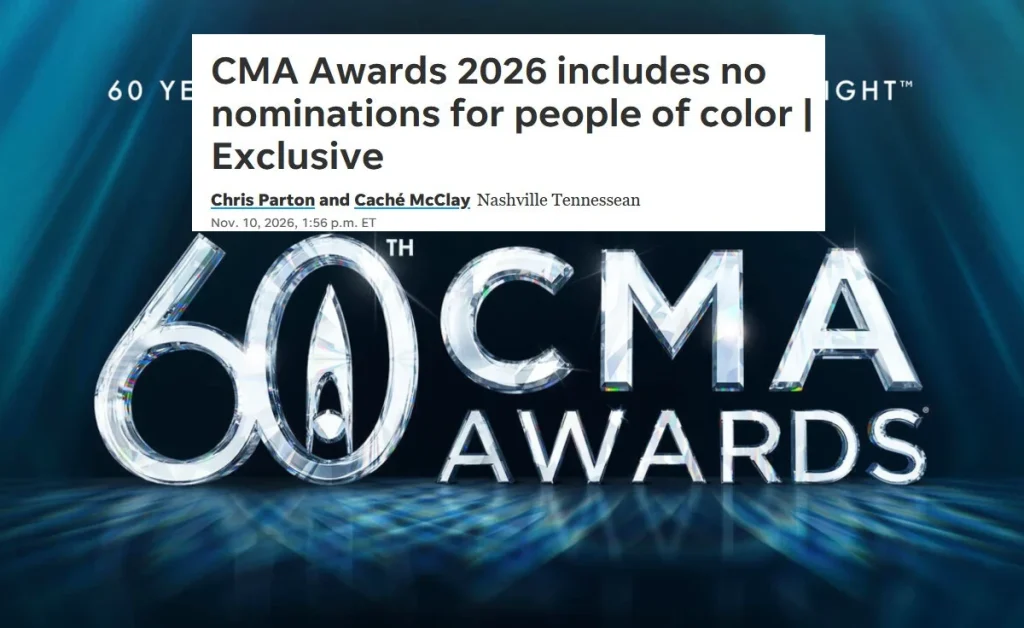
For the first time since 2017, the CMA Awards nominations didn’t include a single Black or Brown artist, songwriter, or producer. For certain, the preceding sentence will set many eyes to rolling in itself, if not inspire them to tune out entirely. But that doesn’t mean the issue is not worth scrutinizing, or mean that it’s “mostly benign” as Rolling Stone remarked about Sammy Kershaw’s conflict, while bringing up the race concern as being much more important. However, this particular issue is much more nuanced, and deserving of a discussion of how and why no nominations for Black or Brown performers happened in 2026.
Rolling Stone is not the only outlet that broached this concern. It was a more detailed report in The Tennessean that’s really responsible for this issue finding traction. Unlike the flippant Rolling Stone take, The Tennessean authors Chris Parton and Caché McClay took a much more measured approach, make use of interviews with multiple sources including performer Rissi Palmer, reached out to incoming CMA CEO Brittany Schaffer for comment, and even play some good devil’s advocacy as to why this issue doesn’t simply boil down to bold faced and overt “racism,” even if that’s the underlying accusation at the heart of all these articles and discussions.
The difference between the Sammy Kershaw situation and the lack of Black or Brown nominees for the CMA Awards is that the CMA unilaterally made the decision to initially not allow Kershaw on the red carpet, while the CMA nominations are not up to the CMAs themselves, but the organization’s 7,000 voting members, which The Tennessean article rightly points out. The CMA can launch diversity initiatives—which they have—and do other advocacy work. But ultimately, it’s the voters who decide.
And even though block voting and horse trading most certainly occur, the CMAs are seen as a lot more honest than the ACMs when it comes to taking a true barometer of voter opinion due to their big and diverse voter base. The Tennessean article also gives the CMA credit for seeing more nominations for artists of color since 2017, and focuses more on the concern that zero nominations this year means there has been a regression, even as Black and Brown listeners make up the fastest-rising demographic of country’s new fans.
But the article brushes over the most likely explanation for why no Black or Brown artists received nominations in 2026 without accurately addressing it: Eligibility, and availability. And though merit is certainly in the eye of the beholder, simply zooming out and asking yourself what Black or Brown performers were passed over this year compared to the actual nominees doesn’t result in any obvious answers, even though there are some good ones going down the roster to more independent performers.
The Tennesean article states, “There were plenty of people who could have been considered this year, with impactful work that fell inside the eligibility window of July 1, 2025 through June 30, 2026. Chief among them was Shaboozey, whose platinum No. 1 collaboration ‘Amen’ with Jelly Roll included two of the genre’s most visible stars.”
But this is misleading. Yes, that particular song was eligible. But Shaboozey’s new concept album The Outlaw Cherie Lee & Other Western Tales was not. Otherwise, it very well might have received a nomination for Album of the Year. Meanwhile, there might not be a more toxic individual in country music at the moment than Jelly Roll, with the left considering him “MAGA coded,” and the right abandoning him after he guest hosted on Jimmy Kimmel Live and cracked Donald Trump jokes. There was no way the CMA voters were going to nominate anything with Jelly Roll’s name on it this cycle.
Another artist The Tennessean article mentions numerous times as someone who has earned nominations and wins in the past is Jimmie Allen. But it doesn’t mention why Jimmie Allen is not longer being recognized in the CMA process.
In June of 2023, Saving Country Music published an article titled, “Jimmie Allen Accusations Exacerbate Country’s Diversity Dilemma.” It was published in the wake of the accusations against him from his day-to-day manager of prolonged sexual assault, rape, and harassment that were detailed in a Variety exposé. In the aftermath, another woman came forward accusing Allen of sexual assault, and then it was revealed Allen had a secret family with another woman, all while married. At that point Jimmie Allen’s popular country music career was over.
Jimmie Allen wasn’t just a country star that happened to be Black. He was a popular performer in country music that the industry had invested in heavily and cultivated over years. The country music industry saw Allen as one of the genre’s brightest stars heading into the future. This is the reason the ACM Awards named him the 2021 New Male Artist of the Year—the first ever Black man to win the award. The CMA Awards also named Allen New Artist of the Year in 2021. Allen’s first three major radio singles all went #1, and the fourth went to #2.
As the Saving Country Music article pointed out in 2023, “The departure of Jimmie Allen will cause a deeper dilemma for the mainstream country industry, and one that won’t be enumerated when the studies, think pieces, and political actions clamoring for more inclusiveness in country music get written and launched.”
That is exactly what we’re seeing from Rolling Stone and The Tennessean, with the former not even mentioning Jimmie Allen at all, and the later not mentioning Allen’s career destruction caused by his alleged reprehensible behavior that had all his industry representation drop him.
The Saving Country Music article goes on to say, “Always treated like a monolith, ‘country music’ won’t get credit for Jimmie Allen’s numerous trophies, multiple #1’s, and the other opportunities he was bestowed. Country will only get credit for the lack of these things moving forward as the hole left from Allen’s departure persists and elongates due to the time, resources, and opportunities it takes to cultivate a top flight career like the one Allen enjoyed.”
Again, this is what we’re seeing right now. Similar to how the lack of women in popular country was caused in part by Taylor Swift becoming the genre’s superstar—including winning two CMA Entertainer of the Year trophies—and then jumping ship to pop, Jimmie Allen’s absence created a hole that in might take years to find a proper performer to fill.
Another performer name checked in The Tennessean article is The War & Treaty. They released an album called The Story of Michael and Tanya on June 19th that would be eligible for CMA consideration. However, after their previous album Plus One released through major country label Mercury Nashville seemed to veer away from their more Americana sound to try and appeal to the pop country market, the duo was very public about The Story of Michael and Tanya released on Atlantic Outpost being their effort to distance themselves from popular country, and realign themselves with Americana.
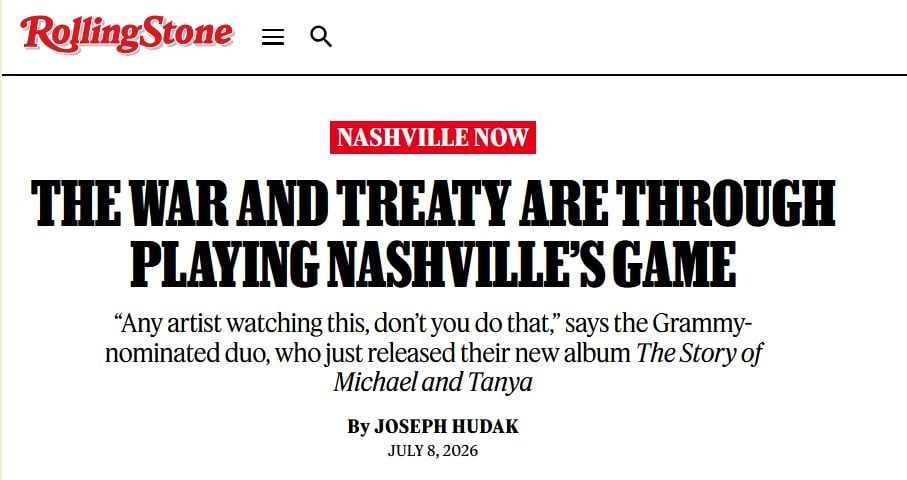
In a feature in Rolling Stone titled, “ The War and Treaty Are Through Playing Nashville’s Game”, Michael Trotter is quoted as saying, “The War and Treaty, in true nature, we are definitely one-million percent an Americana band. And the country music establishment latched on.”
The way country music industry latched onto The War & Treaty was nominating them for the CMA Vocal Duo of the Year in both 2023 and 2024. The duo also performed on the CMA Awards in 2022 and in 2023.
Though you can perhaps understand the duo’s frustration with the Music Row system since they never became superstars, in many respects, they were strong benefactors of it compared to the hundreds, if not thousands of full-time country musicians that have never been nominated for a CMA Award, and never had the opportunity to perform on the presentation.
The Rolling Stone feature also speaks to the role the media plays in these matters. As the publication seems to want to advocate for diversity in country music, it was likely the Rolling Stone headline, and the proclamations in the article and videos tied to the interview that doomed any prospects of The War & Treaty ever being nominated for a CMA Award again.
Why would CMA voters vote for The War & Treaty? The duo and Rolling Stone basically told them to not do so and to consider them Americana, and even seemed to admonish them for including them in the past. So who is at fault for them not being included in the CMA process in 2026? A media feature, title, and quotes like the ones in Rolling Stone could also create a chilling effect on the entire industry to not “latch on” to Black performers (as Michael Trotter characterized it) if they will only be criticized for it in the future.
But none of this is to somehow make excuses for the CMA, or CMA voters whatsoever. Why is the idea that Black and Brown artists are being systemically excluded from the CMA process so lucrative for the media? It’s because the CMA operates a very insular and cloistered system that looks to reward established stars instead of trying to seek out the best or most deserving talent. This in part is the system The War & Treaty were looking to distance themselves from, even if they had benefited from it to some extent.
The CMA Awards also didn’t book any Black or Brown performers for 2026. It does appear like they will have a couple of Black presenters in Darius Rucker and Shaboozey. But adding a Black performer was a way the CMA could have addressed the diversity concern, and didn’t.
Nonetheless, to simply present the lack of nominations for Black country artists at the CMAs in 2026 while ignoring these three major extenuating circumstances affecting previous nominees Shaboozey, Jimmie Allen, and The War & Treaty feels unfair to the full picture. As some have pointed out, perhaps Kashus Culpepper signed to Big Loud Records could have been a contender this year, even if just like The War & Treaty, Culpepper feels more like an Americana act than country.
Kane Brown has also been mentioned. But again, his most recent album The High Road was out of eligibility. Some have also mentioned Breland. But in this case, it’s simply a quality issue. Breland might be Black, and he might be releasing singles in the country space. But frankly, they’re terrible and derivative, and he does not represent Black artists in country music putting their best foot forward, and anyone advocating for his inclusion should do so at their own risk.
From there, you can field a long list of Black performers in the country and roots space that could have been included. But pragmatically speaking, do any of them really rise to the level that most of the other CMA nominees enjoy?
Ultimately, the same solutions that were implemented to increase the representation of women in country music over the last many years are the same ones advocates for Black and Brown artists should be trying to implement today. It often comes down to an inventory issue. There just aren’t that many viable Black and Brown performers right now that would be in the purview of something like the CMAs.
That doesn’t mean there aren’t many viable Black and Brown performers right now in country. On the contrary, there are a ton. But frankly, they often get overlooked or gatekept for the Breland’s of the world. When you look at many major country festival lineups, the Black artists being booked are Nelly, Ne-Yo, BigXthaPlug, Ludacris, and similar non-country performers injecting themselves into the country space, instead of investing festival slots and other developmental opportunities in up-and-coming Black country artists who actually perform country.
There’s also not enough attention being paid to Texas, and the fast rising population of Hispanic performers. Flatland Cavalry has been nominated the last three years in a row for the ACM’s Group of the Year, with all but one member of the band being of Hispanic origin. Yet you never hear them mention in these inclusivity discussions.
Also, these discussions have to stop happening behind paywalls in a way that only reached elite circles. Both The Tennessean and Rolling Stone article on this matter were paywalled. How do you expect to meet country music’s Black and Brown fans and performers, and advocate for them to the greater population when your opinions are gatekept as tight as the industry?
The writers for The Tennessean article were Caché McClay who is Gannet’s dedicated Beyonce reporter, and Chris Parton who is a long-time country music journalist. They did a decent job overall presenting the case, but stopped at explaining why there were likely zero nominations in 2026 more in-depth, and what any solutions might be.
Journalists also have to stop using “country radio” as a way to validate their arguments just because they present statistical anomalies that don’t actually represent country music consumption, which both Rolling Stone and The Tennessean did. Country radio has never been less relevant, and if the CMA Awards were simply a stand-in for radio statistics, The War & Treaty would have never been nominated in the past, and The Red Clay Strays wouldn’t be nominated and front runners now.
Morgan Wallen is the most successful country radio star of the last five years. And right now, the CMAs are ignoring him. If the CMAs were an inherently racist institution, you might think the situation would be reversed. But the CMA distanced from Wallen’s toxic personality. And subsequently, Wallen has distanced himself from the CMA. And just like radio, The CMAs are hemorrhaging relevancy because of this, and because of controversies like what happened with Sammy Kershaw.
Sure, industry awards can be validating. Awards shows can help with exposure of up-and-coming performers. But if artists really want to circumvent the gatekeepers and buck the system, they need to stop depending on it to be their conduit forward, including country radio and the CMAs. Artists should start courting fans directly, and working through independent channels that better serve their interests, align with their values, and allow them more creative freedom.
That is what The War & Treaty did, and that’s why they received no CMA nominations in 2026, not because they were Black, but because they removed themselves from the system.
The women of country music charted the way for how to regain representation: Be yourself, and be bold. But perhaps most importantly, be country. Because that’s what’s hot right now. And now, the women of country don’t need the CMAs. It’s the CMAs who need the women of country for them to have credibility and relevancy in the greater culture. That is how you regain the power in the system.
– – – – – – –
If you found this article valuable, consider leaving Saving Country Music A TIP.
November 18, 2026 @ 8:40 am
CMA Awards LIVE blog tonight during the presentation. Stop by if you can!
November 18, 2026 @ 12:48 pm
I’m looking forward to the CMA’s tonight and I will be an active commenter, so get that dump button ready!
November 18, 2026 @ 8:53 am
: D There is not a thing wrong with Kane Brown’s voice.
It has a clear distinctive tone.
Love it.
November 18, 2026 @ 1:28 pm
There was no mention of KBs voice…. It’s nice. It’s the writing and songs that he buys that suck…
November 18, 2026 @ 1:52 pm
I was going to say something similar. Reminds me of Kieth Urban – so damn talented but horrendous taste in what they choose to record.
November 18, 2026 @ 3:34 pm
He’s had one song that I can honestly say I liked, “Whiskey Sour” from 2022’s Different Man album. It was somber, reflective and had a very Randy Travis-like feel to it. But it was never a single and the only radio exposure it ever got was on The Highway (Sirius).
November 18, 2026 @ 1:42 pm
I’d like to read some Fuzzy/Triggerman
Pretty mama, come and take me by the thread
(By the thread) thread (take me by the thread) pretty mama
Gonna type with your daddy all night long
November 18, 2026 @ 9:26 am
I have trouble dealing with this nonsense. This is a non-issue. The songs and the awards should be based SOLELY on the qualifications, completely colorblind. Any other criteria is inherently racist. So unless somebody can make a musical argument why someone else that meets this artificial criteria is MORE deserving than someone who was nominated, this is a non-issue, and frankly, offensive.
November 18, 2026 @ 10:07 am
Yes, you’re right, nominations should be based on merit alone. However there was a time when black and brown artists and women did merit nominations and were overlooked. It’s that history that is being used against the CMAs (and country music in general) even now when the situation has been mostly corrected.
November 18, 2026 @ 11:22 am
What is very often lacking in these types of identitarian arguments is actual suggestions of who should be nominated. When I wrote about the Grammy Awards earlier this week and criticized the nominees in the Best Traditional Country Album category, I named names of who would have been better nominees, and then explained why in detail. Of course, everyone has an opinion, and those opinions vary. But when you simply say, “Where are the Black and Brown artists?” without making compelling arguments for any one specifically, you’re not actually advocating for much of anything, or presenting an alternative, let alone a solution.
Specifically, Rolling Stone did not mention a single Black artist. The Tenneassean did, but they left out very obvious information of why those artists weren’t nominated.
November 23, 2026 @ 9:57 am
ditto
November 18, 2026 @ 9:40 am
As you point out, there’s really not any eligible black or brown artists worthy of a nod this year. it seems like a manufactured controversy to me – an excuse by “journalists” to label country music racist.
Kane Brown, War & Treaty, and Shaboozey have all received nominations in recent years. Tracy Chapman won Song of the Year not too long ago. In many ways, the CMAs have gone out to their way to be more inclusive.
Having said that, some of this criticism is a result of yet another self inflicted wound by the CMAs. Why not book an artist of color for a performance slot? Would it really have killed them to throw Darius Rucker in the Brooks and Dunn tribute (he would have fit perfectly there) or given Shaboozey a showcase for his newer material (which will be eligible next year)?
November 18, 2026 @ 10:07 am
Good thing every episode of hook has a token black or brown performer.
November 18, 2026 @ 11:16 am
The Hook is open sign up and random pick. The whole point of doing it that way is so nobody can be tokenized, or gatekept. It’s all decided by who puts the effort out to show up, and who gets picked by chance. That also insulates the process from asshole internet trolls like yourself criticizing who gets on, even though as you illustrate, some will still try.
And there’s still not a “Mental Health Table” there either, though I would be opposed to one.
November 18, 2026 @ 1:42 pm
Re: “Mental Health Table”. In some recent post, HAAM was mentioned. Forgive me Trig, I forget what the acronym means. I only recently learned of the efforts in Austin (HAAM), and other cities with music communities, to assist musicians and music industry folks with accessing healthcare. I think these efforts of people helping other people should be celebrated, and I would hope the word gets out through more media outlets and by word of mouth.
November 18, 2026 @ 2:15 pm
HAAM is the Health Alliance For Austin Musicians. They provide health insurance to Austin-based musicians. There is also SIMS, which provides mental health help to musicians. Both have been mentioned on The Hook. Neither have “tables” set up there, though they most certainly would be invited if they wanted. A lot of Austin musicians come to the Hook.
Big Jilm will argue until he’s blue in the face there is a “mental health table” at The Hook even though he’s never been there, while every single person who has ever been there over 20 episode tapings will confirm there’s not. He thinks it’s some sort of weird “gotcha” or “own” that people give a shit about each other and protecting musicians. I might set up a “mental health table” just to spite him.
November 18, 2026 @ 10:25 am
Maybe it’s simple as nobody of color has been good enough to be nominated and win since Charley Pride.
November 18, 2026 @ 10:45 am
I mean, except for Darius Rucker. And Jimmie Allen. And Tracy Chapman.
So, no.
November 18, 2026 @ 1:51 pm
Jimmie Allen sucks would be obvious it’s a white guilt nomination cause his music is complete garbage,Rucker has maybe 2 good songs and one is a cover,
November 18, 2026 @ 2:41 pm
Yeah. Both of them won for new artist, so it was for their breakout year and their potential and they both deserved the award in the years they won.
Glad you didn’t pop off about Chapman though.
November 19, 2026 @ 6:11 am
I got Rucker’s first country album as a gift when it was a new release. Fine album. He’s had a second career in this genre. It’s been successful and credible. And Alan Jackson does covers too.
November 19, 2026 @ 3:54 pm
Allen and Chapman weren’t country.
Rucker has a great voice but the man has recorded the most generic hits since entering country music. His number one singles are interchangeable with other singers’ hits. The main problem facing modern country music.
November 18, 2026 @ 12:26 pm
if he were alive today, Pride would be nominated and win over just about any current country artist, white or black; he was just so great, and his voice was so smooth.
November 18, 2026 @ 5:32 pm
Wrong if Charley was alive today his music would never be played on the pop country radio stations we have. He is too country plus he had something that so called country artists don’t have today, It’s called talent.
November 18, 2026 @ 10:44 am
This USED to be one of the nights of the year that I always looked forward to. But for the past 25+ years I have avoided this pathetic show as I cannot stand the new crop of alleged “country” acts performing horrible songs.
Plan to record it so I can fast-forward through the dreck. Hoping there’s at least some time devoted to real country music and the performers that can truly sing from country music’s golden years (pre-2000) Hopeful but expecting to be disappointed.
November 18, 2026 @ 10:53 am
The last paragraph makes me think the CMAs wet themselves at the chance of having Swift back on. To the point everything else is not even worth batting an eye at.
Also having a black performer could register as tokenism especially if it is just one performer. And while people harp about the lack of black nominees nobody ever even whispers about Asian representation. So it all kinda can feel disingenuous to me.
November 18, 2026 @ 10:59 am
It could be seen as tokenism, unless they were included in such a way as to fit the theme – honoring 60 years of country music. But yes, what we do NOT need is Darius Rucker being the lone black performer and being selected to do a song like “In the Ghetto” again.
As for Asian representation z we could say the same about almost any non caucasian group. But again, did they put out anything in the eligibility window that is worthy of consideration?
November 18, 2026 @ 11:35 am
I came across some songs by Nicolette & The Nobodies this year. I just checked, and if I am not mistaken the singer is called Nicollete Hoang and a Vietnamese Canadian according to some website I came across.
Anyway, I like their songs titled “Losing More” and “Didn’t Know” featured on the youtube channel “Littlest Honky Tonk” some 8 months ago. And, I really like a song titled “Lock In” which they recorded for some radio station contest or something like that. I checked out their website and it seems that that song has now also been officially released if I understood things correctly. The song and video of “Lock In” can be found on youtube!
November 18, 2026 @ 11:31 am
To The Tennessean’s credit, they mentioned Gabe Lee in their article, which really digs deep.
But the thing is, Gabe Lee is never going to be nominated for a CMA Award. I guess never say never, but he is the perfect example of a critically-acclaimed artist that sure, in an ideal world, would be considered for major awards. But it’s also not realistic at all. Gabe Lee isn’t being excluded from the CMAs because he’s Asian. He’s being excluded because he’s too good, has too much integrity, and put his music and songs before the bullshit.
When you ask the question of who the Black or Brown performer is that could be in league with the other nominees who was left off, you won’t get a good answer. The only answer I can come to in this year of eligibility is probably Flatland Cavalry. And that is the name nobody else is bringing up.
Another issue with all of these think pieces and research articles is they’re often done by people who just don’t have a lot of ground level knowledge of country music. They might not even know about the Jimmie Allen controversy, or that The War & Treaty actively distanced themselves from the country industry. They just know they’re Black.
November 18, 2026 @ 12:38 pm
What about Charley Crockett?
November 18, 2026 @ 2:04 pm
One of Charley Crockett’s grandmothers was biracial. He has mentioned this numerous times, and if you ever meet Charley Crockett, you can see that in his features. He says that he was teased as a kid, because that particular set of genes from his grandmother were especially pronounced in him. I’ve even seen him teased for it in this very comments section too.
But Charley has come out and said that he considers himself White, not Black, while also recognizing his distant Black heritage. For years I included him in lists of Black country performers. But if he prefers not to identify that way, then I will respect his wishes.
November 18, 2026 @ 7:38 pm
He wasn’t nominated for a CMA, either. He did get nominated for his third Grammy in a row on Monday.
November 19, 2026 @ 9:30 am
Gabe Lee has some fantastic albums! He should be nominated for every major award.
November 18, 2026 @ 12:10 pm
Lazy journalism (not this article) by people trying to create controversy where there is none. It’s all about fomenting chaos for clicks. The race card has been used too many times and is now being declined.
November 18, 2026 @ 12:28 pm
It’s not coming from country fans…we’re just fine.
November 18, 2026 @ 12:42 pm
Trigger, couldn’t Charley Crockett be considered a “person of color” based on his mixed-race heritage? Admittedly, I don’t know much about Charley or how he chooses to identify, but some of his interviews mention his experiences growing up with a mixed-race background. It just feels a bit disingenuous for the Tennessean to say there are no nominees of color this year, as though Charley’s not a “person of color” enough.
November 18, 2026 @ 1:22 pm
I don’t think Charley was nominated for any CMAs this year. Apparently, he was invited to participate, but declined.
November 18, 2026 @ 7:40 pm
He was announced as part of a showcase for Atlantic Outpost in Nashville today but he’s in LA in the studio with Shooter.
November 18, 2026 @ 8:28 pm
Thanks for clarifying; I was totally thinking of his Grammy nomination for Clovis, so my bad! Also, thanks to Trigger for helping me better understand Charley’s stance.
November 18, 2026 @ 2:03 pm
One of Charley Crockett’s grandmothers was biracial. He has mentioned this numerous times, and if you ever meet Charley Crockett, you can see that in his features. He says that he was teased as a kid, because that particular set of genes from his grandmother were especially pronounced in him. I’ve even seen him teased for it in this very comments section too.
But Charley has come out and said that he considers himself White, not Black, while also recognizing his distant Black heritage. For years I included him in lists of Black country performers. But if he prefers not to identify that way, then I will respect his wishes.
November 19, 2026 @ 6:07 am
Charley let his hair grow out this year and it’s frizzing up nicely.
November 18, 2026 @ 1:13 pm
Crikey this is good. Now to read you make fun of old dominion again.
November 18, 2026 @ 1:34 pm
“There’s also not enough attention being paid to Texas, and the fast rising population of Hispanic performers.”
I’m sorry, but I genuinely can’t read this statement without laughing at its absurdity – at least the first part of it anyway. I get that when graded on an industry-level standard, the Texas music scene is technically “ignored”, but it’s also such a dominate scene in independent music circles (and by all other reasonable standards) that Nashville has basically been forced to acknowledge its existence. Nothing against you Trigger (as you’re based out of Austin and are well within your rights to cover said scene), but I do occasionally wonder if Texas music has become the token source of “independent country music” as far as awards shows and music journalists are concerned — much to the detriment of otherwise excellent country artists who don’t fit the Texas music scene and aren’t recognized because of it.
As for the other 99% of the article, there’s really not much to add. These industry-backed awards shows are based on insiderdom first and foremost, so to claim the nomination process is “racist” ignores the actual longstanding issue. The Rolling Stones and The Tennessean didn’t even try to make the fridge case that country music fans are gatekeeping racists for not listening to more black and brown artists, so there’s not a ton to take seriously here.
November 18, 2026 @ 2:09 pm
I guess I don’t 100% understand what you’re trying to say about the Texas scene. I do disagree though that it’s a stand-in for “independent country.” For many years, Kentucky was seen as the epicenter for independent, insurgent country with Sturgill Simpson, Tyler Childers, and a dozen more. I was simply pointing out that frankly the Nashville mindset has a blind spot for all the Hispanic country artists that originate from Texas, including Flatland Cavalry that are signed to a major label, and have been nominated three times for ACM Awards. If you’re looking for Black or Brown representation, why not start there?
November 18, 2026 @ 4:20 pm
The short version of this is that, as of the last decade or so, it’s mainly been artists from the Texas scene who’ve managed to become accepted by the establishment in Nashville. Yes, the world of “independent country music” is a big and wide one in which (lucky) people from all around have managed to find success, but people like such as Sturgill Simpson and Tyler Childers are, in a sense, more personalities than they are part of a genre (this is a broad characteristic of the roots music scene here in Kentucky). The thing about Texas music though is that there’s enough of a distinguished sound to it that the scene manages avoid the “personal bubble” problem that less unified scenes face, which in turn curates a better system of grassroots support, which is then enough to prompt major labels to sign these artists. This is to say that, even though the Texas music scene is not the whole of “Independent country”, that’s defiantly where the healthiest ecosystem for it currently lays.
For context, I have lived in Kentucky almost my entire life, and have been lucky enough to not only meet, but also produce for some amazing musicians and artists. The blessing of music here is also the curse though, because as awesome as it is that we could faithfully cover “Wild Mountain Thyme”, Frank Zappa, Metallica, and The Eagles in the same studio session, it’s hard to build a consistent sound from that. As such, many of the folks who get noticed from around here are either oddly adept at making hack music (that’s my opinion of Colton Bowlen’s album, with “Clinton County” in particular being completely unlistenable if you’ve actually spent extended time in Clinton County) or really freaking talented. As I said before, the Texas scene adverts this by having a distinguishable sound that it follows.
November 19, 2026 @ 6:12 am
I’m kinda surprised that there hasn’t been another hot country hearthrob like Johnny Rodriguez. I was at the Arizona state fair in Phoenix in 1973 and the young girls went absolutely crazy over him. It seems like there ought to be a Hispanic version of Riley Green out there who could break out in both country and Latin.
November 19, 2026 @ 8:26 am
Keep your eye on Braxton Keith.
November 19, 2026 @ 9:51 am
I’m learning as you go.
November 18, 2026 @ 3:10 pm
The CMA’s for the most part, are too busy inviting extremely mediocre “talent.”
Ella Langley not included. Ella can sing.
November 18, 2026 @ 4:55 pm
Thank you for the well-written, fair and honest article. Excellent journalism.
November 18, 2026 @ 10:29 pm
Have you noticed the shortage of white players in the NBA? I think they should institute some sort of quota system to get the white percentage up! Same goes for the Hip-Hop genre! And how about “World Music?” Aren’t Europeans part of the “world?”
November 19, 2026 @ 12:27 am
The fact that there were no artists who were brown or black is down to the fact that there was none to nominate. The Rolling Stone is click baiting. There was no reason to nominate War and Treaty as they said they were not country. They closed the door. The CMAs gave them opportunities on the big stage. They deserved those opportunities because of their talent and when they do country, they do it really well. I would love to hear a country album from them. They should do one. I would like to see them win an award, not because of their colour, but because they are really good.
November 19, 2026 @ 6:14 am
I appreciate your balanced and nuanced piece, Trigger. Ignore the bomb throwers who will call you a commie or a fascist.
November 19, 2026 @ 8:44 am
Different topic, but controversial enough it should be addressed. CMA paid tribute to Dolly Parton and John Anderson last night; conspicuously absent was any tribute to David Allan Coe. No artist or presenter even mentioned his name…it’s as if he never existed. Would saying his name and curtly acknowledging his passing damage CMA’s brand? Do they consider his legacy that toxic?
November 19, 2026 @ 8:56 am
Richard Sterban also got a mention. Every year the CMAs are going to miss someone since they don’t have an In Memoraim segment. That’s how you make sure you pay proper respect. This is what the Grammys do, and go incredibly in-depth with it. That’s also why the Grammys have multiple red carpets to make sure anyone who wants to walk can walk.
November 19, 2026 @ 8:59 am
I think it’s because many Black and Brown performers are choosing Americana and roots over mainstream country. War and Treaty, Kashus Culpepper, and Allison Russell all blend roots, Americana, and country.
November 19, 2026 @ 10:39 am
Yes, if it’s a conscious decision by the artists through their artistry to distance from commercial country, are we to blame them? If anything, we might should be rooting them on.
November 19, 2026 @ 8:10 pm
When it becomes painfully obvious to add anyone undeserving except for merit, it becomes pandering. This goes for anything and any race. Pandering becomes the eye rolls and the watering down of the talent you’re trying to prop up. Then there’s just tokens to shut up the left. We don’t want, we want the very best regardless of race, religion, etc
November 20, 2026 @ 7:06 am
Nope, whatever award show it was, Charley Rich rising up the John Denver announcement, idiotic. Heck, Charley Rich wasn’t even country Snob.
November 20, 2026 @ 10:56 pm
“There just aren’t that many viable Black and Brown performers right now that would be in the purview of something like the CMAs.”
Trigger’s sentence above should be auto-sent to anyone who complains about the lack of Black nominees.
Also, another way to look at this is that an absence of Black nominees might also mean that even mainstream country is becoming less overrun by hip-hop, and that’s a good thing.
Nominating a Black hip-hopper masquerading as a country artist might be a win for the hip-hopper but it isn’t a win for mainstream country music.