

Album Review – Billy Strings – “So Much For Goodbyes”

Traditional bluegrass (#520.3), Jamgrass (#520.7), Americana (#570) on the Country DDS.
There were so many moments of fate that could have placed Billy Strings in so many other scenarios in life that the one he’s ended up in. There were ample off ramps to his success, and opportunities that could have taken him away from the bluegrass discipline altogether. He could have ended up perpetually stuck in the trailer park in a meth-addled existence like the one he grew up in. After all, Strings experienced substance abuse issues early in his career.
Billy Strings could have remained simply a local or regional performer, or a side player for someone else. He could have ended up working the Kellogg’s factory outside of Kalamazoo. And with the amount of hippies in his audience, Strings could have run off to the jam band world and left bluegrass behind entirely. In 1,000 parallel universes, it feels like Billy Strings only ends up as an improbable arena-level bluegrass star in one of them. But luckily, that’s the universe the rest of us inhabit with him.
Just how tenuous the Billy Strings fate was, the adversities he had to overcome, and what resolve and character he had to evidence to get where he is were underscored when it was revealed his mother passed away in June of 2025, and due to substance abuse issues herself.
It might be the most obvious thing to state that Billy’s new album So Much For Goodbyes is colored through the loss of his mother, and it most certain is. But it goes much beyond a talking point. This is definitely a more somber, thoughtful, reflective, and at times, dour and even dark work, and he addresses her death specifically numerous times, taking the listener down rabbit holes looking for resolution and healing.
So Much For Goodbyes is also far and away Billy’s most diverse, multi-disciplined, and hard-to-pin-down album to date. Is there still plenty of straight bluegrass? Absolutely. Are there those spaced-out extended jams? Sure, but perhaps not as many as you would expect. There are also songs with steel guitar and drums. There’s also a couple of straight up Gospel tunes, and they’re good ones too. Also helping to make the album indefinable is how the first half or so was probably written before his mother’s passing, while the second half was written after.
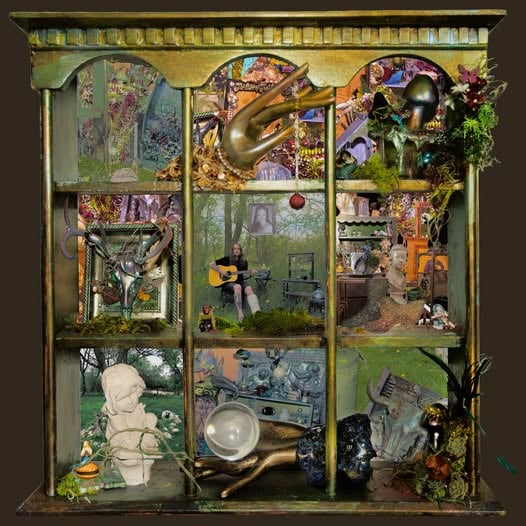
You’re just not sure what you’re going to get from track to track. In that respect, So Much For Goodbyes perhaps struggles to make a strong, cohesive argument for itself on the album level. If you’re looking for a title that helps you resolve in your mind exactly what Billy Strings is, this one might not be right for you. If anything, this album compounds any questions, and not because it doesn’t include any bluegrass, but because when it does, it’s such straight bluegrass, it undercuts any arguments against Strings not being a bluegrass artist first and foremost.
Someone recently called Billy Strings “traditional jamgrass,” which might sound like an oxymoron, except it makes perfect sense for Strings. But this album arguably even confounds that otherwise contradictory conclusion further. It also doesn’t help that Strings delivers sixteen tracks here, which gives you a lot to digest, especially if you hit shuffle since you have no idea where you’re going to land.
What remains true though is So Much For Goodbyes is a very strong collection of individual songs. The songwriting at times from Strings is spectacular, including in more involved and esoteric moments seeming to have been inspired from fever dreams and perhaps psychedelics explored during the depths of post-loss depression, while others are delightfully pithy and simple, if not cheery. This mercurial nature has always been true about Strings. But on this album, that truth has never been more inescapable.
And of course there is some excellent instrumentation, and a few moments that imagination takes over in the “jam” aspect of Billy’s influences. So Much For Goodbyes is so hard to quantify on the album scale, while including some of the absolute best songs of Billy’s career heretofore.
What’s for sure is that the unsettleness Strings experienced in the wake of his mother’s passing makes it patently and palpable into the sounds and passages of this album. Once again, such a world-shaking event could have thrown him off his axis. But instead, it sharpened his focus on the most important things, steeled his resolve, and perhaps resulted in some of the best songs of his career. So Much For Goodbyes might be hard to pin down. But it is still patently a strong version of Billy Strings.
8.3/10
– – – – – – – –
Stream/purchase So Much For Goodbyes.
Song Reviews:
1. I’m One of Those
Traditional bluegrass – Written with three other writers (Jan Fabricius, Pat McLaughlin, Tim O’Brien), this song is about returning home to find some sort of sense of place, or to attempt rekindle memories, but perhaps failing to do so because it’s been too long, or you’re not in the right head space. It helps to establish the unsettled mood that this album find Billy Strings in, trying to resolve old memories.
2. Burn the Other End
Jamgrass – This was an unusual pick for an opening single from the album since it doesn’t really represent the album to any greater extent, and finds one of the darkest moods of the entire work. But again, the point here might be to present an unsettled picture, though the words are much less about loss and more about a moment of self-loathing and doubt that leaves Strings in a dark place. It’s co-written with Paul Hoffman of Greensky Bluegrass.
3. Carry Us Home
Folk/Americana – This very thoughtful and understated song is performed only with fellow flatpicking maestro Bryan Sutton. It includes some great runs and plays in an instrumental conversation, but ultimately it’s one of the album’s more intentional singer/songwriters moments.
4. Lay Me Down
Traditional bluegrass – “Lay Me Down” is a mid-tempo bluegrass song that yearns for an emptying of the mind. Including Del McCoury in the chorus takes what might have been a mild track and makes it feel spectacular. McCoury magic was the perfect texture for this song.
5. Lucid Daydreaming
Jamgrass – This really is the definitive jamgrass contribution from the record with really involved and compelling lyricism, and the perfect instrumentation to compliment it. This is Billy Strings and his band at their jamgrass best. It was also solely written by Billy Strings in what you can tell feels like a stream of consciousness captured for posterity.
6. Mill Town Flood
Traditional bluegrass – This is a great slow bluegrass story song that after “Lucid Daydreaming” really helps illustrate the breadth of the Billy Strings sound and approach, and the authority with which he can work within that wide range. It was also a curious pick as one of the album’s early singles, though it probably calmed some of the agitated ‘grassers after “Burn the Other End” was released. It’s interesting to note that it’s one of numerous songs Daniel Tashian co-wrote or performs on. Tashian was one of the producers that took Kacey Musgraves away from her more conventional country sound, and took her more toward the indie realm.
7. Live To Tell
Country/Americana – “Live To Tell” gives you a lot to unravel. Sonically, it has a guitar melody very reminiscent of a Jerry Garcia/Grateful Dead-style lick. This song is also one of two that features drums and steel guitar, giving it a country music texture, including an extended steel guitar solo near the end. This is also one of numerous songs on the album that mentions Billy home state of Michigan, which is clearly on his mind as he reminisces in the aftermath of losing his mother. Though the story of this song feels a bit ambiguous, it could be about the grief Billy feels for not seeing the signs of his mother’s addiction through the Winter of 2025 leading up to her death.
8. Bluewater Breakdown
Traditional bluegrass – A great little bluegrass instrumental written by Strings that gives a lot of space to feature his band of Alex Hargreaves on fiddle, Billy Failing on banjo, Jarrod Walker on mandolin, and Royal Massat on bass.
9. Light the Way
Bluegrass Gospel – This is an excellent bluegrass Gospel song written solely by strings, with his backing band really proving their strength with harmonies—an asset that’s not always properly exploited, especially in the studio. The death of Billy’s mother definitely played a role in the inspiration for this song.
10. I Like Train Songs
Traditional bluegrass – First, if you’re looking for that bluegrass song on the album that really cooks, start here. This is one of those simple songs that actually says a lot more than it might seem on the surface. The premise is that sure, love songs, story songs, heartbreak songs, even protest songs are fine. But train songs are far the most superior. It’s the quiet sarcasm that makes it so smart, while also feeling somewhat true. You can hear this song becoming a bluegrass standard right beside Billy’s “Dust in a Baggie” and “Richard Petty” through it’s simple, sweet, catchy nature.
11. 10,000 Miles From a Friend
Bluegrass/Americana – Fans of trucker songs will be tickled that Billy Strings officially turns in his contribution to the greater catalog of long haul ballads. But you can’t help but feel that Billy’s prognosis of feeling like he’s “10,000 Miles From A Friend” is less about proximity and occupational necessity, and more about giving rhyme and melody to a lonely state of mind. That’s Mickey Raphael on harmonica.
12. Still I Crash
Folk/Singer-songwriter – On track 12, Billy Strings puts all the metaphors and allegories aside, and addresses the death of his mother in very direct passages, clearly processing through his grief in song. The song is solely written and performed by Strings. The song has an almost Beatles-esque quality to it.
13. I Wish I Wanted To
Country-into-jamgrass – It’s cool to hear Billy Strings performing with drums and pedal steel guitar for a change of pace (that’s Paul Franklin on steel). But it’s almost like he could sense the song wasn’t going much of anywhere, either writing-wise or sonically. So it starts to get a little strange at the end of the 6 1/2-minute journey. This might not resuscitate what might be one of the more mild songs on the album.
14. Remember to Cry
Traditional bluegrass – “Remember To Cry” is a great up-tempo bluegrass number that gets your extremities twitching and makes you want to dance … that happens to be very directly about the death of his mother with unflinching detail.
I never saw you again after April
The ground was still covered in snow
When you kissed me goodbye for the last time
And I was the last one to know
Billy tells the story with such simple detail and in an economy of words, it’s almost eerie. You feel bad for enjoying the song so much given the subject matter. But it’s the contrast between the cheery music and dour subject that makes “Remember To Cry” one of the one of the best on the record, and one of the most memorable.
15. Wrestling an Angel
Traditional bluegrass/Gospel – “Wrestling an Angel” was co-written with Thomm Jutz, and features Dan Tyminski on harmony vocals who gives the perfect texture for this song. Perhaps it’s presumptive to assume that Billy Strings has found religion in the aftermath of the passing of his mother. But he’s certainly found comfort in the messages and melodies of the Gospel approach, and for the second time on the record, finds an inspiring moment through it.
16. Debra’s Waltz
Billy Strings finishes the album with an instrumental waltz named after his mother. It’s the simplicity of the tune where the beauty is found, and makes for a great epitaph that hopefully works like a great exhalation of Billy from his grief.
– – – – – – – – – – –
If you found this article valuable, consider leaving Saving Country Music A TIP.
August 31, 2026 @ 7:44 am
My favorite album of his yet. It was interesting to hear that he is sober now. I’ll be curious to see how that affects his music moving forward.
September 1, 2026 @ 12:30 pm
Unless I’m wrong, I’m pretty sure he’s still “California Sober”…doesn’t drink alcohol but still smokes herb. I think he quit drinking almost 10 years ago before his career started to take off.
September 1, 2026 @ 2:40 pm
He told theo von the other day that he had quit smoking weed now as well.
September 1, 2026 @ 10:07 pm
https://www.youtube.com/watch?v=-Wf62jvJRCg
Here’s a YouTube clip of Billy explaining his rationale for quitting weed. Back on August 06, the NYTimes posted an interview with Billy wherein he admits that he’s been off the weed for about a year.
I’m really proud of and for him.
August 31, 2026 @ 9:29 am
I think this is a real Album of the Year nominee. It’s obviously going to be darker than your average Billy album because of the difficult circumstances. But it continues a trend from the more upbeat Highway Prayers: Billy Strings the songwriter is catching up to Billy Strings the musician. If Jason Isbell had written 10,000 Miles From a Friend I wouldn’t be surprised.
August 31, 2026 @ 4:14 pm
I feel like last week gave us several AOYY contenders.
August 31, 2026 @ 9:45 am
I’ll be popping this on today I think. As an aside, just finished up Daniel Donato’s live album today which clocks in at over 3 hours, but with never a dull moment.
August 31, 2026 @ 9:23 pm
Holy fuck that Daniel Donato album was amazing.
August 31, 2026 @ 10:18 am
Wore this one out this weekend. Feel like a lot of my friends that are Strings fans were pretty lukewarm on the album because it’s not littered with a lot of the bright, uptempo pickers that Strings is more known for to most.
I think the difference to me on this one is that the music matched the mood. Previously you had songs like “In the Clear” where people could overlook the man writing about having a full blown mental breakdown because of the instrumentation. I think this one makes you sit in the mood a little more – which is understandable, given the headspace.
“I’m one of Those”, “Carry Us Home”, “Mill Town Flood”, “Wish I Wanted To” are some of the best written tracks he’s put on wax, IMO. That might just be me relating to the headspace, but I kept hitting those songs over and over.
I disagree with you on “Wish I Wanted To”. I don’t think it’s so much of a throwaway as it is an autobiographical ode to being mildly depressed, higher than a Georgia Pine, and glued to the couch – with a guitar in your hand, in his case. Carry Us Home has some Isbell-esque inflections that felt new.
It’s not all moody though. Still a lot of fun to be had with “I Like Train Songs” and “Remember to Cry”. Those should rip live!
Definitely on the AOTY short list for me, to date.
August 31, 2026 @ 1:19 pm
Very good point about the music matching the mood. Bluegrass is famous for “sad songs with happy music” (I think someone may have named an album that), but it would not have suited this moment well. I second your take on Wish I Wanted To.
August 31, 2026 @ 10:44 am
Loving it. If you have Nugs you go check out the 8/28 show. The first set was the album track for track. Incredible live performances.
September 1, 2026 @ 4:32 am
It was great to see and hear the album live, a great set as part of a great show. Hearing songs debuted live for the first time, quite the experience.
August 31, 2026 @ 11:14 am
Album is a major grower. Every time I listen to it, I find something new that makes it more interesting and engaging. The man is truly a bluegrass master.
August 31, 2026 @ 11:17 am
Another great album from Billy Strings. Mountain Grass Unit’s new album is also excellent.
August 31, 2026 @ 2:47 pm
I can imagine Isbell rolling his eyes about “Wish I wanted to” and it’s simple rhyming conventions.
It reminds me of Sturgill’s “Have the Crown”–a song that he wrote and minutes and seems to despise.
I don’t care… I dig it–it’s a mood, and I believe it so I think it’s a great tune.
Mill Town Flood, 10,000 Miles from a Friend, Remember to Cry, Wrestling an Angel are all standouts to me as well.
Billy is a treasure.
August 31, 2026 @ 3:41 pm
Def a great album. I like some of his stuff but he tens to go all over the place far as styles go so i dont tend to love his albums. This one i dont really feel does that, it doesnt stray far from the bluegrass realm. So i really like it.
August 31, 2026 @ 4:13 pm
I enjoy guessing what the album rating score is before even reading the review. I pretty much always get it right lol. It’s always 8.1, 8.2, or 8.3. I wonder what separates an 8.2 album from a 8.1?
August 31, 2026 @ 8:46 pm
Brandon Flowers – “Thrasher – 8.8
Shaboozey – “The Outlaw Cherie Lee” – 6.5
Zach Top – “Good Girls & Cowgirls” – 7.5
Wyatt Flores – “Scared of Heights” – 6.7
A selection of reviews published in August that don’t fit in that range.
But yes, most reviews do. That’s because that’s the range of good albums, and albums worth highlighting.
August 31, 2026 @ 4:17 pm
Wrestling and Angel may be new song of the year for me. Wow wow wow WOW. That’s up there with Lester & Earl. The depth, the word play, the vocals, all of it. It hits deep.
August 31, 2026 @ 7:37 pm
I’ve only heard this album all the way through one time, but the song that made my head turn was “Mill Town Flood”. I kept thinking, is Billy doing a cover of an old Appalachian tune. It sounds like it could be a hundred years old, but it is not. Having Bryan Sutton and Lindsay Lou on the track was a brilliant move and the lyrics are so haunting.
September 26, 2026 @ 6:41 pm
I agree. It sounds like a song that has been coming off front porches for 100 years. I, for one, was just astounded by the songwriting.
August 31, 2026 @ 8:32 pm
Billy Strings walks the walk of an icon. He put out a piece of art that defines a point in time for him. It is such a joy to witness. He is one of one.
September 1, 2026 @ 4:27 am
Really digging this album, especially I Wish I Wanted To. It describes perfectly how I’ve been feeling lately – not depressed, but just not motivated to do much. I especially relate to the first verse about not being motivated to see the Stones. Last fall I had tickets to see Red Clay Strays 5 miles from my house at a 3,000 seat venue. Day of the show, I just wasn’t feeling it and gave the tix away. Thanks Billy.
September 4, 2026 @ 2:05 am
I love that song. It has “I think I’ll just stay here and drink” vibes, but a bit deeper
September 1, 2026 @ 4:47 am
I love rhat Billy Strings will always be unapologetic, because he has nothing to apologize for. He is true to himself. I definitely don’t care for some of his music and some I really do. But I don’t see him changing ever and I love it.
September 1, 2026 @ 6:57 am
Im a huge fan and have attended many of Billys shows including Friday night Ionia. Trigger’s description of Wish I wanted to fits the album but I will say the live version really boogied and reminded me of JBS Scooter Blues and poppy Buffett country in a very cool way. If you think this album is dark, Im not sure people have really listened to Renewal. As far as his best record, he is growing and improving in so many ways but Home will forever be a seminal record and will continue to age even better with time. Not a fan people just labeling new as best (though it absolutely can be)
JBS MAM jams but people were making lists leaving High Top Mountain dead last. Set down the peace pipe and dont be slave to what is “new”.
September 2, 2026 @ 12:09 pm
Video out there of him playing guitar with death metal band Cryptopsy. Such a talented musician!
September 7, 2026 @ 5:15 pm
Interesting review. Thanks for writing. For me, this front-loaded album peaks in the strong run of the first five cuts, especially on Burn the Other End and Lucid Daydreaming, and only peaked once more many tracks later on Still I Crash. I imagine I will enjoy it more over time, but if an album is going to be 75+ minutes, I’d really appreciate a handful of much longer songs from Billy to give more contour and variety to the journey—and Billy is 100000% capable of delivering entrancing 10-15 minute epics.