

Bob Weir Wasn’t “The Other One.” He Was “Ace” (RIP)
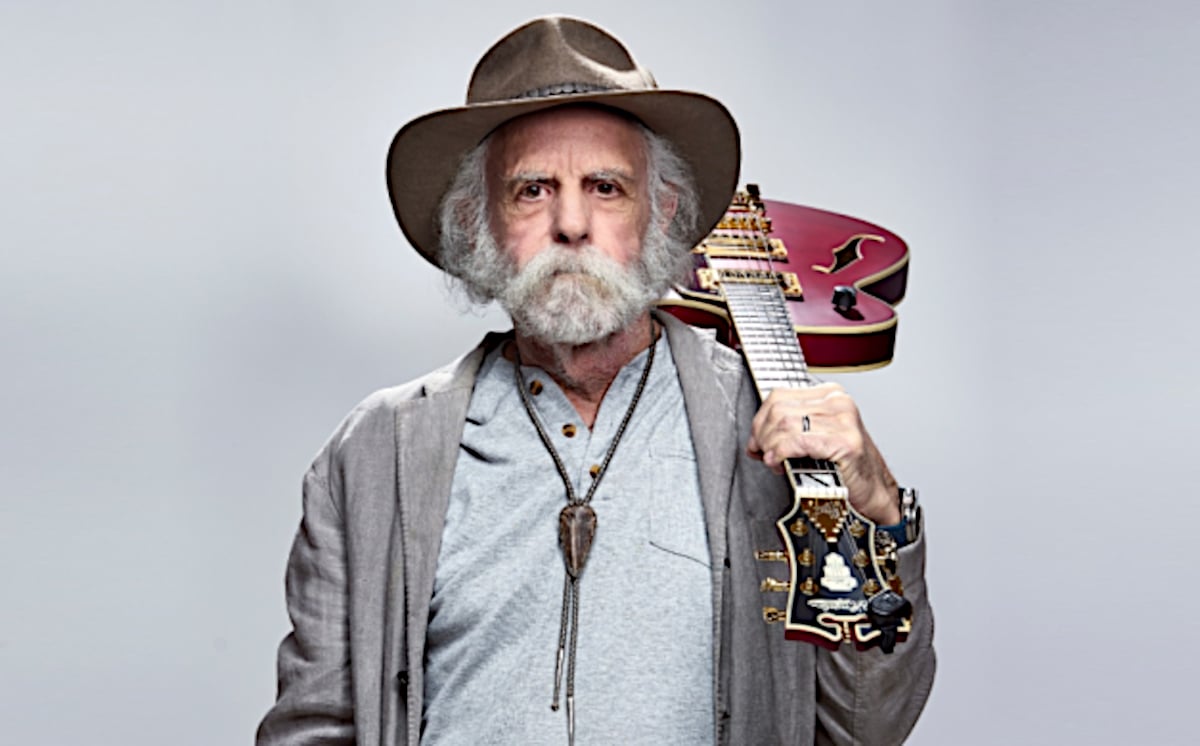
Genre, era, generation, nor country of origin can contain the grief that grips the music world on a cold Saturday night in January as word of the passing of Bob Weir is disseminated. He was the pup of the Grateful Dead, but the preeminent flamekeeper of the band’s legacy ever since Jerry’s passing in 1995. He was a cowboy poet, a rock ‘n roller, a singer, songwriter, guitar player, and a sage advisor to those in the culture that ran counter to the rest of the world, no matter where in the world they reside.
Some referred to him as “The Other One.” That was the name of the documentary film made about Bob Weir in 2014. That name wasn’t exactly a term of endearment or a ringing endorsement. In Grateful Dead lore, nobody would ever rate Bob Weir above Jerry Garcia. But Garcia himself always considered every member of the band equal, and the outfit a truly democratic collaboration. Part of that was just Jerry showing off his humility. But it’s also because he got to perform beside Bob Weir for so many years.
The Grateful Dead was indeed like a super group all unto itself with the talent it amassed, certified by how bassist Phil Lesh (RIP), percussionist Mickey Hart, and rhythm guitarist, songwriter, and secondary frontman Bob Weir were all able to launch solo careers both during Jerry Garcia’s time on Earth, and after.
It was Bob Weir’s ability to be selfless and subordinate to Jerry that made the chemistry of the Grateful Dead so legendary. But when it was his opportunity to take center stage, there was no wilting. Once a student of Garcia, Bob Weir specifically tooled his rhythm guitar style to Jerry’s natural form of playing. And even though he wasn’t as prolific, Bob Weir also contributed some of the most critically important songs to the Grateful Dead canon.
Bob Weir’s 1972 solo release called Ace deserves to be in the conversation for one of the band’s best studio efforts. With some exceptions, the album was the Grateful Dead band backing Bob. “Playing in the Band,” the border town-inspired “Mexicali Blues” with its superb chorus, and the most up-tempo song in the entire Grateful Dead repertoire, “One More Saturday Night,” they all come from the Ace album, and became mainstays of Grateful Dead sets.
So did Bob Weir’s “Weather Report Suite” from the Grateful Dead’s Wake of the Flood album. Like so many of Bob Weir’s contributions to the band, he co-wrote it with songwriter John Perry Barlow. Barlow was to Bob Weir what Robert Hunter was to Jerry Garcia.
Robert Hall Weir was born in San Francisco on October 16th, 1947. Suffering from dyslexia as a child, he struggled in school, but excelled as a musician early on, playing piano, trumpet, and later guitar. It was on New Year’s Eve in 1963 when a 16-year-old Weir was wandering the streets of Palo Alto looking for a club to sneak into when he heard banjo music coming out of Dana Morgan’s Music store. Inside was Jerry Garcia, only 21 himself at the time.
Jerry had no idea it was New Year’s Eve. He was just there setting up to give lessons. Bob Weir became his only pupil for the night. Soon, The Warlocks were formed, eventually becoming The Grateful Dead.
Bob Weir’s presence in the band never wavered, nor did his friendship with Jerry. Like Jerry’s relief pitcher or 2nd in command, Weir would regularly lead songs as the band went from a primitive jug and bluegrass band, to the pinnacle band of psychedelia, to West Coast country and country rock, to funk, blues, plain ol’ rock ‘n roll, and everything in between. There were better players. There were better singers. But there was only one Bob Weir.
After Jerry Garcia passed, Bob Weir did his best to keep the legacy of The Grateful Dead going through projects direct and indirect. RatDog Revue became the name if his solo band, later shorted to RatDog. But Weir also participated with the remaining Grateful Dead members in The Other Ones, The Dead, Further with Phil Lesh, and other on-and-off iterations, with Bob singing his own songs, and some of Jerry’s.
In 1994, Bob Weir was inducted into the Rock and Roll Hall of Fame with the rest of The Grateful Dead. In 2024, the band was bequeathed The Kennedy Center Honors. In 2016, Weir was specifically given a Lifetime Achievement Award by the Americana Music Association.
But the thing about the Grateful Dead and Bob Weir is, none of the accolades ever mattered. The were the ultimate grassroots band, the the ultimate underground heroes. They never really had a hit. They never were really given the credit they were due in their era. They just kept crafting a magic that most other bands could never concoct until it swelled out of clubs to arenas, then stadiums, then an entire cultural phenomenon of tens of thousands of people following them around the country full-time.
It was the chemistry. It was Bob Weir’s selflessness. It was the amalgam of American music all fused together in one long extended jam that allowed The Grateful Dead to open unexplored pathways in the brains of music fans of all stripes, and revolutionize music in magnanimous and monumental ways that are still felt present and palpably all across music to this very day.
Bob Weir—and Jerry Garcia and Phil Lesh who preceded him in death—they were not mere “musicians.” They were the deliverers of musical incantations that made life worth living, made the ethereal feel ever-present, and made the world spin a little more perfectly.
Bob Weir leaves us, and that means one less piece of the Grateful Dead puzzle left behind on Earth. It means the moments and music they made are a little further off in the distance, and there will be no more coloring the moments of the future. But the past, present, and future are all still owed to The Grateful Dead. From the nightly performances of Billy Strings, to Tyler Childers covering Bob Weir’s “The Greatest Story Ever Told,” to Sturgill Simpson sitting in with Weir, the torch will pass on. Because the music that Bob Weir and The Grateful Dead made was for forever.
Bob Weir was 78.
– – – – – – – – – – –
If you found this article valuable, consider leaving Saving Country Music A TIP.
January 10, 2026 @ 8:25 pm
At least the music never stopped. Rest in peace Bobby.
January 10, 2026 @ 8:28 pm
Bob Weir…. thanks for the music. Godspeed on angels wings!
January 10, 2026 @ 8:41 pm
Thank you, for a real good time.
January 10, 2026 @ 9:29 pm
I’ve seen a bumper sticker around – Bob Weir Controls the Weather – it jumped right back into mind as I read this. Bobby was the rhythm, he created space and filled it all the same.
Thanks for these words, Trigger, right on the mark.
January 10, 2026 @ 9:45 pm
So grateful I got to see him twice in 2023, the second time as part of Willie Nelson’s Outlaw Fest
Hope he enjoyed the ride, I sure did
January 10, 2026 @ 9:49 pm
Also; side note: I always assumed the whole “you never get the Dead until one day you do” thing was BS until it happened to me. I spent years trying them off and on and enjoying individual songs but not really getting what the deal was, but one day it just clicked and I’ve since acquired a pretty decent collection of shows (shoutout to the guy at the record show who gave me a discount on the Jerry Garcia Band record store day exclusive he had because I was wearing my Bobby and the Wolf Bros sweatshirt)
January 11, 2026 @ 8:29 am
Same here. I liked a couple songs but used to even make fun of them a little bit. But first it was “I don’t like the Dead except for two songs.” Then it was “except five or six songs.” Then it starts getting into 18,19,20, and you finally realize you’re a fan…Wish I could have had the live experience when everyone was kicking.
January 10, 2026 @ 11:20 pm
A great man , one of the strongest voices who always sang on key and had genuine feeling for the music and the strength energy and natural talent to bring us the best
music We love to hear for a lifetime into eternity for the Grateful Dead will never die but shall live on and on ….
Because it was that good…..the best by far . Beyond our tears , today into the future , smile and be kind, for this is
A legacy that will live in my heart and soul as it shall
With all of us who sing with Bobby and Jerry …. Now and always . Listen to the river sing sweet songs to rock my soul.
January 10, 2026 @ 11:20 pm
God bless God speed Bob ,Phil, Jerry u all changed my life for the better…thanxs for the memories and great times an humbleness..u brought peace to my life..FOREVER GRATEFUL TO THE DEAD !!!
January 10, 2026 @ 11:24 pm
Bless all ur families who shared u with us ..thanxs for ur love of music u shared with us all..FOREVER GRATEFUL DEAD ..💕 ❤️
January 11, 2026 @ 12:17 am
When I was a kid I hit the dead scene in 1985 Jerry & Phil were the major members of the grateful dead I did love Bobby’s songs as well but people use to say he was cheesy screaming all the time till he had no voice but what did I know I was 15 years old street kid dancing with the hippy girls taking lsd and having a blast I came from the heavy metal scene so I had hair down to my ass I had so much fun I worked all winter just to do the whole summer tour every year there is nothing like a grateful dead show
January 11, 2026 @ 12:50 am
In the land of the dark,
the ship of the sun
is driven by the
Grateful Dead.
January 11, 2026 @ 1:02 am
Friends of mine were big Deadheads. They’d drive to Grateful dead shows within a couple of hundred miles–Hartford, Saratoga, Providence, Worcester, Philly, Capital Center, Charlotte, who-knows-where else. One guy, they called “Taper Dave” had some kind of an “in” and was able to hook up his recorder to the sound system (or so they said) and would pass around cassettes of the shows. Another guy, Michael, dragged me to a Dead condert at the Meadowlands Arena in 1989–only show I ever went to. I took him to the Highwaymen concert at Nassau Coliseum the next year.
I’m surprised Weir was only 78, considering that it’s been 30 years since Garcia died and the Dead ended. But, evidently Bob was several years younger than the other members.
January 12, 2026 @ 12:46 pm
Jerry was only 53 when he died.
January 11, 2026 @ 2:54 am
RIP Bob Weir. I explained to my daughter recently, that a Grateful Dead show was more than a concert, it was a community of kindness & celebration of life. 70,000 people could get together & be respectful towards each other, it taught me a lot as a young man. It was an example set by the members of the band that influenced a whole generation.
January 11, 2026 @ 12:57 pm
I attended three shows in California between 1992-1993. There appeared to be just as many fans, with their children, parked outside the venues than actually attending inside. I thought it interesting that people were selling food, jewelry, and T-Shirts from their vans. I actually bought a nice bootleg T-Shirt that I eventually wore out. I even have a photo of me in the shirt while I was spelunking with a colleague in Yosemite NP.
January 11, 2026 @ 2:56 am
Thanks for the ride on the magic carpet.
Fly free Bobby 💥
January 11, 2026 @ 6:50 am
There’s a perception that Jerry was the one who brought country into the mix, but when you heard the Dead playing “Mama Tried” and “Big River,” that’s Bobby. I am convinced that sitting in my room and listening to them on a hippy FM station as a kid is what fueled my eclectic tastes.
January 11, 2026 @ 7:10 am
A brother, friend a devoted disciple. He wanted the music to carry on through us all. We will never forget. Condolences to his family. RIP Bobby
January 11, 2026 @ 8:08 am
If any of you country fans have not dug into the Dead, American Beauty is one of my top 3 favorite country albums ever. It never wears out for me. It sounds like it could have been recorded yesterday or in the 1600s.
January 11, 2026 @ 9:49 am
Add “Workingman’s Dead” to that post. These 2 albums are true Americana before we talked about Americana.
January 11, 2026 @ 10:33 am
You are right. That said, one for me is remarkable and the other is legendary.
January 15, 2026 @ 8:24 pm
Yep…Those are the two…The Band at it’s peak and just Beautiful songs…
January 11, 2026 @ 9:51 am
I was at a local venue the other night to catch a Dead tribute band. I’m 70 yo, and so were many of the few hundred people there, but there were also young people 1/3 to 1/2 my age. The music is timeless and it “will survive”.
January 11, 2026 @ 10:17 am
“Me and my uncle” is about as fine a country song as you gonna find… Sold the hell out of it, I left his dead ass there by the side of the road… perfect cold, cold perfect.
RIP
January 11, 2026 @ 11:14 am
I appreciate the quote about ‘getting’ the Dead. ‘Ace’ did it for me when it came out. I’m pretty sure that it’s my favorite Dead album to this day.
Other than having loved ‘Silver Wings’ beforehand, Bobby Weir was the one who really opened my ears and mind to the music of Merle Haggard through recordings of MH songs on most of the Dead’s live albums.
Thanks for all you brought to us, Bobby. Godspeed on your new journey,
January 11, 2026 @ 11:21 am
I was lucky enough to see him with the Grateful Dead in the ’80s and with RatDog in the ’90s. Really sorry he’s gone now. 🙁
January 11, 2026 @ 11:25 am
This hurts back on July 1 1978 at Arrowhead stadium the way I looked at and loved about music was forever forged Willie Nelson fourth of July picnic with Willie , Waylon Jennings, Jessi Colter , Jerry Jeff Walker and The Grateful Dead a stadium full of hippies and cowboys all getting along enjoying a great and very hot day of music the way it should be WILLIE and BOBBY have been my heroes every since that day long live Willie and the music of the Greatful Dead R.I.P. BOBBY much love to you and your family .
January 11, 2026 @ 12:21 pm
Very sad. Will John Mayer finally change the name of his band out of respect for all the fallen heroes from the Grateful Dead?
January 11, 2026 @ 2:31 pm
Bob Weir was a cowboy poet ala the late,great Baxter Black? Who knew? Anyway,RIP,Bobby,you’ll be missed!!!!!!!!!!!!!!!!!!
January 11, 2026 @ 10:11 pm
The very best
January 12, 2026 @ 8:27 am
Not a country band but the GD wrote and played one hell of a country song. Went to a bunch of shows in the late ’80’s early 90’s. American Beauty and Workman’s Dead set my appetite for the Alt-Country sound and big ole nostalgia for Gram Parsons & Sweetheart of the Rodeo. Their music is timeless. It’s all American gold. Bob, Jerry and Phil are gone but because they gave their music freely to the their live fans I can tune in for the rest of my time here. RIP Bob, death doesn’t leave with the best part of you.
January 12, 2026 @ 11:36 am
I got to see him as guest performer with Wynonna Judd a couple years back. The Fillmore audience lost their minds. But even better was you could see the shit eating grin of Wynonna and her band through the time.
But it felt at if Buddha had come stage for brief moment, then as if by divine magic he vanished and the energy he left in the room stayed for the whole show.
January 12, 2026 @ 5:11 pm
Good article. Ive never been a fan of the group but ive never really listened to much of their stuff. Cant really say why, just never did. But lots of people like them n thats fine. May he rest in peace.
January 13, 2026 @ 2:26 pm
Bob Weir, “The Second Hardest Working Man in Show Business” ..That nickname occured to me during my first show at Red Rocks in Sept. 1985. (First GD show May 15, 1977 St. Louis) Bob Weir, one of the original Cosmic Cowboys, who never gave less than 100% for 60 years. Bobby Weir, the forever young and curious, the earnest performer whose range would go from a feather on your cheek (Lost Sailor) to a thunderbolt through your skull (The Other One) in the space of 20 minutes. Bobby Fuckin’ Weir who knew who he was and made the conscious decision to be the “Rhythm Guitar” player in one of the greatest bands ever instead of being the star of a lesser unit. Bobby Got It…he was a true folk musician who understood the priceless inheritance and the spiritual value of music and community. Bob Weir, the great communicator/story teller of the 20th Century America we lived to see grow to prominence and collapse under its own weight, reflective of The Dead’s own trajectory….Check in with Bobby Weir, The Magic Man who took us all on a journey that changed our lives. NOBODY ever left a Weir performance thinking Bobby hadn’t given his all. And as a result, he routinely exposed us to some real insight while he was “entertaining” us. It’s all there in the music…Listen, reflect and move forward… Bobby always did.