

Justin Townes Earle’s Tragic Life Story Told in New Book

Editor’s Note: This is part book review, part book report, with some important details of Justin Townes Earle’s life previously-unknown shared for the record. Some “spoilers” (if you will) are included. You can also read, “Jason Isbell, Justin Townes Earle Fallout Explained in New Book.“
– – – – – – – –
The life and death of singer/songwriter Justin Townes Earle is not just about one life, and one story. Within this cautionary tale are exemplary lessons and imperative insights into the nature of music, art, addiction, expectations, suffering, and especially the gifts and burdens that are imposed on performers when music isn’t just a passion, it’s a part of their family legacy.
Justin Townes Earle’s experience was wholly unique, and would have been challenging for any soul to navigate. But it also encompassed so many of the recurring plot lines that play out in music, in the lives of people who suffer from addiction, and that continue to permeate society as substance abuse and mental illness expand their reach in an ongoing scourge.
Whether it’s Justin Townes Earle or any other performer who has a story to tell, it often takes someone willing to engage in a dedicated effort to tell it fully and definitively. And often, telling that story comes with a level of personal expense due to the awesome time commitment necessary to do it right. For Justin Townes Earle, that person was writer and journalist Jonathan Bernstein who published What Do You Do When You’re Lonesome: The Authorized Biography of Justin Townes Earle in January.
Don’t let the word “authorized” spook you into believing this account in any way sugar coats or omits the truth of things. On the contrary, the biography is a stark, harrowing, and sometimes difficult story to tell and read, cutting with its honesty, and unabashed with its level of detail. Just as important, it’s passionately-written, yet accurate, and thorough, without being pedantic. It’s perhaps one of the best music biographies published in recent years. It also might be one of the most important.
– – – – – – – –
What Do You Do When You’re Lonesome starts out in many ways setting the record straight about Justin Townes Earle and his upbringing. Though he loved to embellish how he grew up dirt poor and his father was never there, this only tells part of the story, with the other being Justin was an unruly kid hard to control from the beginning, and prone to embellishment and fiction telling. It also probably didn’t help that his parents did little to offer the structure a boy like Justin needed.
Growing up, Earle wasn’t really into roots music, and was more enamored with hip-hop, punk, and grunge until he heard Kurt Cobain sing the old Leadbelly song “In The Pines” on MTV’s Unplugged—a similar story to many other Gen Xers. Dad Steve Earle set young Justin straight that Cobain didn’t write the song. After that, Justin Earle (as he was known at the time) fell deeply in love with older roots music.
One of the most under-told stories of not just Justin, but the roots scene that exploded in Nashville in the 00s was the supergroup called The Swindlers that Justin was a part of with other young musicians with famous fathers. This included Dustin Welch (son of Kevin Welch), who lived in what was called The Chicken Shack behind his family’s house, and where jam sessions, songwriting swaps, and other musical melees would regularly ensue.
Along with Justin Earle and Dustin Welch, Travis Nicholson (son of Gary Nicholson), bass player Willie Domann, Cory Younts who would spend years later also playing with Justin, and other made up the nucleus of the Swindlers/Chicken Shack crew, while folks like Chris Scruggs also floated in and out of that orbit. The reason you never hear much about them is they never released any music. But along with Old Crow Medicine Show and The Hackensaw Boys, The Swindlers were seminal to hatching the roots music revolution in Nashville.
What separated Justin Earle from many of these other musicians was his original songwriting. Otherwise, The Chicken Shack and The Swindlers were about reprising older songs. As author Jonathan Bernstein observes,
“These early songs taught Justin an invaluable lesson: If he dressed up his innermost feelings—his fears, uncertainties, and resentments—in the veneer of old-sounding, tough-edged genres, audiences were less likely to assume he was singing about himself. Classic country caricature, blues bravado, and folkie romanticism provided cover and plausible deniability that allowed Justin to sidestep his own vulnerability and expose the rawness of his interior life without anyone—himself included—thinking twice.”
Justin Townes Earle for much of his youth was functionally homeless by choice. He would spend time at his mother’s apartment, but he would also stay in a tree house in a West Nashville park, and crash in people’s closets. He dropped out in the 8th Grade, and very early developed drug addictions, often embellishing his intake and escapades to make himself seem more seasoned than he was.
As a young Justin Earle started getting into more and more real trouble—and dad Steve was putting his own drug escapades that included getting arrested for crack possession in the past—the older Earle started trying to actively participate and mold his son in the right direction. When Steve Earle taught at Chicago’s famous Old Town School of Folk, Justin accompanied him. Later, Justin was officially hired to be part of The Dukes, a.k.a. Steve’s backing band.
Justin acted very much like the boss’s kid in the band according to his bandmates: entitled, tardy or absent, and one time trashed a hotel room when he dyed his hair but forgot to rinse it out, getting it all over the room, resulting in Earle getting arrested for the first time in 2003.
After leaving Steve Earle’s band and returning to Nashville, this is when Justin’s drug use and destitution really took a turn for the worse. For a while he lived at a semi-homeless/hooker hangout called Shirley Street Station—a semi-club-like establishment where functionally homeless people and sex workers crashed, later to be bulldozed with the street that bore its name for Nashville’s gargantuan Music City Center convention complex.
Songwriter Patty Lemay had a telling exchange about Justin’s life at this time.
“Justin told me that he was afraid to go to sleep alone,” she said. “He said, ‘When I lay down if I’m by myself, I just know my heart’s going to stop, and I’m just going to die and I’ll lie there for days and no one will find me.”
Through all the self-obliteration, Lemay saw a beautiful young man striving toward a light that was becoming harder to see, and she told him as much.
“Do you know why God made you so tall? ” Lemay remembered asking him one day. [Justin was 6’6″]
“No,” Justin said. “Tell me why.”
“So you don’t have to stand in anyone’s shadow,” she said.
– – – –
July of 2004 is when Justin Earle went to rehab for good, and re-emerged wanting to pursue a legitimate solo career in music. He started dating songwriter Bonnie Whitmore, and they became engaged for a spell. It was photographer and friend Joshua Black Wilkins who put “Townes” on the cover of Justin’s debut EP Yuma. This is when Justin started officially using the name of his father’s songwriting hero on stage and in life.
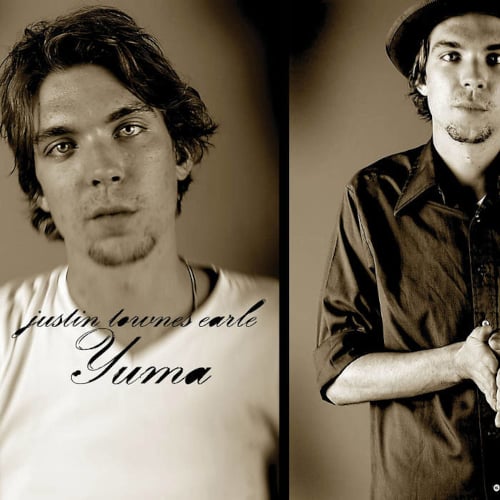
Justin decided after playing the Grand Ole Opry, which he felt was a huge achievement, that he didn’t want to be part of country music. Though he first emerged as a country traditionalist with his debut LPs The Good Life (2008) and Midnight At The Movies (2009), he felt the genre was too commercialized. This is why he started leaning more into blues and Gospel on subsequent albums.
As author Jonathan Bernstein observes in Chapter 11 of the book,
“Justin Townes Earl was defining himself through opposition and in contradictions. He was eager to entertain yet quick to disassociate with any genre that wanted to claim him. He was anxious to be taken more seriously as a songwriter while doubling down on a campy stage presence that could overshadow that talent. He was desperate for recognition yet quick to discount his own dreams—like playing the Opry—when he achieved them. He was hungry for stardom yet deeply resistant of anything that looked like a conventional path to success.”
Through this early part of his career, Justin didn’t have a band, just mandolin player Cory Younts from the Chicken Shack gang. Younts was an Eagle Scout who also worked at the Philmont Scout Ranch in the summers. They toured in Earle’s F-150. Justin told Younts that his song “Poor Fool” was about him. When they were playing on the now legendary “Big Surprise Tour” headlined by Old Crow Medicine Show, Cory spent a lot of time hanging out on the Old Crow bus. Earle officially fired him to forgo the awkwardness of Cory having to ask him if it was okay to join Old Crow full-time.
Ahead of the release of his album Harlem River Blues, Justin Townes Earle first moved to Brooklyn, then to Manhattan—specifically an apartment complex at 516 East 11st Street that was mythical in the annals of American music. Guitarist Eric Ambel who played for Steve Earle lived there for many years. And even though Justin continued to try and publicly distance from his father, he was moving where his father had moved with then wife Allison Moorer. This is also where and when Justin’s sobriety became more public facing, hiding a private lie.
Jonathan Bernstein says, “There were long periods where it seemed like Justin found a managable state of mental and chemical equilibrium. And there were periods of genuine abstention from alcohol and drugs other than weed, periods when Justin’s reliance on chemicals was limited to prescribed medication. But the reality is that, after emerging from rehab in 2010, Justin spent the next decade in an unceasing struggle with his illness.”
Chapter 15 covers the notorious incident at Radio Radio in Indianapolis where Justin Townes Earle was arrested, and accused of “hitting a woman with a closed fist,” even though as the book portrays, the specifics of the incident are still disputed. Joshua Hedley was playing fiddle with Justin, and Bryn Davies played bass. Justin was definitely using again at the time, trashed out the green room, and allegedly was confronted by the owner. When the owner’s daughter got in between the two, that is when she allegedly received an inadvertent belt.
The characterization of Justin Townes Earle hitting a woman really hurt him, both publicly and personally. It became yet another burden for him to carry, and one he publicly disputed, even though the accusation would come up again later.
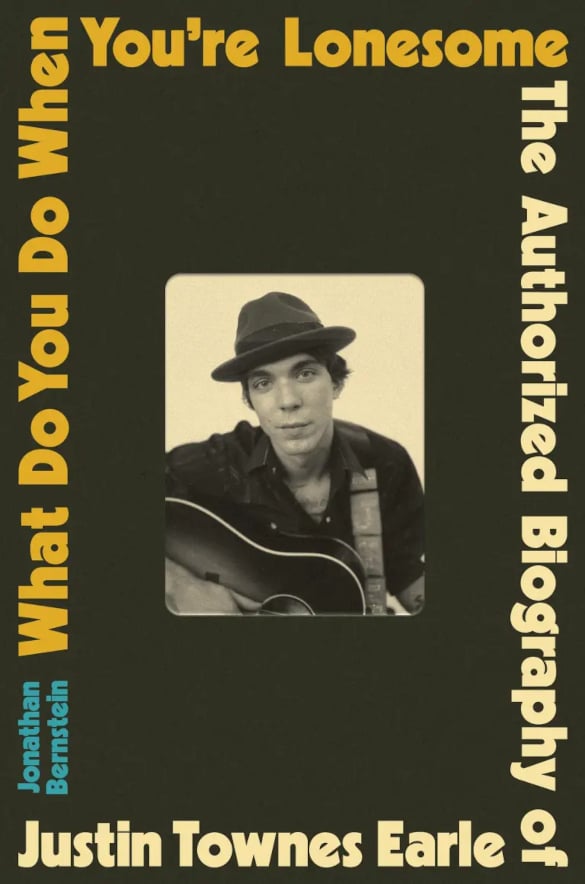
Though Justin attended rehab after the Indianapolis incident once again, his life never seemed to fully get back on track afterwards. When his album Single Mothers came out in 2014 and was commercially unsuccessful, Justin also starting to lose his live draw. When the rise of Sturgill Simpson, Chris Stapleton, and Jason Isbell was celebrated in a GQ photo/spread in early 2016, Justin was nowhere to be found, even though he very much helped spark the roots revolution these three took to the masses.
Another keen observation author Jonathan Bernstein has about this time is, “The entire network and infrastructure of blogs and independent music media that supported and spread the word about artists like Justin Townes Earle in the late 2000s and early 2010s had all but dried up or vanished. Not coincidentally, those two years marked the rise of streaming services like Spotify.”
The recurring theme throughout the book is the frosty relationship between Justin Townes Earle and his father. Though Justin made it part of his public persona that his father was never there, the elder Earle provided often for Justin, hired him via a publishing company he created so he could focus on writing songs, employed him in his band, allowed him to live at his house near Nashville for extended periods during his young adult life, and would have done more if Justin didn’t hold so much resentment.
As the book observes, “There were moments earlier in Justin’s career when Justin would slag off on his dad in a phone interview, end the call, and then immediately ring his dad to say hello.”
There is also the recurring theme of “the myth” as Jonathan Bernstein calls it that followed Justin Townes Earle like a ghost, not just from his father’s name, but from Townes Van Zandt and his tragic story, as well as the tragic stories of so many songwriters who felt like they had to suffer for their art and to sing from an honest, authentic perspective. For Justin, he had a triple whammy to contend with when it came to generational addiction issues, expectations from namesakes, and a toxic mythology.
Meeting his wife Jenn Marie really helped just for a bit. They moved to tiny Westport, California on the coast, then to Portland, Oregon. Jenn Marie got pregnant. Justin started calling his dad even more.
Chapter 22 might be one of the hardest of the book to read. Though Justin was clearly elated at becoming a father, it also clearly filled him with fear and anxiety. He booked a European tour right before the birth. When his daughter Etta came a month early, Earle was on stage. When he was notified, he chose to finish the final days of the tour out before returning home. Then on his way back home to Portland, there was a missing day where Earle vanished.
Days went by after the birth that Justin wouldn’t call. He carried a lot of guilt for missing the birth, but didn’t seem to know how to make it right. After all, he’d named his 2015 album Absent Fathers—the ultimate rebuke of dad Steve. He did finally return to meet his daughter. A few months later though, Justin was on the road again. This is when Justin had another serious relapse.

As Jonathan Bernstein smartly and importantly observes,
“Those employed by Justin were placed in a difficult position: say yes to the boss or get fired. It was a position many had found themselves in throughout the years. And many of those employed by Justin believed that once he was already off the wagon, he’d be better off surrounded by those for him rather than whomever they imagined he’d replace them with if they told him no. This, broadly speaking, was how the music industry worked: Artists toured to earn a living for themselves and to keep members of their team employed. If that artist, writing from the threat of withdrawal, needed cocaine, someone found them cocaine.”
This leads to one of the worst episodes recounted in the book involving Justin and his wife Jenn Marie.
“The couple started yelling. When Etta awoke at the commotion and began crying, Jenn Marie implored Justin not to go upstairs to see her. The couple got into a physical altercation on the staircase, at which point Justin, ‘swung his hand and phone back and struck Jennifer in the face,’ according to the report. Jenn Marie called 911. When police arrived, they photographed her injuries: a gash down the middle of her nose, cuts on her hand, and a bump above her left eye, which was bruised almost to the point of being swollen shut.”
Justin was taken to jail, charged with fourth degree assault. The day before Etta’s first birthday, he flew to Austin for rehab.
In the beginning of the final chapter, it’s revealed that Justin was also arrested for public intoxication at the San Antonio airport, and also charged with possession of cocaine. When hometown hero Steve Earle bailed him out though, all charges were miraculously dropped.
Eventually you get to the inevitable conclusion, which is the combination of the COVID-19 pandemic, the fentanyl scourge, and Justin’s own predilections resulting in his tragic death. At this point in the book, even author Jonathan Bernstein seems exhausted by all the drama, and all the attempts to rehabilitate Justin and resuscitate his career.
Shortly before his death, Justin was in the hospital with pneumonia from aspirating into his lungs from drinking too much. He saw his wife and child who he’d been estranged from for a year around this time. They all said they loved each other, with Jenn and Etta returning to Montana, and Justin remaining in Nashville, waiting for the pandemic to lift to resume touring.
“An autopsy report eventually determined the cause of death: an accidental overdose after ingesting cocaine laced with fentanyl,” Jonathan Bernstein writes mater-of-factly. “He had died on the evening of August 20, [2020] it was determined, in an apartment that was little more than a mile from the hospital in which he’d been born.”
Justin Townes Earle left an inspiring catalog of songs and albums behind, but even that feels somewhat marred by how it all ended. This story was a tragedy, and at times, an incredibly ugly one. What Do You Do When You’re Lonesome starts off as a wickedly compelling, page-turning read. But at the end, you almost feel as empty and hopeless as Justin must have felt in his final days.
Nonetheless, this is a story that feels like essential reading, because it’s a story that’s playing out as we speak in tour buses, hotel rooms, in lonely one bedroom apartments populated by the people we pay to have entertain us through music. They all seems unnaturally predisposed to addiction, mental health issues, and general malaise. It’s their broken nature that intrigues us. But that broken-ness should never be the entertainment itself.
Solving the mental health and addiction issues while saving the music is one of the most complex, but imperative challenges the music community faces. Hopefully the life Justin Townes Earle lived, and the story Jonathan Bernstein tells goes a long way to doing this. The sacrifice and the effort sure feel worthy of it.
8.6/10
– – – – – – – – – – – –
Purchase: What Do You Do When You’re Lonesome: The Authorized Biography of Justin Townes Earle
March 10, 2026 @ 8:52 am
Thanks for the wonderful review and I’m excited to read the book. Justin will always be special to me. I dated a girl long distance in 2009. We would make each other mix cds and mail them to each other. At the time she wasn’t a fan of country music. But she sent me a mix cd that included Justin’s song “ain’t glad I’m leaving”. She wrote in her letter (where she reviewed each song included) this is as country as I get.
At the time I was blown away by the song and told her “this is as country as anyone gets.” Justin immediately became my favorite singer and opened up the world of independent country and is the reason I’m here reading this site. Justin is no longer my favorite but he’s always going to be special to me. Really grateful the music he was able to give us
March 10, 2026 @ 1:10 pm
That’s a great story man ty for that, got one similar but was 1989, and cassette tapes 🤣
I sincerely hope that you got the girl, or at least that you the kept the CDs.
I keep an antique Akai tape deck, for… reasons.
March 10, 2026 @ 1:25 pm
Things didnt work out with us but she made my music taste a lot better. Just funny since as I said she wasn’t a country fan but Justin opened for an Indie rock band she saw in Boston. Said even though she didn’t like country she was blown away by his charisma and performance
March 10, 2026 @ 9:25 am
Im definately going to read this , but it does sound harrowing and it also sounds like Jenni went through a heck of a lot of abuse herself and in front of his own daughter . So im sorry but the lines of a Jason Isbell song are the tip of the iceberg really. Justin’s music stands tall but sadly he wad the saint of lost causes. Its just so sad that the love of a woman and motherhood couldnt even inspire him to get his shit together.
March 10, 2026 @ 11:30 am
“So im sorry but the lines of a Jason Isbell song are the tip of the iceberg really.”
That’s what I kept trying to tell people in the comments of the article about the Jason Isbell/Justin Townes Earle relationship when I was trying to broach a much wider conversation, and people wanted to go back and re-litigate “When We Were Close.” After reading this book, that teapot tempest feels so trivial.
March 10, 2026 @ 12:47 pm
I am grateful to not have comments relitigating that as well. Though I did go back and listen to that song after reading this article and it’s a great song. Independent of everything else
March 10, 2026 @ 10:51 am
I saw Justin open up for Dan Auerbach in Columbus, OH.
Just Justin and a guitar, on Halfway to Jackson it sounded like 3 guitars were on stage.
Very talented guy.
April 8, 2026 @ 7:05 am
I think this is one aspect of Justin that doesn’t get enough attention. He was definitely talented, but also so unique. I sent this video to my dad (we’re both very amateur guitar players) and he was convinced there was a backing track. I finally convinced him otherwise.
https://youtu.be/Lk677khGbUI?si=7aBTUGja9BaWEWJq&t=48
March 10, 2026 @ 11:41 am
Excellent review. Thank you.
March 10, 2026 @ 12:17 pm
Why did he resent his father so muuch?
March 10, 2026 @ 12:45 pm
Haven’t read the book yet but as I understand itmsteve was deep in his own struggles with drug addiction during the time Justin was a child
March 10, 2026 @ 1:12 pm
I haven’t read the book either. I’m sure Justin’s upbringing was difficult in part because of his father’s problems. It seemed that when Steve did clean himself up and try to help, Justin was unable or unwilling to really accept it. This isn’t the first family where addiction problems get passed from parents to children.
March 10, 2026 @ 1:06 pm
Steve Earle was never a threat to win any Father of the Year awards. He faced his own issues with addiction and domestic violence, was married 7-8 times, and was on the road a lot when Justin was growing up. But the book does a good job of laying out that however bad of a father Steve Earle was, he was not “absent,” and put out significant effort trying to raise and support Justin.
For Justin, the pressure was to separate his career from his father, and dispel the idea that nobody would even be paying attention to him if it wasn’t for Steve. This is the blessing/curse relationship 2nd and 3rd generation performers face. Hating his father and blaming him for everything kind of became part of Justin’s public persona and a way to emphasize how he was standing on his own two feet, while as the book lays out, Justin’s mother was also absentee at times.
Another interesting note about the book is that Steve Earle did not interview for it, even though hundreds of other people did. It’s through Steve’s biographies and accounts from others that the relationship between Steve and Justin is constructed. Even then, Steve comes across as being more supportive of Justin in this book than Justin ever portrayed publicly.
March 10, 2026 @ 5:19 pm
I’ve known people who were abandoned, under spectacular conditions, by one parent, but very few who were essentially abandoned by both.
Good thing Punch the Monkey didn’t have access to drugs.
March 10, 2026 @ 1:07 pm
Because he is the spitting image of his father.
Rebel without a clue, to cite Tom Petty.
Great writers, both of them, but like so many artists; something was/is missing inside. Spoiled brats, in many ways, looking for something to ease the boredom, preferably as you blame someone/something else for your own wrong-doings.
March 10, 2026 @ 1:18 pm
Great review. Having read many books on musicians, the sex and drug problems frequently get overwhelming in some of them. It seems that is the case here even though it is the truth. I’m sure I’ll feel overwhelmed with this book too.
I was wondering how Steve would be portrayed in the book. Obviously he wasn’t a great father but it sounds that he did try and help too.
March 10, 2026 @ 4:22 pm
Me at the start of this article: Man, Justin Townes Earle sure made a bunch of fabulous music and I should go listen to some of it.
Me at the end of this article: Ugh. Yeah, maybe not today.
What a sad story.
March 10, 2026 @ 4:45 pm
It’s just a typo but it was Bryan Davies (not Davis) who played bass with JTE. (She’s also played with folks like Peter Rowan & Tony Rice, Patty Griffin, and Old and in the Way, among others.)
March 10, 2026 @ 10:46 pm
Bryn Davies. Nuclear engineer. Bass player. Same person 🙂
https://ne.utk.edu/bryn-davies-music-nuclear-engineering/
https://en.wikipedia.org/wiki/Bryn_Davies_(musician)
March 11, 2026 @ 7:50 am
Oh, that’s right. She played on and is on the cover of the Peter Rowan & Tony Rice Quartet album. I saw her play once as a member of Scott Miller’s Ladies Auxiliary.
March 10, 2026 @ 6:11 pm
JTE and Ryan Adams were my gateway drug into this world of saving country music. When JTE passed I played Harlem River Blues and legit teared up. Saw him many times in concert including an intimate show at a small bar in Mobile with about 40 people. It was a religious experience. I’ll definitely be reading this soon.
March 10, 2026 @ 7:39 pm
I worked with Justin doing production/stagehand work in Nashville in like 05-06. Considered him a friend, but never was in his “inner circle”. He didn’t have a car, and I gave him rides after work several times to places. I, myself, was in the sobriety rooms at that time, and we talked about it a good bit. He told me the first time he ever did heroin, he stole it from his dad’s stash when he was 13. I was a songwriter (still am), and he told me he was recording at that time. I never went to hear him play for some reason, and wish I would have. I sometimes wish I had played or wrote with him, then I think it’s probably best that I didn’t. Only after he passed did I start listening to his stuff and watching videos of him playing. I encouraged him strongly to stay sober, as I’m sure lots of people did. Truly gifted guy. What a tragic life.
March 10, 2026 @ 8:16 pm
Justin always seemed to be trying to out outlaw his father, and in doing so sealed his fate. So many young artists fall into the suffering artist fallacy which has been romanticized for so long; they start out playing a role that inevitably becomes a way of life, a life filled with suffering and tragedy that many never break free from.
In Lauren St. John’s book Hardcore Troubadour: The Life And Near Death of Steve Earle, you get a glimpse of what Steve was up against with Justin even in his teens (including quotes from Steve’s sisters). While Steve may not have been the best father, he did what he could to help his son. In the end, the only person who could have saved Justin was Justin.
March 11, 2026 @ 11:13 am
The audiobook version of this is awesome, too.
Truly a tragic yet predictable tale. Well written tale too.
I remember hearing when Steve named his son Townes and immediately thought the kid was doomed from the start. And he was. RIP JTE
March 12, 2026 @ 5:25 pm
That quote from Patty Lamey — “So you don’t have to stand in anyone’s shadow” — is amazing. I wonder if Justin ever felt he wouldn’t have to stand in his father’ shadow. Let’s face it: Steve Earle is a giant. But Justin made his own mark and he proved how special he was, even if he didn’t believe it himself. So sorry he’s gone.
March 15, 2026 @ 2:12 pm
I’m a huge JTE fan and I pre-ordered the book. It’s well written and appears to be a very fair portrayal of a deeply complicated person. My only complaint is that it just wasn’t enough about the music for my taste. More about his songwriting on specific songs. I wanted deeper dives into the sessions and decision making around the sound of the albums.
March 16, 2026 @ 10:40 am
I am somewhat relieved to read this comment because I thought maybe I was alone in this. I was also disappointed that it didn’t dive into the creative processes (in the studio, etc). I just learned a lot of mostly sad details that may have been better that I never knew. Not sure I want to recommend it to others, as I have too much respect for JTE and his music. To further echo what you’ve said, it is very well written, just did not provide what I was hoping for. Maybe there will be another one day that focuses on his work.
March 16, 2026 @ 10:56 am
I actually think that the book does a good job going into the inspirations of many of Justin’s songs, talking about the deeper psychological symbolism in them, and telling a lot of the stories behind them. Sure, there could have been more focus on this, and yes, this book is filled with many personal details. I also think that as the book goes on, it’s almost like Jonathan Bernstein started to fatigue hinself from all the drama surrounding Justin, and he did get away a little bit from talking about the music. But this was also the time when arguably Justin was past his creative peak.
I respect the criticism that more attention could be paid to the music. But the Justin Townes Earle story is a tragedy, and that’s how it was written.
March 16, 2026 @ 11:16 am
Thanks for the reply. I agree that you can’t get around the tragedy, but we do all know how he died, so was it necessary? I don’t know. I’m conflicted about it. It was a lot to digest and could have been countered with more about his work.
I do not agree that he was past his creative peak. His final album, The Saint of Lost Causes, is a masterpiece and arguably my favorite of his (and I also love his early catalogue). Hopefully it will get the respect it deserves in time. I was really looking forward to what he would do next. Still so sad.
March 16, 2026 @ 11:20 am
As a follow up to my previous comment, I’m just realizing that you may have been talking about his last years when he was no longer making music, after the final album. If so, my apologies for misunderstanding.
March 30, 2026 @ 8:32 am
Interesting article. Some stuff is not accurate. I was in The Swindlers and we did put our cd out. We sold it at our shows. We published our music literally years before Justin and some others filed fraudulent copyright filings which they changed the date of creation and also took sole credit for our music for themselves. Bloodshot Records didn’t honor our IP. BMG Chrysalis doesn’t honor our IP. In fact, after Justin passed away, his widow Jennifer sold a lot of our IP to BMG and kept all of our money for herself. She had no right to sell my IP, I’ll speak for myself on that.
I don’t remember Bonnie Whitmore being around in 2004. From what I remember he was shacked up with a really easy to look at chick named Molly.
The last time I saw Justin was about a year before he passed away. We ran into each other outside of a club called the 5 Spot. I was really digging the drummer so I turned my phone recorder on. I went outside to smoke and Justin poked his head out the door. We shook hands to greet one another and before I knew it, I was being berated by him at the top of his lungs and being falsely accused of having sued him “13 times over publishing”. He then started naming former bandmates from the Swindlers that I hadn’t spoken with in at least 5 years and stated that they had told him that I had sued him…..Now why they were saying that to him(?), I dont know.
I do have some ideas on what may have happened on that though. Justin swore that he had settled with me for 13 of our tunes, and he may have thought he was, but that was the first and last I’d heard of it.
He was a tremendous talent
(c)2026 W.D..
March 31, 2026 @ 11:22 am
Additionally, their fraudulent copyright filings were done through various entertainment attorneys and through various publishing shell companies. All knew that they weren’t being honest in making these filings. The Swindlers stuff that was repackaged and sold on Bloodshot Records all had the false copyright filings with a date within two years of the Bloodshot release in order, I believe, to try and establish a “Prima Facia” status.
The Swindlers had literally published our stuff at a minimum of 7 years prior to anything that Bloodshot had released.
W.D
(2026) W.D.