

Kelsea Ballerini, Austin City Limits, and the Public Funding of Media
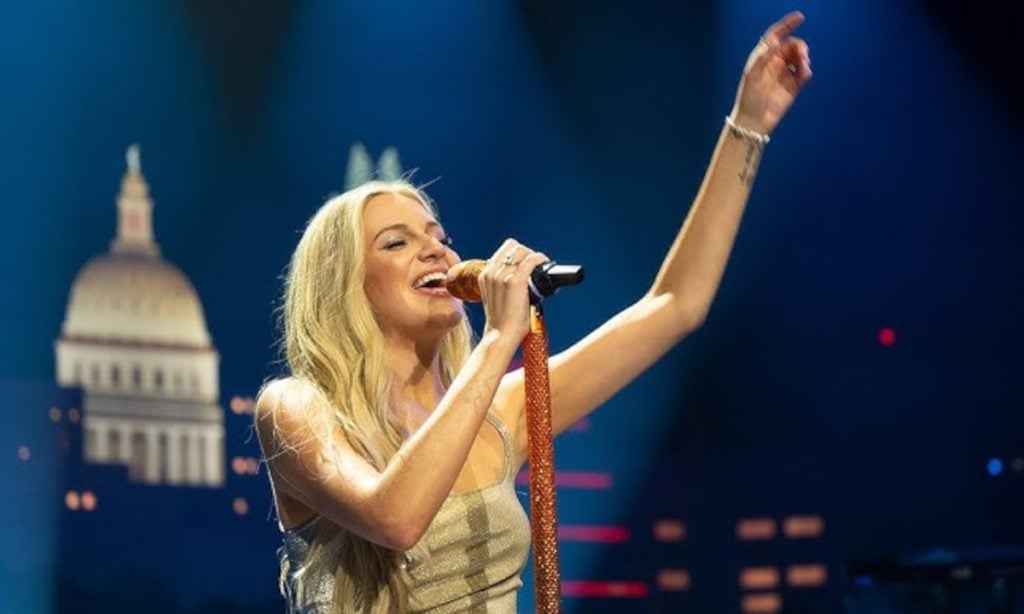
When the PBS TV show Austin City Limits was set up in 1974 and Willie Nelson played the pilot episode, the point was to chronicle the unique and growing music scene in Austin, and share it with the world. Over the years, the show became where the world was first exposed to so many Austin music greats such as Stevie Ray Vaughan and Asleep At The Wheel. It has since become the longest running music television show in American history.
But Austin City Limits moved on from being a dedicated showcase for Austin music long ago. Even during the early seasons, Austin City Limits would bring in a few artists from outside of the Austin music scene to help stimulate interest in the show, though these performers often still fit the general vibe of the ACL stage, and the Austin scene by proxy. They were there to compliment the Austin musicians, not overshadow them.
Now, that legacy of showcasing the Austin music scene seems so far in the past, it feels tired and trite to even complain how little Austin music is featured on Austin City Limits.
The fall lineup for the 51st season included Finneas—a.k.a. the pop songwriter perhaps best known as the brother and producer for Billie Eilish. It also featured the indie pop band The Marías from Los Angeles, jazz singer Samara Joy from New York, and another New York musician in Jon Batiste.
This year’s Austin City Limits Hall of Fame inductee was the indie rock/alt Americana band My Morning Jacket from Kentucky, following in the footsteps of the 2024 inductee, Garth Brooks.
If you’re getting the sense that Austin City Limits has little to do with Austin these days, you’d be correct. Granted, one of the episodes of this current season did feature a tribute to Austin’s long-running blues club Antone’s and included numerous local blues musicians. Charley Crockett who currently lives in Austin also received a return 30-minute slot this season.
But these were exceptions, not the rules. Waxahatchee (Katie Crutchfield) is from Alabama, and shared the episode with Charley Crockett. She would fit the “Austin adjacent” profile pretty well, as would maybe My Morning Jacket. But as all these artists from outside of Austin get featured on Austin City Limits, successful mainstays from the local scene like Silverada, Shane Smith and the Saints, and so many more sit on the outside looking into an ACL opportunity. They’re more likely to be featured on the Grand Ole Opry in Nashville than Austin City Limits. Silverada has been featured on the Opry numerous times.
Maybe most perplexing of all the Season 51 bookings was Nashville pop country star Kelsea Ballerini. She was partnered with “Burning House” singer Cam. It’s difficult to impossible to figure out why Ballerini’s appearance would have any benefit for either party. Austin music fans, and Austin City Limits faithful would find little to no appeal in a Nashville pop star. And Kelsea Ballerini is unlikely to connect with any new fans through the medium. So what is in it for anyone? Are they simply booking her because she’s kind of popular?
Austin City Limits posted two videos from Kelsea Ballerini’s performance on the show on YouTube. Her video for the song “Penthouse” has just over 4,000 views at the time of this post, and her video for “Baggage” has 3,800. Comparatively, the two videos from Charley Crockett’s appearance have 10,000 and 18,000 views. Charley’s views aren’t particularly eye-popping either, and this isn’t some perfect study of popularity with the show’s viewers. But Charley’s views are commensurate with other performers. Waxahatchee’s videos have 12,000 and 42,000 views.
Of all performers, why was Kelsea Ballerini booked on Austin City Limits? In 2021, the owners of the Grand Ole Opry purchased the mixed-use complex in downtown Austin along second street known as “Block 21” that houses the 2,750-seat Moody Theater where Austin City Limits is taped. At the time, the concern was how it could result in the Nashification of Austin. Perhaps featuring Kelsea Ballerini (who is a Grand Ole Opry member) is part of “unlocking synergies” between the property owners and ACL. Perhaps it’s not.
Either way, watching Ballerini perform pop songs on the Austin City Limits stage with all the performative pointing and gesticulations of a Nashville star just feels like watching a fish out of water.
It’s an even worse assessment for Finneas. The videos ACL published of him have 2,800 and 1,800 views on YouTube respectively. Why? Because people who watch Austin City Limits are not interested in these performers. Kelsea Ballerini and Finneas are many times more popular than Charley Crockett and Waxahatchee. But they’re featured on commercial radio and national programming all the time. Austin City Limits is supposed to be for the performers who don’t get other opportunities, and are native or attentive to the music of Austin.
Meanwhile, as Austin City Limits is attempting to entice new audience members through booking big pop names, they’re not only unsuccessful in that pursuit, they’re shedding their long-time, loyal followers and supporters since these viewers are not connecting with the performers featured on the show. There’s no longer that discovery mechanism that was so special about Austin City Limits in the past where you didn’t even look at who was booked on the show. You simply tuned in because you knew it was going to be good.
Earlier this year amid cuts to public funding for PBS and NPR, many in the public cried foul, and cited programs like Austin City Limits specifically as vital to supporting the arts on a local and national level. Public funding for media is important, if not imperative to make sure long-running institutions like Austin City Limits survive.
But the reason the public was willing to support something like Austin City Limits is because Austin City Limits was willing to support local and regional artists who otherwise might not have that support, let alone the archival aspect of the show to chronicle the music of Austin.
But as ACL‘s original mission and unique purpose is fulfilled less and less, it’s becoming more and more expendable, especially as new avenues for discovering music from Austin and elsewhere have opened up, and ACL clout chases after bigger names in search for cultural relevance they’re not finding.
That value to the public on both a local and national level for a show like Austin City Limits is its connection to Austin. The farther it gets away from that, the less valuable it becomes.
– – – – – – –
If you found this article valuable, consider leaving Saving Country Music A TIP.
December 2, 2025 @ 9:47 am
Texas Music Scene replaced ACL for me a long time ago.
December 2, 2025 @ 9:49 am
What would a full season of ACL look like with all Austin Music Scene artists? Keeping in mind they usually try to get biggish names and not repeat the same people over and over?
December 2, 2025 @ 10:06 am
First off, I’m not opposed to having some national names on Austin City Limits. Bring in one or two per season. But also make them names that fit the profile, not pop stars who are used to performing with dance choreography or selling out arenas, and are only playing ACL because they think it will give them gravitas.
Silverada should have been featured on the show seven years ago. Shane Smith and the Saints as well. They have to fly to Wyoming to be featured on Yellowstone before they can be featured in their own hometown. Theo Lawrence might be a guy to bust out big in 2026. Melissa Carper and Paige Plaisance are gems of the Austin scene who deserve a national audience. Honestly, the line forms to the left with worthy Austin musicians being overlooked. And a band like Silverada would draw way more interest to Austin City Limits than Kelsea Ballerini and Finneas, because they have actual, grassroots fans.
The novelty of being able to see your favorite artist on a screen no longer holds the same weight now that we have YouTube channels like Gems on VHS, Western AF, etc. If Austin City Limits wants to survive, it needs to find its unique place in the media marketplace as opposed to trying to be all things to all people.
December 2, 2025 @ 11:09 am
“If Austin City Limits wants to survive, it needs to find its unique place in the media marketplace as opposed to trying to be all things to all people.”
You undoubtedly realize you are preaching to yourself here – and this is a very good thing.
And, This. THIS RIGHT HERE.
“Silverada should have been featured on the show seven years ago. Shane Smith and the Saints as well. They have to fly to Wyoming to be featured on Yellowstone before they can be featured in their own hometown.”
Amen, Brother
December 2, 2025 @ 5:20 pm
Ellis Bullard would be a perfect pick.
December 2, 2025 @ 10:07 am
“If you’re getting the sense that Austin City Limits has little to do with Austin these days, you’d be correct.”
I’m not sure Austin has much to do with Austin these days.
Hasn’t Wyatt Flores taped an ACL that I assume will be broadcast sometime in the spring?
December 2, 2025 @ 10:39 am
Yes Wyatt Flores did, I was on YouTube one Friday evening a month or so ago and the ACL live taping for his show popped up, it was good, I watched twice that night.
December 2, 2025 @ 10:09 am
I have been very disappointed in ACL the last several years. We didn’t have a record player/cd player growing up, just the radio. We also only had network tv stations. My dad was just pretty much a classic rock station on the radio guy. However, most Saturday nights he’d watch Austin City Limits (if the act wasn’t “too country”) , then Saturday Night Live. This was early to mid 90s. It seemed like that was my window to something that wasn’t Garth Brooks/Regis and Kathy lee/Home Improvement. On one hand it sucks to lose that, but on the other hand if I want to see Rattlesnake Milk I don’t have to wait till they play ACL in February, I can sit on my couch and pull up concert videos of them on youtube right now. ACL has been replaced as a “showcase” by youtube channels like WesternAF and blogs like this one.
December 2, 2025 @ 10:15 am
Rattlesnake Milk is a perfect example of an Austin band that should have been featured on Austin City Limits already. It’s a local band making an international impact with a unique sound that illustrates what makes Austin music special.
December 2, 2025 @ 10:46 am
She has some better songs in recent years, but still a pop singer first.
Unrelated to the music, but based on that picture over the video, has she become yet another beautiful young woman who has succumbed to the pressure to get lip filler? It could just be the angle and she hasn’t, but jeez, this issue is rampant, either way.
Ladies, you don’t need it and never have! It looks artificial because it is.
December 2, 2025 @ 1:41 pm
Even worse than lip fillers are those grotesque woolly caterpillars that far too many women in music affix to their eyelids and call “lashes.”
December 2, 2025 @ 11:03 am
“There’s no longer that discovery mechanism that was so special about Austin City Limits in the past where you didn’t even look at who was booked on the show. You simply tuned in because you knew it was going to be good.”
Hot take: this entire consumer mindset of “discovering something new” no longer exists in music, and is part of the reason for the decline of the small-to-mid-sized music venue. Readers of this site are an exception, but readers of this site are mostly older people.
December 2, 2025 @ 11:12 am
Agree on all points. Even TikTok that replaced the discovery mechanisms for young people is dramatically losing steam due to algorithms pushing produced content by creative firms as opposed to individuals, as well as now AI slop. This is also one of the reasons there were no real breakout artists in 2025 across all genres.
December 2, 2025 @ 1:55 pm
More disappointing for me is just how bad some of the music streaming services algorithms have become. I can’t comment on Spotify since it’s been years since I used that service, but I am a Apple Music subscriber and under my “new releases” section they didn’t have Lance Roark’s new album even thought I have listened to his EP plenty AND listened to Turnpike for lord knows how many hours over the years on that service.
It is one thing for the fractured state of music journalism and TV to not help “find” me new artists (this website notwithstanding), but if the music streaming services also suck at it? Yikes.
Thank God for this website!
December 2, 2025 @ 8:30 pm
Spotify’s recommendations years ago were some of the best ways to discover new music. But like so many other algorithms, they have been corrupted and sold, and now they’re sometimes downright incoherent. All these institutions are letting consumers down.
December 3, 2025 @ 9:07 am
Wait!! Me? Older??? Just because I watched the original show featuring Willie Nelson in 1974!!
December 2, 2025 @ 11:31 am
Reckless Kelly should have been on there several times by now.
December 2, 2025 @ 11:57 am
Reckless Kelly, Wade Bowen, Randy Rogers Band, these are all Central Texas-based artists who no excuse can be given why they haven’t been featured on Austin City Limits if we’re featuring Kelsea Ballerini, Eric Church, and Kane Brown.
December 2, 2025 @ 3:26 pm
Kelsea represents something. That is the industry desperately trying to make female artists superstars and convince everyone they have larger fan bases that they really do.
December 2, 2025 @ 5:48 pm
You should be referring to Finneas as they not him.
FYI.
December 2, 2025 @ 6:12 pm
Waylon did this show twice and not in their HOF. Jerry Lee did it and was asked back but even he said he could not top his original appearance. Not in ACL HOF. These men are true legends.
December 3, 2025 @ 4:51 am
Neither are The Crickets or Johnny Cash (but Roseanne is…)
December 2, 2025 @ 7:12 pm
I gotta say Trigger, for someone who abhors the intersection of politics and country music (as you kindly remind us any time Jason Isbell or Tyler Childers releases an album), you always seem to be diving headfirst into the issue on here… Anyways in this case, ACL is just branding… much like Hagen Dasz isn’t real Danish, or the Mormon Tabernacle isn’t comprised of only Mormans, or AARP doesn’t require you to be anywhere near retirement age to join, ACL is mostly just a brand, now and honestly, what Willie Nelson’s intentions with it 50 + years ago doesn’t really matter. It’s not that groundbreaking of a departure either, most music festivals have long since departed from their original intent (Bonnaroo, Coachella, JazzFest).
Also I love Antones, and am so happy its getting a tribute, but the last act I saw there, Ruthie Foster, barely gets mentioned on this site, let alone is registered in the minds of the national public (also she was literally featured last year, so this isn’t some massive long term departure from Austin music we’re talking about here), and this year more than ever, with a scrutiny on PBS, I have no problem with them trying to get names they think will increase viewership (which isn’t measured by youtube views)
As far as why Bellerini and Finneas chose to be on ACL, who knows, maybe its so they can appeal to a more sophisticated audience that is supplied by Nashville, maybe its to show solidarity with PBS while its under attack (hey politics!) but its not wrong at this point to feature them. So let ACL do what they need to do to help PBS out, and don’t treat any change in the world or attempt by a musician to make sense of whats going on right now as a slight.
Also, you darn well know its disingenuous to call Jon Batiste a New York musician…
December 2, 2025 @ 8:22 pm
I agree ACL is just branding. That is the problem. When you have no compass point, when you offer no value to your community, why would you then expect public funding? if PBS and its programming is supposed to be non-profit, why are they thinking about “branding” in the first place?
” I have no problem with them trying to get names they think will increase viewership.”
Kelsea Ballerini is not going to increase their viewership. It’s going to crater it. Kelsea Ballerini has no actual fans. It’s a Music Row construct, and music as marketing. It’s a self-licking ice cream cone that needs corporate radio to recoup the production costs, and an artist like Charley Crockett has a way bigger cultural footprint.
I am not criticizing PBS, Austin City Limits, or public funding of media because I hate these things. I’m criticizing them because I love them. And to see them flouder due to clout chasing and thinking Kelsea Ballerini is going to positively affect their balance sheet is not only spectacularly foolish, it’s beyond embarrassing.
December 3, 2025 @ 3:19 am
I guess someone on Ballerinis team feels she has the potential for an audience beyond Nashville… cant fault her for trying that at least… anyone willing to test their meddle outside those overly safe confines should get a shot at least…
December 3, 2025 @ 9:31 am
Because PBS, like every nonprofit, loves money like a robber baron. They just aren’t honest about it.
I am even glad they lost their funding after Burns’ hack job on the American Revolution.
December 3, 2025 @ 9:53 am
Kelsea has no actual fans??? What on earth are you talking about? I’m a fan.
And FYI, she sold north of 350K tickets during her most recent 3-month tour, including 25 sold out shows. That doesn’t sound like she has no fans.
Come on, Trig. You’re better than that.
December 4, 2025 @ 3:58 pm
I like her cover of “my favorite things” with jazzy piano. It’s great, and I play it many times each Christmas. I don’t have real interest in the rest of her music, though.
December 3, 2025 @ 10:15 am
Nashville does NOT provide a more sophisticated audience. Instead it’s shallow, superficial and others could add more.
December 3, 2025 @ 12:08 pm
Im sorry I meant a more sophisticated audience THAN is supplied by Nashville, not “that” is supplied by Nashville
December 3, 2025 @ 12:26 am
When I was in high school, I saw Pat Green and Cory Morrow on ACL. Fell into the Texas scene. Now? I wish them all the best but I’ll only watch an episode every season or two.
December 3, 2025 @ 9:02 am
As long as they show Kelsea with the sound down I can at least glance at the screen now and then.
December 3, 2025 @ 9:29 am
If you don’t defend your gates and values, the barbarians take over.
December 3, 2025 @ 9:49 am
With all due respect, I grow a little tired of the Kelsea Ballerini bashing. I get it, she’s not very country. But she’s a really great vocalist and songwriter who has written some really wonderful songs. Maybe she’s not to everyone’s taste, but I really don’t see what she has done to deserve such ire around here.
There are more egregious artists to cover…not sure why Kelsea gets under everyone’s skin.
December 3, 2025 @ 9:55 am
Honestly, this is no offense to Kelsea Ballerini. My issue is not with her. My issue is booking her on “Austin City Limits,” which sets her up for criticism she would otherwise not receive, while receiving very little value from the appearance itself. The same opportunity given to someone like Kaitlin Butts would go much farther for both Kaitlin, and ACL.
December 4, 2025 @ 11:56 am
The main issue I had with Kelsea’s set was that there appeared to be two Les Pauls and no telecasters on the stage. Not sure why that was allowed.