

On The Eagles ‘Greatest Hits’ 50th Anniversary, Pondering It’s Country-ness
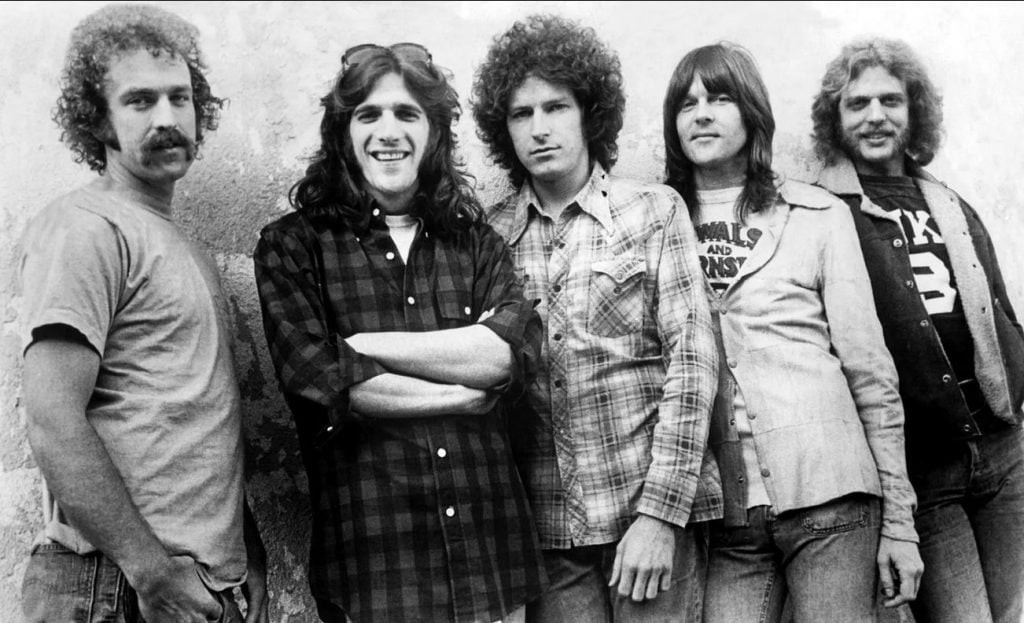
It’s pretty wild to think that the best selling album of all time in the United States is a Greatest Hits compilation, hastily thrown together after only four years of albums and singles, and with little or any input from the band itself. It’s also fair to ask if should it be considered a country album, or at least, mostly or partly country, or country-inspired.
We’re of course talking about The Eagles’ Their Greatest Hits (1971-1975), which was released 50 years ago today, February 17th, 1976. The popularity of this album is really something that is difficult to impossible to comprehend. It’s officially been Certified 40 Times Platinum by the RIAA. “Diamond” is the distinction they give albums when the go 10X Platinum, and enter an elite level of sales and cultural impact. Their Greatest Hits has done that four times over.
The second closest album is Michael Jackson’s Thriller from 1982, which sits at 6 million in sales behind Their Greatest Hits. For a period after Jackson’s death in 2009, Thriller overtook The Eagles for the #1 all-time spot. They regained it again in 2018, speaking to the continued appeal and relevancy of Their Greatest Hits. Today, we barely think of Greatest Hits releases. Streaming and playlists have made them pretty obsolete. But not this one from The Eagles.
It was Eagles manager Irving Azoff who decided to throw the compilation together. The band was pissed about it. They saw it as a cheap cash grab, and were unhappy that their songs were being selected out of album sequence, especially “Tequila Sunrise” and “Desperado” that felt like non-sequiturs outside of their album cycle, and weren’t really hits anyway. “Desperado” hadn’t even been released as a single.
Rest assured, none of the surviving members of The Eagles, or the deceased members estates are crying now. The release also played a important role in the history of the band. By releasing Their Greatest Hits, it gave the band extra time to refine what they were doing for their next album, 1976’s Hotel California, also known as the 3rd highest selling album in United States history (28X Platinum) behind Thriller.
Hotel California is commonly portrayed as The Eagles’ departure from their California country roots to a more rock-oriented sound, facilitated in large part by the permanent addition of rock guitarist Joe Walsh to the band, and the departure of Bernie Leadon, who was really the band’s biggest tie back to its country roots.
Bernie Leadon was one of the original members of the Eagles when they started in large part by backing Linda Ronstadt as the Corvettes during her country phase. Leadon was also in the Flying Burrito Brothers with Gram Parsons, and Dillard & Clark with former Byrds member Gene Clark and banjo player Doug Dillard. Bernie Leadon came from a bluegrass background himself, and was a multi-instrumentalist who played banjo, mandolin, dobro, guitar, and some steel guitar in The Eagles.
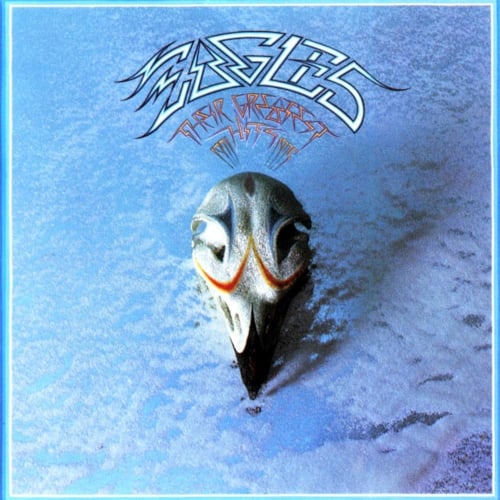
All this tracing back of roots and considering Their Greatest Hits 1971-1975 here on its 50th Anniversary begs the question, should it be considered a country record? What we can say almost conclusively is that if the compilation was released here in 2026, it most certainly would be considered country, if not traditional country, firmly ensconced in Classic California Country for sure, or #510.7 of the Country Dewey Decimal System.
Really, it comes down to how those first four albums that fed into the compilation were marketed, not how they sound, or the singles from them. “Lyin’ Eyes” from 1975 was actually released as a country single, and became a Top 10 on Billboard’s Hot Country Songs chart (No.8). The only reason “Peaceful Easy Feeling” from 1972 didn’t appear on country charts is because it was never released to country.
“Tequila Sunrise” is another song that’s so obviously country, and is only considered rock because The Eagles are considered a rock band. Same goes for “Desperado,” with the strings giving it strong countrypolitan vibes. If any of these songs had been released as country at the time, nobody would have batted an eyelash. And all the songs of Their Greatest Hits have country leanings at the very least.
When Their Greatest Hits really took on a second life was in the early ’90s in the wake of country music’s explosion behind the “Class of ’89,” a.k.a. Alan Jackson, Travis Tritt, Garth Brooks, Alan Jackson, and Brooks & Dunn. Four of these five performers participated in a tribute album to The Eagles in 1993 called Common Threads: The Songs of The Eagles. In fact, it was Travis Tritt working with Eagles manager Irving Azoff and trying to make a video for his take on “Take It Easy” that resulted in The Eagles getting back together.
At the same time, Clear Channel’s very popular classic rock radio format was playing songs from Their Greatest Hits incessantly. This was helping to fuel the appeal for country music’s neotraditional resurgence of the ’90s era, thus also feeding appeal back to the early catalog of The Eagles, all interconnecting in a cross cultural, multi-generational, and nationwide resurgence of interest in country music and the country-influenced music of The Eagles.
Is it still more relevant to consider The Eagles a rock band, and Their Greatest Hits a rock album? If only out of respect to the band’s original artistic intent and stated opinions of what to be called, it probably is.
But it is the country appeal of The Eagles: Their Greatest Hits 1971-1975 that has helped bolster the album’s unprecedented popularity and longevity now across generations. This is the album that seeded the appeal for country sounds and country sounds to millions of people.
Country music deserves some credit for being foundational to the most popular album in America of all time.
– – – – – – – –
If you found this article valuable, consider leaving Saving Country Music A TIP.
February 17, 2026 @ 9:36 am
My dad always called the Eagles fake country or valley country. I think you can lump a few other bands at the time in this boat too, America, Allman Brothers, CCR, Canned Heat, Marshall Tucker Band, Brewer and Shipley etc. The issue with the eagles of course is they were so much connected to California (and not bakersfield) that it really becomes extra blurred with them
I will say, you are spot on trigger about their overplay, they were oversaturated by far in the 90s to the point they havent aged as well as some of their contemporaries. You can say the same about the Who. But either way eagles are highway driving staples regardless of genre
February 17, 2026 @ 10:10 am
Given you include Marshall Tucker, would you also throw Charlie Daniels in that group of “fake country”?
February 17, 2026 @ 10:42 am
Alas its not my term. My dad’s a big fan of tje eagles despite his “fake country” moniker. For whatever reason Charlie Daniels gets much more lumped in with country than others
February 17, 2026 @ 11:07 am
I’m 50. Growing up I heard Charlie Daniels more on the rock stations than country stations sans “Drinking My Baby Goodbye” (that one I recall on the country stations).
Living in SW PA – south of Pittsburgh, but surrounded by West Virginia to the immediate south and west – WDVE (the classic rock station out of Pittsburgh) played Charlie Daniels regularly. I’d only hear Daniels on country radio out of Wheeling, WV when it was Jamboree in the Hills time of the year. When I lived in Hopkinsville, Kentucky, I never heard Daniels out of the 2 Nashville country stations, but that was the early 90’s.
As for the Eagles, WDVE played Eagles music post the GH package. I had the GH album on record and cassette and at the time never thought of it as country. But like Trig wrote, if released today it would be country.
February 17, 2026 @ 10:19 am
That is a strange grouping, the Eagles, America and the Allman Brothers. I’ve never thought of the Allman Brothers, who I’m a big fan of, as grouped with either of the other two.
February 17, 2026 @ 10:34 am
Allman brothers and Marshall Tucker are “southern rock” while the Eagles are “country rock”. If you were to plot genres on a linear line souther rock, and country rock would be pretty close together.
February 17, 2026 @ 10:23 am
The Allman Brothers Band is one of the most important bands in rock history. They most certainly were not ” valley country” or ” fake country”. Blues based rock and roll is what they were. The term southern rock became a thing and The Allmans were included in that category as were many other artists. It is true Dickey Betts loved country music and his first solo album was country in sound, though no one has ever made a case that he was a country artist. It is true Ramblin Man was written with Haggard in mind, but Hag declined it. Majority of ABB music is undeniably rock with pentatonic and hexatonic scalular soloing patterns performed on Les Pauls plugged into Marshall’s. Certainly not country. Marshall Tucker band did a few country songs along the way but never claimed to be country or even country rock for that matter. MTB played a lot of blues and even dabbled in jazz scales and western swing beats at times. Not a country band. Southern rock is where their legacy resides.
As for the early Eagles, id call them California country rock, and I’d include Flying Burritos, Poco and Parsons in that description. Truthfully at the time none of them were even recognized by country music. Later on, many country music fans and artists would cite The Eagles as highly influential.
February 17, 2026 @ 9:47 am
Perhaps for the Eagles, genre is not important. I think it is a great album with great songs and performances that have stood the test of time. I have never seen them as country or country rock, just good. I can understand their wide and enduring appeal.
February 17, 2026 @ 9:48 am
Good article. I don’t think the impact of the Eagles’ mid-1990s reunion can be overstated on their longevity. They went from being semi-mythical history (“Classic Rock”) to a living, breathing, touring, releasing musical act, opening them to new fans who weren’t even alive when they broke up.
February 17, 2026 @ 9:54 am
In the moment growing up in the late 70’s/early 80’s in Northeast Ohio I would never have thought of the Eagles’ music as country mainly because the local AOR radio station, the mighty WMMS, would play “Take it Easy” right in the middle of a 10-song run of Rush, Bowie, Pink Floyd, and Mott the Hoople. It certainly sounded different to me than the other stuff, but it was rock to my ears. Flash forward decades later after I finally found bands like Reckless, and Turnpike, and Boland and yep you can plant just about any song from this record except “Hotel CA” into a Red Dirt playlist and it sure doesn’t sound out of place. Cool topic Trigger.
PS – If you want to hear a great cover of a country rock song turned on its head into a full-blown Gospel/Soul mind-meld check out Etta James’ version of “Take it to the Limit.”
February 17, 2026 @ 9:56 am
I do think this is one of the most influential albums of all time on country music. The common thread album was a hit because the connection was so obvious. Yes all the biggest stars of 90s country (besides George strait) are clearly heavily influenced by the eagles and these songs. My dad told me he became a country fan around the time I was born specifically because country music was where he heard the music he loved when he was younger (the eagles/Grateful Dead).
I think this is definitely a country album and a great one
February 17, 2026 @ 9:58 am
In the 80’s when CD players were becoming more common place in households, this was the first CD I bought for myself. I still have it. I guess I was a trend setter and didn’t even know it
February 17, 2026 @ 10:00 am
Not to pick nits….
I would think Chris Hillman would get a mention with the Flying Burrito Brothers.
I thought it was Bernie Leadon on a B-Bender Telecaster doing the steel sounding solo on Peaceful Easy Feeling.
February 17, 2026 @ 10:20 am
When I was writing this, it started turning into a Bernie Leadon biography, which I would love to write in the future, but is not what I wanted to write here. So much more could have been explored there, and hopefully I will do so in the future.
You very well could be right about Bernie playing the B-Bender. I couldn’t find any good details credits for that song. But clearly the guitar there is meant to emulate steel.
February 17, 2026 @ 10:01 am
The underrated Ray Scott had a fun song released about 20 years ago (My Kind of Music) wherein the singer’s romantic interest attempted to defend her musical taste by saying that she “sorta likes The Eagles.” The implicit derision about the band’s countryness in that song lines up with mine.
Don’t mistake me – The Eagles are great. But they’re ‘70s light rock. One of the definitive bands of that subgenre.
February 17, 2026 @ 10:22 am
Country tinged as a band overall. But the greatest hits album was from everything before Hotel California, I’d say it’s more country adjacent and influenced…like Trigger said, it introduced country sounds to millions of people.
Pretty sure by their own admission they moved more towards rock when they added Joe Walsh and wanted to rock more…that’s what I recall from the documentary, anyway.
I like the Eagles a little bit, but what always struck me as weird about them is that Frey and Henley were big assholes and wannabe tough guys but most of their music was anything but.
February 17, 2026 @ 10:30 am
First two Eagles albums were definitely country sounding. Songs like peaceful easy feeling, Train Leaves Here This Morning and Tequilla Sunrise. They actually led me into listening to country music.
February 17, 2026 @ 10:33 am
If you brought me the Eagles as a brand new band to promote, the tagline would be “featuring Bernie Leadon (ex-Burrito Brothers, Dillard & Clark, Hearts & Flowers)”
February 17, 2026 @ 11:00 am
For me, the Eagles had a country rock edge, and growing up in New England in the 70’s with not much exposure to real Country music, it introduced me to this wonderful sound. Love this album with such great songs.
February 17, 2026 @ 11:10 am
I think I am the only person in the world who does not enjoy The Eagles. Nope. I don’t. I cannot stand Hotel California. They are talented for sure, but I just do not connect.
Sure, they had a country feel. However, I don’t think of them as a country act and their music is not country. They are a rock band. But the guys were simply making music – music of the time – and it appealed across the board.
I think the entire band grew to hate each other? And then to have the #1 selling LP of all time is hilarious.
February 17, 2026 @ 11:15 am
As a 20-something in Southern Californiai n the ’70s, Haggard was the lodestone but songs like “One of the These Nights” and “New Kid in Town” weren’t far off.
February 17, 2026 @ 11:32 am
I grew up in the 70s and was never a huge fan of the Eagles, nor am I now. Interestingly though, I just finished reading Cameron Crowe’s autobiography “The Uncool” in which he writes a bit about the Eagles have been around when they started. This led me to going back and listening to some of their early albums and I pretty quickly I realized why I never liked them.
It’s not about country or not country, it’s about good and not good. Their music, to me, is the worst type of nothing. Their most rocking songs don’t and many of their hits sound like something Burt Bacharach left on the floor.
I remember being a freshman in college and a friend told us Wings tickets were going on sale the next day. We got excited, grabbed our sleeping bags and things we needed to get through the night and headed down to Rupp Arena to get in line. When we got there we found out it was Eagles. I believe I was the only one who headed back to the dorm.
February 17, 2026 @ 11:41 am
I seen Eagle open for Mott and the Hooples.
He was rock.
February 17, 2026 @ 11:48 am
I put my thoughts on the Eagles into a post a while back. Seems relevant here:
It is de rigueur in the hipper circles of Americana music to shit on the Eagles at every opportunity. After all, the icon of all that is hip and holy — Gram Parsons — once described the Eagles as “a plastic dry-fuck.” Well, I love Gram Parsons’ music and we are forever in his debt for his introducing Emmylou Harris to the world — but he was a nasty drunk and mean-spirited quotes from an artist who flushed his potential down the toilet shouldn’t be taken as holy writ.
Anyway, I ain’t here to defend the Eagles per se. I’ve known enough people who have worked with Don Henley to know that he’s a jackass with a titanic ego. The ambition and infighting revealed in the long and very good documentary History of the Eagles ain’t a pretty picture (particularly of Glenn Frey), either — though it’s entirely unexceptional in the 1970s rock world.
No, my ambitions are modest: Simply to pay tribute to Desperado. I love that album, and I don’t care if it costs me my Americana aficionado card.
https://frontierpartisans.com/appreciation-of-desperado/
February 17, 2026 @ 11:59 am
71-75 is definitely the same vibe as the Burritos, Stone Canyon Band, et. al. Once we get to “Hotel California” and “New Kid in Town,” the Eagles are mostly a different thing, not a lot different than Fleetwood Mac.
February 17, 2026 @ 12:17 pm
The Eagles’ Their Greatest Hits (1971-1975),if put out today, yes.I love this album. My Dad was definitely not a rocker, a pedal steel player, Ray Price & George Jones type. He loves this album. If I worked in a music store, I’d put it in the rock area. I typically eye roll when people say “it just sounds good, it transcends genre,blah,blah.” This one does for me.
February 17, 2026 @ 12:32 pm
The most undeniably country song the Eagles ever released was on Hotel California: “Try and Love Again,” written and sung by Randy Meisner.