

Paul Overstreet Named New Songwriter Inductee to the Country Hall of Fame
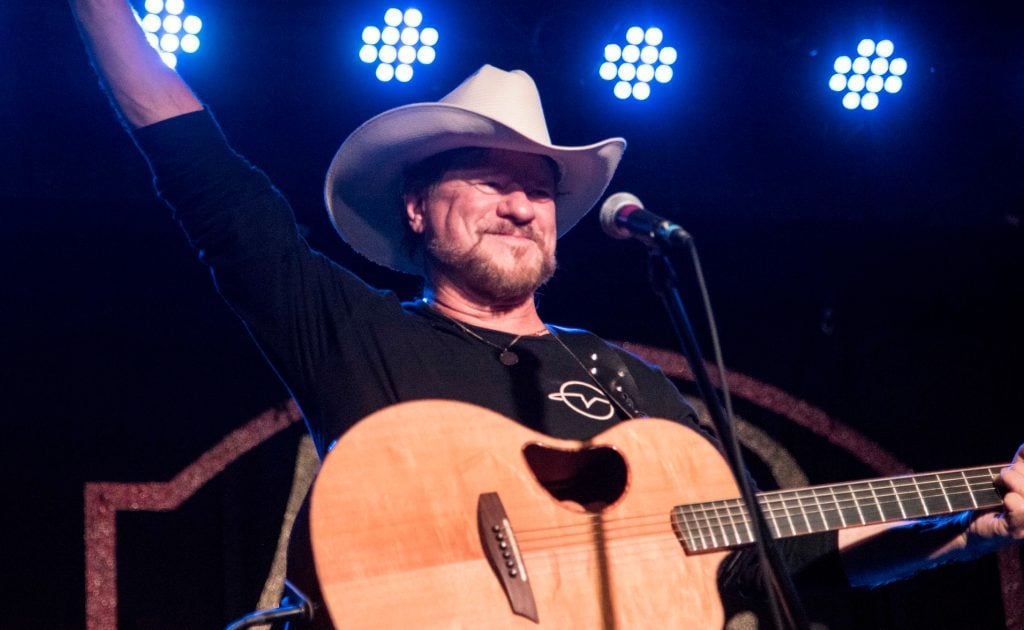
Songwriting is such an essential part of the country music experience that every three years, the Country Music Hall of Fame inducts an individual who is specifically known for writing songs, not necessarily singing or performing them. In 2026, this individual was songwriter Paul Overstreet, and few if anyone would say it wasn’t deserved.
Paul Overstreet was announced as a 2026 Hall of Fame inductee with Ralph Stanley/The Stanley Brothers in the Veteran’s Era category, as well as Tim McGraw in the Modern Era category in a press conference from the Hall of Fame rotunda in Nashville on Friday, March 20th.
“I’ve seen so many of my friends inducted into this iconic organization, and when I was told about it, I was just shocked, because I didn’t really see it coming,” Paul Overstreet said. He got emotional thinking about his name being included with all the other previous inductees.
“I’m so grateful, and thank you. And it’s so important to know you don’t get here by yourself. There’s a lot of people that helped you along the way.”
Paul Overstreet didn’t start out just wanting to only be a songwriter. Originally from Vancleave, Mississippi, he signed to RCA Records, and in 1982 released a self-titled album. Between 1986 and 1987, he was also in the group S-K-O (Schuyler, Knobloch & Overstreet), who had a #1 hit with “Baby’s Got a New Baby.” But it was as a songwriter where Paul Overstreet would find his greatest impact.
It was a host of songs via Randy Travis, and a big one from Keith Whitley that would make Paul Overstreet a seminal songwriter to the neotraditionalist movement of the ’80s. “Forever and Ever, Amen” and “On The Other Hand” were massive hits for Travis, while Whitley’s “When You Say Nothing At All” went to #1, and later would become a hit for Alison Krauss. “Love Can Build a Bridge” by The Judds was another big achievement for Overstreet.
Paul Overstreet co-wrote many of his top songs with Don Schlitz, who became a Country Music Hall of Famer himself in 2017. It’s only fitting the Overstreet would now join him.
Meanwhile, solo albums from Overstreet Sowin’ Love (1989) and Heores (1991) were strong offerings and charted in the Top 20. But the wildly-successful songs he wrote continued to define his career. Even as time when on and a new generation of performers came online, it was Overstreet songs they continued to reach for, including Kenny Chesney and Blake Shelton.
In total, Paul Overstreet wrote or co-wrote 27 Top Ten songs. He also won two Grammy Awards, and the ACM and CMA Song of the Year award in 1987 and 1988 respectively. Overstreet was named the BMI Songwriter of the Year five straight years from 1987 to 1991—an achievement on music row that has not been done before or since.
And though most cite Paul Overstreet as a songwriter first, he was and remains a singer and performer in his own right, helping to bolster his resume for the Hall of Fame.
Others might have sang them. But it was Paul Overstreet who wrote many of the biggest hits of a generation.
– – – – – – – –
If you found this article valuable, consider leaving Saving Country Music A TIP.
March 20, 2026 @ 11:20 am
Well deserved. I guess if Chesney got in despite singing “She Thinks my Tractor’s Sexy”, then it makes sense they would forgive the guy who wrote it 🙂
All kidding aside, this is well deserved. Overstreet is a giant among songwriters. I had thought that his recording career, which isn’t Hall-worthy, might actually be a detriment to him getting in, but obviously not. And that’s good news for Rodney Crowell.
March 20, 2026 @ 12:38 pm
That song is perfectly fine and hilarious.
March 20, 2026 @ 11:49 am
Among the list of Overstreet songs, most articles won’t mention “I Won’t Take Less Than Your Love” which is sung with Tanya Ticker and Paul Davis, but it really stands out as far as I’m concerned.
March 20, 2026 @ 12:06 pm
Well deserved. Daddy’s Come Around To Mama’s Way Of Thinking was a personal favorite of mine. He put out a pretty good Buffett/Chesney beach influenced album Somewhere In The Caribbean. Blake Shelton had a big hit with Some Beach off of it.
March 20, 2026 @ 12:36 pm
I think that “I Think She Only Loves Me for My Willie” is is what put him over.
https://www.youtube.com/watch?v=iogUhIiFCwg&list=RDiogUhIiFCwg&start_radio=1
March 20, 2026 @ 12:38 pm
Great choice by the HOF.
The regular voters must have been out to lunch.
March 20, 2026 @ 1:47 pm
Great choice