

Rock Hall of Fame Beats Country to Inducting Gram Parsons

Well it finally happened. Something that many fans of Gram Parsons and his legacy with The Byrds, The Flying Burrito Brothers, the International Submarine Band, and of course his solo work and mentorship of Emmylou Harris have been strongly advocating for is finally unfolding. Gram Parson will be inducted into the Hall of Fame.
But no, it will not be in the Country Music Hall of Fame where much of that advocacy work has been directed over the years. Instead, Gram Parsons will be going into the Rock and Roll Hall of Fame, which announced its newest inductees on Monday evening (4-13). Gram Parsons was only 26 when he died in 1973. November 5th, 2026 will mark his 80th birthday.
In true Gram Parsons fashion, you might have missed that Gram Parsons was one of the new Rock and Roll Hall of Fame inductees, because in many of the news stories and headlines about it, he wasn’t even mentioned. Phil Collins, Billy Idol, Iron Maiden, Joy Division/New Order, Oasis, Sade, Luther Vandross, and Wu-Tang Clan where the top-line names everyone was touting with only a few even paying attention to Gram.
Gram Parsons is being inducted into the Rock and Roll Hall of Fame via their “Early Influence” category—the same category that got “Father of Bluegrass” Bill Monroe, and Hank Williams inducted in previous years. Gram goes in with Cuban singer Celia Cruz, Queen Latifa, MC Lyte, and Nigerian singer Fela Kuti. Country artists Emmylou Harris and Steve Earle both wrote letters of recommendation to the Rock Hall to consider Gram for induction.
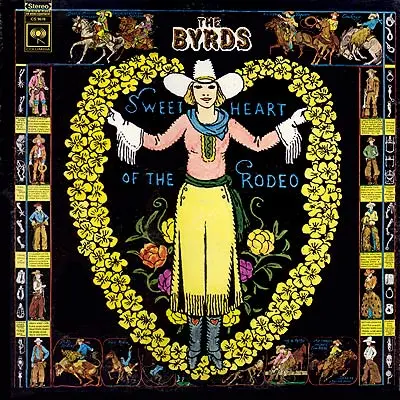
Gram Parsons could have been inducted with his fellow members of The Byrds when they went into the Rock Hall in 1991. But since he was officially considered a hired hand in the band as opposed to a permanent member—despite his wildly influential role in the band’s landmark country record Sweetheart of the Rodeo—they excluded him from the induction. Now the overlooking of Gram and his musical legacy is made right.
But is it in the the wrong institution? When taking stock of the Gram Parson’s legacy, it’s pretty clear his primary influence was in country. Though he’s commonly described as a country rock guy, this is more of a misnomer due to proximity to the country rock scene as opposed to his true “early influence” on the music, which is why Gram is being recognized. Few if anyone can say they were more responsible for helping to sway West Coast music in the direction of respecting, honoring, and performing country music than Gram Parsons.
Sure, there were others, most notable fellow Rock and Roll Hall of Famer Jerry Garcia of the Grateful Dead. But in his time, the work of Garcia was mostly compartmentalized around the Bay Area scene and post-psychedelia. You can give Gram credit as a country rock pioneer too. But with the way Gram compelled the Byrds to record in Nashville and play the Grand Ole Opry, this is what truly broke down barriers and opened doors, while the music itself was decidedly country, despite the “country rock” moniker regularly assigned to it.
Granted, when Sweetheart of the Rodeo was first released in 1968, it was renounced by critics, and became a commercial flop. It was too ahead of its time—two years before the Grateful Dead’s country shift. The Byrds were also booed (or “tweeted,” since many made bird sounds) when they debuted at the Grand Ole Opry. But time has proven they were pioneers, and legends. That is why the Rock and Roll Hall of Fame is making the wrong shown to Gram Parsons right.
Over the last few years, the Rock and Roll Hall of Fame has gone down the slippery slope of starting to induct country stars, and not just as early influences. Dolly Parton and Willie Nelson are now Rock and Roll Hall of Famers, while folks like Phil Collins and Billy Idol had to wait in line, and The Black Crowes and so many more are still on the outside looking in.
The biggest difference between the Rock and Roll Hall of Fame and the Country Music Hall of Fame is the amount of inductees each year, and the permissiveness of the institutions. It might not be possible for the two Halls of Fame to be more polar opposite. Where the Country Music Hall of Fame only allows three inductees each year, the Rock Hall just allowed eight in via their primary category, and 13 total with their Early Influence inductees.
Just as a strong case can be made that the Country Music Hall of Fame is being way too austere in their inductions—leaving worthy names out, including performers who pass away before being able to enjoy their induction—a strong case can be made that the Rock Hall is being too permissive, diluting the importance of the honor, while also leaving the definition of “rock” more ambiguous, or simply meaning “popular music.”
But what is hard to argue against is the induction of Gram Parsons, in the Rock and Roll Hall of Fame, or its country counterpart. Granted, one of the reasons Gram seems to always been named, but never to be a front-runner for the Country Hall of Fame is that so many other worthy names continue to be dumped into the Veteran’s Era category from the Modern Era category that are probably more worthy or high profile than Gram. In an ideal world, Gram and others would have been inducted a decade ago, but the Country Hall backlog keeps a whole host of worthy names out.
Could we continue to see a scenario where Country Music Hall of Fame hopefuls get inducted into the Rock Hall first, especially now that the Rock Hall has opened up the doors to more and more country performers? We definitely could. A few years ago, John Prine was considered for the Rock and Roll Hall of Fame, though he didn’t get in. He could in the future though, while his prospects for the Country Hall feel bleak under the current system.
Dwight Yoakam continues to be systemically snubbed by the Country Music Hall of Fame. With his California legacy and cowpunk roots, could we envision as scenario where he gets inducted into the Rock and Roll Hall of Fame first? That’s not completely out of the realm of possibility. In fact, the Rock Hall might be where Dwight Yoakam fans should start training their advocacy.
But if Dwight and John Prine went into the Rock and Roll Hall of Fame first, it would send a bad message. The fact that Gram Parsons is being inducted into the Rock and Roll Hall of Fame is a wrong being done right. But it also illustrates how the insular and restrictive nature of the Country Music Hall of Fame is putting it on the outside looking into cultural relevancy.
Nobody’s asking for the Country Hall to throw the barn doors wide like the Rock Hall. But adopting something like the Rock Hall’s “Early Influence” category would allow worthy names like Gram Parsons and others to finally get in, alleviate pressure on the other categories, and give more fans an opportunity to celebrate like Gram Parsons fans are today, and to preserve the legacies of critically important and influential artists.
As Waylon Jennings who skipped his Country Hall of Fame induction once said, “We need a change.”
– – – – – – – – – – –
If you found this article valuable, consider leaving Saving Country Music A TIP.
April 14, 2026 @ 10:52 am
Does anyone really give a monkeys about any of these halls of fame 🤔
April 14, 2026 @ 11:27 am
Well, I’m sure people have varying degrees of how many monkeys they invest in the doings of halls of fame. But as someone who advocates for the legacies of past greats, I definitely think they’re important for codifying and preserving these legacies, especially someone like Gram Parsons who passed away so young. Dolly Parton and Willie Nelson don’t have to worry about going forgotten. As an “Early Influence,” Gram does have the chart hits to keep his legacy top of mind. All the more reason to induct him.
April 14, 2026 @ 3:43 pm
No Gram Parsons, no Eagles. He belongs in every Hall.of Fame.
April 14, 2026 @ 11:26 am
When I was at the Country Hall of Fame in Nashville last summer, there was a whole section about the West Coast scene, its history and influence, including Gram and the Burritos. Someone there just needs to join up the dots.
April 14, 2026 @ 11:33 am
The R&R Hall of Fame is so watered down that it is meaningless. It was cool at first, but they’ve let too many in too fast.
That being said, I’m glad they still remember Gram. I doubt most people, including those in the music industry today, even know who he was.
April 14, 2026 @ 11:57 am
Donna Summer beat Rush into the R&R HoF, and now Wu Tang Clan will beat The Guess Who. Give me a break.
For as egregious as the Country HoF’s backlog is, for anybody who hasn’t been inducted, there are a dozen names for whom an equal case could be made who have also been snubbed. The R&R HoF, on the other hand, is just a giant mess of undeserving inductees and undeserved snubs, and has been for decades now.
April 14, 2026 @ 12:08 pm
It’s funny how both sports and music have halls of fame with the opposite problem. You’ve got the Pro Football HoF that is too restrictive (still can’t believe Belichick didn’t get in year 1) but the Basketball HoF is a watered down joke.
April 14, 2026 @ 12:26 pm
I think the Baseball HOF is a better example as “too restrictive”. There have been entire years that have gone by where nobody gets into the Baseball hall unless it is via the Veterans Committee.
The Football HOF usually inducts a full class every year. Belichick should have gotten in, but it turns out being a dick to everyone you meet in your professional life has consequences. Who knew!?
April 14, 2026 @ 1:25 pm
Belichick is still coaching for crisssakes. He took the job at North Carolina because he didn’t land a HC job in the NFL. But there’s still a lot of speculation that he would leave UNC if he gets an offer from an NFL team. (And considereing how he did at UNC last year, they probably wouldn’t be all that broken up if he leaves.)
It’s very likely that some voters passed over Belichick because they don’t believe he’s actually retired. Just because he was deemed retired by the NFL and placed on the HoF ballot does not mean that every voter has to go along with that.
The only thing more ridiculous than this endless carping because someone failed to get in on the first ballot is what happened with Ichriro Suzuki in the Baseball hall. He got in on the first ballot with something like 398 out of 400 votes and there were people who were upset and demanding an investigation over why the vote was not unanimous.
April 14, 2026 @ 12:56 pm
Rush got hosed because Jann Wenner didn’t care for prog rock. He kept The Monkees out even though they were huge and still have a real fan base.
The Rock Hall has become too diffuse and ultimately made themselves less relevant as a result.
April 14, 2026 @ 12:06 pm
The rock hall is a mess. I know everything traces back to Rocket 88, but including hip hop is odd even though it’s a branch on the same tree as rock. Pick a lane.
April 14, 2026 @ 12:30 pm
I feel so strongly that hip-hop should open its own hall of fame that I hope to write an article about it soon as a country music writer. Hip-hop is a massive genre with huge superstars and important influences. It gets lost in the Rock Hall process, while also being accused of being marginalized. I get the pop intersection with rock, but hip-hop should stand on its own feet. Jay-Z and Beyonce are both worth over a billion dollars. Buy an old building in a blighted part of Brooklyn, build a shrine to hip-hop, and start preserving that legacy as opposed to kneeling at the alter of Jann Wenner.
April 14, 2026 @ 12:51 pm
Jay-Z and Beyonce are both worth over a billion dollars. Buy an old building in a blighted part of Brooklyn, build a shrine to hip-hop, and start preserving that legacy as opposed to kneeling at the alter of Jann Wenner.
That’s an idea! Unfortunately, I don’t think either of them have that kind of depth. Jay calls himself “Che Guevara with bling.” He worships money and fame and I don’t think he’s the type of person who could care about creativity and art to do something honoring something but himself. She is an empty skirt/dress/bodysuit or whatever her handlers dress her up in that particular day.
April 14, 2026 @ 12:07 pm
I’d rather see Justin Earl Towns than Wu Clan Tang in the Rock Hall of Fame.
April 14, 2026 @ 12:30 pm
Justin Townes Earle – you’re a real fan…
April 14, 2026 @ 12:31 pm
I think rock n roll hall of fame is just the music hall of fame is fine imo. Gram parsons was also on Rolling Stones top 100 artists all time list. He is one of my favorite artists ever so I’m thrilled for him to get any recognition. Hickory wind and return of the grievous angel are all time great country songs.
April 14, 2026 @ 12:37 pm
I was stunned at this induction. Not because Gram wasn’t a big deal, but because I didn’t really envision these people doing that kind of esoteric dive into the background of this story.
I also didn’t think there was the kind of respect for country music itself. Personalities like Willie and Dolly are the outliers who people who “don’t like country” could embrace and not look like some square-assed hick. Perhaps Emmylou and Steve Earle had some influence in the process.
April 14, 2026 @ 1:29 pm
Doug Sahm next.
April 14, 2026 @ 2:49 pm
I’m not sure how anyone post-1956 is an “early influence” on rock, but I’ll take it. Meanwhile the genre he influenced most thinks he’s no Kenny Chesney…
April 14, 2026 @ 3:05 pm
Country Hall 1st and more appropriate? Yes, for sure…but I’m glad for any honors Gram gets…I worked backwards to him when I learned that Uncle Tupelo, The Jayhawks, Son Volt, Wilco, Whiskeytown and on and on all revere GP and point to him as a great inspiration and influence. Some of these and others making “Return of the Grievous Angel-A tribute to Gram Parsons” is one of the best CDs I have. Whiskeytown’s “A song for you” on youtube? As good as it gets.