

The CMA Now Has a Another Controversy On Its Hands
The Sammy Kershaw red carpet kerfuffle ahead of the 2026 CMA Awards might now be resolved for the most part, with Sammy Kershaw accepting the CMA’s apology, and being invited to attend. But make no mistake about it, it’s one of those incidents that will be cited for years to come as an example of the callous nature of the country music industry, and how it treats certain cohorts of performers. It’s also an issue whose underlying concerns remain unresolved, and worthy of addressing more in-depth in the future, as Sammy said in accepting the CMA’s apology.
But in the shadow and aftermath of how Sammy Kershaw was treated, a second controversy emerged, even if it wasn’t as viral and far-reaching. However, it is similar in nature, because it stems from concerns for the systemic segregation of people by the institutions of country music for more popular and established stars, making it difficult to impossible for anyone else to find traction or break through.
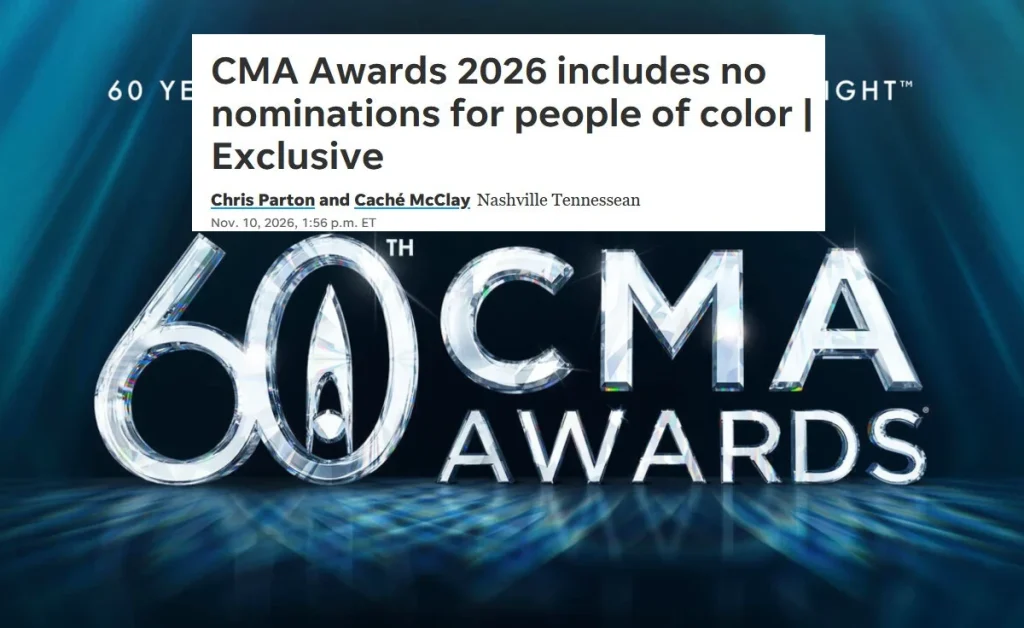
For the first time since 2017, the CMA Awards nominations didn’t include a single Black or Brown artist, songwriter, or producer. For certain, the preceding sentence will set many eyes to rolling in itself, if not inspire them to tune out entirely. But that doesn’t mean the issue is not worth scrutinizing, or mean that it’s “mostly benign” as Rolling Stone remarked about Sammy Kershaw’s conflict, while bringing up the race concern as being much more important. However, this particular issue is much more nuanced, and deserving of a discussion of how and why no nominations for Black or Brown performers happened in 2026.
Rolling Stone is not the only outlet that broached this concern. It was a more detailed report in The Tennessean that’s really responsible for this issue finding traction. Unlike the flippant Rolling Stone take, The Tennessean authors Chris Parton and Caché McClay took a much more measured approach, make use of interviews with multiple sources including performer Rissi Palmer, reached out to incoming CMA CEO Brittany Schaffer for comment, and even play some good devil’s advocacy as to why this issue doesn’t simply boil down to bold faced and overt “racism,” even if that’s the underlying accusation at the heart of all these articles and discussions.
The difference between the Sammy Kershaw situation and the lack of Black or Brown nominees for the CMA Awards is that the CMA unilaterally made the decision to initially not allow Kershaw on the red carpet, while the CMA nominations are not up to the CMAs themselves, but the organization’s 7,000 voting members, which The Tennessean article rightly points out. The CMA can launch diversity initiatives—which they have—and do other advocacy work. But ultimately, it’s the voters who decide.
And even though block voting and horse trading most certainly occur, the CMAs are seen as a lot more honest than the ACMs when it comes to taking a true barometer of voter opinion due to their big and diverse voter base. The Tennessean article also gives the CMA credit for seeing more nominations for artists of color since 2017, and focuses more on the concern that zero nominations this year means there has been a regression, even as Black and Brown listeners make up the fastest-rising demographic of country’s new fans.
But the article brushes over the most likely explanation for why no Black or Brown artists received nominations in 2026 without accurately addressing it: Eligibility, and availability. And though merit is certainly in the eye of the beholder, simply zooming out and asking yourself what Black or Brown performers were passed over this year compared to the actual nominees doesn’t result in any obvious answers, even though there are some good ones going down the roster to more independent performers.
The Tennesean article states, “There were plenty of people who could have been considered this year, with impactful work that fell inside the eligibility window of July 1, 2025 through June 30, 2026. Chief among them was Shaboozey, whose platinum No. 1 collaboration ‘Amen’ with Jelly Roll included two of the genre’s most visible stars.”
But this is misleading. Yes, that particular song was eligible. But Shaboozey’s new concept album The Outlaw Cherie Lee & Other Western Tales was not. Otherwise, it very well might have received a nomination for Album of the Year. Meanwhile, there might not be a more toxic individual in country music at the moment than Jelly Roll, with the left considering him “MAGA coded,” and the right abandoning him after he guest hosted on Jimmy Kimmel Live and cracked Donald Trump jokes. There was no way the CMA voters were going to nominate anything with Jelly Roll’s name on it this cycle.
Another artist The Tennessean article mentions numerous times as someone who has earned nominations and wins in the past is Jimmie Allen. But it doesn’t mention why Jimmie Allen is not longer being recognized in the CMA process.
In June of 2023, Saving Country Music published an article titled, “Jimmie Allen Accusations Exacerbate Country’s Diversity Dilemma.” It was published in the wake of the accusations against him from his day-to-day manager of prolonged sexual assault, rape, and harassment that were detailed in a Variety exposé. In the aftermath, another woman came forward accusing Allen of sexual assault, and then it was revealed Allen had a secret family with another woman, all while married. At that point Jimmie Allen’s popular country music career was over.
Jimmie Allen wasn’t just a country star that happened to be Black. He was a popular performer in country music that the industry had invested in heavily and cultivated over years. The country music industry saw Allen as one of the genre’s brightest stars heading into the future. This is the reason the ACM Awards named him the 2021 New Male Artist of the Year—the first ever Black man to win the award. The CMA Awards also named Allen New Artist of the Year in 2021. Allen’s first three major radio singles all went #1, and the fourth went to #2.
As the Saving Country Music article pointed out in 2023, “The departure of Jimmie Allen will cause a deeper dilemma for the mainstream country industry, and one that won’t be enumerated when the studies, think pieces, and political actions clamoring for more inclusiveness in country music get written and launched.”
That is exactly what we’re seeing from Rolling Stone and The Tennessean, with the former not even mentioning Jimmie Allen at all, and the later not mentioning Allen’s career destruction caused by his alleged reprehensible behavior that had all his industry representation drop him.
The Saving Country Music article goes on to say, “Always treated like a monolith, ‘country music’ won’t get credit for Jimmie Allen’s numerous trophies, multiple #1’s, and the other opportunities he was bestowed. Country will only get credit for the lack of these things moving forward as the hole left from Allen’s departure persists and elongates due to the time, resources, and opportunities it takes to cultivate a top flight career like the one Allen enjoyed.”
Again, this is what we’re seeing right now. Similar to how the lack of women in popular country was caused in part by Taylor Swift becoming the genre’s superstar—including winning two CMA Entertainer of the Year trophies—and then jumping ship to pop, Jimmie Allen’s absence created a hole that in might take years to find a proper performer to fill.
Another performer name checked in The Tennessean article is The War & Treaty. They released an album called The Story of Michael and Tanya on June 19th that would be eligible for CMA consideration. However, after their previous album Plus One released through major country label Mercury Nashville seemed to veer away from their more Americana sound to try and appeal to the pop country market, the duo was very public about The Story of Michael and Tanya released on Atlantic Outpost being their effort to distance themselves from popular country, and realign themselves with Americana.
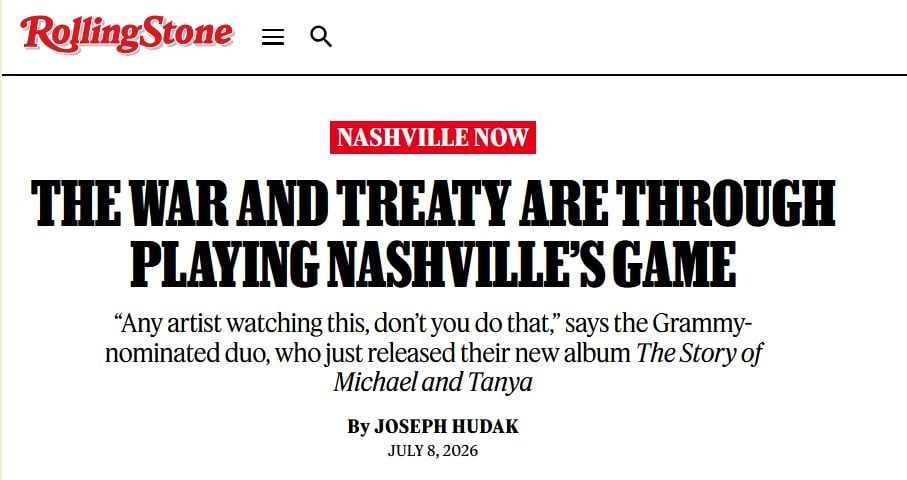
In a feature in Rolling Stone titled, “ The War and Treaty Are Through Playing Nashville’s Game”, Michael Trotter is quoted as saying, “The War and Treaty, in true nature, we are definitely one-million percent an Americana band. And the country music establishment latched on.”
The way country music industry latched onto The War & Treaty was nominating them for the CMA Vocal Duo of the Year in both 2023 and 2024. The duo also performed on the CMA Awards in 2022 and in 2023.
Though you can perhaps understand the duo’s frustration with the Music Row system since they never became superstars, in many respects, they were strong benefactors of it compared to the hundreds, if not thousands of full-time country musicians that have never been nominated for a CMA Award, and never had the opportunity to perform on the presentation.
The Rolling Stone feature also speaks to the role the media plays in these matters. As the publication seems to want to advocate for diversity in country music, it was likely the Rolling Stone headline, and the proclamations in the article and videos tied to the interview that doomed any prospects of The War & Treaty ever being nominated for a CMA Award again.
Why would CMA voters vote for The War & Treaty? The duo and Rolling Stone basically told them to not do so and to consider them Americana, and even seemed to admonish them for including them in the past. So who is at fault for them not being included in the CMA process in 2026? A media feature, title, and quotes like the ones in Rolling Stone could also create a chilling effect on the entire industry to not “latch on” to Black performers (as Michael Trotter characterized it) if they will only be criticized for it in the future.
But none of this is to somehow make excuses for the CMA, or CMA voters whatsoever. Why is the idea that Black and Brown artists are being systemically excluded from the CMA process so lucrative for the media? It’s because the CMA operates a very insular and cloistered system that looks to reward established stars instead of trying to seek out the best or most deserving talent. This in part is the system The War & Treaty were looking to distance themselves from, even if they had benefited from it to some extent.
The CMA Awards also didn’t book any Black or Brown performers for 2026. It does appear like they will have a couple of Black presenters in Darius Rucker and Shaboozey. But adding a Black performer was a way the CMA could have addressed the diversity concern, and didn’t.
Nonetheless, to simply present the lack of nominations for Black country artists at the CMAs in 2026 while ignoring these three major extenuating circumstances affecting previous nominees Shaboozey, Jimmie Allen, and The War & Treaty feels unfair to the full picture. As some have pointed out, perhaps Kashus Culpepper signed to Big Loud Records could have been a contender this year, even if just like The War & Treaty, Culpepper feels more like an Americana act than country.
Kane Brown has also been mentioned. But again, his most recent album The High Road was out of eligibility. Some have also mentioned Breland. But in this case, it’s simply a quality issue. Breland might be Black, and he might be releasing singles in the country space. But frankly, they’re terrible and derivative, and he does not represent Black artists in country music putting their best foot forward, and anyone advocating for his inclusion should do so at their own risk.
From there, you can field a long list of Black performers in the country and roots space that could have been included. But pragmatically speaking, do any of them really rise to the level that most of the other CMA nominees enjoy?
Ultimately, the same solutions that were implemented to increase the representation of women in country music over the last many years are the same ones advocates for Black and Brown artists should be trying to implement today. It often comes down to an inventory issue. There just aren’t that many viable Black and Brown performers right now that would be in the purview of something like the CMAs.
That doesn’t mean there aren’t many viable Black and Brown performers right now in country. On the contrary, there are a ton. But frankly, they often get overlooked or gatekept for the Breland’s of the world. When you look at many major country festival lineups, the Black artists being booked are Nelly, Ne-Yo, BigXthaPlug, Ludacris, and similar non-country performers injecting themselves into the country space, instead of investing festival slots and other developmental opportunities in up-and-coming Black country artists who actually perform country.
There’s also not enough attention being paid to Texas, and the fast rising population of Hispanic performers. Flatland Cavalry has been nominated the last three years in a row for the ACM’s Group of the Year, with all but one member of the band being of Hispanic origin. Yet you never hear them mention in these inclusivity discussions.
Also, these discussions have to stop happening behind paywalls in a way that only reached elite circles. Both The Tennessean and Rolling Stone article on this matter were paywalled. How do you expect to meet country music’s Black and Brown fans and performers, and advocate for them to the greater population when your opinions are gatekept as tight as the industry?
The writers for The Tennessean article were Caché McClay who is Gannet’s dedicated Beyonce reporter, and Chris Parton who is a long-time country music journalist. They did a decent job overall presenting the case, but stopped at explaining why there were likely zero nominations in 2026 more in-depth, and what any solutions might be.
Journalists also have to stop using “country radio” as a way to validate their arguments just because they present statistical anomalies that don’t actually represent country music consumption, which both Rolling Stone and The Tennessean did. Country radio has never been less relevant, and if the CMA Awards were simply a stand-in for radio statistics, The War & Treaty would have never been nominated in the past, and The Red Clay Strays wouldn’t be nominated and front runners now.
Morgan Wallen is the most successful country radio star of the last five years. And right now, the CMAs are ignoring him. If the CMAs were an inherently racist institution, you might think the situation would be reversed. But the CMA distanced from Wallen’s toxic personality. And subsequently, Wallen has distanced himself from the CMA. And just like radio, The CMAs are hemorrhaging relevancy because of this, and because of controversies like what happened with Sammy Kershaw.
Sure, industry awards can be validating. Awards shows can help with exposure of up-and-coming performers. But if artists really want to circumvent the gatekeepers and buck the system, they need to stop depending on it to be their conduit forward, including country radio and the CMAs. Artists should start courting fans directly, and working through independent channels that better serve their interests, align with their values, and allow them more creative freedom.
That is what The War & Treaty did, and that’s why they received no CMA nominations in 2026, not because they were Black, but because they removed themselves from the system.
The women of country music charted the way for how to regain representation: Be yourself, and be bold. But perhaps most importantly, be country. Because that’s what’s hot right now. And now, the women of country don’t need the CMAs. It’s the CMAs who need the women of country for them to have credibility and relevancy in the greater culture. That is how you regain the power in the system.
– – – – – – –
If you found this article valuable, consider leaving Saving Country Music A TIP.
November 18, 2026 @ 8:40 am
CMA Awards LIVE blog tonight during the presentation. Stop by if you can!