

Wayne Moss – Guitarist on “Pretty Woman” and “Jolene” – Has Died
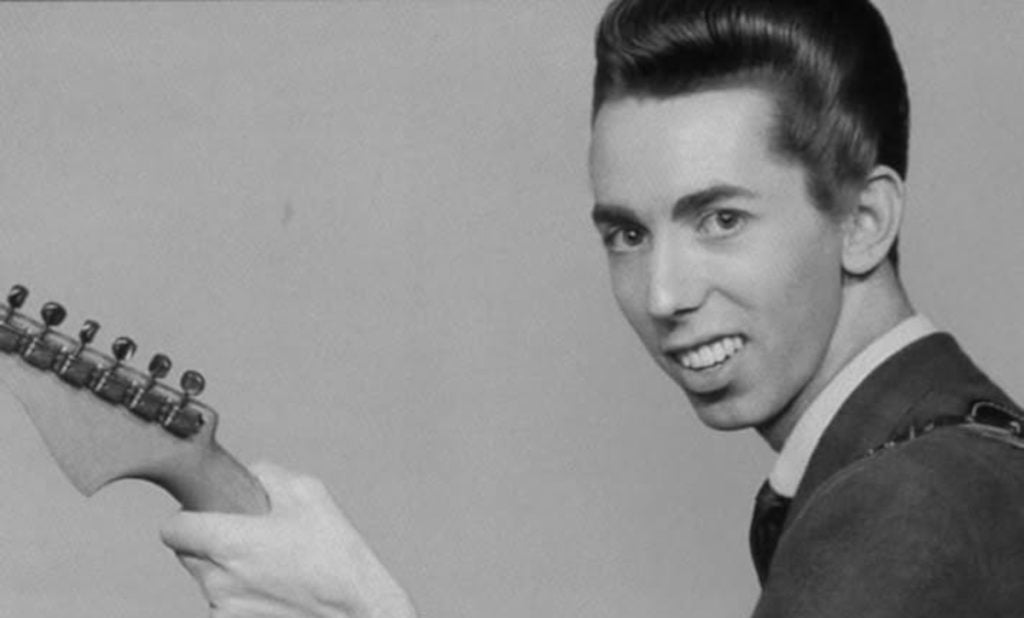
When you can sit back and boast about how you played on the signature songs from both Dolly Parton and Roy Orbison—let alone the guitar part on “Only Daddy That’ll Walk The Line” by Waylon Jennings, and were part of Bob Dylan’s Nashville sessions recording his iconic album Blonde On Blonde—you can very well claim you left your mark on American culture. Truth is, that’s just where the credits and accolades for “Nashville Cat” session player Wayne Moss begin.
Unfortunately though, his life story ended on Monday, April 20th at the age of 88. The music he made though, it will live on.
Wayne Moss was one of those Nashville session players whose credits were so numerous, it might be easier to list of who he didn’t work with than who he did through the years, with many of his credits simply going unrecorded. When he moved to Nashville in 1959 looking to make it in music, he became friends with harmonica player Charlie McCoy and drummer Kenny Buttrey, falling in with the crowd who was on-call day and night to record the next hit.
It was Hall of Fame piano player Hargus “Pig” Robbins who officially hired on Wayne Moss as a session musician. But only a couple of years after arriving in Nashville, Moss also opened his own studio called Cinderella Sound, which would become legendary in recording circles, in part because of the mystery surrounding it. Along with playing guitar and bass on countless sessions, Moss also worked as a record producer, and accrued numerous songwriting credits over his career as well.
Though country was much of the repertoire that Wayne Moss worked in, he was also known for working with numerous rock performers. That’s why his playing credits span across a wide variety of artists, from Patsy Cline and Lefty Frizzell sessions, to Waylon Jennings, Charley Pride, Charlie Daniels, Kris Kristofferson and Loretta Lynn, to Joan Baez, Bob Dylan, Linda Ronstadt, and the Steve Miller Band.
If you were one of those rockers who came to Nashville to tap into the city’s rich musical talent, Wayne Moss was one of the names you wanted to have on your recordings. He could bring that country feel, but remain palatable to rock sensibilities. Former Monkees member Mike Nesmith, Carl Perkins, and Nancy Sinatra were some other names the solicited the services of Wayne Moss. Though studio sessions were mostly what he was known for, Moss was also in the touring band of Brenda Lee for a spell.
Wayne Moss was around long enough to see the very start of the Nashville recording community, and around long enough to see it go through numerous permutations, from classic country gold, to the rise of rock, to Countrypolitan, and into the Outlaw era. He also played in two of Nashville’s most legendary session player bands, Area Code 615 and Barefoot Jerry.
As big labels bought up or operated many of Nashville’s studios, Wayne Moss kept his Cinderella Sound independent. The studio emerged out of the closing down of a nightclub called The Sack that Moss owned with Charlie McCoy. They took the sound equipment from the club, and built a studio out of it in the garage of Wayne Moss’s Madison-area home. It would go on to become legendary, and one of the last independently-owned studios in the city.
Grand Funk Railroad, James Gang, Steve Miller Band, Linda Ronstadt, Mickey Newbury, and more were some of the names who sought Cinderella and Wayne Moss out to record. The studio wasn’t listed in any phone book, and wasn’t part of public knowledge. You had to know somebody who new Wayne Moss to get permission to record there. That made the space magical to the artists and bands that ventured to Nashville to record at the place owned by the guy who played the iconic guitar riff on “Pretty Woman.”
Wayne Moss was born on February 9th, 1938 in South Charleston, West Virginia, and grew up playing in bands in Charleston, knowing he wanted to be a musician. Moss was inducted into the West Virginia Music Hall of Fame in 2013. He probably should be a candidate for the Rock and Roll and Country Music Halls of Fame as well.
So the next time you hear the guitar on Bob Dylan’s “I Want You,” or Roy Orbison’s “Pretty Woman,” or Dolly Parton’s “Jolene,” think of Wayne Moss who put the sound to the stories of some of the greatest pieces of recorded music in history.
– – – – – – – – – – –
If you found this article valuable, consider leaving Saving Country Music A TIP.
April 21, 2026 @ 6:30 pm
This article is a wonderful example of why I love what you do Triggers.
April 21, 2026 @ 8:04 pm
Is it even possible today for an under twentysomething new to Nashville, who is proficient on several instruments but chooses not to write for him/herself to carve out the career Mr. Ross had (what a resume!). How does someone break into that circle of musicians that performers who don’t record all their material on a MacBook seeks out?
April 21, 2026 @ 9:31 pm
Anything is possible. It’s always been tough I to have a good career in music, it’s just tough in different ways now.
April 21, 2026 @ 9:02 pm
Aw man this sucks. I got to meet Wayne through Buzz Cason and got to hang with him a while at Creative Workshop. An iconic player and a sweet man. Rest easy Wayne!
April 22, 2026 @ 4:35 am
Why can’t I seem to get the intro to “Only Daddy That’ll Walk the Line” out of my head?
April 22, 2026 @ 5:31 am
Because it’s that good! I have the same problem
April 22, 2026 @ 2:42 pm
The part about that song that is most unbelievable to me is…
It’s a Jazzmaster, NOT a Telecaster!
..
April 22, 2026 @ 5:32 am
What a career he had. Playing any part in the recording of the song Pretty Woman is incredible. It’s one of the songs that built the foundation for Rock music in my opinion. Then to also be on one of Dollys most famous songs and one of Dylan’s best records to boot.
April 22, 2026 @ 7:31 am
Who played on Jolene was a bit of a mystery for decades. Recently, the original 16 track master tape surfaced and research has revealed some interesting truths. First off, its not one guitar player that you hear on Jolene. Its two, and the two are split to pan between left and right. One guitar is a steel string played with fingers and a thumbpick, the other channel is a classical nylon string guitar also played with fingers and a thumbpick. Now ,in Dollys book she mentions that Wayne Moss played on it, and indeed Wayne confirmed this fact. On the labeling of the 16 track tape box, on track 8 is labled in blue ink the name Jimmy. Some folks thought that this was none other than Jimmy Colvard, a Nashville session guitarist that was a buddy of Wayne Moss. However…this is not the case at all. Wayne Moss himself was interviewed about it and he said that the second guitarist DEFINITIVELY was Chip Young. The labeling on the tape box was in error. Chip Young himself also spoke at length about his playing on the session and he confirmed that it was both himself and Wayne Moss on the track. Jimmy Colvard did not play with a thumbpick , ever according to Wayne Moss who knew Jimmy quite well. Mystery solved.
Wayne Moss was also in a supergroup of Nashville sessions guys called Area Code 615. The group included Charlie McCoy on Harmonica as well as Buddy Spicher on fiddle and Weldon Myrick on pedal steel. They released two albums, both are worth listening to if your a fan of mind blowing picking. The band never toured as they were too busy being session players and didn’t need the income. The most notable song off their releases was Stone Fox Chase, a ripping instrumental featuring Charlie McCoys dazzling harmonica work. This song would become the tv theme song for BBC music show The Old Grey Whistle Test.
Later, Wayne Moss would form the Nashville band Barefoot Jerry. Wayne was a musicians musician as they say!
April 22, 2026 @ 7:49 am
Hadn’t heard of Mr. Moss,but if he was the “Pretty Woman” guitarist,that alone made him a Country music icon.RIP,Wayne !!!!!!!!!!!
April 22, 2026 @ 1:57 pm
Rip Wayne. I believe it was Wayne and Jimmy Colvard on Jolene but might never get the factual answer.
April 22, 2026 @ 2:34 pm
Chip Young himself told the story. He claims he did the demo for the song and created that thumbpicked riff. He then said that he and Wayne both played on it and that he borrowed a nylon string guitar for the recording and that Wayne played the steel string.
Further, Chip describes a conversation with him and Grady Martin, where Grady Martin asks who did the demo and Chip replies that it was him. He said that Grady being Grady, he leaned into Chips face and asked him to show the lick and Chip obliged, astounding Grady who then said it was great.
I find it hard to discredit both Wayne and Chip. To say otherwise would make them liars. Why do you still believe that it was Jimmy?
April 23, 2026 @ 5:37 am
Rip to an absolute legend. We also lost Alan Osmond of the Osmonds. While more known as a 70s pop group, they did score four top 40 country songs in the 80s with their highest being “I Think About Your Lovin'” in 82.
April 23, 2026 @ 2:54 pm
And Dave Mason. Not really “country”, but there is a YouTube video of him doing “We Just Disagree” at Farm Aid ’86.
April 25, 2026 @ 11:33 pm
It’s profoundly sad that the last-remaining members of this great generation of music makers is leaving us. I’m grateful we have Wayne Moss’s friend Charlie McCoy still with us, and that Charlie is still so active as an Opry performer and as a Nashville session musician.