

Darius Rucker Says He’s Criticized for Making Country from the Black Community
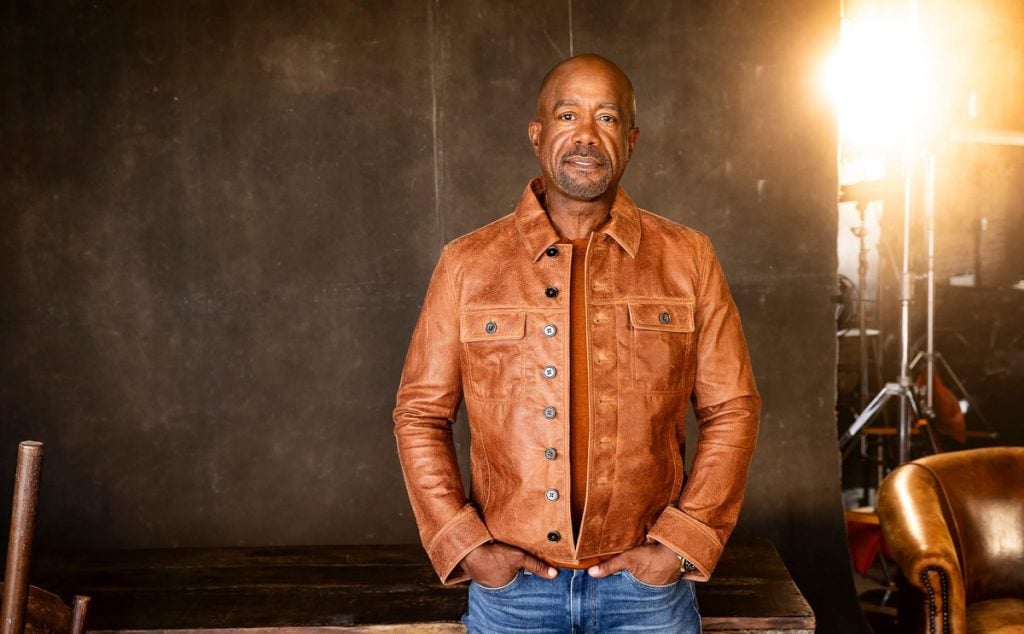
A clip of Darius Rucker talking about the criticisms he’s faced from the Black community for making country music is going viral, and stimulating a very important discussion about the other reason some Black country artists might struggle in country, or might even be discouraged to pursue a country career in the first place. Taken from the Bobby Bones podcast Bobbycast Episode 711 (available on Netflix), they also speak to how little support Black country artists often receive from traditional Black media.
“I’m not talking about just White folks being racist, I’m talking about Black folks going, ‘What the f-ck are you doing, man? Really?’ The other night some woman comes on, and she says, ‘You know you’re Black, right?’ I just went off. I’ve been doing this for 60 years,” Darius Rucker says.
Rucker continues, “I f-cking know I’m Black. And you, instead of looking at me and going, ‘Ok, he’s doing something we shouldn’t do, or they’re telling us we can’t do, and he’s making it successful, I’m gonna big up on him. Big up on that Black man for saying f-ck it, I’m gonna go and do what they do.’ Instead of doing that, you think you have to sit here and tell me I’m Black? Are you f-cking kidding me? Do you know how many times I’ve heard that? Are you kidding me? I was so mad.”
Ahead of the 2026 CMA Awards that featured no Black or Brown nominees or performers, The Tennessean ran a deep dive into the discrepancies minority musicians can face in country music. But what is almost never talked about is the bigotry towards Black performers who pursue country music that emerges from the Black community itself. The way Darius Rucker explains his experiences, this could have just as much of a chilling effect on performers as overt racism, if not more.
“It hurts more, because the White side I expect it. I expect it. I know it’s coming,” Darius Rucker continues. “I was born in Charleston, South Carolina. I know that’s coming, and I’m ready to deal with that. But when it comes from the Black side, it crushes you. It crushes your soul.”
Rucker goes on to speak about how Black media institutions rarely if ever support Black artist in the country realm.
“Charley [Pride] and I were talking, and he said, ‘You know what bothers me probably the most, though? I won Entertainer of the Year in country music in 1971. I hosted the CMAs. I was the biggest thing in country music. And I’ve never been on the cover of Ebony or Jet.’ And when he said that to me, I looked at him and went, ‘Wow, I’ve never been on the cover of Ebony or Jet.’,” Rucker recalls.
Rucker continues, “I thought, me and you did what people said we can’t do. Not shouldn’t do. We can’t do. We can’t do it. That’s impossible. I was told what I wanted to do was impossible, to my face. ‘This is never going to work.’ And instead of embracing us for one second and saying, ‘Look what these two brothers did,’ just ignore us.”
As you can imagine, there are a lot of opinions swirling about Darius Rucker’s statements. One thing fans of country music should not do is assume this means there is absolutely no concern about how difficult it was for Charley Pride, or might continue to be for Black performers to find traction in country music. At the same time (and somewhat ironically), multiple Black commenters are saying Darius Rucker is concerning himself too much with a secondary problem, and not the primary one with country and race.
One commenter says, “I feel for our brother. However, this clip puts an unfair emphasis on how SOME (not all) black people aren’t celebrating what (most) WHITE PEOPLE (w/in the genre) have systematically intentioned to keep us away from. Weird how he brushes past the WHITE inflicted racism but says he’s most affected by black people for not embracing or celebrating him more.”
But when Darius Rucker states, “…when it comes from the Black side, it crushes you. It crushes your soul,” this is very similar to when Black country artist Mickey Guyton revealed that she had been disinvited from a video shoot for The Highwomen last minute back in 2020. It was being rejected by her fellow women in the genre that hurt the most.
“I had been disinvited. The song was about supporting women in country, yet they disinvited the only charting African American woman in country music. Do they know? Don’t they see that I support them? Do they care? Do they want to see me? The answer is no. Let that sink in,” Guyton said in an op/ed published on Billboard.
Also, it’s not if Darius Rucker hasn’t spoken about facing racism in country music more directly as well. In a recent profile in People Magazine, Darius Rucker said,
“There wasn’t a Black person on country radio for 25 years at the time. So of course I didn’t think I’d get a record deal. Who would give me a record deal? When I sit back and think about it, I really still don’t believe it worked the way it did.”
He also says he faced racism in the rock realm fronting Hootie and the Blowfish. Rucker’s comments both to Bobby Bones and People come in the midst of a new documentary on Rucker being released through Hulu called “Darius Rucker: They Called Me Hootie.”
Perhaps the most important point Darius Rucker raises is how Black country artists are ignored in Black History curriculum, by conventional Black media and Black award shows, even as think pieces and documentaries published on Black people in country music make wild claims about how country music is exclusively the domain of Black people, stimulated in part by the release of Beyoncé’s supposed country album Cowboy Carter.
If country music is exclusively the domain of Black culture like a recent documentary on Peacock called “High Horse: The Black Cowboy” claims, why don’t the BET Awards recognize country music? They recognize hip-hop, pop, R&B, Gospel, and International music. Country music is not even considered.
As Saving Country Music pointed out earlier this year during Black History Month, why do we teach about Jackie Robinson breaking the color barrier in baseball, or about Chuck Berry in rock ‘n roll, but don’t teach about Charley Pride? Wouldn’t that help end some of the misconceptions about Black artists and country music for country fans of all races, and resolve some of the issues Darius Rucker has faced in his career, including from his own community?
Perhaps just as important as what Darius Rucker said is how passionately he said it. To hand wave away his comments as simply a way to get on the right side of racism in country music or excuse it is disrespectful. You can tell Rucker’s passion comes from real, lived experiences. And they’re experiences that all fans of country music should work to rectify so that everyone feels welcome and invited in country music, as long as they have a sincere love for country music in their hearts.
– – – – – – – – – – –
If you found this article valuable, consider leaving Saving Country Music A TIP.
November 25, 2026 @ 10:06 am
“Darius Rucker Says He’s Criticized for Making Country from the Black Community”
Tough read. Might sound better as: “Darius Rucker Says He’s Criticized by the Black Community for Making Country Music.”
November 25, 2026 @ 10:32 am
Without getting too much into the sausage making process, character count is very important when it comes to composing titles. I did the best I could with this one without mischaracterizing the story or creating click-bait, while also staying below the character limit your revision would trigger.
November 25, 2026 @ 10:12 am
When this came across my social media feed yesterday, I had a feeling you’d write about it. Very well done.
It makes me very sad that black country artists struggle to find acceptance – not only in the white dominated industry, but in their own community. It seems like many black men are often criticized in the African American community for not being “black enough.” Heck, even President Obama struggled with that label.
Maybe Rucker’s words will reach the right people and make some difference. Certainly, both he and Pride have earned the cover of Jet and Ebony and recognition as exceptional black Americans in African American studies.
November 25, 2026 @ 10:18 am
I seen him open for the Hootenanny Blowfish in like ’95.