

Barbara Mandrell: The Overlooked Country Music Queen
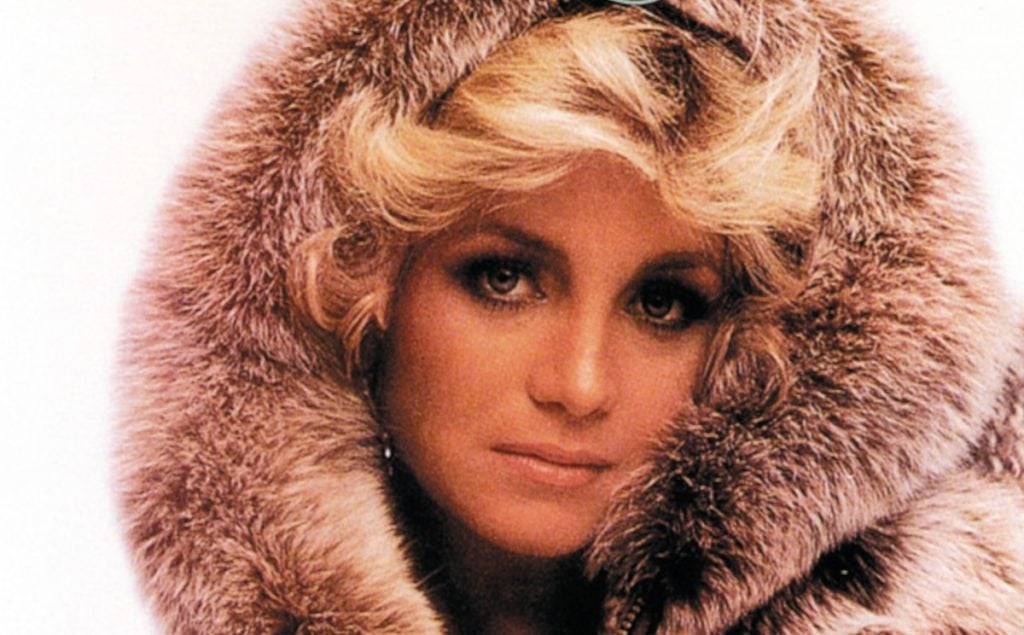
Here at the tail end of 2026, we’re having to learn how to live in a world without Dolly Parton. The great Loretta Lynn passed away in 2022. And we lost Tammy Wynette at the relatively young age of 55 in 1998. That leaves us looking for matriarchs in country music at a time when women are in a major resurgence in popular country thanks to Ella Langley and others.
Luckily, we still have Reba McEntire around, who just like Dolly, is just as much a cultural institution as she is a country star. We have the women who came up in the ’90s like Trisha Yearwood, Lee Ann Womack, Alison Krauss, Martina McBride, and Shania Twain. We have the incomparable Tanya Tucker, even if she always felt like a bit of an outsider, despite her major industry success for decades, and Emmylou Harris, even if she feels more like the domain of Americana these days.
But the one name you don’t hear nearly enough about when it comes to country music’s living queens—and seems to never get mentioned in retrospectives on the important roles played by women in country music—is the one and only Barbara Mandrell.
Granted, part of this is self-induced. Mandrell announced her retirement from touring, performing, and recording in 1997, playing her final show at the Grand Ole Opry House. And unlike so many others in entertainment, Mandrell has stuck to that commitment. Mandrell had actually pondered retirement a couple of other times in her career previously, once after she got married in 1967, thinking she only wanted to be a housewife. She was also in a serious, almost fatal car accident in 1984, and considered retirement during her recovery.
But in the late ’70s and early ’80s, Barbara Mandrell was as big as anyone, and bolstered by her big variety television show that mixed music with comedy, and co-starred her two sisters Louise and Irlene. Mandrell was never a hit machine, but she minted six #1 songs in her career, and twenty-two Top 10 hits. Some purists also like to hold her back because some of those hits were more a blend of R&B and country instead of the pure thing. But despite her screen popularity, Mandrell was not a crossover star, and stayed loyal to country throughout her career.
In fact, many people consider Barbara Mandrell’s signature song “I Was Country When Country Wasn’t Cool,” which is a song that feels as relevant as ever, and featured George Jones as a guest. Nonetheless, some used Mandrell’s catalog to talk about country’s ’80s authenticity crisis, and how the genre tried to answer things like the disco craze. These days though, apparently country disco is trying to make a comeback thanks to artists as far ranging as Miranda Lambert to Sturgill Simpson’s Johnny Blue Skies.
But when Barbara Mandrell was inducted into the Country Music Hall of Fame in 2009, it wasn’t just as a singer/performer and television personality. It was the fact that Barbara Mandrell remains on the greatest steel guitar players and multi-instrumentalists in the history of country music, with an induction to the Steel Guitar Hall of Fame in 2009 to prove it.
Barbara Mandrell was born in Houston, TX on Christmas Day, 1948. She would spend most of her time growing up in Corpus Christi, and later in Oceanside, California. Her dad was a police officer, and her mother was music teacher, and music was a vital part of her upbringing. Like so many country stars, it started by singing in church, but early on, Mandrell showed an incredible knack for picking up instruments.
Barbara Mandrell started playing accordion even before she entered the first grade, and apparently she learned to read music about the time she learned to read at all. Later she would play saxophone in the school band, but very early on, she was introduced to the steel guitar by a friend of her father. She showed such promise on the instrument, her father took her to a trade show in Chicago where country music guitar god Joe Maphis heard her play. Mandrell was only 11-years-old at the time, but this is when her country music career started in earnest.
Joe Maphis debuted Barbara Mandrell at his stage show in Las Vegas in 1960. Maphis also took her next door to California to perform on the TV show Town Hall Party. Mandrell not only shocked the world as a steel guitar prodigy, but as one of the few women in the male-dominated industry of country guitar. Performing in Southern California meant Mandrell didn’t have to take time off from school, but she would regularly travel to Las Vegas in summers to perform with Joe Maphis.
By the time she was 13, Barbara Mandrell was being picked up by national touring artists to perform on the road, including Johnny Cash, Red Foley, Tex Ritter, Little Jimmy Dickens, and Patsy Cline, who took Mandrell under her wing, and would share her hotel rooms with her since she was still a minor. Later, she would play in the Mandrell Family Band with her parents and two sisters to help facilitate Barbara’s burgeoning country career. During this time she also picked up banjo, and became adept at the instrument as well, along with double neck guitar like mentor Joe Maphis.
It was in the family band that she met Ken Dudney, who’d been hired on to play drums. Mandrell would graduate high school in 1967, and shortly thereafter, the two were married. Mandrell decided she wanted to settle down and have a simple life of raising kids. Much of her family band experience had been on the move playing military bases all around the world, including in Vietnam. But after she left the band and her parents moved to Nashville, she caught a Grand Ole Opry performance while in town visiting. She decided she didn’t want to be a spectator in country, but a participant. She would be a Grand Ole Opry member three years later.
It didn’t take long for Nashville to recognize the talent of Barbara Mandrell, both as a musician, but most importantly, as a singer and a star. She played some shows in Printer’s Alley in Nashville, both playing steel guitar and singing standards. Six different record labels wanted to sign her. She ended up putting pen to paper with Columbia Records, and legendary country producer Billy Sherrill.
Due to the timbre and smoothness of Mandrell’s voice, Sherrill slotted her more into the R&B style of country, which in some respects, went against her more traditional and twangy upbringing. “I’ve Been Loving You Too Long (To Stop Now)” written by Otis Redding was her first charting single. “Do Right Woman, Do Right Man” by Aretha Franklin was another early hit, and that slotted Mandrell into the R&B country lane. It would be very lucrative for her for over a decade.
But when the “Class of ’89” (Garth Brooks, Alan Jackson, et al) emerged and so did the neotraditionalist sound, the industry and consumers had little use for Barbara Mandrell. Like so many performers of the previous generation, Mandrell was shoved aside. She still was able to tour and perform to appreciative audiences, but perhaps didn’t see the point in trying to fight the system and slowly fade away. After all, she had her moment on top. So she bowed out gracefully.
Barbara Mandrell still officially remains a member of the Grand Ole Opry. On rare occasions, she still will appear at country music functions. It’s not like she’s a recluse, but she’s taken her commitment to retirement seriously.
On December 8th, Barbara Mandrell will be bestowed with one of the biggest honors in all of American arts when she becomes one of the 2026 recipients of the Kennedy Center Honors, along with Paul Anka, David Foster, Andy Garcia, and David Mamet. Despite the very politically polarizing nature now surrounding the Kennedy Center Honors, it’s hard to not say it’s deserved for Barbara Mandrell. It also comes at a time when country music is looking for its living matriarch.
Barbara Mandrell might be mostly out-of-sight these days. But she should never be out of mind for country fans. As a musician, as a singer, and as an entertainer, Barbara Mandrell is as big of a contributor to country music as most any other living soul. And most importantly, she reminds us that country music has always been cool, even if the rest of the world loses sight of that from time to time.
– – – – – – – – – – –
If you found this article valuable, consider leaving Saving Country Music A TIP.
November 24, 2026 @ 1:20 pm
YAY! finally.
Not my kind of music but maaan she was a phenomenal performer and musician
November 24, 2026 @ 1:25 pm
Barbara had the rare opportunity to choose her retirement instead of being forced into it, and it seems as though she had her fill of the spotlight and did what was best for herself and her family. As Judge Judy said about giving up $20 million a year for not having a producer credit, “How much can you eat?” Perhaps Barbara felt the same way about the industry’s insatiable drive for more fame and more money. While the Kennedy Center Honor is much deserved, and while a greater recognition of her work would be nice, perhaps going unrecognized in the grocery store is worth more than all of that.
November 24, 2026 @ 1:28 pm
Oh, Trigger, thank you so much for this article! Barbara Mandrell has been a hero of mine since I was a little girl. It amazes me how forgotten she has become. She was the first artist – not woman, but artist – to win the CMA Entertainer of the Year twice. As a young country music fan, she was the first woman that I really felt was more than just a “girl singer.” She danced, she played so many instruments, she connected with audiences in a way I haven’t seen before or since. Thank you so much for taking time to remember her legacy. It’s one worth remembering.