

Album Review – Colton Bowlin’s “Grandpa’s Mill”
Appalachian (#519) and Traditional Country (#510) on the Country DDS. AI = clean
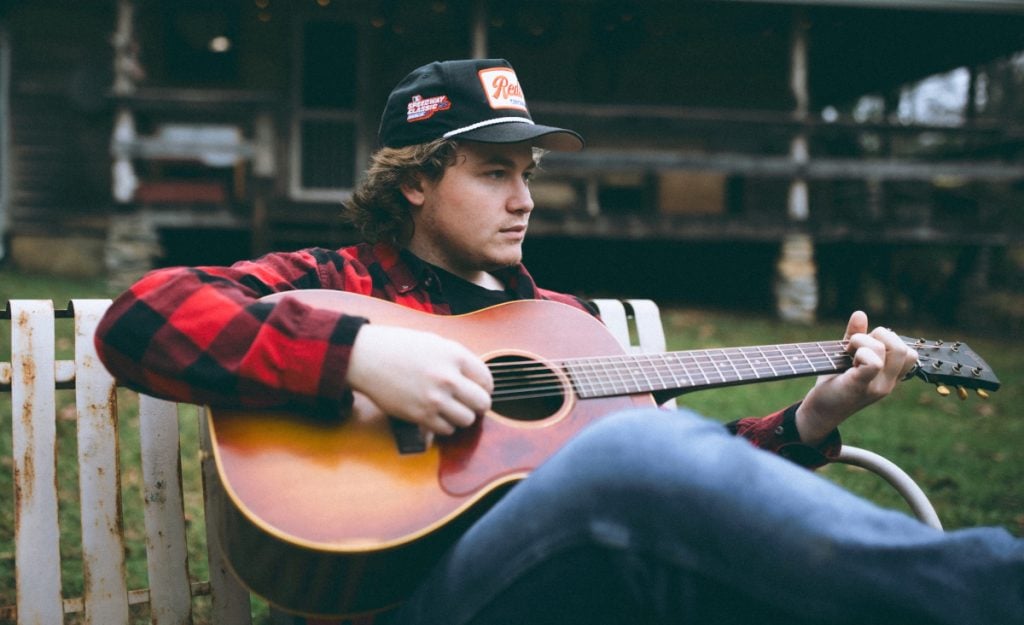
It’s the fault of Kentucky songwriters like Sturgill Simpson and Tyler Childers that we all have such an insatiable appetite for those authentic Kentucky expressions brought to song. You probably wouldn’t portray the latest output of either of those guys in that same vein today, even if we still have all their old records to go back and enjoy. But the appetite in the audience for new stuff similar to what Sturgill and Tyler started off doing is far from quenched. It’s this void that young songwriter Colton Bowlin has stepped forward into.
From Albany, Kentucky right near the Tennessee border, Colton Bowlin brings those homespun, sincere country sentiments to sounds that infuse the original influences of Appalachian music into more modern expressions. He’s aided expertly in this pursuit by producer David “Fergie” Ferguson, known for working with Sturgill, Tyler, and many others before to capture that genuine Appalachian feel.
Grandpa’s Mill is a great title for this album, because it’s a work that’s very much centered around family and a sense of place. As opposed to trying to write songs that appeal to the masses, Colton Bowlin instead takes the approach of writing deeply about himself, hoping that sincerity comes across and translates to the audience, even if their specific life experiences are completely different. The love for home, and the love for family are universal.
Sure, there’s a little bit of fiction here—or perhaps the telling of someone else’s story, specifically via a couple of murder ballad’s like the chilling and reverberative “Dirty River.” But when Colton sings of “Clinton County” or “Greenbriar Road,” you know these are directly inspired by very specific places. The father figures in Colton Bowlin’s life loom large in this music. Along with singing from his own perspective, he adopts the perspective on one of his elders and reflects upon himself in the smart writing of “Man I Used To Be.”
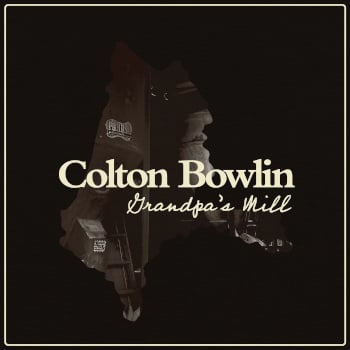
Grandpa’s Mill is one of those albums that immediately fits right with you like a glove, especially if you’re a glutton for this type of real and raw Kentucky stuff, whether you connect with it personally, or unabashedly use it as escapism to remove yourself from the slavish modernity you’re surrounded by. You can feel the creak of the grayed and weathered floorboards beneath your feet, hear the rushing of the water down the holler, smell the green in the air, and feel the grit of the earth in your pores as you peruse through Grandpa’s Mill.
It does feel fair to point out that sometimes the rhymes or resolutions of phrases in Bowlin’s writing feel a little elementary. You can also hear him in respective songs trying to find his own voice synthesized through his heroes as opposed to just emulating them. At times you hear Tyler Childers, with the cracked and strained squeaks making it through more clear notes like in “Clinton County.” At other times you hear a country crooner with a more barrel-chested approach like in “On My Way.”
Colton Bowlin is still young and still figuring some stuff out on the job. But it’s all grist of the mill as they say. In the song “Keep Your Word,” when Colton sings, “Well my dog got hit by a man with no attention to pay,” you feel it in your bones. Later when he sings, “Me and my grandpa was as tight as a banjo string. But on that July day, I hated to see that string break,” you feel it in your soul.
In the aftermath of albums like Purgatory and Metamodern Sounds, you had a bunch of dopplegangers out there singing plenty about coal and cocaine. More lately, you have Zach Bryan soundalikes dominating the up-and-coming ranks. But what young performers should take away from these influences is not how to be like them, but how being like yourself is what creates that strong appeal with audiences. Colton Bowlin goes a long way to finding that path with Grandpa’s Mill.
8.1/10
– – – – – – – – – –
Purchase/Stream Grandpa’s Mill
March 23, 2026 @ 9:48 am
Ok. This guy has something.
He could end up hitting it, Big.
Don’t anyone belly ache about him playing at a Live Nation event this coming June.
Colton Bowlin, Ella Langley, Cody Johnson, set to perform at the inaugural Braves Country Fest on June 13, 2026.
March 23, 2026 @ 10:07 am
great record. this has been in heavy rotation since it dropped a few weeks ago.
March 23, 2026 @ 10:19 am
He is impersonating Childers on Clinton County and then sounds like a different person on Dirty River.
Good singer, but he needs his own sound.
March 23, 2026 @ 11:29 am
This one has been on my to-do list for a week now and I finally found time this morning on my commute. It’s fantastic. There are no skips – zero. The crooning on “On my Way” was certainly unexpected but I thought it was a cool change-up. This record hit me in the same way Ty Smith and The Minor Offenses debut did a couple years ago – as in “geez this young man has something special.” He’s playing the Bluebird in Bloomington in May. I’m getting tickets now because this guy will not be playing 400 cap rooms for long.
March 23, 2026 @ 11:41 am
I really like this album and it will probably end up being one of my favorites on the year, but I thought Bowlin had a more distinct, original sound on his previous album ‘Songs From The Holler.’
It’s the whole making music for art vs. making music for a living dilemma. Bowlin has to move towards more the center (where we SCM readers like it or not now reside) in order to make a living and more art.
March 23, 2026 @ 11:45 am
I have been listening to this album for a few days. It instantly grabbed me (Sturgill never has). This is a good album. He sounds the real deal. Well worth a listen.
March 23, 2026 @ 12:11 pm
Bee enjoying his early stuff since about this time last year. Wendell’s in Anderson brought him as a last minute opener twice, For Wyatt Flores w/Blake Whiten and CWG w/ Dayton Farley. Felt genuinely bad for Blake Whiten having to follow him, definitely felt like they had their openers out of order. Excited to see what he does and hope to catch a headline gig soon!