

Grammy’s New Rules and Folk Award Split Could Impact Country
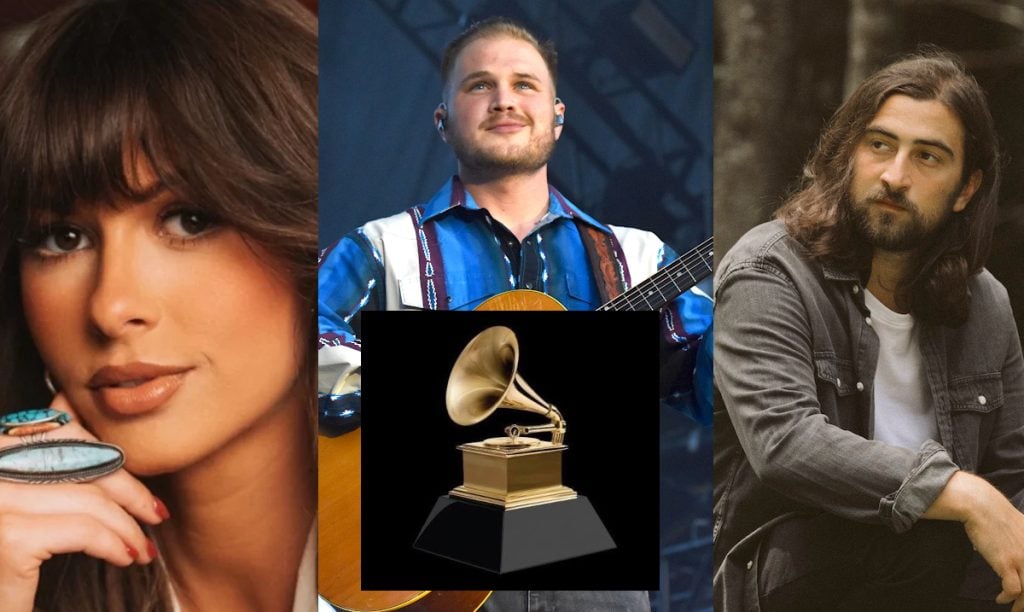
In 2025, the Recording Academy split the Best Country Album category into two, separating “Contemporary” country from “Traditional” country. This resulted in nominations for Charley Crockett, Willie Nelson, Lukas Nelson, Margo Price, and a win for Zach Top that these artists otherwise might not have received without this new “Traditional” designation.
In 2026, the Grammy Awards have now done the same for folk, or more accurately, they have brought back the “Best Contemporary Folk Album” category that was eliminated in 2012, while also founding a new “Best Traditional Folk Album” category. For the next round of nominations and awards, there will now be double the amount of nominees and winners in folk.
Though the adoption of a “Best Traditional Country Album” category certainly had a more direct impact on country music itself, the formation of two folk album categories might even have bigger implications on the greater American roots world, which includes country music, and many artists from what many consider the “independent country” and Americana realms, and even popular country artists.
First and foremost, this gives actual folk artists a lane to not be overshadowed by the massively popular stars from indie folk, folk rock, and folk pop that have become a massive force in popular music over the last few years, including in some people estimates performers like Zach Bryan, Noah Kahan, Joshua Slone, Sam Barber, and others. The artists keeping the regional dialects and distinct folk traditions alive not just in North America, but all around the world deserve both recognition, and to not have commercial implications affect their recognition with the Grammy process.
But perhaps just as importantly, performers who really lean into folk’s singer/songwriter lineage, but also mix more contemporary, indie, and rock elements into the music, they deserve their own category too, and to not have to be called “country” or “rock” just for a lack of another popular genre to be categorized in. Remember for his last album, Zach Bryan recused himself from Grammy consideration, in part because he doesn’t want to be considered “country.” He considers himself a folk artist. But is it really fair if he’s competing with some old-time performer from Appalachia, or a traditional Irish performer from Belfast?
The official definition of a “Traditional Folk Album” from the Recording Academy states, “This category recognizes excellence in albums of traditional folk recordings. Traditional folk includes folk recordings with folk song structures, harmonic structures, and rhythms, including traditional folk instruments such as piano, harmonica, traditional woodwind, strings, and percussion from around the world. It also includes song types such as old time, a capella, work songs, shanty, protest, call and response, ballad, and other traditional folk song structures created in and/or passed through community-rooted tradition distinct from Regional Roots.”
The official definition of a “Contemporary Folk Album” according to the Recording Academy states, “This category recognizes excellence in contemporary folk recordings. It includes folk recordings that vary from traditional folk song and harmonic structures and may employ non-traditional folk song structures including composition and narrative expression. It can be community-rooted, and it may use production and arrangements of song types such as indie folk, ethno-folk, protest, and folk rock, distinct from the pop approach. It may include traditional folk instruments and non-traditional folk instruments, as well as contemporary production techniques.”
The ‘pop approach” might be where some confusion sets in, since so much contemporary folk these days has become wildly popular. After all, Zach Bryan sold his song catalog for more than any other artist in history, and holds the largest attendance record in the United States. Will he be too pop for contemporary folk?
Nonetheless, this feels like a huge victory to make sure these earnest singer/songwriters who’ve helped really push popular music into a more meaningful direction after the pandemic are given their own lane, not lumped into “country,” and not competing with more conventional folk performers.
When there was a Best Contemporary Folk Album category from 1987 to 2011, who were some of the winners?
The first ever award was given to a Steve Goodman tribute record. The next year, Steve Goodman won himself for his album Unfinished Business. Steve Earle won it three times, including for his tribute to Townes Van Zandt, Townes. Emmylou Harris won it twice for her landmark albums Wrecking Ball and Red Dirt Girl. Lucinda Williams won in it 1999 for what some consider the great alt-country album of all time, Car Wheel on a Gravel Road. Johnny Cash won it for his 1995 American Recordings. John Prine won it twice as well.
So could this category have implications on what are considered country and country adjacent artists, especially singer/songwriters? It absolutely could.
Other new Grammy categories added this year are “Best Asian Pop Music Performance (a nod to K-Pop’s continued popularity), “Best Latin Song,” “Best R&B Collaboration or Duo/Group Performance,” and “Best Traditional Pop Vocal Performance.”
There were also two new changes made to how Grammy members can vote that could also have major effects on the country and roots world. Unlike other major awards that are the domain of the industry, the Grammys are non-profit and peer voted, meaning you must be a musician, singer, songwriter, producer, or engineer to vote.
For the upcoming awards cycle, The Grammys are updating the rule that says that any Best New Artist nominee can’t be considered more than three times. Now the rules states they can’t be considered more than four times. If you want, go ahead and coin this the “Ella Langley Rule,” because that’s who it’s likely to affect most directly. She’ll likely be nominated, and very likely will win it when the awards go down in February 2027. Megan Moroney is another artist that under the previous rule who have not been eligible.
“The way artists are being developed is changing, and the time it’s taking to find success or recognition can take longer than it once did,” says Grammy CEO Harvey Mason Jr. He’s certainly right how one of the big narratives in music over the last few years has been how few new artists are “making it.” Ella Langley is a big exception. But this also raises concerns that the “new” portion of the “Best New Artist” continues to get stretched. We see this commonly with country music’s awards as well.
The other rule change will allow some Grammy voters to not just vote in ten categories, but as many as fifteen. This could affect country and roots because you commonly have voters from other genres coming in to vote for performers outside the country and roots genre that are competing within country and roots categories.
The Grammy Awards now officially have 100 categories. Compared to how much country, bluegrass, folk, and roots music is featured at something like the CMA Awards, and it’s night and day. There are way more opportunities for the critically-acclaimed to be recognized over the commercially successful. That’s how Sierra Ferrell has four Grammy Awards. And hopefully now with the new “Contemporary Folk” and “Traditional Folk” categories, more worthy roots artists can find the recognition they deserve.
– – – – – – – –
If you found this article valuable, consider leaving Saving Country Music A TIP.
June 17, 2026 @ 9:12 am
Hey, Walker Hayes and Mickey Guyton got Best New Artist CMA nominations ten years into their careers. Ray Charles got one 30 years into his(!). The word ‘new’ has many meanings.
June 17, 2026 @ 5:40 pm
The Horizon Award, as it was formerly called, wasn’t for best “new” artist. It was for career development in the past year. Ray Charles got a nod in 1985 (shouldn’t have) after the “Friendship” duet album hit big, and many artists got nominations in back-to-back years.
June 18, 2026 @ 6:39 am
Shelby Lynne won Best New Artist many years into her career. I believe the language for the award says something luke *year the artist came to prominence” to begin the eligibility period. So yes…if you have recorded for ten years with no real impact, but you suddenly have a major hit in year eleven. year eleven begins your eligibility. I’m with Trig…Ella Langley has a lock on this award for February, if not some of the other major categories as well (Record and Song of the Year). This may be the first interesting Grammy ceremony in a long time.
June 17, 2026 @ 10:23 am
There really should be a category called best ‘Neo-Millenial Folk’ or ‘Neo-Stomp Clap Hey’.
June 17, 2026 @ 10:29 am
That is what Contemporary Folk is. And it doesn’t deserve to be called “folk,” and it does fit to call it “country.”
June 17, 2026 @ 11:52 am
You know, in retrospect, 2012 was an odd year to abolish the Contemporary Folk category. They missed out on some really neat stuff in there. I know Millennial stomp-clap-hey music is cool to hate on now, but I think there was some good stuff in there, post-2012.
June 18, 2026 @ 7:29 am
Not that it means anything but I hated it in 2012 lol. Every guy with a beard and an IPA beer loved Mumford and Sons and ‘Little Lion Man’. There is a video on Youtube of a guy who smartly breaks down some of the hated stomp-clap-hey songs and explains why that genre is hated. Those songs were inoffensive and “commercial” sounding – it’s why you would hear them in commercials. ‘Best Day Of My Life’ by the American Authors is a key example. Someone on the comment section months ago said “they play instruments I love but I feel nothing with their music.” That’s exactly how I feel about almost all of it.
June 18, 2026 @ 11:45 am
I like IPAs too.
June 18, 2026 @ 2:23 pm
We’ll forgive you.
June 17, 2026 @ 4:30 pm
The Contemporary Folk nominees in the past were pretty much always solid. It got people like Emmylou, Steve Earle, John Prine and John Hiatt some well deserved recognition. Albums with some great songwriting got their due. Hopefully songwriting will get some attention again.
June 17, 2026 @ 8:10 pm
Wonders if this will open slots for western ballads.
June 17, 2026 @ 9:50 pm
Western music would still be the domain of the New Traditional Country category, which I think could lend to nominations for folks like Colter Wall and others who’ve been looked over in the past. What a traditional folk category could do is give a better lane to old-time musicians who often get buried in folk under pop-adjacent acts and big Americana names.
June 17, 2026 @ 9:44 pm
What does this all mean, really. The Grammys don’t present or announce these awards during the telecast on in front of the audience, so there are no constraints. They could make 500 categories. If they got Leroy Vandyke to come out and announce all those winners in 60 seconds, I might be impressed.
June 18, 2026 @ 10:29 am
I think this is great. Still waiting for the Emo County award. Zack Bryan would clean up.