

Let’s Not Start Celebrating The New Live Nation Ruling Yet
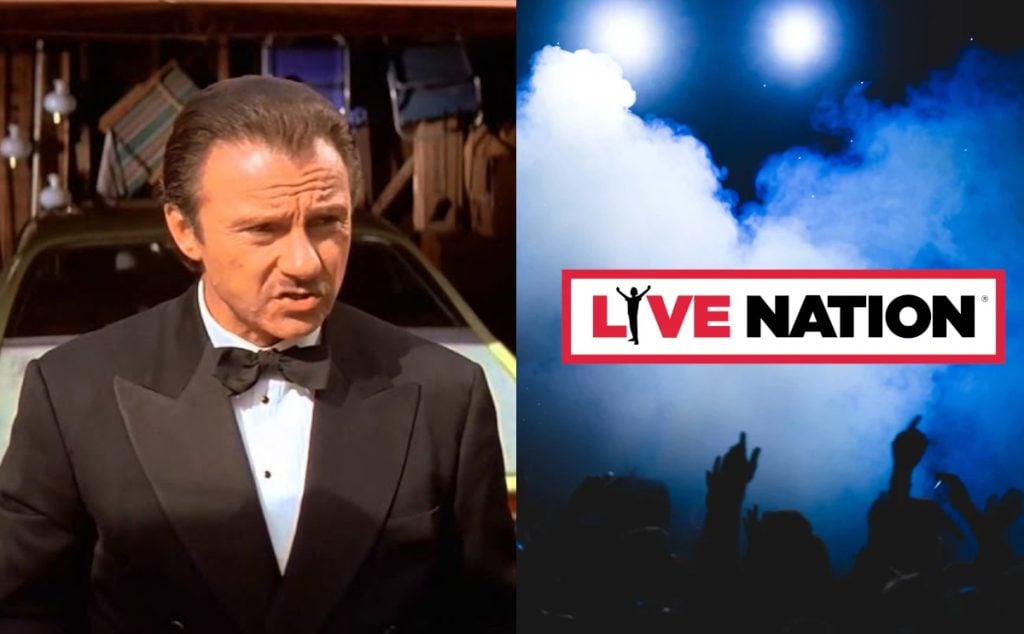
At the risk of showing one’s age or being accused of rebroadcasting bawdy language, it feels like it’s necessary to cite the wisdom of the great Winston Wolfe—a fictional character from film director Quentein Tarantino’s magnum opus, Pulp Fiction portrayed by Harvey Keitel. It feels like the only appropriate way to properly contextualize this recent court decision against concert behemoth Live Nation.
As the news broke Wednesday afternoon, April 15th that Live Nation was ruled to be a monopoly, American consumers of all different stripes were ecstatic, with viral posts celebrating the demise of Live Nation eating up the internet. But as Winston Wolf said to Jules Winnfied (Samuel L. Jackson) and Vincent Vega (John Travolta) after they’d cleaned the blood and body out of the Chevy Nova…
Is the ruling a victory? Sure it is, and a big one. A jury of our own peers in the United States found after a lengthy trial in a New York Federal court brought by 30-something state’s attorney generals that Live Nation illegally maintained monopoly power in the live entertainment market. Live Nation and Ticketmaster merged in 2010, basically creating the monopoly that exists to this day.
And let’s not downplay how important this decision is. Live Nation put powerhouse lawyers behind fighting the case. They tried to put together a shady backroom deal with the Federal Justice Department that even the judge and many of the plaintiffs didn’t know about. But ultimately, the jury came to the only sane decision. And this was the first decision that needed to be secured to set the wheels in motion to actually do something about the fiasco that is American live music and entertainment.
But does this mean the next time you go to secure Taylor Swift tickets for your daughter, they’ll be $34.95 for floor seats with a $1.74 convenience fee? Does this mean your locally-owned music venue or festival won’t continue to face insurmountable pressure where each year they’re forced to consider shuttering or selling out? Does this mean that the shady resale market that’s been one of the biggest drivers in ticket price will all of a sudden evaporate overnight?
No, it doesn’t. We are far, far away from Live Nation and Ticketmaster being split up, scalpers and bots being brought to heel, and something even nearing an equitable ticketing ecosystem being enacted. It not only could take many months, or likely years for the next shoes in the legal fight to fall, it’s probably just as likely, if not more likely that this will all still resolve in Live Nation’s favor. Because that’s how these things often go.
First what needs to happen is Judge Arun Subramanian must choose what to do with Live Nation now that it has been found by a jury to be a monopoly. He could rule for the company to be broken up into different pieces. There is a lot of indication that he will do this very thing. Mr. Subramanian sure didn’t like the end around that Live Nation and the Justice Department tried to pull during the trial. Not only did the plea deal fail to satisfy the court, it might have cheesed it off.
Then once the judge comes to his ultimate conclusion, Live Nation will immediately appeal. Potentially, or likely, any official breakup of the company, penalties or fines, or other restrictions will be limited, if not stayed until the appellate process plays out. Then once the appellate process plays out, the case might end up in the Supreme Court since it’s such a landmark legal action, and Live nation is a massive company. And the current Supreme Court has proven to be pretty pro business.
For those of you old enough to quote Pulp Fiction, you also might remember the ruling of Microsoft as a monopoly, and its legally-prescribed breakup in 1998 by a court in the District of Columbia. But the Court of Appeals partially overturned the ruling, with the Justice Department and Microsoft ultimately coming to a settlement, and Microsoft modifying some of its business practices, but staying in tact.
Much more recently, the Federal Trade Commission (FTC) and 46 states sued Meta (the parent company of Facebook and Instagram) claiming a monopoly and anti-competitive mergers. The lawsuit was initially dismissed in 2021, before being resubmitted later that year. A trial commenced in April of 2025 with CEO Mark Zuckerberg testifying himself. Ultimately, on November 18th, a District Judge ruled in favor of Meta. In January 2026, the FTC said it would appeal the ruling.
Though the Meta case is still officially pending, appreciate it started five years ago, and still hasn’t resolved. It’s very fair to expect a similar timeline with this Live Nation legal action.
Really, the last time a major monopoly was truly broken up in the United States was Bell Telephone (AT&T) in 1984 when “Ma Bell” was broken up into the regional “Baby Bell” telephone companies, and AT&T became a long-distance carrier. Those who remember paying .12 cents a minute to talk to grandma on Christmas are really showing their age. That legal action started in 1974. It took a decade for the process to resolve.
Who knows, maybe the case against Live Nation is so open and shut that the appeals court shuts down any arguments, whatever legal remedy the New York judge decrees sticks, and the big bad wolf of American entertainment is truly vanquished. One can only hope. After all, with the way the impending AI revolution looks to continue to disrupt recorded music, the live event space is going to be the last bastion where independent, human-made music can hopefully thrive.
But despite the initial victory, folks should be very realistic about what the future looks like when it comes to the Live Nation legal situation, not just to be prepared, but to continue to apply pressure on elected officials to do what they can to make sure American music and entertainment consumers stop being fleeced by what a dozen everyday Americans deemed in a court of law was a monopoly.
– – – – – – – –
If you found this article valuable, consider leaving Saving Country Music A TIP.
April 16, 2026 @ 8:36 am
Keep in mind that after the doj did their very sudden settlement of their own lawsuit against live nation, The Wall Street journal put out a very detailed article about the fact that Trump apparently intervened personally after he was given a bribe by live Nation for his inaugural bribe fund:
https://www.ticketnews.com/2026/03/wsj-trump-personally-pressed-for-live-nation-settlement-met-with-rapino-march-5/
April 16, 2026 @ 8:48 am
Ironically, by the Justice Department doing their settlement with Live Nation—and not including the states attorney generals in that conversation, the Justice Department removed themselves as a player in this legal action. At this point, Live Nation could give the Trump Administration a billion dollars, and they would be completely unable to move the needle on the case whatsoever. They settled. It’s now up to the courts, and the 35 states attorney generals what happens next. Live Nation will not be able to bribe themselves out of this, at least not with the Trump Administration.
April 16, 2026 @ 9:11 am
“The Wall Street journal put out a very detailed article about the fact that Trump apparently intervened personally after he was given a bribe by live Nation for his inaugural bribe fund:”
WSJ. Lol. TDS alert!
This case will go on for years. Live Nation will appeal.
April 16, 2026 @ 9:27 am
The Wall Street Journal is owned by far right billionaire Rupert Murdoch. It just happens to be his more so-called “respectable journalism” outlet (compared to some of the other stuff his empire owns)
April 16, 2026 @ 9:37 am
Yeah, I have no reason to doubt the Wall Street Journal’s reporting here, and Live Nation would have been fools to not have tried to pay off the Trump Administration to settle the case. The problem is the Justice Department was so inept, did take the time to actually work with its fellow plaintiffs, they completely duffed the opportunity to settle, pissed off the judge, created a PR debacle for themselves, and have now lost the case.
If I was a betting man, I would still say that Live Nation doesn’t get broken up. But in lieu of that, they will have to agree to major concessions, at the least. But we’ll see.
April 16, 2026 @ 10:12 am
You….you do understand that just because a publication reports something unflattering about Trump, that doesn’t mean it has “TDS”….right?
April 16, 2026 @ 8:51 am
Yeah it’s definitely a very good outcome (hopefully- you’re right that these things take years and we have such a weak anti-monopoly laws that it may ultimately not go anywhere).
One thing it’s going to take is continued public pressure. The whole thing is probably in the hands of Judges at this point but attorneys general and their lawyers are still affected by public opinion and they are still going to be the ones arguing all of the appeals and shit
Sorry I included a link about the Wall Street Journal investigation – the original is super paywalled but I think it’s linked from the Ticketnews article.
April 16, 2026 @ 8:56 am
I will be pleasantly surprised if anything positive comes out of this.
April 16, 2026 @ 9:25 am
If nothing else, it creates an opening for competition. I think it’ll be chaos for a while, but I think it will go faster than Ma Bell – e-commerce is pretty mature, ticket sales is a huge business, and there are a lot potential entrants. The worst case is that we end up with 3-5 Ticketmaster clones and the added fees are a little lower.
April 16, 2026 @ 10:01 am
Even though noting is solved today, I got a HUGE laugh out of the the Pulp Fiction clip.