

It Feels Like The Entirety of the Music Industry is Now Fraudulent
Some will read the headline and say, “Come on. This is ridiculous and alarmist.” Others will say, “Well of course it is. You’ve been reporting on this stuff for going on two decades. Aren’t you being a master of the obvious?”
But over the last year or so, the game has shifted, and dramatically, and perhaps, catastrophically, especially for the artists who don’t have the financial resources to play it. Is saying that the entire music industry is fraudulent being a bit hyperbolic? Maybe. But maybe not. Sure, there are still artists and labels and managers out there doing things the right way and above board. Some of them are even breaking through and succeeding despite not participating in the fraudulent aspects of the industry.
But their numbers are dramatically diminishing, and their success is becoming less likely as increasingly you only have one real choice: play the game, or fail. As the old NASCAR saying goes, “If you ain’t cheatin’, you ain’t tryin’.” And meanwhile, the amount of new artists actually breaking through in music is dramatically down, thanks in part to the financial burden of entry it takes, and the distrust the public has of the industry, resulting in listeners relying more on older, catalog artists for their music consumption.
Every day you could write yet another story about how some piece of corruption has been exposed, another artist that broke out did so by gaming TikTok, and another artist had their identity stolen by AI. But in truth, you’re just scratching the surface, and simply giving illustrations of much bigger systemic problems, while it still feels imperative to report on the music being released from artists with integrity unwilling to play the corrupt game as opposed to only focusing on exposing the hype.
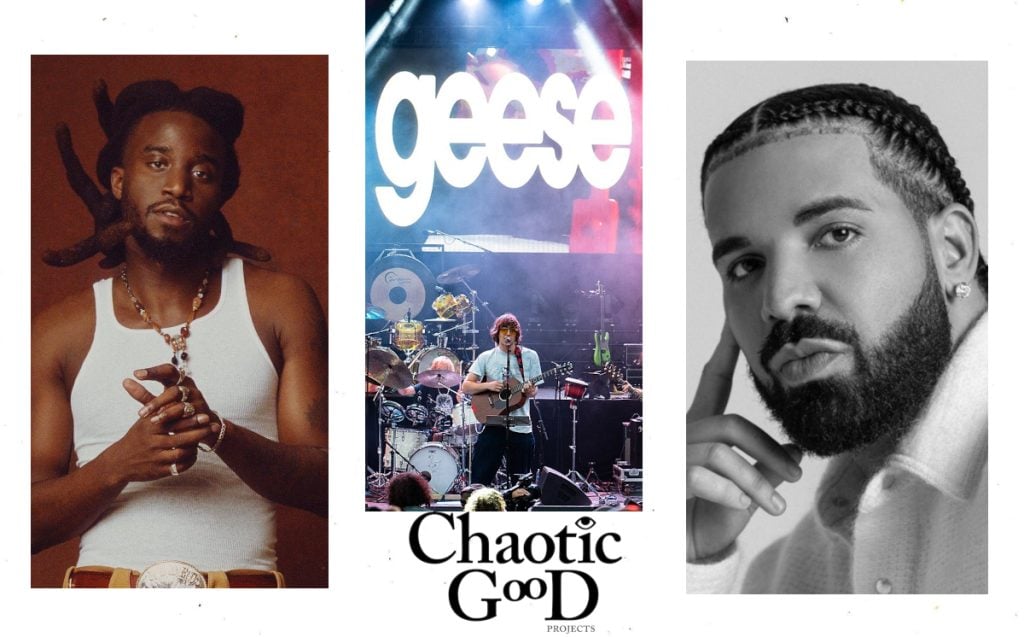
What’s inspired the latest round of worry that the entirety of the music business might be governed by corruption is a report in Wired talking about the rock band Geese, their 2025 album Getting Killed, and the recent accusations of them being an “industry plant,” or at least the benefactor of market manipulations being true.
But it’s not really Wired’s reporting that exposed what was happening, even though that’s the article that went viral. It was a Billboard interview with two guys named Andrew Spelman and Jesse Coren at SXSW who have a digital music marketing company called Chaotic Good. In the interview they proudly spilled the beans about what they call the practice of “tend simulation,” bragging, “We know how to go viral. We have thousands of pages.”
Long story short, Chaotic Good is one of the many companies out there that uses TikTok influencers and thousands of fake fan accounts to launch artists by placing songs in the backgrounds of viral videos, for the right price of course. Frankly, this is nothing new, nor is artists, management, and labels paying for TikTok virality, or any other kind of promotion beyond the conventional publicist who artists and labels used to pay to work with reputable media outlets to feature artists and their music.
Earlier this year, Saving Country Music exposed how media outlets such as Holler and Whiskey Riff were charging for coverage. But again, this is just barely the tip of the iceberg. In these instances, some love to cite the old radio practice of “payola,” meaning paying radio stations and DJs to play songs. But when it comes to payola, there are actually laws governing this practice, and heavy fines and penalties if radio stations are found to be engaging in it. On social media and TikTok, it’s the wild west.
The braggadocios nature of the Chaotic Good founders who inadvertently exposed Geese as getting goosed by a social media campaigns parallels the same cavalier attitude of another company called WtrCoolr who spilled the beans on how they spread a fictional story about how Dolly Parton was Shaboozey’s Godmother in a way that helped send Shaboozy’s massive hit “A Bar Song (Tipsy)” into the stratosphere.
These companies are acting with such impunity and in an open-faced manner by turning around and bragging about it because it’s an environment with little or no consequences. Some, if not many of the artists employing these types of tactics don’t even know what’s going on. It’s being employed, if not mandated by their labels or managers. The performers are just going with the flow, and glad anyone real is actually paying attention, however that attention was garnered.
But these practices dramatically raise the burden of entry for artists into music. To get the deals, you need followers. To get followers, you need capital to pay companies like Chaotic Good. To get the capital, you need a label or backers. It becomes a self-licking ice cream cone where people standing on the outside looking in don’t have a snowball’s chance in hell to break through, which is the reason only about half as many artists are breaking through in music at the moment than were before the pandemic and the proliferation of TikTok.
Meanwhile, you have to take the accusations from a recent lawsuit against Spotify accusing the Canadian rapper Drake of being the beneficiary of “billions” of fake streams seriously. We know streaming fraud is likely just as rampant as underhanded TikTok campaigns. We just don’t know how rampant it is. How much can you trust those Spotify streaming stats? Is it all propped up via paid-for streams? Is that one of the reasons if feels like bad music rises, and the best stuff gets squashed?
Ironically, the crackdown on streaming fraud isn’t affecting artists like Drake, or Geese, or Shaboozey, who have big teams who can make any problems or accusations go away. Who is getting hit the hardest in crackdowns on illegal streaming are completely independent artists with no labels, or managers, and meager budgets who are getting swept up in streaming fraud crackdowns inadvertently, and have little or no recourse to resolve it.
That doesn’t mean breaking through organically is impossible. Though the accusations against Oliver Anthony and his song “Rich Men North of Richmond” being the result of market manipulation and Anthony being an “industry plant” were rampant, those accusations have never bore any fruit. It actually was a tuly organic moment.
But as the story of Geese being an “industry plant” continues to go viral, you’re seeing a significant amount of sympathy for them, or at least excusing of it, and from folks that you might think would be opposed to these kinds of underhanded market manipulations.
“Wild to see how many people didn’t know how social media-based marketing works,” says NPR’s Ann K. Powers. “The point of that Geese expose is in the last paragraph when the artist who ‘exposed’ the marketing plan said she’d do it too. Fair to not approve but don’t be shocked…”
But the reason people are shocked or having a visceral reaction to the Geese story is because all of this stuff is being done so surreptitiously. And no, it doesn’t feel the same as hiring a legitimate publicist who then persuades a third-party journalist to write about them. As guitar player and producer Sadler Vaden said in response to the controversy, “Here’s a mind blowing concept, Geese is awesome. Be awesome, play awesome music, spend money on an awesome publicist. Crazy!!”
What companies like Chaotic Good are doing—as well as big social media accounts who take payment for promoting artists—is presenting the specter of organic virality and reach, when in reality it’s paid-for. When a consumer reads a puff piece on a performer in Rolling Stone or GQ, they know the game, and can measure the information to come to their own conclusions. When it simply appears there’s dozens of average fans buzzing over a band—but those aren’t actually fans, their fictionalized bots bought to push a narrative—it’s the gaming of the mind.
What these companies and bands are doing is exploiting the very last bastion of creating a sustainable career without the help of the industry, which is cultivating a grassroots following. Manufacturing these grassroots fugazis is much more sinister because it undercuts the effectiveness of independent grassroots strategies that try to build fan bases up one fan and one human connection at a time.
Ultimately, just like you have with radio, there needs to be some sort of regulation, oversight, or at least, transparency when people are being paid to promote an artist or band. That doesn’t mean there aren’t still loopholes in the radio system regulated by the FCC. Label reps can still take radio programmers out for steak dinners and cultivate relationships that result in favorable outcomes, similar to publicists in print or even social media.
Is there any hope that some sort of regulatory oversight will be enacted over TikTok, illegal streaming activity, and other market manipulations in music? Of course not, at least not in the near term. There are too many other dilemmas and pots boiling over for the government to even identify the problem, let alone address it.
But what the entire music industry is doing by either turning a blind eye to it, or outright exploiting it, or even making excuses for it as we’ve seen a strange amount of when it comes to the example of Geese, is their undermining the integrity and public trust of the entire music industry.
Whether the entire music industry is fraudulent or not, increasingly the perception in the mind of consumers is that it is. They don’t trust the viral song, the viral moment, or the viral artist. They just assume everything is part of a corrupt scheme. That cynical, distrusting posture is why consumers are turning more and more to back catalog listening as opposed to supporting new, up-and-coming artists, ironically making these new artists have to rely even more on boosted exposure on social media.
The short-term gains of relying on TikTok virality and manipulations are already resulting in a long-term undermining of the industry itself. So when will the powers that be at the major labels, and organizations like the Recording Academy and RIAA step up to put new rules in place, petition the government to offer more regulation and transparency, and clean up the system before there’s no system left, and it’s simply the most monied interest in music that make it, and everyone else is left feeding off the scraps?
– – – – – – –
If you found this article valuable, consider leaving Saving Country Music A TIP.
April 16, 2026 @ 11:14 am
Consequently, all the value now to be had is in local live music. The robot economy can pound sand.
April 16, 2026 @ 12:08 pm
This is the reason that all this Live Nation business is so important. If Live Nation is able to monopolize local music, which they already have in certain markets, there truly is no opportunity for the future.
April 16, 2026 @ 3:48 pm
Ironically, you are plugging Geese.
April 18, 2026 @ 11:15 am
why, that’s just shocking ! !
….so, Mr. Saving messiah, Sir:
you ready to name the pimp daddy ?
April 16, 2026 @ 11:20 am
Market manipulation has always existed but in the past we got better music out of it. I saw in a video of how friends of Heart would call radio stations from payphones requesting to play on of their songs. I don’t think it’s a damnable sin for some derivative of payolla to exist as long as the music is good. The Clear Channel takeover of radio killed independent stations. I see that as having done far more damage to up and coming artists.
While I disagree with what Chaotic Good is doing, how is this any different from major pop stars like Sabrina Carpenter being a nepo baby industry plant, and Chappel Roan having a dubious origin story and a very wealthy father? American Idol and The Voice have tricked most of Gen Z and A into believing that is a normal path to success – fabricate a sob story and go on a reality TV show which only exists for bolstering social media clicks.
I came across an interview clip of Steve Allen in the early 80’s where he talked about how American’s will only latch onto an artist after they are famous and THEN appreciate their musicality vs appreciating someone for their musicality first. Social media and the internet destroyed local culture so now bands have to fight for nationwide and worldwide appeal on social media because it replaced local band scenes.
April 16, 2026 @ 11:32 am
Gen Z and A don’t watch American Idol or the Voice dog thats boomer shit. Your last paragraph is spot-on though – an incredible band like Geese could play at your local bar and no one would give a shit unless they already knew they were famous.
Jeremy Pinnell’s “goodbye LA” is a rippin album
April 16, 2026 @ 12:40 pm
Boomer shit
Really?
April 16, 2026 @ 12:56 pm
Well, it objectively is. You really think Gen Z is sitting at their TV watching American Idol and the Voice in 2026?
Hell, even older Millennials long ago tuned that out. The people watching those shows are Gen X’ers and Boomers. That is who still watches network TV. This is just a harsh truth.
Most of your reply might be correct, but where Gen Z is finding music is TikTok and YouTube. Zach Bryan, Sam Barber, Dylan Gosset, Noah Kahan, all can credit their success to being discovered on TikTok and YouTube and their music getting shared via both the algorithm and young people sharing it with other young people.
Look – Gen Z has their flaws – like all generations do (Boomers included). But it has been clear for some time now (as seen by the success of the artists above) that a large number of that generation is yearning for something less “manufactured” and “real” in their entertainment. And American Idol and The Voice – only still on TV because those shows are cheap to make and it fills a time slot for the networks – ain’t where young people are finding artists.
April 16, 2026 @ 1:08 pm
Hey Mike,
I wasn’t talking about those shows. There’s so much trash talking on here, I think I was just too quickly responding to “boomer shit”. Sorry I had to make you write all those interesting comments.
April 16, 2026 @ 6:44 pm
I’m Gen X, and I’ve never once watched American Idol or The Voice
April 16, 2026 @ 8:18 pm
As a boomer who has been discovering new music via YouTube, I’m kinda surprised to hear that younger people are. I didn’t think they had that kind of attention span. I consider this to be an improvement over how I found new stuff back in the sixties, when we got to hear only what the local radio station allowed us to hear – and they censored stuff like Janis Ian’s Society’s Child that would be considered “woke” today. I love being able to see something about an artist I never heard of, type their name in and instantly see/hear their music. My latest discovery is a young guy named Kashus Culpepper who reminds me of Clarence Carter and those other southern soul artists I listened to in high school and college. I guess my point is that music today is a giant smorgasbord of choices and if you don’t like what you’re listening to, maybe you need to dig deeper.
April 19, 2026 @ 1:50 pm
Hey Linda Clarence Carter was Great! And Culpepper is too
April 16, 2026 @ 1:05 pm
I’m 73 and I agree. That’s Boomer shit
I won’t watch
April 16, 2026 @ 1:17 pm
Getting wound up over someone using the term Boomer shit is the most Boomer shit ever.
April 16, 2026 @ 1:20 pm
Boomer is literally taken from Baby Boomer so idk how you find that to be an insult
April 16, 2026 @ 1:18 pm
I was trying to make it obvious that I understand that they don’t watch it. Artists trying to make it will go on those shows and then leverage that exposure on social media. The majority of them are doing that.
April 16, 2026 @ 11:25 am
I was just reading about that Chaotic Good / Geese piece yesterday on Paste (via AV Club) — thanks for bringing it up here. 😀
April 16, 2026 @ 11:29 am
Trig, great article, few thoughts
1. Please link and credit Eliza McLamb, a great indie artist whose substack post “Fake Fans” started this whole thing
https://www.wordsfromeliza.com/p/fake-fans
2. I think a lot of people defending Geese are saying that the members of Geese are not engaging in anything immoral by signing up for a marketing campaign. I agree with this defense of Geese because
3. Paying for promotion, be that through ads or agencies like Chaotic Good, has become simply an unavoidable cost of releasing music (if you’re interested in having anybody hear it). It’s a positive feedback loop where it’s unavoidable, so you pay for promotion, which makes organic reach more impossible, which makes paying for promotion more unavoidable.
As an artist, you’re participating in a broken system, but thats a favorable alternative to giving up on your career. Hence why McLamb ends her article by saying she would happily accept one of these campaigns, despite its associated systemic issues.
Jeremy Pinnell rips
April 16, 2026 @ 12:17 pm
I made sure in the article to mention that we can’t assume any of the bands or artists that benefit from these companies are programs are actively advocating for them, or even know about them. I don’t take any issue with Geese personally.
“Paying for promotion, be that through ads or agencies like Chaotic Good, has become simply an unavoidable cost of releasing music…”
I strongly disagree with this mindset, and this characterization. The majority of artists are not participating in this, and never would. Maybe they will pay for a publicist, or ads on Facebook. But paying for fake fans to push your music, or for fake streams to make it look like you’re bigger than you are, that’s a whole other thing.
I’m also seeing this “well, this is just the way it is now” all over the place, so I’m not just jumping your butt Jim. But I do thing this is a wrong mindset. There are other ways artists can promote themselves where they don’t have to undermine their integrity.
April 16, 2026 @ 12:31 pm
I’d agree its a spectrum, where paying for ads is healthier than paying for a marketing campaign (that may involve “user-generated content”), which is healthier than buying fake streams outright.
But of those 3, i’d only say the last one really undermines an artist’s integrity. The first two are just playing the game. And since Meta Ads work (unfortunately), both are basically payola. The second one is just more likely to convert people to actual fans, which is the true goal for any artist.
In the Geese discourse, you get a lot of “who cares, they’re great!”. Which is stupid, but was made possible by the fans they made through the fake fan campaign.
April 16, 2026 @ 11:39 am
They got the name completely wrong, there’s nothing good about what that company does.
April 16, 2026 @ 11:49 am
I know this is bad, but now that I’m middle aged I’m past the point of discovering new music. I’m grateful that I’ve got a lifetime supply of music that has already been made that I like.
Example: I decided a couple days ago to listen to the new Ella Langley album because I haven’t listened to someone new in a long while. I listened to a couple tracks, then noted that there’s 5 writers for every song. I bailed.
It’s too tiring to find what I would consider “real” artists – those who write and perform their own music. Every song has 6 writers, not to mention AI, then autotune and other digital manipulation. This doesn’t even take into account the schemes you mention here which are required for me to even hear about an artist.
I guess music up through Silverada / Turnpike / Childers is where I get off the bus.
April 16, 2026 @ 12:21 pm
“It’s too tiring to find what I would consider “real” artists – those who write and perform their own music.”
The vast majority of new artists who I highlight/review here still fit this bill. It’s really only the few mainstream artists where this is the case.
Completely understand the “I’m old, and I know what I like” mentality. This is the natural progression of a music fan. We tend to take the music of our 20s and early 30s, and rarely look for anything new. But there are some really great newer artists, and they’re having a harder and harder time to find support.
April 17, 2026 @ 10:42 am
I’m middle-aged and coming from the opposite side: I like “Hotel California” and “The Joker,” but how many times can a person hear the ~700 songs they play on “Classic Rock” formats before they just vomit?
Thanks for bringing us the new stuff, Trigger.
April 18, 2026 @ 4:36 am
Just like with country, don’t just rely on the radio for your classic rock. I’ve dug so deep into those music scenes that I don’t just know the B-level bands, I know the C and D level bands and just like now, there was SO much better stuff that never gets airplay released. Just dig my brother
April 16, 2026 @ 2:45 pm
Obviously i don’t know your specific taste, but check out this playlist i made for some family members that listen to radio country.
All of it was released in the 2000s, probably 90% since 2020, and a lot of it in the last two years. (and a great deal of it I discovered here on SCM!)
https://open.spotify.com/playlist/5I51rYKa9Q4Y86b5jQUexZ?si=64f2cbd53d294ba9
I hate to hear people aren’t listening to new music. These are the artist you can see live this year!
April 17, 2026 @ 10:43 pm
Far too few current women in this playlist. But that’s the problem with almost all country playlists on Spotify.
April 16, 2026 @ 8:27 pm
I’m way past middle age – I’m effing old – but I’m still discovering new music. I first heard Choosing Texas way back last fall and fell instantly in love so I checked out Ella’s stuff and added a few tunes to my playlist but still haven’t listened to the whole album. There are some artists that make albums that should be listened to from front to back in order and others who make catchy singles that can be part of a fun playlist. Choosing Texas isn’t on mine anymore because I eventually got tired of it but that just made room for a new artist I never heard of until last week.
April 17, 2026 @ 10:38 pm
I’m also middle-aged, have dug deep into 20th century music, listen to everything from trad jazz to Chicago blues, classic rock, Balkan brass, French chansons, Latin American styles, reggae and dub to British punk and post-Soviet postpunk or klezmer. But there are so many exciting, authentic new artists in country music these days that it’s a real joy to discover new music. It’s been a long time since I heard anything current that excited me as much as the Red Clay Strays, Shane Smith & the Saints, Charles Wesley Godwin, Zach Bryan, the Castellows and others.
April 16, 2026 @ 11:50 am
Maybe I’m just getting old, but it feels like all the shenanigans on social media are making it less likely I’ll pay attention. And if that trend continues, it’s not clear how independent artists can even connect with me anymore (other than here, of course). Significant success as an independent could turn out to be a short lived phase.
April 16, 2026 @ 12:15 pm
This is why I prefer geese’s solo work (Goose)
April 16, 2026 @ 1:45 pm
I immediately thought of Goose too. I don’t know anyone would run with a band name without Googling it first to make sure it isn’t already used.
April 16, 2026 @ 4:00 pm
Geese’s “solo work” – haha! Goose is tons of fun – great jam band. And to clarify which came first: according to the Google machine, Goose began in 2014, Geese in 2016. Either way, Googling the name would’ve been a really good idea.
Y’all probably have a better idea than I do as to when these two bands became reasonably well-known – but for me, both hit my radar in early 2026; becoming aware of one caused me to become aware of the other. Love me some Goose – but Geese, I’ll pass, thanks.
April 18, 2026 @ 9:58 am
I hear the Candian version of Geese are dicks though.
April 16, 2026 @ 10:24 pm
Ah yes, an awful band that needs autotune to sound good. Plenty of jambands out there to dig into
April 16, 2026 @ 12:34 pm
What exactly is an “industry plant”? Like you find a good looking person with passable talent, put them in the clothes you want, give them the hair you want and then promote them? This question doesn’t even have to do with the article specifically, just in general I see that term and it seems like, well yeah, like the monkeys, John Cougar, olivia Newton John, like all these people are talented. Or does it have to be like Milli Vaneli to be an “industry plant”?
April 16, 2026 @ 1:22 pm
South Korea’s whole music industry runs exactly like that, actually. They take teenagers (or the parents sign them up or whatever), put ’em in camps and train them to be “pop stars” – singing, dancing, fashion, media training etc. dress them up, do their makeup, give them plastic surgery, give them songs to sing, and shove ’em out to the masses for consumption. That’s what “K Pop” is. The ones that don’t make it commercially get booted from their deals unceremoniously and nobody ever hears about them ever again.
It’s the most dystopian thing I’ve ever seen or heard of, and I wouldn’t put it past American companies to do exactly the same thing.
April 16, 2026 @ 1:46 pm
*cough Disney *cough
April 17, 2026 @ 10:53 am
Hahaha. We should start a list:
* Hannah Montana/Miley Cyrus (Billy Ray’s daughter)
* Justin Timberlake
* Britney Spears
How many dozen more.
I guess that’s why I’m kind of shrugging at this article. I don’t think newer artists are having more trouble because of the social media campaigns of other artists. I think newer artists are having more trouble because the available catalog of existing music has exploded over time as the digital age has progressed.
April 20, 2026 @ 9:59 am
Makes me remember when Leanne Rhymes came out – we were both 16 – she was great! When I found out she was groomed and funneled into that from a young age, I was disappointed.
I was complaining to me Mom that I would never become a star like that, then realized I was complaining about not being rich and shut up. Still like her music!
April 19, 2026 @ 2:07 pm
The Monkees. At least in their earliest incarnation.
April 16, 2026 @ 1:37 pm
An industry plant is someone who was hand-selected and “groomed” to be a mostly empty vessel for provided output. There is no concrete objective proof that will hold up in a court of law for individuals accused of this but the evidence is circumstantial. There are artists who come up thru the Disney ranks who become major Pop artists with tons of plastic surgery by age 22. There are repeat stories of a personal trainer having power of attorney over artists. The mental breakdowns of Kanye and Britney Spears point to this. They both had a trainer/power of attorney who controlled their lives. If you go down the Youtube rabbit hole you will find interviews of people making the claims of artists who essentially work with the occult to summon demons to bolster their careers. Obviously you have to take each one with a grain of salt but the occult imagery in Pop music is bizarre. There is also the weird occult artwork and clothing (Balenciaga) that many top artists wear – artwork that includes bloody faces and suggestive exploitation of children. These are extreme examples I’m throwing out there but the idea of appealing to the occult for fame and riches is not new. The idea of a Faustian deal with a demon has been around for hundreds of years. The problem with confirming any of this is that none of us are on the “inside.” I know this sounds crazy but it’s one thing to understand why The Beatles, Elton John, Miles Davis, Eric Clapton, got as big as they did because of their raw talent. I can’t justify why Sabrina Carpenter, Jojo Siwa, any mumble rapper, Drake, got famous.
Without going full conspiratorial there an industry plant can also be someone who paid the way of their kid to become famous: Sabrina Carpenter (niece of Nancy Cartwright), Taylor Swift, Owl City. Or someone the industry put resources behind to make into something they believed would be marketable like Shaboozy and Lainey Wilson.
April 16, 2026 @ 1:54 pm
Ok. So that’s what I am saying. I thought it was a given, and just widely accepted that this happened/happens. Plastic surgery seems like a lot though. But I just listened to Jack Ingram and Kelly Willis talk about doing “media training” in the 90’s. people are told how to dress and do their hair all the time. Given songs they didn’t right. The disney thing is a great example. The partridge family, Ricky nelson, Leif Garret, New Kids, Ricky Martin, Will Smith, are these all “industry plants’? I thought it was just good business and (usually) shitty music.
April 17, 2026 @ 9:52 am
Artist development is different from being what is considered an “Industry plant.” Even Alan Jackson went thru artist development for a few years before his first album.
April 16, 2026 @ 2:41 pm
There was also a massive push toward “poptimism” in mid-00’s, to counter what they called “rockism”.
The way I understand it, “poptimism” was all about critical acceptance and aggressive elevation of manufactured corporate pop music to counter the traditional “rock” styles of the 70’s, 80’s, and 90’s – essentially, promoting the dubious notion that a manufactured pop star was equally as, if not more artistic, talented, and important than say Hendrix, Clapton, Bowie, Zeppelin, the Stones, the Beatles, Van Halen, Prince etc.
So, pop artists like Beyonce started featured heavily on music sites like Pitchfork, which had previously focused exclusively on underground and independent music (mostly indie rock). The defense for “poptimism” was that it gave underrepresented races and genders equal or elevated critical and cultural footing with the white “rock” artists of previous generations – despite the fact that pop artists of all genders and races had already been hugely successful, culturally and critically, for decades. A solution in search of a problem.
In retrospect it’s pretty obvious that “poptimism” was a corporate/commercial wolf in the sheep’s clothing, under the guise of “social justice” – a way to control the cultural and critical narrative, to prop up corporate product that was arguably worse in artistic quality and value compared with the artists and musicians that had come before, who were aging and comparatively harder to manipulate and control.
So, the wild notion that Beyonce was the heir apparent to the country music genre itself was a byproduct of a broader corporate/commercial push, decades in the making. So now manufactured corporate pop rules every avenue of the music industry, from radio, to magazines, to websites, to music festivals – and you don’t dare say you don’t like it, because you’ll be accused of elitism, racism, sexism etc. It’s a clever trick, and most people fell for it.
April 20, 2026 @ 10:03 am
Or if you ask Billy Corgan it was a CIA conspiracy to chill people out. No more Woodstock 99 Fred Durst roits….
April 17, 2026 @ 10:06 am
My impression of the term industry plant is that it gets used for artists that are going for some kind of fake authenticity when in fact they have an enormous amount of corporate money behind them
Good examples are probably midland. I think the controversy around them was that they lied about doing a residency at a famous Texas venue or something like that. In reality they had not.
Being an industry plant does not necessarily mean that you’re doing bad music, just that the image was very carefully curated by somebody with a lot of money who is trying to hide that fact in order to cash in on authenticity fetish.
April 16, 2026 @ 1:50 pm
An “industry plant” is not the same as a boy band or a manufactured artist who is sort of groomed by the industry as some are saying here.
What makes an “industry plant” is an artist that manipulates grassroots markets to make them look like they came up organically, but it truth was manufactured with a planned out media strategy. The practice of cultivating these artists is often called “Astroturfing,” because again, you’re exploiting grassroots energy to launch them.
This is what makes taking thousands of fake fans, and acting like there’s an organic movement behind them so damaging. We all know what a boy band is. When you take an artist or band and act like there is an organic movement behind them, you dilute the efficacy of actual grassroots growth.
April 16, 2026 @ 1:59 pm
Ok, thank you Trigger. That makes more sense. I responded to Straight above before I saw this. So “industry plants” are something that’s come after the internet right? because you really couldn’t do that pre internet I don’t think.
April 16, 2026 @ 2:04 pm
Also, sense I got you, Rodney Crowell released a new song with Guy Clark singing. Its not a song he’s released before I don’t think, or that I’ve been aware was (that’s not to say it’s not older, I’m just not familiar with it. Do you have any insight how that happened? Not A.I I hope. Just something they recored before Guy died?
April 16, 2026 @ 2:06 pm
It’s from a “lost” Rodney Crowell album called “Then Again” that will be released on June 26th. I will try to get an article up about it at some point.
April 16, 2026 @ 2:15 pm
Cool, thanks!
April 16, 2026 @ 2:07 pm
* since
April 17, 2026 @ 12:45 pm
Would Kane Brown fall under that umbrella?
April 17, 2026 @ 1:12 pm
Absolutely, and I was going to mention him in this article, but it felt a little out-of-date for the discussion at hand.
But back in 2015 I did a whole investigation and how they used the “organic” narrative to push Kane.
https://savingcountrymusic.com/kane-brown-market-manipulations-the-manufacturing-of-an-organic-star/
April 17, 2026 @ 1:37 pm
Thanks.
Kevin from CU cited Kane Brown as an example of good modern country music.
Hilarious. Brown is contrived as a Dairy Queen cone.
April 16, 2026 @ 1:16 pm
This is as good a comments section as any to say that the reason I’ve read Saving Country Music almost every day for the last nine or ten years now is because it’s an antidote to dead internet theory. It reads like a blog from 2008–that is, written by a person and not by and for algorithmic slop, and likewise not beholden to any of these shady new forms of payola.
Country underground aside, it’s the last island of old internet.
April 17, 2026 @ 10:47 am
This hits home. I miss the blogosphere like crazy.
April 17, 2026 @ 5:43 pm
it’s on Substack and Patreon now.
April 20, 2026 @ 1:49 pm
Substack has been the best thing to happen to the Internet in 10 or 15 years. But it’s not the same.
April 16, 2026 @ 1:36 pm
It’s a terrible shame to see what’s going on here. I’m wondering though, if the entire music industry, even BEFORE tiktok and the pandemic, was significantly harder to break through than in the past.
Artists don’t put out one album a year any longer. they’re lucky to put out one album in three years. That means that songs, older songs, stay in the top spots longer, playlists remain stagnant for much longer (and i’m talking not only about country radio playlists – that goes without saying; i’m talking about streaming playlists too) and there’s only so much room on the playlist of the average person.
So along comes a new guy, and there’s not even any room on the playlists anymore for these guys. How is a a new guy supposed to even get noticed anymore in the traditional ways? Now, when we add your article on TOP of this, that they can’t even break into the industry in non-traditional ways, it becomes a total disaster.
April 16, 2026 @ 1:56 pm
Statistically, it is harder to break into the industry now than it was before TikTok, at least for top level stars. The industry launched half as many stars in 2023-2025 as it did in 2013-2015. This has been a long-standing narrative across the industry basically since the pandemic.
It is true that social media, streaming networks, etc. make the burden of entry easier for artists. But that also means there is incredibly more competition, stealing attention from more worthy artists towards less worthy ones. The peak era was before the pandemic, because you could still leverage the value of technology, but there still was a level of accountability and meritocracy involved.
April 16, 2026 @ 11:19 pm
I have to question whether the current model of putting out a new album every two – three years is fair to the artists. Audiences today have short attention span and can lose interest in an artist after liking their first single. Also if one album tanks the artist’s career could be over before the label gets around to releasing the next one. Maybe it’s time to go back to the singles based model of the fifties, except a modern version where artists put out several singles a year with videos, etc, on all the usual places and listeners add them to their playlists. Isn’t that really what’s happening now anyway?
April 16, 2026 @ 2:05 pm
Seeing the amount of apathetic response from the talking heads on the internet has me feeling like there’s no bottom to any of this. This “endless hustle economy” has everyone willing the sell their souls, culture, morals… whatever it takes to make it. Whatever that means these days. All hail the dopamine kings. Never been happier to be a small bar songwriter with no desire for mass exposure.
April 16, 2026 @ 5:12 pm
A lot of folks have done, and will do anything to be rich and famous, and not just in the music business.
April 16, 2026 @ 2:35 pm
I got turned on to Geese pretty early on (like right before the KEXP/Paste live performances videos went viral) and I didn’t care for them. It seemed like the kind of stuff people liked because they were told by someone “cool” to like it… boy was i vindicated to find out that was the flat out truth! **no, it’s the children who are wrong meme**
April 16, 2026 @ 7:53 pm
I’d imagine the same people that like Parquet Courts, Viagra Boys, Idles etc are your fanbase for Geese. IMO it’s mostly they bought exposure, which made them visible to people inclined to like that style of disjointed, angular, noisy, minimal/abstract lyricism stuff. IOW, the people that like them I think do actually like them. Personally I think Liquid Mike, Twisted Teens and Wednesday are vastly better bands and more deserving of that spotlight. But I’m not into the whole transatlantic art postpunk thing.
April 16, 2026 @ 2:57 pm
Hey, it worked for The Monkeys in days gone by!
April 16, 2026 @ 10:36 pm
The individual Monkees were hired for their musical (Peter and Michael) or acting (Davy and Mickey) talent but somehow gelled into a real group that would rebel against the people that created the group. That’s not likely to happen now.
April 17, 2026 @ 6:44 am
This is true.
April 16, 2026 @ 3:24 pm
I’ve been listening to Bobby Bare and Hoyt Axton lately and have really been enjoying it. I also like Ella Langley!
April 16, 2026 @ 10:41 pm
Those guys have been favorites of mine for decades. I saw Hoyt a bunch of times at the Palomino and he always put on a great show. I wore out my copies of Bare’s Drunk and Crazy and Down and Dirty.
April 16, 2026 @ 4:57 pm
Welcome to the New music business, same as the old music business.
This has been going on for many decades. The game has been upgraded, but it’s the same thing that has been happening forever. And just because there are laws against payola, doesn’t mean it still doesn’t exist in radio. The honest few in Nashville will tell you that it costs a lot of money to land a number one hit.
Labels, producers, etc., will do whatever it takes to make money and get exposure for their artists. It sucks, but it’s not going away. Have people forgotten how Shania Twain’s breakout record was juiced in order to make it spike on the charts? It worked. Was it fair? It doesn’t matter.
April 16, 2026 @ 9:29 pm
No, it’s not the same. It just isn’t. Paying someone to put a song on the radio is not the same as creating 10,000 fictitious accounts to make an artist look bigger than they are, especially when one is still illegal, and the other isn’t.
April 17, 2026 @ 12:01 pm
Buying tens of thousands of copies of an album you produced so the artist you’re married to spikes on the charts is no different than thousands of fictitious accounts. Those were fictitious buyers, but it worked. No one had an issue with it then. And you know it likely wasn’t an isolated incident. This isn’t to going away, it’s only going to get worse.
April 17, 2026 @ 12:24 pm
I just don’t see any value in people saying,” Music is corrupt. Music has always been corrupt. Music will always be corrupt. That’s just the way it is.” I’m sorry, but I’m not just going to accept a corrupt system that puts certain performers at a disadvantage and damages meritocracy just because it’s “the way it is.” I’m going to work to expose and address those things, as I think all music media should.
Of course there’s been corrupt, underhanded stuff in the past. That doesn’t make the present stuff excusable, or any less serious.
April 16, 2026 @ 4:59 pm
In the past few weeks I’ve seen this news, the Bill Ackman trying to buy UMG and thus owning a huge chunk of Spotify news, the Live Nation Ticketmaster thing, Mark Pitts stepping down from RCA, Cindy Mabe launching Joan of Arc, Rick Beato reviewing the Spotify top 10 and how depressing that is, an old Prince clip pointing out that FedEx doesn’t own what you ship so why do music labels/distribution own part of your songs, Billy Corgan on And The Writer Is and his takes on boomer value, AI, & how gatekeeping is gone, Diplo on Behind the Wall saying that technology always wins (in regards to AI), Molt Productions and how AI agents ‘are the new streaming fraud’, and countless posts on socials about ‘what to post now if you’re an artist’, and how ‘it’s not social media it’s interest media now’. This is all so incredibly exhausting, frustrating, and defeating. Everything has a price tag now, everything is a product now. It is beyond depressing. Make it make sense.
April 17, 2026 @ 10:12 am
Every time I pull up social media, I am seeing posts from artists and media types talking about this dilemma and that dilemma they’re facing in music. You see more of these topics than you see about music itself. It’s everywhere, and pervasive at the moment. That’s one of the reasons the Geese story went viral. It touched a nerve.
As bad and bleak as stuff is though, I think it’s still important we try to keep our eye on the ball of talking about the music we love, supporting it in whatever capacity we can, and not acting like it’s ‘game over,” because it’s not. There are a ton of challenges in the music business, so it’s up to artists and the people advocating for them to step up, craft solutions and work arounds, and figure out new avenues to sustainability.
April 17, 2026 @ 12:03 pm
“…an old Prince clip pointing out that FedEx doesn’t own what you ship so why do music labels/distribution own part of your songs…”
You pay FedEx to ship your package, the labels invest millions of dollars into an artist and expect to be compensated.
April 17, 2026 @ 2:48 pm
Prince’s point was that the return should match the risk, not be a permanent owner of someone else’s work. Labels invest and make their investment back plus a profit, but the artist should still own their work.
April 16, 2026 @ 5:23 pm
Geese are not very good. The really good album of that kind of music released last year was the one by Maruja. (Full disclosure: I’m not a bot paid for by Maruja’s management.)
April 16, 2026 @ 10:14 pm
Horse manure
April 16, 2026 @ 10:13 pm
Man, the way this story has taken flight is absurd. Geese have been a band for years, figuring out tgeir style, dealing with highs & lows, and now you morons think that because they’re getting 21st century marketing help, they are a plant/psyops/whatever is ridiculous. They are a great young band exploring dynamics beyond the verse/chorus/verse silliness prevelant in current pop/country genres.
Open your ears and just listen and if you don’t like, fine…
April 16, 2026 @ 11:03 pm
21st Century marketing help? You mean deceiving the public by populating tens of thousands of fake fan profiles? As is said in the article, we don’t even know if Geese knew about this. But the folks hand waving it away just because they like the music aren’t seeing the forest for the trees. If you allow this kind of activity unfettered, you will undermine the entire integrity of the music industry, if you haven’t already.
April 16, 2026 @ 11:30 pm
Nah dude, you are so in your own deception, you can’t even read my whole post.
Have fun with your clickbait, real musician/engineer/producer here signing out
April 17, 2026 @ 12:06 pm
“Nah dude, you are so in your own deception, you can’t even read my whole post.”
Deception? You appear to be the one who is deceived, or are a “moron” as you like to say.
Real musician, producer here, too (not that that changes the truth in this article) . 😂
April 16, 2026 @ 11:44 pm
Also, prove it – everyone is relying on one article about these fake bots. Give me 50 ids, should be easy if there are thousands of them
April 17, 2026 @ 12:55 am
The same happened to the movie industry and the publishing industry.
Overpaid singers, overpaid actors, overpaid directors, overpaid authors delivering underwhelming results ends in the draining of money and talent.
Instead of nurturing an obvious talent, the industry focus on what they consider a smash hit (think Justin Bieber, a nothingburger if there ever was one).
But trends changes too fast these days. Instead of a Madonna or a Jackson lasting for 20 years plus as a huge income, we get artists who disappear from the top within a few years. Even Taylor Swift seems to be on the decline, her fans are getting older and her music stays in the same teen/tween lane.
April 17, 2026 @ 6:27 am
I get all the arguments here. And I’m not arguing for the tactics that those guys used to game the system.
But at some point, the work has to stand for itself. I liked the Geese album…and I don’t remember how I heard about it, but I listened to it a few times and liked it. I actually thought it was surprisingly good and refreshing…not a lot of bands like music like that. I’m not sure why I haven’t listened to it since then, other than there’s just so much music out there to listen to.
I digress. The work has to stand for itself. What I view those guys doing was a way to essentially jumpstart the conversation about Geese…what those guys did didn’t make people write positive reviews about the music. What those guys did didn’t make people put the Geese album on end of year “best music” lists. What those guys did didn’t get Geese invited to play SNL.
At some point you have to give credit to the audience for being selective (or in some cases, not selective) in their tastes and what gets pushed to the forefront. I get that there are sorts of stories from back in the day about backroom deals, pay to play, shady dealings…and now, stuff like these guys gaming the system to get a band jumpstarted.
But backroom deals, pay to play and the 2026 version of those tactics don’t sell out Madison Square Garden.
April 17, 2026 @ 7:19 am
I agree that the music should stand on its own. I’m not boned up on the music of Geese to have an opinion on it, but if people like it, I respect that. Liking their music is also not an excuse for using underhanded tactics to promote it. Though again, I have no idea if the band signed off on it. It’s often managers and labels who are paying the bot farms.
April 17, 2026 @ 6:31 am
The future sucks
April 17, 2026 @ 6:46 am
For music, yes. That is why I listen to the artists from yesteryear. And I’m very selective even with that. And I guarantee Shania, Garth, etc. are NOT on that list.
April 19, 2026 @ 9:29 am
It always did, and it always will.
April 17, 2026 @ 8:22 am
Rick Beato just posted a new video on his channel. He reviews the current top 10 most streamed songs from Spotify. Most of the songs are complete drek. Hardly any melodies that are discernible, mumbled nothing lyrics, extremely dry limited chord changes and no hooks. When he gets to the number one most streamed song it’s Choosin’ Texas by Ella Langley. His eyes light up and he’s full of complements on it. Says it’s killing all other songs out there in terms of stellar production, lyrics, melody, etc. His take is that clearly professionals who know what their doing were behind it. Interestingly enough Tom Bukovac who was a key musician on it, was a guest on Beatos show a year ago alongside Guthrie Trapp.
Anyhow, Beato is very open minded to new music of any genre but in general believes modern music is largely in a death spiral. He does these Spotify reviews now and then to test his hypothesis.
April 18, 2026 @ 5:16 am
Beato’s channel is great and he is an incredible interviewer. This is more selfish than criticism, I wish he would talk about independent music which he seems to avoid.
April 18, 2026 @ 5:56 am
FWIW , Beato has interviewed several independent artists. Matteo Mancuso has been on twice, and several others as well. Primarily his channel is guitar- centric so majority of his content is weighted toward guitar players and guitar based bands.
His occasional forays into Spotify top 10 and 20 are based on streaming numbers. Whatever is attracting the most attention, ie popular is what he uses to make judgements on music trends. Popular music..is what he believes is going downhill to the point of alarm. No creativity. Obviously there is great indie music to be found and he understands this. Hes talking big picture.
April 18, 2026 @ 7:12 am
Yes, my one criticism of Beato is he centers his attention on what’s “popular,” both in the present and the past. When you see someone like Billy Strings on there, it’s the exception, and even Billy is pretty damn big, especially in the guitar world.
April 18, 2026 @ 9:24 am
Rick Beato’s channel is great. I don’t believe Country music has ever been his thing. He only covered Ella Langley’s songs on that recent video because they were in the top 10 for Spotify streams. (Which is amazing that 2 of the top 10 are Ella Langley)
April 17, 2026 @ 10:55 am
As we proceed further into our dystopic, fractured, AI world, I wonder how much of the answer here is just local, local, local? NFL or the halftime show pissing you off? Well, a high school near you is going to start up its season in six months or so. The high school band will handle the halftime show. Disgusted by AI in music or shady payola bot scams? There’s a bar near you that’ll have a local blues or country band tonight, or maybe one of the many touring acts that get featured here.
Will it be as “good” as the mass-produced dreck? Maybe. Probably not. But it’ll be 100% organic local fair-trade. Go meet your neighbors.
April 17, 2026 @ 12:09 pm
Yes! Well said, John.
April 18, 2026 @ 2:30 am
I live on the Gulf, and 95% of the shrimp sold in restaurants is from China. Local ain’t even local in this hellscape we are barreling towards.
April 18, 2026 @ 9:25 am
This was a good video about AI use in the music industry:
https://www.youtube.com/watch?v=CVXewkmZ3hc
April 18, 2026 @ 7:20 am
Nothing really changes? Payola is long time ago and there has always been and sadly, there will always be cheating. Social media has taken the place of radio? It is not just cheating in music, it is cheating in just about everything.
April 18, 2026 @ 9:53 am
Yeah I don’t view Payola as being any more immorally wrong than someone having the unfair advantage of being the kid of a famous artist, or having “pretty privilege.” You can’t tell me that Riley Green and Ella Langley didn’t get to skip to the front of the line because of their attractiveness. What can you do now that you are there? That’s always the question. There has always been unfair advantages for some but it’s whether or not they can deliver once they have the public’s ear.
April 20, 2026 @ 2:15 pm
Ultimately what I see happening in many fields not just music is people are so disillusioned by social media and the web that they are turning towards their local music scenes for stuff they can physically see, hear, and touch in person.
This is, at least where I live creating a healthy a unique local scene. And I have heard it is happening elsewhere. So you will have less nationally know names being important and more focus on one’s own local community scene.
Puling eyes and ears away from corporate strangleholds.
April 20, 2026 @ 3:19 pm
It sucks, but you’re 100% right. On top of everything you mentioned, I wish Spotify’s “Discovery Mode” was being looked at a little harder and discussed more often. Any artist with 25k monthly listeners can opt in to give Spotify a 1/3 of their royalties to rig the algorithm… and that obviously has a huge impact on who gets playlisted and who doesn’t. Streaming numbers are total bs, and the few that are doing things the right way are fighting a damn near impossible battle.
April 21, 2026 @ 9:17 am
I think it’s a case of the viral marketers thinking their job is more important and influential than it actually is. I’ve honestly never seen a Geese song trending or being used in any memes or trends, and I’m a newer fan of theirs that discovered them through what I imagine are fairly traditional means, like I discover music through this website and others, new releases and reviews. Researching them I know that they have been gaining traction since 2018, that doesn’t really seem like a plant, unless it’s super slow growing.
May 5, 2026 @ 11:39 pm
Late to the game; however with this toxicity, I would hope it wouldn’t dissuade new artists – which would be a shame. However, I would say finish college, go to vocational school to learn a trade in case it doesn’t work out. Always pays to have a backup plan. Now that the tendrils of AI are poisoning everything, I put nothing past record companies and unscrupulous record producers to put out AI artists and phase out the human element.