

The Powerful Message to Take from New Tyler Childers Interview
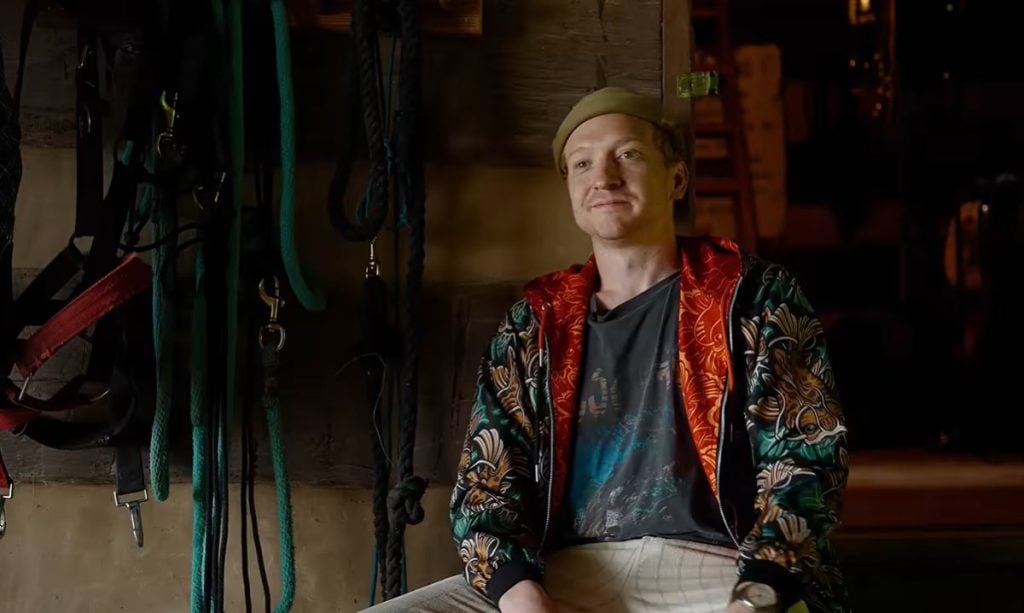
Tyler Childers does not give audio or video interviews these days. He just doesn’t do it. Simply seeing Tyler Childers speaking extemporaneously on camera this week in a video released in partnership with the Newport Folk Festival was a little jarring almost, though not in a bad way. We’re just used to only hearing from Tyler Childers when he’s singing, along with the often purposely-awkward stage banter that’s become one of his endearing signatures.
Beyond the fascination of simply seeing Childers in his mule barn in Kentucky as he answered questions from Newport Folk producer Jay Sweet, Tyler also had some excellent answers that give us quite a bit of insight not just into Childers himself, but into the moment we’re living in, and how music can help us navigate through it, and actually solve some of the problems that plague us.
It feels important to first set the context for this discussion. Jay Sweet has very much made the Newport Folk Festival into a political institution. One caption released earlier this week from Rolling Stone recapping the 2026 Newport Folk Fest read, “Hayley Williams, Father John Misty, Lauryn Hill, Dave Matthews, Wednesday, Tom Morello, and more of the best of the New Port Folk Festival 2026 performances.”
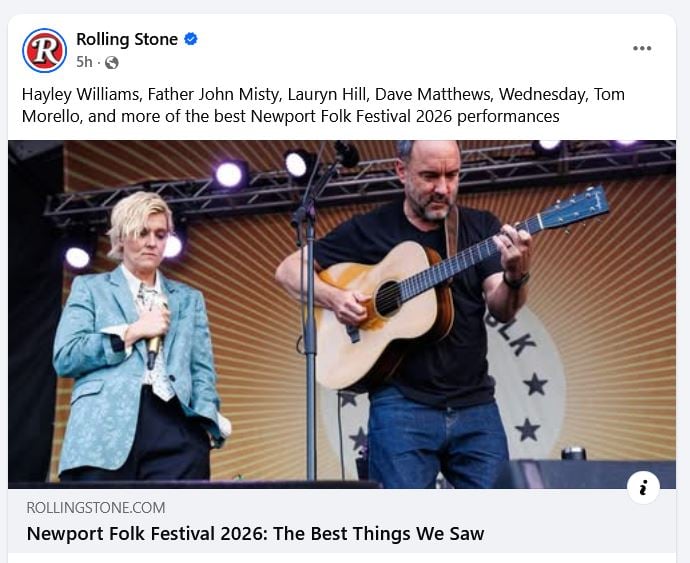
But of course, none of these performers are folk artists in really any capacity. Not to say there aren’t any folk musicians who played Newport in 2026. But there certainly seems to be a lot of clout chasing happening in a way that can cast actual folk musicians as second class. That’s one of the reasons the Grammys thankfully split the Folk Album category this year into “Contemporary” and “Traditional.”
What the artists touted by Newport Folk and Rolling Stone do have in common is political leanings. This really seems to be the curation point for Newport Folk these days. Hey, if Kid Rock is out there curating his summer series based on alignment to Trump, why can’t Newport Folk? But ultimately this is bifurcating American society, and specifically using music as the wedge instead of using it to unite people, including sometimes for political causes, which can be music’s greatest asset. As we’ve seen recently with the opposition to data center construction, sometimes opinions aren’t as stratified as the media likes to portray.
Interviewer Jay Sweet seemed to be trying to get Tyler Childers to commentate on America in a way that would make his answers come across as politically appealing to the demographic that the Newport Folk Festival curates to and attracts in the new interview.
“What is it like being a musician in America on 250?” was Sweet’s first question.
His second was, “I’m gonna read this quote, ‘It’s a folk singer’s job to comfort disturbed people, and to disturb comfortable people.”
Granted, part of the premise for the interview series is tracing the footsteps of Woody Guthrie “From sea to shining sea,” and so these questions are certainly relevant. Woody Guthrie definitely had his political leanings, and put them into his songs.
To start off answering the second question, Tyler Childers talked about how after his grandpa died, he found comfort in John Prine songs, and specifically the song “Souvenirs.” Childers talked about how he never really understood the lyrics until listening to them in that moment. Childers went on to say,
“I think all of our hope as songwriters is to be able to have those songs that gives people that listen to us that hug when we’re not physically there to and can’t be. And I’ve met a lot of people that ‘Follow You to Virgie’ has done that for. And I’ve been blessed and thankful that I’ve been able to do that in other people’s lives. In the same token, at least in my own catalog, there’s been moments like ‘Long Violent History’ where it’s ruffled some feathers. But hopefully, the relationship I’ve created with those people to listen to me has given me the space to touch on some things where it’s like, ‘Hey, we’re all here together, but some things aren’t cool, and here’s why.'”
Of course, Rolling Stone chose the “Long Violent History” comment as what to primarily highlight from the new Childers interview, because it was political, and works to wedge people apart, even though it it was only three sentences in a nearly 14-minute interview.
The ultimate take from the interview with Tyler Childers is how he sees music as a unifying element in society, and sees his responsibility as a musician to use music to create those unifying moments as opposed to wedging people apart like the media and politics often labor to do since it activates individuals and drives online engagement.
The third question Jay Sweet asked Tyler Childers was, “If you were to pick a song or artist that makes you think about America when you hear it, or makes you feel American when you hear it. Do you have one that might come to mind?”
The answer that Tyler Childers gave was the James Booker song called “Make a Better World,” written by Earl King.
“Society has no priority, we’re all one part of the whole. Whenever people shout, you have to hear them out. Everyone is a beautiful soul,” was the lyric Chiders quoted before saying,
“It’s talking about some really serious stuff. We all have to get along. But it’s got that strut, that feel good vibe to it that allows for you to not feel preached to so much as you’re being talked to about the importance of something in celebration of that. James Booker was an artist that had a lot of pain. He had a lot of loss. He had a lot of struggles. But he’s smiling through that and finding the beauty in life, which is the same super power that John Prine had where he could have you laughing about things. But that opened your heart up to talk about these more serious pressing matters in life.”
Childers went on to say, “You’re not telling somebody, ‘You need to feel this way.’ You’re making them feel something. And through the experience of feeling that movement, they’re moved to maybe just listen, maybe subconsciously. But now they have that message. It might be a really powerful book. But you have to read that book three or four times. And if the book is big, then it’s like ‘When do I have the time to get through that?’ But you’ve got time to get through a three minute song over and over and over again.”
Tyler Childers then went on to talk about how fans of his music can meet each other at shows and create lifelong friendships that often bridge across political divides.
“That entry point right there allows for both sides to disarm themselves and just start being less concerned about the foreign policy and all of that, and just being like, ‘How’s your mom?’ How as this friend of yours that we’ve shared all these experiences together in the pit of this Tyler Childers show? … No matter what you feel one way or the other political-leaning, if you’re both living in a community, and there’s a pothole in between your house and town, the pothole doesn’t care if your tire voted one way or the other.”
Tyler Childers goes on to say most importantly, “Music is kind of like a medicine to allow us to see those things in life that affect all of us no matter what.”
Whenever Saving Country Music broaches political matters, it’s often under this same very philosophy, even if it’s often misconstrued by people on both the right and the left as taking a side. The most important stance is that music as an institution is kept free of political stratification so that it can work to broaden the perspectives of people, and soften hardened hearts. But this can only happen if it isn’t overtly politicized like so often the media loves to do, and sometimes, if not often, artists do themselves, even inadvertently.
It wasn’t Tyler’s album Long Violent History that was the most polarizing leverage point when he released it. It was the accompanying video where he said at one point, “We can stop being so taken aback by Black Lives Matter if we didn’t need to be reminded that there would be justice for Breonna Taylor, a Kentuckian like me, and countless others.” In fact, the accompanying video released on September 18th, 2020 was really the last time we saw Tyler Childers speak on video for any expanded period.
The problem was that Black Lives Matter wasn’t just a term, it was an organization that at the time was advocating for the disillusion of the nuclear family, and ultimately was found to have been running a real estate embezzlement scheme with much of the money that was donated to the organization used to enrich its leadership. By adding that political specificity to his Long Violent History project, Childers didn’t let the music speak for itself, and he did come across as “preachy.”
As similar diagnosis can be made for Tyler’s song “In Your Love.” Though many on the right love to lambast the song being about “gay miners,” the song has nothing to do with that. It was the accompanying video for the song where a pair of same sex miners were shown in a relationship. But as opposed to challenging homophobia as was Tyler’s intent and the way it was portrayed by the media, the actual effect was to likely stoke homophobia. Whether Tyler heart was in the right place was irrespective of the outcome.
Oliver Anthony recently released a new song called “Hank” that says “My songs might be missin’ to ol’ boys kissin’,” in reference to “In Your Love.” Childers himself even references the controversy in a song on his new album Snipe Hunter. Again, the video felt less like telling a relatable story, and came across more as “preachy,” even of Tyler and many of his devoted fans feel otherwise. Tyler Childers has become an extremely politically polarizing performer, fair or otherwise, where simply mentioning his name comes with floods of comments about “gay miners,” and how he’s a “hick lib.”
But ultimately, Tyler’s instincts about the transformation power of music are 100% correct. We’ve seen this effect from music over the decades. It’s often things like the social media presence or the conventional media portrayal of performers in puff pieces that puts the ability of music to be transformational in jeopardy, and often for completely selfish reasons for clout, attention, and engagement.
“For a long time as a young’un, I was told, ‘You got to get out of here,'” Tyler says at the conclusion of the interview with Jay Sweet. “But that really doesn’t change the place. If you’re maintaining a garden in a spot, and every year you’re pulling from that patch of ground and you’re not putting minerals back into that, eventually you’ll end up with dead soil. In a lot of places throughout Appalachia, and in a lot of places in America, that’s what we’ve created. I really hope that other artists and other people that ‘make it out’ don’t go out, that they see the worth, that they see themselves as the mineral, they are the nutrient that place needs.”
Childers continues, “The biggest thing that you could do with your music is to take all the beautiful things that have happened to you through that powerful blessing you’ve been given, and give it back to the community that you came from, because that’s how you make a better world.”
Tyler Childers is 100% correct, and you can see how that philosophy has guided his career. But this only works when music maintains its ability to unite people as opposed to being used as a weapon to divide.
– – – – – – –
If you found this article valuable, consider leaving Saving Country Music A TIP.
July 31, 2026 @ 10:08 am
Looks like the new Son Volt album is finally coming to digital. Trigger, do you know why some artists release physical first then months later upload it to streaming? Does it make them more money or something?
July 31, 2026 @ 10:57 am
Not Trigger, but it is well documented that streaming only pays pennies to the artist with how the machine works. If you buy a digital copy instead of streaming that’s better for the artist than streaming the content.
Buying the physical media helps the artist even more so. Although buying from your local record store is a great way the ultimate ma & pa store is if you buy said physical media from the artist 1st hand whether at a show or their official online store. Big box stores like Walmart, Target, etc should really be a last resort for physical purchases.
July 31, 2026 @ 10:59 am
I have noticed this happening recently more as well – first with the Sturgill Simpson album from earlier this year and then the new John R. Miller album.
My assumption is that because streaming payouts are so pathetically bad that some artists are experimenting with a “Movie” type business model where higher margin options like vinyl, CD, or paid digital download are released first as a way to push fans to those higher margin platforms with early sales and then the streaming version is released ala movies on HBO Max, Prime Video, Disney+, etc.
It will be interesting to see if it continues, but it definitely seems some like a purposeful approach by some artists. Can’t blame them considering they are getting squeezed on live show revenue due to fuel prices and a sagging economy slowing ticket sales and streaming has always been a piss poor business model for anyone who isn’t a major record label or tech company.
July 31, 2026 @ 2:38 pm
Yeah, I just think it’s an incentive to buy physical first, support local record stores, and give core fans a more intimate experience out of the gate. I’m not opposed to it, but it does make it hard to know when to review an album.
July 31, 2026 @ 3:41 pm
Yeah that’s what I figured but then I wondered why only a few artists are doing it. I suppose there’s a trade off between more physical release money, but less publicity and maybe less crowds at shows because of it.
July 31, 2026 @ 10:51 am
Tyler is spot on about investing into the community that helped raise him. He could easily blow through the financial gains he has received on lavish goods or a drug addiction along with relocating. With him being an active part of Eastern KY he is helping set an example of a path forward for many aspiring musicians from Appalachia.
From that point of view reminds me of an article I read earlier this week related to former NBA player JR Smith. JR has came around finally that his ways as a young adult were misguided and could/should of invested those financial gains elsewhere. In the article JR claims to have dropped $60k on 1 outing to a strip club along with having 7 exotic cars and designer clothes.
There has been plenty of pro athletes that fall into those trappings. If they wise up they realize they could create generational wealth for their family and/or leave a legacy that helps set a example for others that are in the communities they came from!
July 31, 2026 @ 12:27 pm
I’m no Lebron fan but he has given a lot back to Akron Ohio where he is from. I was watching a Youtube video from a channel where the dude goes to different drug ravaged cities and interviews locals. The people that do the most charity work tend to talk about it the least.
August 4, 2026 @ 8:04 am
True regarding Lebron. I know about some of his work in Akron (school primarily) but was not aware if he did this outside of his hometown.
Shaquille O’neal is a great example where he initially blew a lot of his early money. Then he came around to buying franchises and opening them in communities that normally would not be on the top of the list. Not really charitable but still helps bring up communities instead of blowing through it.
July 31, 2026 @ 11:28 am
I’ll take a stab having heard from a number of musicians on this. When music is released to streaming services it allows the music to proliferate to the masses. That can be a positive thing but financially it devalues the music. The artists receive next to nothing for the streams. The physical media probably helps recover recording costs but unless it sells thousands of copies it probably doesnt cover the costs. I’ve heard artists say that the physical media is also to reward the fans of the artist before being released to the general populous.
July 31, 2026 @ 11:50 am
Sorry trigger the in your love video is bulletproof from this criticism. It’s a song about gay romance. It’s not anymore preachy than a song about heterosexual romance is preachy. It’s literally just artistic depiction of two people in love. The song did not make anyone be more homophobic. They reacted homophobically because they are homophobic. And promise people will be in the comments forthrightly confessing this despite any attempt to sanitize their views you might want to try.
Also the Newport folk festival as a place of left wing politics is as old as the festival itself. That sure isn’t some new development.
July 31, 2026 @ 12:22 pm
So first off, I think it’s really important we distinguish the song from the video. “In Your Love” is not a song about “gay miners.” It’s a song about love. Childers chose to portray that love between two gay men, and I’m not here to either slag that portrayal, or the idea behind it. But from a very practical standpoint, it is irrefutable that video separated Tyler Childers from elements of his fan base that needed to hear the message of a song like “In Your Love” to understand that love can be universal.
“Gay miners” has become so synonymous with Childers, he’s even citing it in his lyrics. Homophobia or no, the video was ineffective at opening hearts. In my opinion, it helped close some because some people are tired of being preached to, even if they tolerate homosexuality.
July 31, 2026 @ 1:01 pm
Geno Seale wrote the song In Your Love. Tyler recorded a version of it.
Silas House wrote the video. The song lyric itself has no explicit gay theme.
Silas House created that interpretation in the video, presumably with the approval of Childers.
Geno Seale’s version:
https://www.youtube.com/watch?v=Uqsv0eD4bi0
https://www.youtube.com/watch?v=Uqsv0eD4bi0
July 31, 2026 @ 1:44 pm
I appreciate the sentiment of wanting Music to be untarnished by politics (or political stratification). But music is a part of this world and as such, it’s inherently political. Not taking a stand is as political as stumping for the left or the right. Next, gay people aren’t unruly children to be tolerated. The word tolerate gives the game away. Everyone deserves acceptance, no matter who they love.
Finally one side wants to legislate away the rights of gay people and one side does not. While lefties are inept and corrupt as the next party, it makes it easy to side with Tyler’s choices on this one.
July 31, 2026 @ 2:46 pm
It’s Tyler Chiders who said in this interview that it’s important to carry messages forward in music and have the audience “not feel preached to.”
For whatever reason (possibly because of the emotional quotient in anything political), people just cannot hold this idea in their minds. It’s actually really simple: If you preach to someone either in a video or in a social media post, that idea is less likely to resonate than if it’s conveyed in the story of a song. This isn’t just the opinion I’ve been forwarding for going on 20 years. This is the opinion Tyler Childers just shared in this interview. And still for many, it goes in one ear, and out the other, with the default of “All music is political” offered to hand wave the idea away.
Do you want to change the world, or do you not? Okay, Tyler Childers is giving you the blueprint on how to do that. It’s the same blueprint I’ve been forwarding since 2008.
Or, keep celebrating Jason Isbell for telling right-wingers he doesn’t want them listening to his music, and pass that off as “activism.”
July 31, 2026 @ 3:19 pm
“It’s actually really simple: If you preach to someone either in a video or in a social media post, that idea is less likely to resonate than if it’s conveyed in the story of a song.”
This is all very reasonable! I just don’t see how it’s not political.
July 31, 2026 @ 3:54 pm
I’m not saying it’s not political. I just think that if you can remove the political polarization from a message, it’s more likely to end up with results. There seems to be this contingent of people who believe that “being political” is enough. Often, that’s where they fail. And I don’t think music is inherently political. I think it’s inherently human. And on that human level, that’s where it’s most powerful.
July 31, 2026 @ 1:56 pm
I don’t think the people who were offended by a sweet video about love between two men in the 2020s were ever going to get the message that love is universal. He wanted people like his uncle to see depictions of their love in a genre that doesn’t have many music videos portraying love between two men. It didn’t reach people already beyond reach.
July 31, 2026 @ 2:48 pm
“It didn’t reach people already beyond reach.”
It most certainly did. And it made them more entrenched in their beliefs. I see this every time I type the name “Tyler Childers” on social media.
July 31, 2026 @ 4:03 pm
Here’s the thing, representation is important. Childers knows this, that’s why he had a gay couple in his video. You say that homophobes (yeah I said it) became more entrenched in their views. But that video wasn’t just for them or just to change their minds today (well 2023). Exposure is the name of the game. People need to be exposed to the other in order to be able to see them as human. Ellen DeGeneres came out in 1997 and not long after her tv show was cancelled. But in 2003 she had her own talk show and by 2013 she was America’s sweetheart. Because of her (and many others who came of the closet) being gay became more acceptable to much of America and certainly within our laws.
All minority groups have a similar story of acceptance. Anybody who knows history, knows this. The people who complain about the In Your Love video today will have nieces, nephews, kids, both gay and straight who’ll appreciate it for many reasons. And some of the protesters will also be enjoying the video they once railed at.
July 31, 2026 @ 5:03 pm
” But that video wasn’t just for them or just to change their minds today (well 2023). Exposure is the name of the game. People need to be exposed to the other in order to be able to see them as human.”
Man, tell that stuff to the tourists. The idea that people in 2026 need to be “exposed” to gay culture to be more accepting is such a stuffy, intellectual, gender studies canard. 14-year-old boys are exposed to hardcore gay porn on their phones in America whether they want to be or not.
I agree that in the early oughts, there was a HUGE reversal in public sentiment around gay marriage, which ultimately resulted i nthe Supreme Court making it legal. In the last couple of years, that public sentiment has now reversed by six point according to Gallup:
https://news.gallup.com/poll/710810/support-lgbtq-issues-remains-down-peak.aspx
Why is this? There are numerous theories, but one is that people are tired of being hectored on the issue. And I agree that Tyler’s heart was in the right place, and he wasn’t necessarily meaning to “preach” to anyone through the video. But that’s not how the media portrayed it. That is why in this article, I underscored the critical role the media plays in portraying these types of things, driving up the political polarization behind them. Rolling Stone alone has set back the movement to make country music more open and accepting by a decade, and their headlong obsession with trying to make everything political in country is only making the more genre more right-wing, more closed off, and more difficult for Black, Brown, and lgbt artists to make it in.
It doesn’t matter what your intentions are. What are the results? The “In Your Love” make Tyler Childers a politically polarizing artist, with large swaths of the country population being unwilling to listen to his music no matter what it is.
August 1, 2026 @ 2:03 pm
… with large swaths of the country population being unwilling to listen to his music no matter what it is.”
Disagree.
Not to disagree, but “large swaths of the country population” is a fallacy.
Cousins, were at a Tyler & Ella concert, a couple weeks ago.
Most of the time, a person needs to be on the ground, to see what is happening out there.
Thankfully, a lot of the bullsh*t being propagated on line, is just that – bullsh*t.
: D Very happy to report that all is well.
Not coming at you, Trig,
Just happy to report that Tyler is doing fine.
August 1, 2026 @ 2:20 pm
Di Harris,
It’s almost like you sit back and exquisitely craft the most terrible comments possible. It’s really become an art.
First, “Tyler and Ella” have never played a show together, at least if you’re referring to Ella Langley, and if you aren’t, I couldn’t find any other “Ella” who has ever opened for him.
Second, nobody is contending that Tyler Childers doesn’t draw well live. That’s irrelevant to if “large swaths of the country population [are] unwilling to listen to his music.” You don’t have to look any farther than this comments section to see plenty of seeting anger at Tyler to verify this.
And the idea that all these opinions are based from behind a keyboard, and not from being out in the field is insulting and irresponsible. I spend a ton of time out in the field, saw Tyler Childers perform the last two years straight, and am very aware of him and what happens at his live shows.
August 1, 2026 @ 2:37 pm
Ella and Tyler played the “Railbird Music Festival at The Infield at Red Mile in Lexington, Kentucky earlier in the summer.
The festival took place on June 6–7, 2026. While Tyler Childers headlined the Sunday lineup (June 7), Ella Langley performed on the same stage earlier that day.”
Apologies, was off a few weeks.
And, no one is saying you do not work hard.
And, would you please stop being an asshole?
Is tiresome
August 1, 2026 @ 2:46 pm
Di,
Just because Tyler Childers played a festival with 35 other artists, and ESPECIALLY since big draws Ella Langley and Zach Top played that same day, and there were a lot of people there, isn’t somehow invalidating of the idea that many people are turned off by his music for political reasons. That is the textbook definition of “anecdotal data.”
And you came at me first. Just because you say, “Not to come at you” before coming at me doesn’t somehow refute that.
August 3, 2026 @ 6:53 pm
Sure, but there’s nothing “preachy” about the video at all. If it weren’t a same sex couple, nobody would have thought twice about it.
And that’s kind of Childers point. The video depicts a same sex couple in the same way that Don’t Take the Girl depicts a hetero couple. But because there were “gay miners” the mentally fragile among us believe they’re having something “shoved down their throats” or “being preached to.”
A gay couple was the subject of a music video. And snowflakes who weren’t raised right stamped their feet and cried about it.
August 4, 2026 @ 6:21 am
You can’t say the song didn’t allude to it and then say people were tired of being preached to. Thats inconsistent in the kindest interpretation. Acknowledging publicly some people are gay isn’t preaching to anyone.
“I support people as long as I can pretend they don’t exist” isn’t exactly support.
August 4, 2026 @ 6:56 am
Not following your logic at all here Michael. Either you’re twisting my words, or didn’t understand what I said, or I’m not understanding you.
“‘I support people as long as I can pretend they don’t exist’ isn’t exactly support.” I certainly never said anything like that.
July 31, 2026 @ 12:28 pm
Disagree. The in your love video was deliberately provocative rather than genuine support of love. The entire reason the video is remembered is because it’s depicting gay romance. A regular country music video or a guy and a girl wouldn’t have even been remarkable. Tyler set out to offend, to provoke, to get clicks and hits and to enrage a conservative country audience. The fact you’d argue with that last point is absurd give he was interviewed by npr and ny times after the video was released and he said he made the video to provoke a response from republicans.
What’s lost on him and many leftist partisans here is how that issue isn’t meaningful to republicans in 2026. Trump was pro gay marriage in the 90s, Hillary Clinton and Barack Obama weren’t in favor of it until 2010 or later. Trump in 2016, 2020, and 2024 didn’t run on banning gay marriage. Scott bessent the treasury secretary is openly gay and ric Grenell was the first openly gay person in any administration, he was DNI in 2016 and now heads the (Trump) Kennedy Center. It’s a settled issue. What trump and republicans do have a problem with is the trans movement, the administration kept the mentions of lesbians, gays and bisexuals on government sites but removed mention of the t’s, trans. Sophie Cunningham isn’t speaking out against gay marriage she’s against trans in sports.
Tyler seems to think trump era republicans are raging homophobes. I also think it’s possible to disagree with the lifestyle and still be friends. Dave Rubin, Milo and George Santos all are openly gay. I would bet someone like Ben Shapiro disagrees with the lifestyle but Ben has had dinner with Dave Rubin and Dave’s husband where Dave’s husband cooks the meal.
Plus I’ve always laughed at the term homophobic. No conservative fears walking in gay neighborhoods or has a fear of being carjacked by roving bands of gays in the Castro district. No conservative cowers in fear when a group of gay men walk towards them. Most conservatives would disagree with their lifestyle but no wimper away. Charlie Kirk spoke routinely with and had civil conversations with gay and trans people. His last moments on earth he was shot and killed by a gay man who had a trans boyfriend. But the irony is had the kid stepped up to the microphone Charlie would have listened and let him talk. Charlie’s last moments on earth were giving people he disagreed with a platform to speak and be heard.
So no, I wholeheartedly disagree with the notion that conservatives are scared of or worried to speak to gays. I think the opposite is true. LGBTQ individuals seem to think any criticism of them is just cause for murder, and that’s just sick thinking. You and I are allowed to have fair and legitimate criticism of the lgbtq movement and still be kind and civil. Tyler doesn’t appear to want that. And neither do people like Tyler Robinson
July 31, 2026 @ 3:39 pm
Excellent comment Megs man.
Disagreeing with someone’s lifestyle and still being friends with them and treating them with respect is not enough for (many in) the alphabet community. You have to affirm their lifestyle or you are phobic or worse.
Also, I have never met a conservative man who was in any way afraid of gay men.
July 31, 2026 @ 4:26 pm
First off, Tyler never told NPR or the NYT that he made the video to ‘provoke Republicans.’ That is completely false. He said his primary motivation was his own family—specifically his gay cousin who felt forced to leave Appalachia—and wanting queer people in rural communities to see their stories represented on CMT for once. Silas House, who wrote the concept, explicitly said ‘these are human stories, not political stories.’ Reframing an artist’s personal tribute to rural representation into a deliberate ‘rage-baiting’ plot says way more about how culture-war-obsessed the audience is than what Tyler actually set out to do.
July 31, 2026 @ 12:11 pm
While I’ve never put much stock on what artists on either side of the fence say (most artists are about as informed as turnip), and I don’t believe music is in any way going to fix the world or its problems or bring people together and that it’s not polarizing and, in certain quarters (and certain types of artists) isn’t preachy, I did like this comment from Childers:
“No matter what you feel one way or the other political-leaning, if you’re both living in a community, and there’s a pothole in between your house and town, the pothole doesn’t care if your tire voted one way or the other.”
Do I believe he practices this himself? It’s hard to say; talk is cheap.
July 31, 2026 @ 2:49 pm
Tyler has done more for his local community though Hope in the Hills, Healing Appalachia, and his water delivery program than any other artist I can name. He’s absolutely given back to his community, and without taking any judgement on the political leanings of folks.
July 31, 2026 @ 3:49 pm
My comment wasn’t about his philanthropy; he should be commended for all he has done and is doing. I was talking more about him acting like he only wants to bring people together. He’s just as guilty as other artists for causing discord when it comes to politics in music. There’s nothing worse than an artist, actor, politician, person, etc. with a saint complex. I whole heartily agree with the comment I reposted, but not everything he said.
July 31, 2026 @ 4:42 pm
Childers is a hater.
“To put it plain he doesn’t like you.”
His little Kumbaya act is phony.
July 31, 2026 @ 8:57 pm
And you know this because you have sat down with him on numerous occasions and had long talks about it…
August 1, 2026 @ 8:02 am
Zip it, Gnome.
July 31, 2026 @ 12:17 pm
Tyler Childers looks like Rob Schneider in that picture.
July 31, 2026 @ 12:25 pm
Did Tyler ever apologize about the BLM reference in his song after the truth about them came out?
Face it, when these artists inject political references into their songs, they darn well know what they are doing.
Kid Rock wears the label. You know what you get. More respect for that rather than being clandestine about it.
July 31, 2026 @ 12:33 pm
Most people are only as informed as the news sources they choose to consume. None of the things Childers has said that are “politically controversial” are outside of the boundaries of normal talk. Anyone who is a moderate or left-leaning would have had to go out of their way to know the full story about Breonna Taylor. This same logic can be applied to all the Country artists who supported the Iraq War, including the modern day ones who ignore what’s happened to Palestine. I could name a few topics though that directly affected fans that I think some artists should apologize for..
July 31, 2026 @ 1:20 pm
I actually said something similar in the Isbell article comments. But some beta cucks like Liza and matt complained that I wanted favorable coverage of kid rock as opposed to biased and slanted slams on the artists characters.
It’s funny how trigger does deep dive psychological profiles that sympathize with left wing artists like Isbell, Childers, BJ Barham, and sturgill in treatises that tamely call out but ultimately sympathize the artists as complicated and complex but ultimately good hearted people trying to get along. Whereas Oliver anthony, chase rise, Morgan Wallen, kid rock, John rich, lee Brice, Aaron lewis, Jason Aldean, are all fretted about with long winded rants about why they might cause woke fake news reporters to view us all as racists. But the artists themselves are at fault. It’s Morgan’s own fault for his behaviors but Isbell who has just as many sins and skeletons in his closet, well he’s left wing and makes anti major country industry music so he’s given a pass. It’s nakedly partisan.
Trugger empathizes with Tyler, which is fine. But the same empathy he extends to Isbell and sturgill is bone dry and absent when talking about Aaron lewis and Morgan Wallen. It’s funny how it’s so nakedly partisan. There were no articles written by trigger after the n word incident or chair throwing that condemned his actions yet offered grace and empathy. Isbell is a drunk, emotionally abusive figure whose own actions resulted in his being fired from his own band and a divorce. Yet trigger excuses it, ignores it and in a way tacitly supports that behavior by elevating some sins as worse than others. Trigger is woke so the n word incident is the gravest sin in modern country history. It cast shame on us all and set race relations back to the 50s. It was the worst thing, maybe ever.
Yet Isbell cent manage his demons in terms of substance abuse and Amanda said he was abusive. Yet trigger who turned on Garth brooks and jimmy allen and diplo for abuse whispers somehow writes glowing articles about an abuser like Isbell. It’s because trigger likes Isbells music and dislikes diplo, Garth and Jimmie’s music. It’s that simple.
July 31, 2026 @ 2:35 pm
“Whereas Oliver anthony, chase rise, Morgan Wallen, kid rock, John rich, lee Brice, Aaron lewis, Jason Aldean, are all fretted about with long winded rants”
Megs Man,
This is just factually untrue. You keep saying this same thing over and over and over again because you’ve created a canard in your brain.
July 31, 2026 @ 3:31 pm
You kept saying this and then say Isbell and sturgill hate you. But the issue isn’t that they hate you the point is the above artists you quoted me on, Morgan, kid rock, chase rice, Lee Brice, Jason Aldean all are never given positive reviews at all. It doesn’t really matter to me if you hated a few songs Isbell wrote and feel like we all do he peaked 13 years ago. The issue is you don’t positively review any of the artists I mentioned at all. The press you give Morgan is 100 % negative which seems odd to me given he is modern country music from 2021 onwards. And even if you hate his music he clearly has resonated with audiences in a way I’ve never seen in my lifetime. He’s one of the biggest country artists who ever lived. Yet no article ever dives deep into that aspect. You criticize his actions and music. And view him as negatives. Whereas I never saw you lambast Isbell as the abusive narcissistic jerk he is. It’s funny how abuse seems to be something you work to expose via Garth, Jimmie Allen and diplo, but you’ve never entertained the Isbell facts, his own ex wife admitted it as true.
I’m happy to say you are above board and fair Trigger. But I’d need to see proof.
Can you provide me evidence you’ve ever said a positive thing about Morgan, chase rice, Lee Brice Aaron lewis, John rich, Aldean. They’ve between them released easily 40 plus albums. My guess is you’ve never positively reviews any of those 40. But prove me wrong.
I don’t really give a damn if you hated the 2nd song off isbells 3rd album. My hunch is you’ve never given a positive review to a single overtly conservative country artist. And that seems more than a little suspect. I mean how many Aldean albums are there? 13? He’s one of the most successful modern country artists. Sells out venues. Is wealthy and is very successful. 13 albums is maybe a hundred and thirty songs. I find it suspect you don’t positively review any of those. My guess is because you are a lib.
July 31, 2026 @ 4:09 pm
Positive Reviews for Aaron Lewis (3):
https://savingcountrymusic.com/album-review-sinner-by-aaron-lewis/
https://savingcountrymusic.com/album-review-state-im-in-by-aaron-lewis/
https://savingcountrymusic.com/album-review-aaron-lewis-frayed-at-both-ends/
Positive Reviews for Chase Rice (2):
https://savingcountrymusic.com/album-review-chase-rices-go-down-singin/
https://savingcountrymusic.com/album-review-chase-rices-i-hate-cowboys-all-dogs-go-to-hell/
Defense of Chase Rice playing a concert during COVID-19:
https://savingcountrymusic.com/chase-rice-concert-criticism-misses-the-bigger-picture/
Positive Review for Lee Brice:
https://savingcountrymusic.com/lee-brice-is-back-and-boy-is-worth-the-hype/
Positive review for Morgan Wallen:
https://savingcountrymusic.com/song-review-hardy-tim-mcgraw-eric-church-morgan-wallen-mcarthur/
Eight articles defending Morgan Wallen after the overblown N-word backlash:
https://savingcountrymusic.com/tmz-pulls-mischaracterized-morgan-wallen-drink-pouring-story/
https://savingcountrymusic.com/the-real-double-standard-found-in-morgan-wallen-repercussions/
https://savingcountrymusic.com/morgan-wallen-backlash-not-just-ineffective-its-counter-productive/
https://savingcountrymusic.com/jimmie-allen-says-some-critics-of-morgan-wallen-exploiting-incident/
https://savingcountrymusic.com/on-miranda-lambert-writing-with-morgan-wallen/
https://savingcountrymusic.com/rolling-stone-falsely-reports-morgan-wallens-post-n-word-donations/
https://savingcountrymusic.com/morgan-wallen-fulfills-donation-pledge-to-african-american-museum/
Now SHUT THE FUCK UP ABOUT THIS. You’re a fucking idiot who hasn’t done the basic searches of the website to substantiate your stupid claims, and now you’re getting your dick handed to you.
You don’t know what the fuck you’re talking about. And if you ever mention this stupid bias claim ever again, you comments get deleted. All of them.
Now, fuck off.
July 31, 2026 @ 4:36 pm
I literally never said anything like that to you. Manufacturing fake quotes and assigning statements to me that I never made just shows how bad-faith your entire argument is. If you have to lie about other commenters to make a point, you don’t have a point.
July 31, 2026 @ 1:27 pm
Is this the same Kid Rock who went on Capitol Hill to testify about how terrible Live Nation – Ticketmaster is for both fans and artists, then has pretty much shut up about it after reporting came out that Trump personally intervened and pressured the DOJ to drop their anti-trust case against the corporate behemoth?
I think that is the same Kid Rock, but you tell me.
If anything I have less respect for Kid Rock that remaining friendly with the President seemingly means more to him than standing by his supposed strong convictions that Live Nation – Ticketmaster is a shit deal for music fans and artists.
But hey, it’s a big club. And you and I ain’t in it. Bob apparently wants to stay in it I guess….
July 31, 2026 @ 3:02 pm
Not defending Kid Rock because he’s always been an interloper in the Country genre, but has anyone stood by their fight against Ticketmaster? Not hearing anything more from Zach Bryan about it. Also I don’t remember ever hearing criticism from the Left about Bruce Springsteen or other artists refusing to criticize Obama when they were frequently hobnobbing with him. Just wait, when the Democrats in the presidency in 2028 you will see a long line of artists wanting to get and keep access to the President. (No one wanted access to Biden)
August 1, 2026 @ 10:04 am
Zach Bryan didn’t testify before Congress.
I’m in no way denying that “liberal” artists do the same, but I just find it funny when someone tries to hold up Kid Rock as an example of an artist unafraid to speak his opinions, when in reality as soon as the Trump (privately) put the kibosh on holding Live Nation – Ticketmaster accountable, he shut up real quick.
I’m not asking Kid Rock to criticize Trump – but to supposedly feel so strongly about an issue that the minute the President you backed betrays you on an issue (which is exactly what happened) and then you just zip your lips shut and remain quiet is not deserving of respect. Regardless if the artist is conservative, liberal, or somewhere in between if you stump for an issue and then go “oopsies, I really want to retain access over standing by my principles” well, that is just cowardly IMO.
August 1, 2026 @ 11:38 am
Yeah but he released an album titled ‘All My Homies Hate Ticketmaster’. That’s why I mentioned him.
Yeah Kid Rock is an idiot. Anyone who thinks Kid Rock is principled is an idiot.
July 31, 2026 @ 2:56 pm
Smart people in 2020 knew BLM was a scam.
Most musicians are idiot savants.
July 31, 2026 @ 12:26 pm
Sorry, Harris. People who disagree about the “In Your Love” video are not “homophobic.” We just believe that homosexuality is abnormal and serves zero purpose for the advancement of society.
I could bring in the God aspect but then you would probably come back with Bible verses taken out of context or refer to the Bible as “fiction,” “outdated,” or God not existing so I’ll just bring the science.
Thousands and thousands of years of homosexuality’s existence and still no gay gene. Any
“scientific” studies performed in favor of homosexuality were done by either homosexuals themselves or “allies” that couldn’t fully remove their biases from the studies – something that needs to be done in order to be taken seriously and scientifically. The study that removed homosexuality from the DSM as a mental illness fell into this category but the study was quickly championed, crowed as “groundbreaking,” and ushered in the Gay Movement of the 70s to where the people that screamed the loudest convinced the average person it was gospel (sound familiar?).
My unscientific view (but scientific studies lend to my opinion): homosexuality is a byproduct of childhood trauma.
July 31, 2026 @ 2:33 pm
Boy, when you’re outflanking Megs Man to the right, that’s something.
Who cares what two consenting adults do behind closed doors? And if homosexuality is a byproduct of childhood trauma (probably not true), why impugn these people for being subject to trauma they sustained when they were innocent? Why not be compassionate towards them?
August 2, 2026 @ 4:53 pm
Nobody on this website has ever stepped a foot on my right. I wish someone would. It gets lonely here.
To answer your question: Your definition of compassion appears to be to show someone a vague shallow kindness or niceness.
Real compassion is to do and say what’s best for someone based on eternal objective truth.
It’s hateful to tell someone afflicted with same-sex attraction that their affliction is normal. It’s unloving and uncompassionate to tell someone that the digestive tract is a sex organ.
August 5, 2026 @ 9:12 am
I assume that the “eternal objective truth” that you refer to comes from your god, which I also assume is the Christian god. I respectfully ask you to provide the exact chapter and verse where this “eternal universal truth” regarding “same-sex affliction” and “the digestive track is not a sex organ” are stated. Also, if this “eternal objective truth” says “digestive tract” sex is immoral, I assume it also says that any non-vaginal sex is immoral. Therefore, I assume that according to this “eternal universal truth”, the mouth, tongue, hand and fingers are also not sex organs. Ergo, fellatio, cunnilingus, and manual stimulation are immoral. Therefore I assume that you do not engage in these practices. Also, you imply that “ digestive tract” sex is immoral, which I infer to mean anal sex, and that some people are afflicted with “same-sex attraction”. This, plus no mention of cunnilingus or manual stimulation, leads one to assume that lesbians are not immoral. That is perplexing as lesbianism is a form of same-sex attraction. I respectfully ask you to please explain and clarify, as your comments as stated are obviously quite confusing. Thank you.
August 7, 2026 @ 7:32 am
No reply at all to a fair and reasonable comment and questions.
July 31, 2026 @ 9:58 pm
This has to be the most idiotic posts that I have ever read on this website.
August 1, 2026 @ 10:04 am
You wrote four paragraphs claiming to ‘bring the science,’ only to end it with ‘My unscientific view.’ That says it all! Modern medical consensus, the APA, and actual genome studies proved decades ago that same-sex attraction is a completely normal biological variation, not ‘trauma.’ You don’t get to speak for science when you’re just regurgitating 1950s junk theories.
August 3, 2026 @ 7:02 pm
“We just believe that homosexuality is abnormal and serves zero purpose for the advancement of society.”
I’ll bet ole Lewis never once turned down a BJ though.
It’s funny how when another group does something that “serves zero purpose for the advancement of society” it’s something to freak out about. But when you want to do it, hell it’s fair game.
July 31, 2026 @ 12:56 pm
Music should be used as a way of bringing people together and like he said, getting people through hard times whatever the causes may be. Can it be political, sure, but pretty much anything can be anymore. I also agree with your thoughts on the song in your love. By putting the gay people there in the video, it puts it out there as a message supporting that. The song itself is just about 2 people loving each other so it alone works for anyone in love. Its why in many cases if not most, its best to just let the individual listeners imaginations decide vs a video or the artist own interpretations what a song means. It works that way in films and videogames a lot. I was reading an article on i believe a game but it could have been a movie, cant remember now, but they asked the guy what the characters motivations were. He answered it very well. He said he knew the characters motivations because he wrote it, but he wanted the viewers to come up with their own ideas. A pretty good answer i believe.
July 31, 2026 @ 3:07 pm
Kind of like David Chase discussing the ending of The Sopranos.
July 31, 2026 @ 4:02 pm
I read an article with Don McLean recently where he was talking about the meaning behind “American Pie.” He said for decades people have thought that his references to the king in the song were about Elvis Presley, but he said he was talking about Jesus Christ. The song was inspired by a childhood tragedy, but McLean said people have their own interpretations.
July 31, 2026 @ 1:21 pm
It is bonkers to me the amount of criticism he has received from those two little tiny baby creative outputs. People are treating him like he is De Niro or Mark Ruffalo. His “political” takes have been so friggin tame in this day and age. I think that many of his old fans would prefer he smokes crack, kills alligators with his hands, and poops on the porch.
His takes on this interview were pretty darn positive in nature!
July 31, 2026 @ 1:36 pm
You are stunned by the partisan reaction to an artist who is overtly political? Tyler is similar to Isbell and sturgill in how vitriolic their hatred of conservatives and trump is. It’s not just I’m making my beliefs heard and let me be an advocate for social causes. It’s the intense hatred all of them have for conservatives. It makes complete sense to me as a conservative that I will never give a dime to any of by them. They want conservatives to be killed. And that’s just not something I support, condone or allow. It’s funny how libs view any deviation from their worldview a racist dogwhistle and a hate crime. Conservatives refusing to stream Tyler means we are racist, homophobes. When in reality, most of us just want to be able to listen to good country music or any genre and not have politics shoved down our throats in the visuals, lyrics or live. It’s a simple ask.
July 31, 2026 @ 2:53 pm
I think that I would be happy to concede to or agree with your opinion if you had any actual evidence to back it up that he is anywhere near the neighborhood of those that I had provided as examples in my comment. The specific point I was making was that I have not seen any evidence where he is this hateful liberal monster that you portray him as being.
I can certainly agree with many people and those levels of hate and vitriol, but I just have not seen that with him and I would like to see evidence otherwise
July 31, 2026 @ 3:33 pm
You can stream who you want. You choose Aldean, Lewis and Kid Rock. Good for you. Personally I think they suck. Big time. But you do you. I have never seen anyone so butt hurt on this site as you are, and that is saying a lot. Isbell, Childers, Barnham and Sturgill are some of the best artists of the past decades. Aaron Lewis not so much. But you do you.
Dude, you need to get over the hate. Don’t worry about what others are doing and worry about yourself. Your comments are so over the top.
Have a beer, smoke a joint and just enjoy the life you have. This is fucking tedious post after post. But what do I know as a country loving, Yankee Dead Head.
August 1, 2026 @ 10:08 am
If you are put off by Tyler’s so-called politics (he has never mentioned any party or public officials that I know of) than I feel sorry for you. He is all about equality and bringing people together, something he brings up at every one of his dynamite shows.
August 1, 2026 @ 12:10 pm
Tyler played at Governor Andy Beshear’s inauguration party.
August 1, 2026 @ 1:29 pm
That’s great! Were you there?
August 1, 2026 @ 10:11 am
“Tyler is similar to Isbell and sturgill in how vitriolic their hatred of conservatives and trump”? Vitriolic? Where are you getting this from? I’ve never heard Tyler even mention Trump or Conservatives. Sounds like it’s all in that screwed up mind of yours.
August 1, 2026 @ 12:11 pm
BLM is anti-Trump. Tyler is BLM.
August 1, 2026 @ 12:18 pm
You don’t have to go any farther than this comments section to see how politics bogs everything down in bullshit. That’s why why Tyler said in this interview was so important.
August 1, 2026 @ 1:00 pm
Tyler lost a great number of his original fans over the In Your Love video created by Silas House, the LGBTQ activist and Poet Laureate of Kentucky.
When Tyler previously did the BLM propaganda, Silas House was also right there interviewing him at length, and being described as his “publicist.”
It is pretty clear Tyler was recruited by the democrat political machine by Silas House in 2020 and achieved his commercial success that way, culminating in a Grammy for a forgettable song from a forgettable album.
In all this Tyler’s personality changed. He is a shadow of his former self.
He has that deer in the headlights look of someone being handled, or at least of someone terrified of being cancelled.
He may want to back off politics but has already eaten the apple, so to speak.
No one trusts him as a unifier at this point. He is stupid to gaslight us.
August 1, 2026 @ 1:57 pm
Claiming Tyler Childers is ‘handled’ because he released a love song and video that made you uncomfortable is wild cope. The guy is selling out arenas—I think he’s doing just fine without the conspiracy theories.
August 1, 2026 @ 10:22 am
Going from a standard music interview to claiming artists ‘want conservatives to be killed’ is an absolute Olympic-level leap 💀 Nobody is plotting a hit on you, Megs Man, Touch grass!
August 1, 2026 @ 12:13 pm
First they came for Charlie Kirk.
August 1, 2026 @ 2:02 pm
Imagine being this terrified of a banjo player and a love song. Thank you for proving my point about Olympic-level leaps
August 1, 2026 @ 2:16 pm
🤣
July 31, 2026 @ 1:44 pm
It was all but a guarantee that people are going to miss (or ignore) the point of the piece/interview.
Greatest part of the interview lauded the power of music to getting people from all different beliefs and walks of life in the same room to enjoy the same thing, and how that relates to actual community versus national politics.
It’s all 100% true. Politically, I couldn’t be further from 95% of artists. But, I believe in the good that comes from positive shared experiences. We don’t have to share the same views on immigration, entitlements, and national governance to have a good time at a show or be friendly. I don’t need to agree with you on BLM and vaccines to care how your family is doing. Too many people have made political grievances their personality these days. It’s boring. If the only thing you have to offer is thoughts about politics, it’s because you’re an uninteresting person that realized it was an easy way to attract attention.
Being from East Kentucky myself, I can attest to everything Childers said in that interview. He’s right about all of it. And most importantly, he’s living it – much better than I am. He invests in the community that made him when he could be living the high life anywhere. Anyone who can’t find that admirable because of a music video or half baked fiddle album that was released as a fundraiser has little else to complain about.
July 31, 2026 @ 2:07 pm
Well said and I for one appreciate your take on it! I don’t have time to dig crazy deep into the research about specifics, but it does seem that he has done a decent amount of donating and providing for his “causes” and that is really cool. “Much better than I am” – don’t sell yourself short because we all have the opportunity to do what we can!
August 2, 2026 @ 7:14 am
“Too many people have made political grievances their personality these days.”
X-ring.
July 31, 2026 @ 2:56 pm
“Bitin’ List” is his best song.
July 31, 2026 @ 2:58 pm
“I like everything Tyler stands for and sings about as long as he doesn’t get specific and stand up loudly for certain populations – then he’s “preachy”
July 31, 2026 @ 4:08 pm
It’s not standing up, it’s virtue-signalling, and both democrat and republican artists do it, not just Childers. Why anyone would listen to what a music artist, actor, influencer, etc. has to say when it comes to big issues is beyond me. Thinking seems to have become a lost art for many.
July 31, 2026 @ 4:14 pm
😂👍🏻
August 1, 2026 @ 6:21 am
I applaud artists whose virtues are standing up for people who have it harder than them and not punching down.
August 1, 2026 @ 7:10 am
Serious question. What does “virtue signaling” mean?
July 31, 2026 @ 3:28 pm
I have been reading this blog for years. I used to comment way more than I do now. Why? Because I am so in my bones sick of certain commenters here taking over almost every comment section on every single post with crazy political rants.
This was a well done, well written article. If Trigger had done an equally well done and well written one on Oliver Anthony (hint – he has), some of you people still wouldn’t be satisfied.
The words spoken in this interview were heart felt and resonated with me. I appreciate Trigger covering it because otherwise, I never would have found it.
August 1, 2026 @ 2:31 pm
Please don’t let a few random whack jobs make you not invest in these comment streams. I think I speak for many many country music fans when I say that the comment streams on this website are incredibly valuable for the country music community. Sharing thoughts and experiences and even sometimes venting can be very beneficial not to mention how many amazing artists have been introduced to us through trigger and people on the comment streams. That mega man guy or whoever he is with his agenda should just be completely ignored because he sucks.
July 31, 2026 @ 3:52 pm
‘It’s a folk singer’s job to comfort disturbed people, and to disturb comfortable people.”
Funny how that always seems to go one way with these hicklib types
July 31, 2026 @ 4:39 pm
Guthrie was overrated.
July 31, 2026 @ 4:58 pm
I love the kind, humanitarian acts, of Ty!
July 31, 2026 @ 5:07 pm
This comments section has been forced to close because commenter “Megs Man” is spamming it.
August 1, 2026 @ 6:30 am
Saw Steve Earle in Bend, Oregon, last night. Steve can be mouthy, and his politics aren’t exactly a secret, but he didn’t talk much about it directly, and what he said boiled down to this:
1. If you can’t talk to people you know you’re going to disagree with, democracy fails.
2. Maybe it’s better if we all sing together.
3. We need to be a whole lot kinder.
I can live with that from an artist. The rest of the “message” was in the songs themselves, where it hits harder and means more anyway.
August 1, 2026 @ 11:49 am
Guys like Earle are why this nation is in the shape it is in.
August 1, 2026 @ 9:10 am
Nice bit of writing and insight, Trigger, thanks for posting.
August 2, 2026 @ 4:43 am
I think you misunderstand Newport Folk and Jay Sweet. The festival has always been political – it was co-founded and run for most of its history by Pete Seeger. Tom Morello first played there in 2009, as The Nightwatchman. Sweet had really just started to take over as the festival producer that year and Seeger was very much active as a performer and curator.
Jay Sweet’s impact on the festival has way less to do with politics than it does with indie rock. He’s nudged the festival beyond folk while trying to maintain a connection to its history and a cohesiveness to the curation that defies genre. But politics have always been there, and I think the suggestion that someone has come in and turned the festival political is both inaccurate and divisive in the very way you criticize.
August 2, 2026 @ 9:42 am
I totally 100% understand that Newport Folk has always had a political angle, as has folk music in general. My bigger beef is seeming to use political outspokenness as a curation point in a way that undermines an important folk music institution. Jay Sweet used to be a big player at Paste, and I agree, it’s taken an indie rock turn too over the past few years.
I don’t have a problem with a indie rock band or two playing Newport Folk. I don’t believe all festivals need purity tests or something. It’s healthy to have wild cards to facilitate the “rub.” But Newport Folk has become so exclusive, so signaling (for lack of a better word), and it’s really puts actual folk artists—including political ones—at a disadvantage at participating. That’s my deeper point.
August 2, 2026 @ 10:25 am
The old left is now considered far right.
August 2, 2026 @ 12:17 pm
The rooster crows at sundown.
August 2, 2026 @ 3:07 pm
Your latter point is what seems made up to me. I’ve gone to Newport most years since 2009. It’s not any more or less political. It’s always been a politically (and ethnically and socioeconomically) homogeneous crowd.
The curation is very much about trying to tap into the next vein of indie rock, while keeping crowds happy with bigger acts that appeal to the demographic. Jay Sweet hasn’t wrapped his arms around MJ Lenderman etc because Lenderman is political, it’s because he’s aware that’s the nucleus of where indie rock is headed. Same with Ryan Davis, etc.
It seems like you’ve imposed a political angle here, which is exactly the thesis of what you despise.
August 2, 2026 @ 4:41 pm
I disagree with you often, but usually I find your writing to be fairly level-headed and at least somewhat cogent.
You’re stretching on this one, though, and as a result your regrettable perspective comes through more clearly.
Just FYI.
August 2, 2026 @ 5:34 pm
Hey Billy,
I’m not exactly sure what you’re trying to say with this comment. But I will say that throughout my entire career, I’ve been saying basically the same exact things about using music to improve the world as Tyler Childers said in this interview, namely to not “preach” to people, but using story, allegory, character, and the inherent infectiousness and disarming nature of music to soften harden hearts, and allow people to see the world from another’s perspective.
Though it seems like these are concepts that someone should at least be able to understand the perspective of, if not agree with , they have been used to call me a Nazi MAGA White Supremacist homophobic piece of shit for reasons I cannot fathom beyond the conceit of activists that believe getting country stars to come out overtly for political causes will turn the American rural electorate from red to blue, even though that project has colossally failed, and has resulted in country music becoming MORE conservative—a reality they don’t want to reckon with, so they resort to ad hominem name calling of the people that point it out.
August 2, 2026 @ 5:23 pm
Believing that the left and right can unite is only exceeded in foolishness by the belief that they should. These beliefs require you to believe that all values are equal, that all cultures are equal, and that objective truth and morality don’t exist.
The “I’m not political. Politics are a scourge” schtick is the epitome of decadence, weakness and ignorance. Politics is simply the debate or discussion associated with creating policy for governance or the abolition of it. Saying “I’m not political” is to say, “I don’t care how my country is governed, what the laws are, or who has control over my future.”
In an attempt to be “above it all”, or somehow more enlightened than those who hold strong political beliefs, the “I’m not political” people reveal a mental state that I would describe as childlike in its understanding of the world, brought on by Western comfort.
What makes it funny (sort of) is that there is a logical fallacy named after the worldview to which these people adhere (the Middle Ground Fallacy), yet they march forward, chest out and nose high telling everyone how non-political they are, as though it’s a badge of honor.
August 2, 2026 @ 11:12 pm
Honky,
We’ve had this discussion many, many times before. You look at politics as a line with a right and a left, and folks in the center as the mushy, “normie” “weak” middle unwilling to take a hard stance. But in reality, politics is a circle. And one that circle there a place where the hard left and right meet, and understand that what really need to happen is a form of unifying radicalism that burns the entire venal and corrupt system down and return the power to the people. People in this middle aren’t getting together to join hands and sing songs in unison. They’re joining together to raise the black flag and start a popular uprising.
August 3, 2026 @ 9:10 am
Why are we still talking about this weirdo? He hasn’t put out good music in 7 years. You would destroy any other artist who put out the bullshit he has after coming on so strong, but instead you keep swinging from his nutsack.
August 3, 2026 @ 5:01 pm
I have no problem with Tyler Childers, and I’m not going to let politics determine whether I enjoy an artist or an album.
One of my closest friends is gay, and I’d take a bullet for him. I don’t have an issue with people being gay.
What I do get tired of is feeling like basic respect isn’t enough. It sometimes seems like you’re expected to publicly celebrate or fully embrace every viewpoint, and if you don’t, you’re immediately labeled a bigot. I don’t think that’s healthy.
I also think we need to recognize that when people are constantly demonized no matter what they say, they’re not likely to change their minds. Most people don’t move toward someone who’s calling them hateful. They move the other way. If the goal is understanding, that approach usually has the opposite effect.
I believe we can respect each other, disagree on some things, and still get along. We’d all be better off if we gave each other a little more grace.
August 5, 2026 @ 9:18 am
Nice article and agree with most of it. Tyler is just doing the right thing (in his measured considered opinion) to be honest and help us see each other as people instead of opinions we are told define us but don’t and ultimately divide/distract us.
Although I think @Trigger comment about Black Live Matter is missing the forest from the trees.
QUOTE “The problem was that Black Lives Matter wasn’t just a term…”
THE PROBLEM is regular innocent folks getting murdered by police, in my opinion.
August 10, 2026 @ 9:54 am
Oh boo hoo over 150 years ago at the height of slavery in America less than 1.4% of White Americans were slave owners, so what?
Approximately 99% of White Americans have literally NO ties to slavery never did and never will. so what exactly is his bitch ass whinging about?